Free Daily Podcast Summary
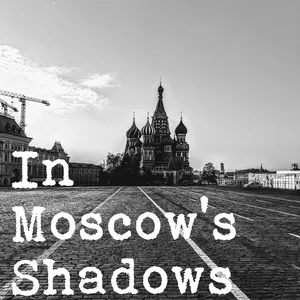
In Moscow's Shadows: Daily Summaries Delivered
by Mark Galeotti
Russia, behind the headlines as well as in the shadows. This podcast is the audio counterpart to Mark Galeotti's blog of the same name, a place where "one of the most informed and provocative voices on modern Russia", can talk about Russia historical and (more often) contemporary, discuss new books and research, and sometimes talk to other Russia-watchers.
Latest Episodes
The most recent episodes — sign up to get AI-powered summaries of each one.
- Yesterday46 min
In Moscow's Shadows 263: Voting for War Putinism
In Russia’s elections, the ballot box is no longer a measure of consent but rather a tool for manufacturing it. It's only two days into the three days of elections to the State Duma, but I catch up on the latest and consider what to look for, before addressing the growing concern/hysteria about the Russian threat to the West (no, Putin didn't try to kill Boris Johnson), mobilisation and the BRICS summit. In the second half, I use Dmitry Medvedev’s striking line that Russia is “either a great ...
- 2 weeks ago48 min
In Moscow's Shadows 262: Jaw-Jaw Not Ending The War-War
I start with a round-up of current news stories: the Witkoff-Kushner peace mission that is likely heading nowhere, Zelensky's apparent threat to civil aviation that was likely more psyop than serious, and the SCO summit in Bishkek that was likely more significant than either of the above. (And medieval counterfeiting, for good measure...) In the second half, I look at Russia's drone strike on the SBU HQ in Kyiv and the signs of a SBU-GUR rivalry, driven by both politics and also the thriving ...
- 3 weeks ago49 min
In Moscow's Shadows 261: Happy Days for Putin?
Everyone keeps diagnosing Putin’s mood, not least given the CIA Director’s visit to Moscow. Putin is angry, he's frightened, he's desperate -- that seems to be the standard Western talking point these days, and hence the fear that he might do something dangerously escalatory. But is he? Things might actually look rather more encouraging from his perspective. So, in this episode, I try and peer through the Kremlin's windows, to understand how he believes things are going, in war and potential ...
- 4 weeks ago50 min
In Moscow's Shadows 260: Digging (Relics) For Victory
The war seems to be getting (even) nastier, in part perhaps - and this may be over-optimistic - as both sides seen an endgame almost in sight, as well as out of growing desperation on both sides. The desperation even extends to digging up Prince Dmitri Donskoi's bones for propaganda purposes. Then again, in the second half this gives me an excuse to talk about a couple of archaeological stories that have no real political importance, but interested me... The episode of the Peacemonger podcast...
- Aug 16, 202649 min
In Moscow's Shadows 259: A Bite Out Of The Apple
When the Kremlin changed its mind and decided to ban the opposition party Yabloko (Apple) from running in September's elections, it demonstrated its concern that this could become the new vessel of the 'coalition of the fed-up.' After all, this seeming no-hoper party was suddenly being boosted by a guerrilla meme campaign and looked as if it might even cross the 5% threshold to get into the Duma. This could not be allowed. The Kremlin is not frightened of Yabloko winning, it is frightened of ...
- Aug 9, 202647 min
In Moscow's Shadows 258: The Ukraine War and Russia's Khaki Election
Ukraine’s long-range campaign against Russia is no longer just about spectacular refinery fires. When Kyiv pivots towards softer targets like logistics hubs, it can hit morale, prices, and everyday life in ways that pure military targets do not. It is also a reminder of the innovation cycle in the war: Ukraine shifts tactics, Russia adapts, and both sides hunt for the next gap in air defences and the next pressure point that the public cannot ignore. What is the political intent behind these ...
- Jul 26, 202655 min
In Moscow's Shadows 257: A Tale Of Two Systems
Zelensky sacks a defence minister, then removes his commander-in-chief, and suddenly the question is not “who is better?” but “who controls the politics of war?” I use this as an opportunity to explore the systemic warfighting capacities of Ukraine and Russia defined not so much in military but political terms: political focus, generating and motivating soldiers, and learning. Russia can concentrate resources and recruit with money longer than many expect, but morale, discipline, and se...
- Jul 12, 202644 min
In Moscow's Shadows 256: Desperation, Escalation, Mobilisation
Putin is being pressed by some within the elite to call it quits and freeze the war on the current front line, by others to step up and try and impose a quick military solution. His natural impulse is to put off decisions, but Kyiv's campaign against Crimea may make that impossible. He seems determined to hold out for the last bit of the Donbas, so he has to escalate. With other options, from nuclear demonstration to stepping up the covert campaign in Europe not being viable, all he has is ex...
Get In Moscow's Shadows summaries in your inbox
Free AI-powered daily recaps. Key takeaways, quotes, and mentions — in a 5-minute read.
Get Free Summaries →Free forever for up to 3 podcasts. No credit card required.
You Might Also Like
Listeners also like.

The Team House
Deep-dive conversations on national security with special operations veterans, intelligence professionals, and frontline reporters.
Ukrainecast
A BBC podcast investigating the war in Ukraine through on-the-ground stories, expert analysis, and high-level interviews.

Ukraine: The Latest
Daily analysis of the war in Ukraine, covering military developments, geopolitics, and life in Russia and Ukraine.

NatSec Matters
Former national security officials interview top leaders on critical security challenges and U.S. policy responses.
Putin
Explores Vladimir Putin’s life and decisions through accounts from those who have studied or interacted with him.

The Lawfare Podcast: Patreon Edition
Experts and policymakers discuss national security, law, and policy issues including foreign policy, intelligence, and cybersecurity.

Global Security Briefing
Experts analyze global security challenges and international defense policies, with a focus on the UK, Indo-Pacific, and Gulf regions.

The Real Story
Experts and decision makers analyze and debate major news stories.

The Lawfare Podcast
Discussions with experts on national security, law, and policy covering foreign policy, intelligence, cybersecurity, and governance.

Intelligence Squared
Live debates and in-depth discussions on pressing global issues featuring leading experts and thinkers.

The Rest Is Classified
Former CIA analyst David McCloskey and journalist Gordon Corera examine real espionage cases and intelligence operations from the Cold War to present.

The Rest Is Politics: US
Insightful analysis of U.S. politics and policy from a former White House official and a veteran BBC correspondent.
About In Moscow's Shadows
Russia, behind the headlines as well as in the shadows. This podcast is the audio counterpart to Mark Galeotti's blog of the same name, a place where "one of the most informed and provocative voices on modern Russia", can talk about Russia historical and (more often) contemporary, discuss new books and research, and sometimes talk to other Russia-watchers.
Customized Recaps
AI-powered recaps with compact key takeaways, quotes, and insights.
Straight to Your Inbox
Get key takeaways from In Moscow's Shadows in a 5-minute read.
Save Hours Every Week
Stay current on your favorite podcasts without falling behind.
Frequently Asked Questions
What is Podzilla's In Moscow's Shadows daily summary?
It's a free AI-powered email that summarizes new episodes of In Moscow's Shadows as soon as they're published. You get the key takeaways, notable quotes, and links & mentions — all in a quick read.
How does the In Moscow's Shadows podcast summary work?
When a new episode drops, our AI transcribes and analyzes it, then generates a personalized summary tailored to your interests and profession. It's delivered to your inbox every morning.
Is this an official In Moscow's Shadows product?
No. Podzilla is an independent service that summarizes publicly available podcast content. We're not affiliated with or endorsed by Mark Galeotti.
Can I get summaries of other podcasts too?
Absolutely! The free plan covers up to 3 podcasts. Upgrade to Pro for 15, or Premium for 50. Browse our full catalog at /podcasts.
How often does In Moscow's Shadows release new episodes?
In Moscow's Shadows publishes weekly. Our AI generates a summary within hours of each new episode.
What topics does In Moscow's Shadows cover?
In Moscow's Shadows covers topics including News, History, Government, Commentary. Our AI identifies the specific themes in each episode and highlights what matters most to you.
Start getting In Moscow's Shadows summaries tomorrow morning.
Free forever for up to 3 podcasts. No credit card required.
Free forever for up to 3 podcasts. No credit card required.