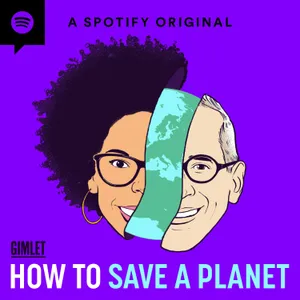
Free Daily Podcast Summary
How to Save a Planet: Daily Summaries Delivered
by Gimlet
Get key takeaways, quotes, and insights from How to Save a Planet in a 5-minute read. Delivered straight to your inbox.
Latest Episodes
The most recent episodes — sign up to get AI-powered summaries of each one.
- Jul 29, 202146 min
Is Your Carbon Footprint BS?
We're tackling a sibling debate: Do your individual actions matter when it comes to climate change? Or is it all about big, systemic change? In this episode, we break down both sides of the argument. We lay out the actions that have the biggest impact on your carbon footprint – and then ask if there's a better way to think about our individual role in climate change. (This episode originally aired in March) Guests: Katharine Wilkinson, Anthony Leiserowitz and Steve Westlake Calls to Action Draw your Climate Action Venn Diagram – what are you good at? What is the work that needs doing? What brings you joy? Post your Venn diagram to social media (Twitter / Instagram) and tag us @How2SaveAPlanet. Looking for a job? Climatebase has a jobs directory and organizations directory that can be filtered by Project Drawdown sectors and solutions. Check out the How to Save a Planet Calls to Action document. All of our episode Calls to Action can be found there. Talk to people about climate change, but don’t be annoying about it! For tips, listen to our episode, Trying to Talk to Family about Climate Change? Here's How, and read the Yale Program on Climate Change Communication’s Attaining Meaningful Outcomes from Conversations on Climate. Learn More Check out Project Drawdown to learn more about the Drawdown Framework, and to see their Table of Solutions that breaks down solutions by sector(s) and their impact on reducing heat-trapping gases. Listen to related How to Save a Planet episodes – Party Like It’s 2035, Trying to Talk to Family About Climate Change? Here’s How, and Are Electric Cars Really Better for the Climate? Listen to the climate podcast A Matter of Degrees, co-hosted by Dr. Katharine Wilkinson and Dr. Leah Stokes. Check out the Yale Program on Climate Change Communication to learn more about the widespread support for climate policy solutions in America, and other research. Check out the research paper that provides a comparison of emissions reductions from various individual actions. If you take an action we recommend in one of our episodes, do us a favor and tell us about it! We’d love to hear how it went and what it felt like. Record a short voice memo on your phone and send it to us via our Listener Mail Form. We might use it in an upcoming episode. This episode of How to Save a Planet was produced by Felix Poon. The rest of our reporting and producing team includes Kendra Pierre-Louis, Rachel Waldholz and Anna Ladd. Our intern is Ayo Oti. Our senior producer is Lauren Silverman. Our editor is Caitlin Kenney. Sound design and mixing by Peter Leonard with original music from Emma Munger. Learn more about your ad choices. Visit podcastchoices.com/adchoices
- Jul 22, 202143 min
Like The Monarch, Human Migrations During Climate Change
Human migration is nothing new, but the scale at which people will need to relocate due to climate change will be different than ever before. A World Bank report estimates that over the next thirty years, 143 million people will be displaced within three of the most vulnerable regions alone: sub-Saharan Africa, South Asia, and Latin America. To handle such shifts in population, our governments and immigration systems will have to evolve. This challenge, and the stakes, are illustrated beautifully in the essay we’re featuring this week. “Like the Monarch,” written by The New Yorker staff writer Sarah Stillman, explores the complex intersections between the climate crisis and human migration. It is read by actor, producer, director, and activist America Ferrera. Sarah Stillman’s essay, along with 40 other essays appear in the anthology co-edited by Dr. Ayana Elizabeth Johnson and Dr. Katharine Wilkinson called All We can Save: Truth, Courage, and Solutions for the Climate Crisis. To find out more about the book, each of the contributors, and the nonprofit the co-editors founded to carry forward the book’s mission, check out allwecansave.earth. Also, we put together a playlist to go with the anthology – each essayist and poet picked a song to go with their writing. Check it out! Featuring: Sarah Stillman, America Ferrera Calls to action: Keen for more of Sarah Stillman’s writing? Check out her recent piece, When Climate Change and Xenophobia Collide Craving more wisdom from women climate leaders? Pick up a copy and dive into the anthology All We can Save: Truth, Courage, and Solutions for the Climate Crisis – now out in paperback! Want to read this anthology with your climate squad/book club? Here’s a great facilitation guide for reading circles Curious what’s next from the All We Can Save crew? Learn more about the new non-profit, The All We can Save Project Eager for more from the audiobook? Listen to: If Miami Will Be Underwater, Why is Construction Booming? (here on HTSAP) and Healing the Soil, Healing Ourselves featured on A Matter of Degrees podcast. Or purchase the full shebang! Seeking a soundtrack? Check out the playlist featuring songs chosen by each essayist and poet to accompany their writing Check out our Calls to Action archive for all of the actions we've recommended on the show. Send us your ideas or feedback with our Listener Mail Form. Sign up for our newsletter here. And follow us on Twitter and Instagram. Learn more about your ad choices. Visit podcastchoices.com/adchoices
- Jul 15, 202140 min
Fighting Fire with Fire
From California’s crimson skies to smoke so thick along Colorado’s front range that sent people indoors for days, wildfires in the US have becomes more and more extreme. On today’s episode, we ask, how did the wildfires get so bad – and what can we do to address them? This episode originally aired in October of 2020. Call(s) to action Help build fire adapted communities. If you're interested in learning more about the range of small, wonky, zoning-type solutions to reduce pressures driving people to the WUI (pronounced wooie!)and make managed retreat a more palatable option, check out fireadaptednetwork.org, where you can keep track of all the little policy changes that would actually help make a big difference. Prepare Your Home for Fire. The California Department of Forestry and Fire Protection, better known as CalFire, has a great resource to teach you how to prepare your home for wildfire. You can find it at readyforwildfire.org. Learn More about Fires from Bobbie Scopa through the audio stories she tells on her website, Bobbie on Fire Guests: Bobbie Scopa and Suzy Cagle *And one last thing, the anthology that Dr. Ayana Elizabeth Johnson co-edited with Dr. Katharine Wilkinson, All We Can Save, will be published in paperback on July 20th. So, we are using that as a chance to celebrate! On publication day, Ayana and Katharine hosting a celebration featuring a bunch of the contributors to the book – women leading on climate solutions, poets, artists. And you’re invited! Please save the date, July 20th, and head to allwecansave.earth/events to save your virtual spot.* Check out our Calls to Action archive here for all of the actions we've recommended on the show. And if you take any of the actions we recommend, tell us about it! Send us your voice message, ideas or feedback with our Listener Mail Form. We might use it in an upcoming episode. Sign up for our newsletter here. And follow us on Twitter and Instagram. This episode of How to Save a Planet was produced by Kendra Pierre-Louis. The rest of our reporting and producing team includes Rachel Waldholz, Anna Ladd and Felix Poon. Our senior producer is Lauren Silverman. Our editor is Caitlin Kenney. Sound design and mixing by Peter Leonard with original music by Emma Munger. Learn more about your ad choices. Visit podcastchoices.com/adchoices
- Jul 8, 20211h 7m
Soil: The Dirty Climate Solution
On this week's episode, we meet two farmers who, at first glance, seem very different. One is a first-generation farmer in upstate New York raising fruits and vegetables for the local community. The other is a third generation farmer in Minnesota who sells commodity crops—corn and soybeans—to big industrial processors. But they share something in common. They’re both bucking modern conventions on how to farm. And they're paying close attention to something that is frequently overlooked: the soil. We explore how making simple changes in the way we farm can harness the incredible power of soil to help save the planet. (This episode first aired on January 7, 2021.) Guests: Leah Penniman and Dawn and Grant Breitkreutz Calls to action The new US Congress will be considering the Farm Bill at some point soon, and there are lots of subsidies in there that could incentivize adoption of regenerative practices and restore and conserve agricultural lands. So keep your eyes peeled for windows of opportunity to push your elected officials to get on board with this. For now, there’s a helpful blog post from the World Resources Institute that will get you up to speed. Also, keep your eyes out for the Justice for Black Farmers Act to be reintroduced in this new Congress, which would support training and access to land for Black farmers. Support farmers of color through the National Black Food and Justice Alliance. Want to learn more about regenerative farming? Check out The Soil Health Institute. Watch these videos from Gabe Brown and Dr. Allen Williams, teachers who helped Grant and Dawn learn about regenerative farming. Read Leah Penniman’s book Farming While Black, which is brimming with great information on her Afro-Indigenous-inspired approach to farming. Watch the new film Kiss the Ground, which is all about how agriculture, and the carbon-sequestering power of soil, is a powerful climate solution. Ayana’s mom, an organic and regenerative farmer, recommends the book Dirt to Soil by Gabe Brown. Her review: “Excellent job of demonstrating best regenerative farm practices. Great for gardeners and every food consumer to know.” She also recommends checking out the farming magazine called Acres and the array of great books published by Chelsea Green. If you take an action we recommend in one of our episodes, do us a favor and tell us about it! We’d love to hear how it went and what it felt like. Record a short voice memo on your phone and send it to us via our Listener Mail Form. We might use it in an upcoming episode. Check out our Calls to Action archive here for all of the actions we've recommended on the show. Sign up for our newsletter here. And follow us on Twitter and Instagram. How to Save a Planet is a Spotify original podcast and Gimlet production hosted by Dr. Ayana Elizabeth Johnson and Alex Blumberg. Our reporters and producers are Kendra Pierre-Louis, Rachel Waldholz and Anna Ladd. Our senior producer is Lauren Silverman. Our editor is Caitlin Kenney. Sound design and mixing by Peter Leonard with original music by Emma Munger. Our fact checker this episode is James Gaines. Learn more about your ad choices. Visit podcastchoices.com/adchoices
- Jul 1, 202144 min
Drs. Jane Goodall & Ayana Elizabeth Johnson Talk About Hope
If you’re curious to know how Drs. Ayana Elizabeth Johnson and Drs. Jane Goodall first fell in love with the natural world, both on land and underwater, this week’s episode is for you. Dr. Jane Goodall, DBE, founder of the Jane Goodall Institute and UN Messenger of Peace is an ethologist and conservationist best known for her long-term study of chimpanzees in the forests of Tanzania. Today, Jane hosts a podcast called The Jane Goodall Hopecast and is a global activist for holistic solutions to the greatest threats facing our planet like biodiversity loss and the climate crisis. One of her recent guests was our very own Ayana Elizabeth Johnson. They discuss their career paths, the role of individuals in the climate movement and then dive deep into Ayana’s tenuous relationship with the word hope. Guests: Drs. Jane Goodall and Ayana Elizabeth Johnson Call to Action: Check out Dr. Jane Goodall’s global environmental youth program Roots & Shoots, which aims to empower young people to affect positive change in their communities with chapters all over the world. Check out our Calls to Action archive for all of the actions we've recommended on the show. Send us your ideas or feedback with our Listener Mail Form. Sign up for our newsletter here. And follow us on Twitter and Instagram. Learn more about your ad choices. Visit podcastchoices.com/adchoices
- Jun 24, 202150 min
Recycling! Is it BS?
The recycling bin — many of us have learned to view this humble container as an environmental superhero. It is, after all, the critical first step in turning our trash into… well, not treasure, but at least more stuff. Or is it? In this episode, we take a look at the science to help you understand whether recycling is an environmental boon or hindrance, and we open up the Pandora's box that is plastic. We also dive into what recycling has to do with tackling climate change. (This episode first aired on January 21, 2021.) Guests: Deia Schlosberg, Sarah Paiji Yoo Take Action Check out the Break Free from Plastic campaign Contact your members of Congress and ask them to push for the Break Free From Plastic Pollution Act If there’s a product or a brand that you love, reach out to that company and ask them to change their packaging Check out Loop, a store that ships your favorite products to you in refillable containers that they take back, wash, and reuse Check out Deia Schlossberg’s film, The Story of Plastic If you take an action we recommend in one of our episodes, do us a favor and tell us about it! We’d love to hear how it went. Record a short voice memo on your phone and send it to us via our Listener Mail Form. We might use it in an upcoming episode. Check out our Calls to Action archive for all of the actions we've recommended on the show. Send us your ideas or feedback with our Listener Mail Form. Sign up for our newsletter here. And follow us on Twitter and Instagram. This episode of How to Save a Planet was produced by Kendra Pierre-Louis. The rest of our reporting and producing team includes Rachel Waldholz and Anna Ladd. Our senior producer is Lauren Silverman. Our editor is Caitlin Kenney. Sound design and mixing by Peter Leonard with original music from Emma Munger. Learn more about your ad choices. Visit podcastchoices.com/adchoices
- Jun 17, 202151 min
An Origin Story of the Blue New Deal
This week, the inside scoop on how a climate policy gets made. In 2019, when the Green New Deal resolution was unveiled, How to Save a Planet co-host Dr. Ayana Elizabeth Johnson noticed something big (and blue) was missing: the ocean. The ocean is not just a victim of climate change, it’s also a hero, offering many climate solutions. Ayana, along with a bunch of other ocean policy nerds, didn’t want these solutions to go ignored. So how does a plea to remember the ocean become federal policy? In this episode, we learn from people who made it happen, how the power of the pen (or keyboard) can help catalyze climate action. Thanks to our guests Chad Nelsen, Maggie Thomas and Jean Flemma! Calls to Action In a few of our recent episodes we’ve asked listeners to call congress. You can check out our tips for doing that in the Calls to Action Archive, and also add these tips courtesy of Jean Flemma–co-founder of Urban Ocean Lab and former congressional staffer–to your outreach strategy: Follow your congressperson on social media, share what you care about by tagging them, and thank them when they support legislation you support. When you reach out via email, write your own note instead of using a form letter or only signing a petition. It’s more time consuming, but much better at actually getting their attention! The Ocean Based Climate Solutions Act is finally gaining some traction, so if you care about this issue, call / email / tweet your congressperson! Check out our Calls to Action archive for all of the actions we've recommended on the show. Send us your ideas or feedback with our Listener Mail Form. Sign up for our newsletter here. And follow us on Twitter and Instagram. This episode of How to Save a Planet was produced by our intern, Ayo Oti. The rest of our reporting and producing team includes Kendra Pierre-Louis, Rachel Waldholz and Anna Ladd. Our senior producer is Lauren Silverman. Our editor is Caitlin Kenney. Sound design and mixing by Peter Leonard with original music from Emma Munger, Bobby Lord, and Peter Leonard. Our fact checker this week is Angely Mercado. Learn more about your ad choices. Visit podcastchoices.com/adchoices
- Jun 10, 202157 min
Presenting: Gastropod
Over the past century, we've transformed the arid lands of the American west into year-round, well-irrigated agricultural powerhouses. Today, fruits, nuts, and nearly all of our leafy greens are grown in the desert, using water diverted, stored, and supplied at taxpayer expense. This intense irrigation is having an impact: Reservoir levels are dropping, rivers are drying up, and the state of Arizona is literally sinking. All of which raises some big questions, like should we be farming in the desert? And what would a water-saving system even look like? Today’s episode comes from our friends at the show Gastropod, which is hosted by Cynthia Graber and Nicola Twilley. They explain how the United States became so dependent on food grown in the driest part of the country and then share stories of people who have found alternative ways of growing delicious food with less water. If you like what you hear, follow Gastropod on Spotify and check out their other episodes. You can also see photos from this episode and find more details here. Guests: Brad Lancaster, Ramona Button, Terry Button, Gary Nabhan, Sterling Johnson, Nina Sajovec, Eric Meza, Abe Sanchez and Sonja Swanson Learn more about your ad choices. Visit podcastchoices.com/adchoices
Get How to Save a Planet summaries in your inbox
Free AI-powered daily recaps. Key takeaways, quotes, and mentions — in a 5-minute read.
Get Free Summaries →Free forever for up to 3 podcasts. No credit card required.
You Might Also Like
Listeners also like.
Ask MIT Climate
MIT Climate Project
Unf*cking the Future
iHeartPodcasts
Speed & Scale
TED
Outrage + Optimism: The Climate Podcast
Persephonica and Global Optimism
Living on Earth
World Media Foundation
Planet: Critical
Rachel Donald
Warm Regards
Warm Regards Podcast
Cool it Down
BBC Media Action
Climify
Climate Designers
Climate One
Climate One from The Commonwealth Club
SystemShift
Greenpeace International
The Green Elephant in the Room: Solutions To Restoring the Health of People and the Living Planet
Rico Verde
About How to Save a Planet
Does climate change freak you out? Want to know what we, collectively, can do about it? Us, too. How to Save a Planet is a podcast that asks the big questions: What do we need to do to solve the climate crisis, and how do we get it done? Join us, journalist Alex Blumberg and scientist and policy nerd Dr. Ayana Elizabeth Johnson, as we scour the earth for solutions, talk to people who are making a difference, ask hard questions, crack dumb jokes and — episode by episode — figure out how to build the future we want.
Customized Recaps
AI-powered recaps with compact key takeaways, quotes, and insights.
Straight to Your Inbox
Get key takeaways from How to Save a Planet in a 5-minute read.
Save Hours Every Week
Stay current on your favorite podcasts without falling behind.
Frequently Asked Questions
What is Podzilla's How to Save a Planet daily summary?
It's a free AI-powered email that summarizes new episodes of How to Save a Planet as soon as they're published. You get the key takeaways, notable quotes, and links & mentions — all in a quick read.
How does the How to Save a Planet podcast summary work?
When a new episode drops, our AI transcribes and analyzes it, then generates a personalized summary tailored to your interests and profession. It's delivered to your inbox every morning.
Is this an official How to Save a Planet product?
No. Podzilla is an independent service that summarizes publicly available podcast content. We're not affiliated with or endorsed by Gimlet.
Can I get summaries of other podcasts too?
Absolutely! The free plan covers up to 3 podcasts. Upgrade to Pro for 15, or Premium for 50. Browse our full catalog at /podcasts.
What topics does How to Save a Planet cover?
How to Save a Planet covers topics including Science, News, Culture, Society & Culture. Our AI identifies the specific themes in each episode and highlights what matters most to you.
Start getting How to Save a Planet summaries tomorrow morning.
Free forever for up to 3 podcasts. No credit card required.
Free forever for up to 3 podcasts. No credit card required.