Free Daily Podcast Summary
HORSE, FIRST - with Lockie Phillips: Daily Summaries Delivered
by Lockie Phillips
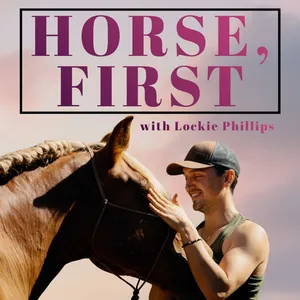
Yes, but let's put the horse first! Taking a clear, ethical stance on horsemanship without judgement. We are observant, humble, clear eyed, regulated and deeply respectful of our equine partners. This podcast is not:Not human self-help using horses as metaphorsNot romantic liberty training mythologyNot moral superiorityNot training evangelismThis podcast is:Deep listeningThoughtful questioningSlowing down human narrativesAllowing the horse to be the authorityJoin Lockie Phillips, the horseman behind Emotional Horsemanship, as we explore the inner world of the horse, the human systems that impact horses and building functional, ethical partnerships with horses where the horse is the authority on correctness. Guests from all around the world plus solo episodes to build connections based on truth telling, community and the joy of
Latest Episodes
The most recent episodes — sign up to get AI-powered summaries of each one.
- 1 weeks ago30 min
Can We Consent Our Way Out Of Training?
www.emotionalhorsemanship.com The horse world needed a serious conversation about consent. For generations, horses have been punished for refusing, pushed through fear and pain, and treated as though their experience did not matter. Learning to recognise dissent has been an important correction, but it cannot be the end of our thinking. A horse’s “no” can mean many things. It may mean pain, fear, confusion, fatigue, physical inability, lack of preparation or simply a preference for the easier option. Those possibilities require very different responses. If every hesitation is treated as a final withdrawal of consent, we may believe we are listening to the horse while avoiding the harder work of understanding them. In this episode of HORSE, FIRST, Lockie Phillips examines the limits of borrowing human consent language for horse training. He explores the difference between preference and welfare, discomfort and harm, coercion and manageable challenge. He also asks whether compassionate trainers can become so frightened of applying pressure that they leave horses underprepared for the unavoidable demands of life. Ethical training is not about ignoring refusal, nor is it about making every request disappear when a horse becomes uncertain. It is about allowing the horse’s response to change the conversation while the trainer remains responsible for its direction. Sometimes that means stopping, investigating pain or abandoning the plan. Sometimes it means changing the question, improving the preparation or helping the horse remain with a manageable difficulty long enough to find confidence on the other side. Agency must mean more than the ability to opt out. It should also include the ability to participate, attempt, recover, influence the process and develop genuine capability. You cannot consent your way out of training because consent language cannot tell you whether to pause or persist. It cannot determine whether a horse is frightened, confused, uncomfortable or simply meeting an appropriate challenge. Those decisions still require observation, judgement, empathy and skill. The most important question may not be whether the horse said yes or no. It may be whether the horse was heard, whether the human remained responsible, and whether the conversation left the horse with more capacity than they had before. Hosted by Simplecast, an AdsWizz company. See pcm.adswizz.com for information about our collection and use of personal data for advertising.
- 2 weeks ago1h 5m
The Horse Is a Trojan Horse
Discover Lockie's Work here: www.emotionalhorsemanship.com We come to horses thinking we're going to learn about horses. Then the horse becomes a Trojan horse. Through the simple, practical business of trying to understand another animal, we can find ourselves questioning much bigger things. How we relate to the land. What we consider intelligent. Where we believe consciousness resides. What illness means. What a body is. What it means to belong to an ecosystem rather than simply live on top of one. In this episode of Horse First, Lockie Phillips is joined by writer, poet and ecological thinker Sophie Strand for a conversation that wanders far beyond the boundaries of conventional horsemanship. Sophie writes at the intersection of ecology, mythology, spirituality, storytelling, illness and the more-than-human world. Her work asks us to reconsider the deeply human habit of placing ourselves at the centre of the story. And horses offer an extraordinary place to begin. For many of us, the horse is one of the first large, powerful, unmistakably other creatures with whom we attempt to build a genuine relationship. We cannot completely control that encounter. We cannot know exactly what the horse experiences. We have to pay attention to another nervous system, another body, another set of priorities, another way of perceiving the world. ABOUT SOPHIE STRAND Sophie Strand is a writer and poet whose work explores ecology, mythology, spirituality, embodiment and the more-than-human world. She is the author of The Flowering Wand: Rewilding the Sacred Masculine, The Madonna Secret, and The Body Is a Doorway. Website: https://sophiestrand.com/ Make Me Good Soil: https://sophiestrand.substack.com/ Instagram: @cosmogyny Hosted by Simplecast, an AdsWizz company. See pcm.adswizz.com for information about our collection and use of personal data for advertising.
- Aug 13, 202658 min
Too Much Turn Out? (With Michelle Knapp)
Can horses get too much of a "good" thing? In our effort to be ethical have we become blind to the stressors we place on a horses capacities when they live in perpetual turn-out? I wrote a difficult post that went viral online and this podcast I respond to the criticism and chat about the key themes at play in the episode. Joined by my mate Michelle Knapp, thanks Michelle! Hosted by Simplecast, an AdsWizz company. See pcm.adswizz.com for information about our collection and use of personal data for advertising.
- Aug 7, 20261h 27m
The Future Isn't Anti-Tradition (With Jillian Kreinbring, M.S.)
Explore more with Lockie HERE: www.emotionalhorsemanship.com In this episode of Horse First, Lockie Phillips is joined by horsewoman, educator, and movement specialist Jillian Kreinbring for a thoughtful conversation about the evolution of horsemanship. Together, they explore the importance of discernment in an age of endless information, asking not whether tradition is right or wrong, but how we decide what is worth preserving and what deserves thoughtful revision. Drawing on classical horsemanship, functional anatomy, modern science, and decades of practical experience, Jillian shares her perspective on the old masters, the lessons that continue to serve horses today, and the practices that may no longer withstand careful scrutiny. Throughout the conversation, Lockie and Jillian compare their own approaches, highlighting the places where they overlap, where they differ, and why respectful disagreement is one of the healthiest forces driving horsemanship forward. This is a conversation about curiosity over certainty, discernment over dogma, and the responsibility we all share to keep refining our craft in service of the horse. Because good horsemanship isn't about preserving the past unchanged. It's about carrying its wisdom forward with honesty, humility, and the courage to revise. Discover Jillian here: https://online.jilliankreinbringinspired.com/ Hosted by Simplecast, an AdsWizz company. See pcm.adswizz.com for information about our collection and use of personal data for advertising.
- Jul 30, 202636 min
Building Better Horses | Homecoming 4.0 and UK Clinic
A conversation about confidence, community, thoughtful training, and the next chapter of Emotional Horsemanship. From my first UK clinics to the launch of Homecoming 4.0, this episode explores why sequencing, training plans and purposeful practice are changing the way we develop horses—and ourselves. Hosted by Simplecast, an AdsWizz company. See pcm.adswizz.com for information about our collection and use of personal data for advertising.
- Jul 23, 202625 min
The Tap That Stayed With Me (Reading My New Book)
In this special episode of Horse First, Lockie Phillips reads a chapter from his forthcoming book exploring the origins of his professional objection to whips. Part memoir, part reflection on horsemanship, this chapter traces the early experiences that shaped his understanding of fear, power, violence, and the complicated relationship many horse people have with training tools. Far from being a discussion about equipment alone, this episode asks deeper questions about memory, conditioning, and the experiences that quietly shape our values long before we have language for them. How do our earliest encounters with fear influence the horse people we become? And what happens when we stop treating our reactions as weaknesses and start treating them as information? A personal and vulnerable reading from a book still in progress. Because sometimes understanding the horse begins with understanding ourselves. Hosted by Simplecast, an AdsWizz company. See pcm.adswizz.com for information about our collection and use of personal data for advertising.
- Jul 16, 20261h 24m
The End of Horse Ownership as We Know It (with Kim Hallin)
What kind of future are horse people building? And perhaps more importantly, what kind of future are we failing to imagine? In this episode of Horse First, Lockie Phillips sits down with horsewoman and thinker Kim Hallin for a conversation that moves far beyond training techniques and management systems. Together they explore the uncomfortable reality that many horse owners have more faith in euthanasia than in society's ability to care for their horses after they're gone. From there, the conversation opens into larger questions about stewardship, extraction, community, and the place of horses in a rapidly changing world. www.emotionalhorsemanship.com What happens if the economic and cultural systems that currently support horse ownership begin to change? What responsibilities do horse people have to imagine alternatives? And what might horses themselves have to teach us about cooperation, leadership, resilience, and shared living? This is not a conversation about answers. It's a conversation about asking better questions. Because if horse people cannot imagine a future worth leaving horses to, who will? Get to know Kim Hallin here: https://myunbridledlife.substack.com/ https://www.kimhallin.com/ Hosted by Simplecast, an AdsWizz company. See pcm.adswizz.com for information about our collection and use of personal data for advertising.
- Jul 9, 202614 min
Life First, Horsemanship Second
When a horse develops a behavioural problem, most of us reach for training. More lessons. More exercises. Better technique. A different method. But what if the horse isn't expressing a training problem at all? What if they're expressing a living problem? In this episode of Horse First, Lockie Phillips explores one of the most overlooked realities in modern horsemanship: horses spend far more time living in their management systems than they do being trained within them. From difficult-to-catch horses and separation anxiety to tension, explosiveness, and so-called laziness, Lockie examines how movement, forage, social contact, comfort, and predictability shape behaviour long before a trainer enters the picture. This is not an argument against training. It's an argument for looking at the whole horse. Because before we ask how to change a behaviour, it may be worth asking what problem that behaviour is solving for the horse. Sometimes the answer isn't a better technique. Sometimes it's a better life. And remarkably often, when the life improves, the behaviour follows. Hosted by Simplecast, an AdsWizz company. See pcm.adswizz.com for information about our collection and use of personal data for advertising.
About HORSE, FIRST - with Lockie Phillips
Yes, but let's put the horse first! Taking a clear, ethical stance on horsemanship without judgement. We are observant, humble, clear eyed, regulated and deeply respectful of our equine partners. This podcast is not:Not human self-help using horses as metaphorsNot romantic liberty training mythologyNot moral superiorityNot training evangelismThis podcast is:Deep listeningThoughtful questioningSlowing down human narrativesAllowing the horse to be the authorityJoin Lockie Phillips, the horseman behind Emotional Horsemanship, as we explore the inner world of the horse, the human systems that impact horses and building functional, ethical partnerships with horses where the horse is the authority on correctness. Guests from all around the world plus solo episodes to build connections based on truth telling, community and the joy of
Customized Recaps
AI-powered recaps with compact key takeaways, quotes, and insights.
Straight to Your Inbox
Get key takeaways from HORSE, FIRST - with Lockie Phillips in a 5-minute read.
Save Hours Every Week
Stay current on your favorite podcasts without falling behind.
Frequently Asked Questions
What is Podzilla's HORSE, FIRST - with Lockie Phillips daily summary?
It's a free AI-powered email that summarizes new episodes of HORSE, FIRST - with Lockie Phillips as soon as they're published. You get the key takeaways, notable quotes, and links & mentions — all in a quick read.
How does the HORSE, FIRST - with Lockie Phillips podcast summary work?
When a new episode drops, our AI transcribes and analyzes it, then generates a personalized summary tailored to your interests and profession. It's delivered to your inbox every morning.
Is this an official HORSE, FIRST - with Lockie Phillips product?
No. Podzilla is an independent service that summarizes publicly available podcast content. We're not affiliated with or endorsed by Lockie Phillips.
Can I get summaries of other podcasts too?
Absolutely! The free plan covers up to 3 podcasts. Upgrade to Pro for 15, or Premium for 50. Browse our full catalog at /podcasts.
How often does HORSE, FIRST - with Lockie Phillips release new episodes?
HORSE, FIRST - with Lockie Phillips publishes weekly. Our AI generates a summary within hours of each new episode.
What topics does HORSE, FIRST - with Lockie Phillips cover?
HORSE, FIRST - with Lockie Phillips covers topics including Leisure, Hobbies. Our AI identifies the specific themes in each episode and highlights what matters most to you.
Start getting HORSE, FIRST - with Lockie Phillips summaries tomorrow morning.
Free forever for up to 3 podcasts. No credit card required.
Free forever for up to 3 podcasts. No credit card required.