Free Daily Podcast Summary
History on Trial: Daily Summaries Delivered
by iHeartPodcasts
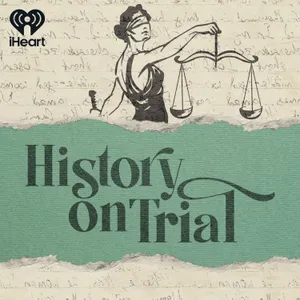
From the Salem Witch Trials to O.J. Simpson, trials have always revealed hidden truths about our world. History on Trial digs into famous legal battles from American history, uncovering the real story behind the headlines, and exploring the powerful cultural contexts that shaped the verdicts -- and still impact us today. Fans of true crime, legal dramas, and history alike will be captivated by the unbelievable cases that played out in the courtrooms of history. Hosted by Mira Hayward.
Latest Episodes
The most recent episodes — sign up to get AI-powered summaries of each one.
- Jan 23, 202552 min
The Salem Wizard Trial
In 1692, a witch hunt began in Salem Village. The hunt soon grew to shocking proportions, with more than 150 people accused. Even Salem's former minister, Reverend George Burroughs, wasn't safe: in April, he was named as a wizard. In the face of a terrified population and a government desperate for control, would Burroughs's ministerial status be enough to save him from the noose? ***This is the final episode of season 1 of History on Trial! To keep updated on the show, follow our Instagram @historyontrial and subscribe to our newsletter at www.historyontrialpodcast.com. See omnystudio.com/listener for privacy information.
- Jan 2, 202544 min
Charity's Crime
In 1854, a gruesome murder rocked the Oregon Territory. Charity Lamb stood accused of killing her husband, Nathaniel, with an axe. Newspapers called Charity a monster and speculated on her marriage. But there was more to the story. Would Nathaniel's history of physically abusing Charity convince jurors that she had acted in self-defense?See omnystudio.com/listener for privacy information.
- Dec 12, 202459 min
Horror in Honolulu: Part Two
It's 1932, and Thalia Massie's husband, Tommie, and mother, Grace, are getting frustrated with what they see as the failings of the Hawaiian justice system. Soon they decide to take matters into their own hands. When events take a deadly turn, will Tommie and Grace's connections help them evade punishment? Or will Hawai‘i itself suffer the consequences of these visitors' actions?See omnystudio.com/listener for privacy information.
- Dec 5, 202453 min
Horror in Honolulu: Part One
In 1931, Thalia Massie, a white woman, told Honolulu police that she had been raped by a group of Hawaiian men. Police quickly zeroed in on five young men who'd been involved in a fight earlier that night. But there was a problem: the suspects had ironclad alibis. In the face of a political establishment determined to get convictions for Thalia Massie’s rape, would the truth be a good enough defense?See omnystudio.com/listener for privacy information.
- Nov 21, 202457 min
Trial at the O.K. Corral
In 1881, the Earp brothers and Doc Holliday faced the Clantons and the McLaurys in the Old West's most famous showdown: the gunfight at the O.K. Corral. When the smoke cleared, three men lay dead. Some called it Western justice. But would Western justice suffice as a defense when one of the survivors took the Earps and Holliday to trial for murder?See omnystudio.com/listener for privacy information.
- Oct 31, 202455 min
The Poison Precedent: Part Two
It's 1900, and Roland Molineux's murder trial is coming to a close. The prosecution has used some unorthodox methods to prove their case. Will their tactics secure them a conviction? Or will the defense manage to argue their way out? What happens next will create a precedent that still matters today. See omnystudio.com/listener for privacy information.
- Oct 24, 202455 min
The Poison Precedent: Part One
In 1898, two fatal poisonings horrified New Yorkers. When it emerged that both victims were connected to one person, a wealthy young chemist named Roland Molineux, the police thought they had their man. But proving their suspicions was easier said than done, and convicting Molineux would require creativity on the part of the police and the district attorney. Would their legal tricks succeed...or get their case thrown out?See omnystudio.com/listener for privacy information.
- Oct 10, 202448 min
The Real Lincoln Lawyer
In 1859, Abraham Lincoln walked into a courtroom in Springfield, Illinois, ready to defend his client. No one knew it then, but this would be Lincoln's last murder trial; fourteen months later, he would be elected president. Lincoln's defense of 22-year-old Quinn Harrison, accused of killing another young man in a fight, highlights the future president's brilliance. But would Lincoln's legal skills be enough to free Quinn Harrison?See omnystudio.com/listener for privacy information.
Get History on Trial summaries in your inbox
Free AI-powered daily recaps. Key takeaways, quotes, and mentions — in a 5-minute read.
Get Free Summaries →Free forever for up to 3 podcasts. No credit card required.
You Might Also Like
Listeners also like.

The Trial: USA
Analyzes major criminal trials through court transcripts, interviews with investigators and experts, and detailed courtroom evidence breakdowns.
Court Junkie
Covers wrongful convictions and unsolved crimes by analyzing court documents, attending trials, and interviewing affected individuals.

The Trial: Australia
A deep dive into major Australian court cases, revealing evidence, key moments, and insights through interviews with insiders.

The Prosecutors
Two prosecutors analyze infamous cold cases, offering insider perspectives on true crime mysteries.
The Greatest True Crime Stories Ever Told
Anthology of complex true crime cases exploring female killers, justice, and societal forces through a psychological lens.

Juicy Crimes with Heather McDonald
Explores sensational true crime cases with a focus on greed, deception, and celebrity, blending humor and insight with guest experts.

America's Crime Lab
A weekly look at unsolved criminal cases sent to a specialized forensic lab for breakthrough analysis.

American History Tellers
Pivotal moments in American history are explored through narrative storytelling, revealing their impact on the nation and modern life.

Dark History
Reveals dark, overlooked historical events like tyrannical rulers and corporate crimes that were omitted from mainstream education.

Unsolved Murders: True Crime Stories
Dramatized true crime stories explore cold cases and unsolved murders through immersive audio storytelling.

True Crime Tonight
Five nights a week, a deep dive into true crime cases, celebrity scandals, and trials with analysis and listener discussions.

Law&Crime Sidebar
Daily legal news and true-crime stories analyzed in under twenty minutes.
About History on Trial
From the Salem Witch Trials to O.J. Simpson, trials have always revealed hidden truths about our world. History on Trial digs into famous legal battles from American history, uncovering the real story behind the headlines, and exploring the powerful cultural contexts that shaped the verdicts -- and still impact us today. Fans of true crime, legal dramas, and history alike will be captivated by the unbelievable cases that played out in the courtrooms of history. Hosted by Mira Hayward.
Customized Recaps
AI-powered recaps with compact key takeaways, quotes, and insights.
Straight to Your Inbox
Get key takeaways from History on Trial in a 5-minute read.
Save Hours Every Week
Stay current on your favorite podcasts without falling behind.
Frequently Asked Questions
What is Podzilla's History on Trial daily summary?
It's a free AI-powered email that summarizes new episodes of History on Trial as soon as they're published. You get the key takeaways, notable quotes, and links & mentions — all in a quick read.
How does the History on Trial podcast summary work?
When a new episode drops, our AI transcribes and analyzes it, then generates a personalized summary tailored to your interests and profession. It's delivered to your inbox every morning.
Is this an official History on Trial product?
No. Podzilla is an independent service that summarizes publicly available podcast content. We're not affiliated with or endorsed by iHeartPodcasts.
Can I get summaries of other podcasts too?
Absolutely! The free plan covers up to 3 podcasts. Upgrade to Pro for 15, or Premium for 50. Browse our full catalog at /podcasts.
How often does History on Trial release new episodes?
History on Trial publishes biweekly. Our AI generates a summary within hours of each new episode.
What topics does History on Trial cover?
History on Trial covers topics including History, True Crime. Our AI identifies the specific themes in each episode and highlights what matters most to you.
Start getting History on Trial summaries tomorrow morning.
Free forever for up to 3 podcasts. No credit card required.
Free forever for up to 3 podcasts. No credit card required.