Free Daily Podcast Summary
History Lessons for the Modern Investor Podcast: Daily Summaries Delivered
by Patrick Huey
Take a rollicking romp through the past and make an investment in your financial future with History Lessons for the Modern Investor. Patrick Huey is an investment advisor representative of Dynamic Wealth Advisors dba Victory Independent Planning, LLC. All investment advisory services are offered through Dynamic Wealth Advisors. Patrick Huey is the author of two books: "History Lessons for the Modern Investor" and "The Seven Pillars of (Financial) Wisdom"; this is considered an outside business activity for Patrick Huey and is separate and apart from his activities as an investment advisor representative with Dynamic Wealth Advisors. The material contained in these books are the current opinions of the author, Patrick Huey but not necessarily those of Dynamic Wealth Advisors. hl4tmi.substack.com
Latest Episodes
The most recent episodes — sign up to get AI-powered summaries of each one.
- 3 weeks ago19 min
💸5 Retirement Tax Strategies Your Advisor May Not Be Talking About
If you're retired—or within about five years of retirement—tax planning can be just as important as investment planning.In retirement, it isn't just about how much your portfolio earns. It's about how much you actually get to keep.In this episode of The Retirement Income Lab, Patrick Huey, CFP® breaks down 5 overlooked retirement tax strategies that could help you reduce lifetime taxes, manage future tax exposure, and keep more of your retirement income.These aren't gimmicks or loopholes. They're practical strategies for retirement planning that can be incorporated into a comprehensive retirement income plan.In this episode, you'll learn:1. Roth Conversions in the Retirement "Gap Years"The years between retirement and Required Minimum Distributions can create an important opportunity for strategic Roth conversions. We discuss how converting portions of a traditional IRA to a Roth IRA may help manage future RMDs, tax brackets, Social Security taxation, Medicare premiums, and even what your heirs ultimately inherit.2. Why Your Retirement Withdrawal Order MattersShould you spend your taxable accounts first? Your IRA? Your Roth IRA?There's no universal answer. A coordinated withdrawal strategy can use multiple account types to help manage your tax bracket over your retirement—not simply minimize taxes in one particular year.3. Qualified Charitable Distributions (QCDs)If you're charitably inclined and eligible, a Qualified Charitable Distribution from an IRA may provide an important tax-planning opportunity. We discuss how QCDs can interact with RMDs, taxable income, Social Security taxation, and Medicare premium surcharges.4. Asset Location vs. Asset AllocationMost investors understand asset allocation. Fewer pay attention to where their investments are held.Different account types receive different tax treatment. Thoughtful asset location may improve after-tax outcomes without requiring you to take additional investment risk.5. The Hidden Tax Cliffs in RetirementYour marginal tax bracket isn't the only thing to watch.Additional income can affect:Social Security taxationMedicare IRMAA premiumsCapital gainsRequired Minimum DistributionsFuture tax bracketsThe important question isn't just, "What tax bracket am I in?"It's also:"What happens if I recognize one more dollar of income?"The Bigger Retirement Planning LessonA retirement plan that simply says, "Take what you need and we'll deal with the taxes later," may be missing an important opportunity.A more coordinated strategy can potentially incorporate:• Roth conversions• Tax-efficient withdrawal sequencing• Qualified Charitable Distributions• Asset location• Social Security tax planning• Medicare IRMAA planning• RMD planning• Lifetime tax managementThe goal isn't to eliminate taxes.The goal is to avoid paying more taxes than necessary over the course of your retirement.Who Is This Episode For?This episode is especially relevant if you:Are within five years of retirementAre recently retiredHave significant traditional IRA or 401(k) assetsExpect substantial Required Minimum DistributionsAre considering Roth conversionsGive to charityAre concerned about Medicare IRMAAWant to coordinate Social Security and retirement withdrawalsWant to reduce your lifetime tax burdenWant a Second Opinion on Your Retirement Plan?The Retirement Income Lab Assessment can help identify potential Roth conversion windows, evaluate withdrawal sequencing, stress-test future tax exposure, and examine how your account structure affects your retirement paycheck.Schedule a Retirement Income Lab Assessment:👉 VictoryIndependentPlanning.com/contactI'm Patrick Huey, CFP®, fiduciary and owner of Victory Independent Planning. I work with high-saving professionals nationwide who are within about five years of retirement or recently retired.Subscribe to The Retirement Income Lab for practical conversations about retirement income planning, taxes, Social Security, Medicare, investing, and the decisions that can help you retire—and stay retired.Disclaimer: This video is for educational purposes only and is not individualized tax, legal, or investment advice. Tax laws and individual circumstances vary. Consult your qualified tax and legal professionals before implementing any strategy.#RetirementPlanning #RetirementTaxes #RothConversion #RetirementIncome #TaxPlanning #IRA #RMD #QCD #IRMAA #SocialSecurity #RetirementIncomePlanning #FinancialPlanning #RetirementStrategy #CFP #RetirementIncomeLab This is a public episode. If you would like to discuss this with other subscribers or get access to bonus episodes, visit hl4tmi.substack.com
- Jul 13, 202624 min
📉 Inflation Is Wrecking Your Retirement Plan | The Planning Mistake That Could Cost You Thousands
Most retirees worry about stock market crashes.But one of the biggest threats to your retirement isn't a bear market—it's inflation.Inflation quietly reduces your purchasing power every year. Even "normal" inflation can dramatically increase the amount of income you'll need over a 25- or 30-year retirement. And if your retirement plan still assumes inflation quickly returns to 2%, your plan may be built on unrealistic assumptions.In this episode of the Retirement Income Lab, Certified Financial Planner™ Patrick Huey explains:✅ Why inflation is one of retirement's biggest hidden risks✅ Why the idea that inflation is "transitory" has often been wrong throughout history✅ How inflation affects retirement income planning✅ Why your retirement paycheck needs to grow over time✅ Common retirement planning mistakes that leave retirees vulnerable✅ How much stock exposure retirees may still need✅ Why flexibility matters more than chasing returns✅ How to stress test your retirement plan against inflationIf you're within five years of retirement—or already retired—this episode will help you understand how to build a retirement income strategy designed to preserve purchasing power for decades.Schedule Your Retirement Income Lab AssessmentWondering whether your retirement plan is prepared for long-term inflation?Schedule a Retirement Income Lab Assessment:👉 https://victoryindependentplanning.com/contactWe'll help you evaluate:• Inflation assumptions• Withdrawal strategy• Tax-efficient retirement income• Investment allocation• Long-term purchasing powerSubscribe for Weekly Retirement Planning VideosNew episodes every week covering:• Retirement Income Planning• Roth Conversion Strategies• Retirement Taxes• Social Security• Medicare• Required Minimum Distributions (RMDs)• Safe Withdrawal Strategies• Retirement Investing• Inflation• Sequence of Returns Risk• Tax Planning• Estate PlanningChapters00:00 Inflation Is the Quiet Thief of Retirement02:10 Why Inflation Hurts Retirees More Than Workers05:20 The Dangerous "Transitory Inflation" Myth10:35 The Retirement Planning Mistake Most Advisors Miss15:30 Why Inflation Can Last Much Longer Than Expected20:15 Three Inflation Mistakes Retirees Make25:05 How to Build an Inflation-Resistant Retirement Income Plan30:40 Action Steps to Protect Your Retirement#RetirementPlanning #Inflation #RetirementIncome #FinancialPlanning #Retirement #RetirementInvesting #CFP #RothConversion #SocialSecurity #RetirementTaxes #RetirementStrategy #Investing #PersonalFinance #WealthManagement #RetirementIncomeLab This is a public episode. If you would like to discuss this with other subscribers or get access to bonus episodes, visit hl4tmi.substack.com
- Jun 29, 202618 min
💰I Have $2 Million in Retirement Savings — What’s the Best Retirement Paycheck Strategy?
You’ve saved $2 million for retirement.Now what?In this episode of The Retirement Income Lab, Patrick Huey, CFP®, answers one of the biggest questions high-saving professionals face:What is the best retirement paycheck strategy if you have $2 million in retirement savings?Because building the portfolio was only part of the job.In this video, we put a real-world retirement income scenario under the microscope and walk through how to turn $2 million into a retirement paycheck that can flex with markets without blowing up your plan.In this episode, you’ll learn:How much income a $2 million retirement portfolio may be able to support🎯Why a 4% withdrawal rate is a starting point, not a magic formula🎯How Social Security changes the amount your portfolio actually needs to provide🎯Why the best retirement paycheck strategy is usually flexible, not rigid🎯How inflation can quietly destroy purchasing power over a 20- to 30-year retirement🎯Why retirees still need some stock exposure to maintain or grow purchasing power🎯Why too much stock exposure at the wrong time can create sequence-of-returns risk🎯How a practical retirement income structure might use cash, bonds, and stocks together🎯Why discretionary spending flexibility can make a retirement plan more durable🎯How tax-aware withdrawals from IRAs, Roth accounts, and taxable accounts can improve retirement incomeThis episode includes a specific example:A retired couple, both age 65$2 million in retirement savings$60,000 per year in combined Social Security$140,000 per year in desired spending$80,000 needed from the portfolio in year oneThat means a 4% starting withdrawal rate.But the real question is not just “Can I take 4%?”It’s:Can I build a retirement paycheck that survives bad markets, inflation, taxes, and a long retirement?That’s what this episode is about.Why this mattersA lot of retirees make one of two mistakes:🙅🏽They get too conservative and let inflation eat away at their purchasing power🙅🏽Or they stay too aggressive and expose themselves to major damage if markets fall early in retirementThis episode explains why both risks matter — and why the best retirement paycheck strategy usually sits somewhere in the middle:Enough growth to fight inflation. Enough stability to survive bad years. Enough flexibility to adapt when real life does not cooperate.About The Retirement Income LabI’m Patrick Huey, CFP®, owner of Victory Independent Planning and host of The Retirement Income Lab.This channel is for high-saving professionals within about five years of retirement — or just into it — who want practical answers to questions like:Can I retire with what I’ve saved?How much can I safely withdraw in retirement?How much risk do I actually need?How do I build a retirement paycheck?What does inflation really do to retirees?How do I make better decisions with my IRA, Social Security, taxes, and investments?No hype. No stock tips. Just data, discipline, and decisions you can live with.Want a second opinion?If you have the savings but not a clear retirement paycheck strategy, schedule a Retirement Income Lab Assessment:https://victoryindependentplanning.com/contactIn your assessment, we can help you:Map your retirement income sourcesStress-test your withdrawal strategyIdentify where your plan is vulnerable to inflation or bad marketsEvaluate how much flexibility your spending really hasCoordinate retirement income with tax planningBuild a retirement paycheck strategy designed to lastTimestamps: 00:00 – I have $2 million in retirement savings… now what? 01:10 – What the best retirement paycheck strategy really has to solve 02:15 – Case study: retired couple with $2M and $140K spending 04:10 – Why a 4% withdrawal rate is not magic 05:10 – Why rigid retirement paychecks can be dangerous 06:10 – Inflation and why retirees still need stock exposure 08:00 – Sequence risk: why too much stock can hurt early in retirement 09:25 – A practical retirement paycheck structure using cash, bonds, and stocks 12:00 – Why “flex” matters in retirement income planning 13:45 – How tax-aware withdrawals improve retirement income 15:10 – What the best retirement paycheck strategy really looks like 16:20 – How to stress-test your own plan 17:15 – Next episode preview: inflation specialIf this video helped you:Like the videoSubscribe to The Retirement Income LabShare it with someone asking how to retire on $2 millionComment below: If you had $2 million saved, would your bigger concern be inflation, taxes, or market risk?#retirementofpartner #RetirementPlanning #RetirementIncome #RetireWith2Million #WithdrawalStrategy #4PercentRule #FinancialPlanning #RetirementPaycheck #Inflation #SequenceOfReturns #SocialSecurity #IRA #RothIRA #CFP #VictoryIndependentPlanning #RetirementIncomeLab This is a public episode. If you would like to discuss this with other subscribers or get access to bonus episodes, visit <a href="https://hl4tmi.substack.com?utm_medium=podcas
- Jun 17, 202623 min
😱 Why Your Financial Advisor Sucks (Or the System Does)
Schedule: www.victoryindependentplanning.com/contact Download the book: https://victoryindependentplanning.com/ (Click on “Download Free Retirement Guide.” Does your financial advisor really suck?Probably not.But the system many advisors work in just might.In this episode of The Retirement Income Lab, Patrick Huey, CFP®, breaks down why so many investors and retirees feel ignored, underserved, or overcharged by their financial advisor — even when that advisor seems like a perfectly decent person.The real problem is often the business model: too many clients, too little personalization, product-driven advice, and not enough proactive retirement planning.If you’re within 5 years of retirement, already retired, or paying around 1% for wealth management, this episode will help you ask a very important question:What am I actually getting for the fee I pay?In this video, you’ll learn:➡️Why your advisor may not be the problem — but the system they operate in is➡️How Dunbar’s number helps explain why advisors with hundreds of clients can’t truly know most of them well➡️Why more clients are not always better for the client➡️How wirehouses, broker-dealers, and even some large RIAs create pressure for growth over stewardship➡️The warning signs that your financial advisor may be giving you generic advice instead of real planning➡️What a healthy advisory relationship should look like➡️What value you should expect for a 1% advisory fee➡️Why investment management alone is not enough to justify what you pay➡️How tax planning, Roth conversions, Social Security timing, Medicare guidance, estate planning, and behavior coaching can create real advisor value➡️The key questions to ask your advisor about fees, fiduciary duty, service model, and client loadIf you’ve ever wondered:❓Is my financial advisor worth 1%?❓Am I getting real retirement planning or just investment management?❓How many clients is too many for one advisor?❓Should I get a second opinion on my retirement plan?I❓s my advisor really acting as a fiduciary?…this episode is for you.Why this matters:A retirement plan usually doesn’t fail because of one bad mutual fund.It fails because the relationship around the plan breaks down under stress.When markets fall, taxes change, healthcare costs rise, or retirement gets closer, you don’t need a product pitch. You need a steward who knows your situation, understands your goals, and can guide you through real decisions.That’s what this episode is about.About Patrick Huey and The Retirement Income LabI’m Patrick Huey, CFP®, owner of Victory Independent Planning and host of The Retirement Income Lab.This channel is for high-saving professionals within about five years of retirement — or just into it — who want clear answers to the questions that matter most:Can I retire?How much risk do I really need?How much of my IRA belongs to the IRS?What am I really getting from my advisor?How do I turn my portfolio into a paycheck I can actually live on?No hype. No stock tips. Just data, discipline, and decisions you can live with.Want a second opinion?If you’re not sure whether your current advisor relationship is delivering real value, or whether your retirement plan is built to hold up under pressure, schedule a Retirement Income Lab Assessment:https://victoryindependentplanning.com/contactIn your assessment, we can help you:Review your current retirement planEvaluate your advisor’s service modelAssess whether your advisory fee is justifiedIdentify gaps in tax, income, healthcare, and estate planningStress-test your retirement income strategyDetermine whether you’re getting stewardship or just generic adviceTimestamps: 00:00 – Does your advisor really suck? 01:05 – Why the real problem is often the system 02:00 – Dunbar’s number and too many client relationships 04:10 – How the wirehouse model created this problem 06:05 – Why the same issue is showing up in large RIAs 07:25 – Warning signs your advisor’s model is failing you 11:00 – What a healthier advisor relationship looks like 13:20 – What are you getting for the 1% you pay? 15:15 – Where real advisor value should come from 17:20 – Questions to ask your advisor right now 20:15 – Why retirement plans fail under stress 21:40 – When it’s time to get a second opinionIf this video helped you:Like the videoSubscribe to The Retirement Income LabShare it with someone who’s paying an advisor but wondering what they’re really gettingComment below: What do you expect from a financial advisor for 1%?#FinancialAdvisor #RetirementPlanning #RetirementIncome #Fiduciary #AdvisorFees #WealthManagement #FinancialPlanning #Retirement #CFP #RIA #RothConversions #SocialSecurity #MedicarePlanning
- Jun 5, 202616 min
📉 How Much Risk Do You Really Need in Retirement?
Risk Capacity vs Risk Tolerance. Are you taking too much risk with your retirement savings… or not enough?If you’re 5 years from retirement (or just into it), you’ve probably heard two opposite pieces of advice:“Play it safe. Move everything to cash or bonds.”“If you don’t stay aggressive, you’ll run out of money.”Both can be wrong.In this episode of The Retirement Income Lab with Patrick Huey, CFP®, we put retirement risk under the microscope and answer a better question:“How much risk do you actually need to reach your goals — and how much risk will just keep you up at night?”You’ll learn:• The 3 types of risk every retiree should understand:– Risk preference (how much risk you feel comfortable taking)– Risk capacity (how much risk you can actually afford based on your finances)– Portfolio risk (how much risk your investments are really taking)• Why “playing it safe” by moving everything to cash and short‑term bonds can quietly starve your plan over 20–30 years• Why staying too aggressive in your 60s can blow up a good retirement plan in a bad market• A real‑world case study (David & Karen, age 63, $1.8M saved) showing:– How their risk tolerance, risk capacity, and actual portfolio risk don’t match– How an 85% stock portfolio can be more aggressive than they realize– What a better‑aligned mix might look like (so they can still grow AND sleep at night)• Practical questions to ask yourself:– How did you react in past market drops (2008, 2018, 2020)?– What would you do if your portfolio fell 20% next year?– How flexible is your spending in a bad year?– How important is leaving money to kids, grandkids, or charity?If you’re a high‑saving professional heading into retirement, this episode will help you align the risk you feel, the risk you can afford, and the risk you’re actually taking — instead of guessing.👨💼 About The Retirement Income LabI’m Patrick Huey, CFP®, CAP®, MBA and owner of Victory Independent Planning. I work with high‑saving professionals nationwide who are within about 5 years of retirement or recently retired, helping them turn portfolios into paychecks they can actually live on.🔎 Want to find out if your risk level is really aligned with your retirement plan?Schedule a Retirement Income Lab Assessment:https://victoryindependentplanning.com/contactIn your Assessment, we’ll help you:• Clarify your retirement goals and spending needs• Measure your risk preference AND your true risk capacity• Analyze the real risk in your current portfolio• Test different investment mixes to see how they affect your income — and your ability to sleep at night⏱ Timestamps00:00 – Two bad pieces of advice about risk in retirement01:20 – The real question: how much risk do you actually need?02:10 – Risk preference vs risk capacity vs portfolio risk04:00 – Case study: David & Karen, age 63, $1.8M saved06:15 – Where their risk is out of alignment07:30 – How much return they really need to fund their plan09:00 – A more balanced, aligned risk level10:10 – Questions to find YOUR “sleep‑at‑night” risk level13:30 – Why aligned risk beats “more” or “less” risk15:00 – How to get your own Retirement Income Lab Assessment✅ If this video helped you:• Hit LIKE to let YouTube know it’s useful• SUBSCRIBE to The Retirement Income Lab for weekly retirement income case studies• COMMENT with your questions about risk in retirement, risk tolerance, or portfolio mixLIKE. SHARE. SUBSCRIBE.Give this video a thumbs up if you enjoyed watching.#retirement #retirementplanning #retirementincome #investing #risk #risktolerance #riskcapacity #financialplanning #CFP #retirees #retireearly #sequenceofreturns #portfolio #VictoryIndependentPlanning #RetirementIncomeLab This is a public episode. If you would like to discuss this with other subscribers or get access to bonus episodes, visit hl4tmi.substack.com
- May 29, 202620 min
How Much of Your IRA Really Belongs to the IRS?
If you have a large traditional IRA or 401(k), here’s the uncomfortable truth:Every dollar in that pre‑tax account is NOT really yours.You have a silent partner — the IRS — and you won’t know exactly how big their share is until you start taking withdrawals and Required Minimum Distributions (RMDs).In this episode of The Retirement Income Lab with Patrick Huey, CFP®, we put that relationship under the microscope and answer a key question:“How much of your IRA really belongs to you… and how much belongs to the IRS?”You’ll learn:• Why your traditional IRA or 401(k) balance is a BEFORE‑tax number, not a spendable number• How a $1,000,000 IRA might really be a 78/22 “partnership” between you and the IRS• The difference between pre‑tax, Roth, and taxable accounts — and how each is taxed in retirement• How two households with the same $1M balance can have very different after‑tax outcomes• The hidden danger of ignoring your IRA taxes until RMDs hit in your 70s• How RMDs can push you into higher tax brackets, increase taxes on Social Security, and raise Medicare premiums• Practical strategies to reduce the IRS’s share over time: – Roth conversions in your 60s– Smarter withdrawal order from pre‑tax, Roth, and taxable accounts– Using Qualified Charitable Distributions (QCDs) if you give to charity– Coordinating Social Security timing with RMDsIf you’re a high‑saving professional within about 5 years of retirement (or just into it), this episode will help you see your IRA the way the IRS does — so you can plan before the tax bill shows up.👨💼 About The Retirement Income LabI’m Patrick Huey, CFP®, CAP®, MBA and owner of Victory Independent Planning. I work with high‑saving professionals nationwide who are close to or recently in retirement, helping them turn portfolios into paychecks they can actually live on.🔎 Want to stress‑test your own IRA and RMDs?Schedule a Retirement Income Lab Assessment:https://victoryindependentplanning.com/contactIn your Assessment, we’ll help you:• Map your accounts by tax type: pre‑tax, Roth, and taxable• Estimate how much of your IRA is effectively pledged to future taxes• Project your required minimum distributions (RMDs)• Explore Roth conversions, withdrawal sequencing, and charitable tools to improve your after‑tax income⏱ Timestamps00:00 – The “silent partner” in your IRA: the IRS01:15 – Why your IRA balance is not all yours02:40 – Example: $1,000,000 IRA and the IRS’s share04:00 – Pre‑tax vs Roth vs taxable: how each is taxed06:10 – Two $1M households, very different after‑tax realities08:30 – The danger of waiting until RMDs to think about taxes10:30 – How RMDs can raise your tax bracket & Medicare premiums12:00 – Strategies to reduce the IRS’s share (Roth conversions, QCDs, withdrawal order)17:30 – Key questions to ask about your IRA and taxes19:00 – How to get your own Retirement Income Lab Assessment✅ If this video helped you:• Hit LIKE to let YouTube know it’s useful• SUBSCRIBE to The Retirement Income Lab for weekly retirement income case studies• COMMENT with your questions about IRA taxes, RMDs, or Roth conversionsLIKE. SHARE. SUBSCRIBE.Give this video a thumbs up if you enjoyed watching.#retirement #retirementplanning #retirementincome #IRA #401k #RMD #taxplanning #RothConversion #financialplanning #CFP #preTax #RothIRA #taxesinretirement #medicare #socialsecurity #VictoryIndependentPlanning #RetirementIncomeLab This is a public episode. If you would like to discuss this with other subscribers or get access to bonus episodes, visit hl4tmi.substack.com
- May 21, 202619 min
Can you really retire at 62 with $1.5 million… and stay retired?
Can you really retire at 62 with $1.5 million… and stay retired? In this episode of The Retirement Income Lab with Patrick Huey, CFP®, we put a real‑world scenario under the microscope. Our test couple, “Mark and Lisa,” are both 60, have saved $1.5M in their 401(k)s, IRAs, and brokerage accounts, and want to retire in just two years. They spend about $90,000 per year after taxes and are wondering the same thing you might be:• Is $1.5 million enough to retire comfortably?• What changes if we retire at 62 vs. 65?• How do health insurance and Medicare affect our retirement date?• What withdrawal rate is actually sustainable for a 30‑year retirement?In this video, you’ll learn:• How to estimate how much income you really need in retirement (after taxes).• Why retiring at 62 usually means higher health insurance costs until Medicare at 65—and why that’s a big deal.• How different withdrawal rates (3%, 4%, 4.5%+) impact a $1.5M portfolio.• How Social Security timing (claiming at 62 vs. later) changes your retirement income picture.• The risk of “sequence of returns” if markets drop early in retirement.• Why working just a few more years can dramatically improve your odds of retiring confidently.If you’re a high‑saving professional within about 5 years of retirement (or just into it), this kind of stress test is exactly what you should be doing before you pick a retirement date.👨💼 About The Retirement Income Lab I’m Patrick Huey, CFP®, and owner of Victory Independent Planning. I work with high‑saving professionals nationwide who are close to or have recently retired, helping them turn their portfolios into paychecks they can actually live on.🔎 Want to stress‑test your own retirement income plan? Schedule a VIP Retirement Income Lab Assessment:https://VictoryIndependentPlanning.com/contactWe’ll help you:• Map your real after‑tax spending needs• Compare retiring at 62 vs. 65 (and beyond)• Factor in health insurance costs before Medicare• Optimize Social Security timing• Evaluate whether your savings are enough to retire and stay retired⏱ Timestamps00:00 – Can you retire at 62 with $1.5M?01:05 – Meet Mark & Lisa: age 60, $1.5M saved02:40 – How much income they really need (after tax)04:00 – What different withdrawal rates look like on $1.5M05:00 – Scenario A: Retiring at 62 (and paying for health insurance)08:10 – The cost of retiring before Medicare at 6510:30 – Scenario B: Working to 65 and going straight onto Medicare13:00 – Social Security timing and lifetime income15:00 – Withdrawal rates, sequence risk, and confidence17:30 – Key takeaways for anyone near $1.5M18:30 – How to get your own Retirement Income Lab Assessment LIKE. SHARE. SUBSCRIBE.✅ If this video helped you:• Hit LIKE to let the algorithm know it’s useful• SUBSCRIBE to The Retirement Income Lab for weekly retirement income case studies• COMMENT with your questions about retiring at 62, health insurance before 65, or withdrawal ratesGive this video a thumbs up if you enjoyed watching.#retirement #retirementplanning #retireearly #retirementincome #financialplanning #CFP #retireat62 #401k #IRA #medicare #healthinsurance #socialsecurity #sequenceofreturns #withdrawalstrategy #VictoryIndependentPlanning #RetirementIncomeLab This is a public episode. If you would like to discuss this with other subscribers or get access to bonus episodes, visit hl4tmi.substack.com
- May 19, 20264 min
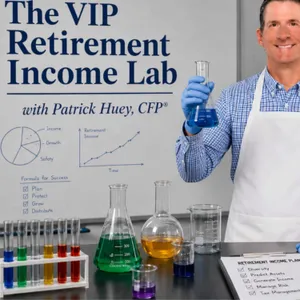
🧪 The VIP Retirement Income Lab |
Did you ever notice that saving for retirement and taking money out of your accounts in retirement feel like two completely different games? Most of Wall Street, the financial media, and even many advisors are still playing the first game.Welcome to The VIP Retirement Income Lab.In this channel, we’ll focus on the second game: how to turn your life’s savings into durable, tax‑aware, real‑world income that you can actually live on—without getting pushed around by the latest headline, hot stock tip, or screaming TV pundit.In this short Episode 0, you’ll learn:• What “Retirement Income Lab” really means (and why I chose the word Lab on purpose).• The disconnect between how investing is usually taught and how real retirees actually use money.• How history, behavioral finance, and practical planning experience all come together in this show.• What you can expect from future episodes: simple frameworks, real examples, and repeatable processes you can apply to your own situation.Who is this channel for?• Pre‑retirees and retirees who want a clear retirement income plan, not just a big pile of investments.• Thoughtful investors who like stories—from history, markets, and real client experiences—more than they like jargon.• People who suspect that “just pick better funds” is not a retirement strategy.About meI’m Patrick Huey, CFP®, CAP®, armchair historian and financial planner. I’ve spent years helping real families navigate the transition from earning a paycheck to living off their portfolios, and I wrote “History Lessons for the Modern Investor” to help people avoid the same old mistakes, dressed up in new clothes.This Lab is my way of opening up that process so you can see how thoughtful retirement income planning actually works.Work with me 1:1If you’re looking for a guide—not just more information—and you’d like help building or stress‑testing your own retirement income plan, I do work with clients and am currently accepting new ones.You can reach me here:www.victoryindepednentplanning.com/contactNext steps• If this sounds like the kind of perspective you’ve been missing, hit Subscribe and turn on notifications so you don’t miss future episodes.• Like this video if you’d like more content on retirement income planning.• Drop a comment with one question you have about turning your savings into a paycheck in retirement—your questions will help shape future episodes.#retirementincome #retirementplanning #investing #history This is a public episode. If you would like to discuss this with other subscribers or get access to bonus episodes, visit hl4tmi.substack.com
About History Lessons for the Modern Investor Podcast
Take a rollicking romp through the past and make an investment in your financial future with History Lessons for the Modern Investor. Patrick Huey is an investment advisor representative of Dynamic Wealth Advisors dba Victory Independent Planning, LLC. All investment advisory services are offered through Dynamic Wealth Advisors. Patrick Huey is the author of two books: "History Lessons for the Modern Investor" and "The Seven Pillars of (Financial) Wisdom"; this is considered an outside business activity for Patrick Huey and is separate and apart from his activities as an investment advisor representative with Dynamic Wealth Advisors. The material contained in these books are the current opinions of the author, Patrick Huey but not necessarily those of Dynamic Wealth Advisors. hl4tmi.substack.com
Customized Recaps
AI-powered recaps with compact key takeaways, quotes, and insights.
Straight to Your Inbox
Get key takeaways from History Lessons for the Modern Investor Podcast in a 5-minute read.
Save Hours Every Week
Stay current on your favorite podcasts without falling behind.
Frequently Asked Questions
What is Podzilla's History Lessons for the Modern Investor Podcast daily summary?
It's a free AI-powered email that summarizes new episodes of History Lessons for the Modern Investor Podcast as soon as they're published. You get the key takeaways, notable quotes, and links & mentions — all in a quick read.
How does the History Lessons for the Modern Investor Podcast podcast summary work?
When a new episode drops, our AI transcribes and analyzes it, then generates a personalized summary tailored to your interests and profession. It's delivered to your inbox every morning.
Is this an official History Lessons for the Modern Investor Podcast product?
No. Podzilla is an independent service that summarizes publicly available podcast content. We're not affiliated with or endorsed by Patrick Huey.
Can I get summaries of other podcasts too?
Absolutely! The free plan covers up to 3 podcasts. Upgrade to Pro for 15, or Premium for 50. Browse our full catalog at /podcasts.
What topics does History Lessons for the Modern Investor Podcast cover?
History Lessons for the Modern Investor Podcast covers topics including History, Business, Investing. Our AI identifies the specific themes in each episode and highlights what matters most to you.
Start getting History Lessons for the Modern Investor Podcast summaries tomorrow morning.
Free forever for up to 3 podcasts. No credit card required.
Free forever for up to 3 podcasts. No credit card required.