Free Daily Podcast Summary
High Stakes: Daily Summaries Delivered
by Paige Soya
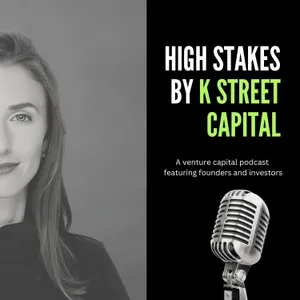
Join seasoned investors and successful start-up founders as they weigh in on topics and trends currently dominating the venture capital space. Each episode brings together a founder and an investor to provoke a deepened understanding of the topic at hand. If you want to learn about how early-stage venture capital investing works, this show is for you.
Latest Episodes
The most recent episodes — sign up to get AI-powered summaries of each one.
- Yesterday43 min
How VCs Think About PR for Startups | Paige Soya & Kate Meissner (Velocity Partners)
In this episode of High Stakes, K Street Capital Managing Partner Paige Soya continues the Venture Capital 101 season with a conversation about public relations (PR) for early-stage companies: when startups should invest in PR, how founders can build a compelling company narrative, and why the right media strategy can help accelerate business growth.She's joined by Kate Meissner, K Street investor and co-founder of Velocity Partners, a strategic communications firm working with venture-backed startups. Kate breaks down how founders should approach PR with limited resources, why publicity needs to start with clear business objectives, and how companies can identify the right moment to share their story with a broader audience.Paige and Kate explore how founders can develop a narrative that resonates with investors, customers, employees, and journalists. They discuss what makes a story newsworthy, why reporters prioritize their readers over the companies they're covering, and how founders can build relationships with journalists before their biggest announcements.The conversation also covers how AI is changing the media landscape, the rise of generative engine optimization (GEO), and why human relationships, credibility, and authentic communication may become even more valuable as more content becomes machine-generated. The episode closes with Kate's career journey, lessons from balancing entrepreneurship and family, and why founders should be selective about whose advice they follow.We dive intoWhat PR means for early-stage startups and why it mattersHow founders should approach PR with limited resourcesWhy publicity should start with clear business objectivesWhen startups are ready to invest in PR and media exposureHow founders can identify a compelling company narrativeWhy finding product-market fit can be a signal to amplify your storyHow PR can support fundraising, hiring, and customer acquisitionHow strategic product announcements can build momentum before a Series AWhy founders should build relationships with 5–8 key journalistsWhat makes a startup story compelling and newsworthy to reportersWhy journalists prioritize their readers rather than the companies they coverHow founders can establish credibility and permission to speak to the pressThe importance of understanding on-the-record and off-the-record conversationsHow traditional journalism and independent media are changingWhat Generative Engine Optimization (GEO) means for startupsWhy credible earned media can influence how AI platforms surface informationWhy human relationships and real-world credibility matter in an AI-driven worldWhy founders should be selective about whose advice they followChapters00:00 Intro: PR for Early-Stage Companies00:48 Welcome to High Stakes: Venture Capital 10101:35 Meet Kate Meissner & Velocity Partners02:18 Why Startups Struggle With PR04:19 The Story Behind Paige's First PR Experience04:49 What PR Actually Means for Startups06:47 When Is the Right Time to Invest in PR?09:13 Finding a Compelling Startup Narrative10:35 Turning Your Company Story Into a Bigger Market Narrative12:24 Why Startups Should Seek Strategic PR Advice Early13:11 Timing Your PR Strategy Around Business Milestones15:54 Building a PR Strategy Before You're Ready to Launch16:14 How PR Can Influence Startup Growth and Fundraising20:12 What Makes a Startup Story Newsworthy?21:01 What Journalists Actually Look for in a Story23:03 Building Credibility and Relationships With Journalists24:56 On-the-Record vs. Off-the-Record Conversations27:28 How the Media Landscape Is Changing29:13 AI, GEO & the Future of Startup PR34:00 Why Human Relationships and Social Proof Matter35:04 Kate's Career Journey Outside of PR38:31 Career Mistakes, Entrepreneurship & Family40:48 Why Founders Have More Capacity Than They Think41:07 The Best Advice: Don't Take Advice From People You Wouldn't Want to Become42:37 Final Thoughts on Entrepreneurship & Building a Co
- 3 weeks ago43 min
The 6 Unit Economics VCs Use to Evaluate Startups | Paige Soya, Nick Duafala & K Street Capital
In this episode of High Stakes, K Street Capital Managing Partner Paige Soya and Principal Nick Duafala continue the Venture Capital 101 season with a discussion about unit economics: how investors evaluate a company's financial performance, efficiency, and potential to scale.Joined by members of K Street Capital's investment team, Paige and Nick break down the key metrics the firm looks at when evaluating startups, particularly SaaS businesses, and explains why founders should understand their expected economics even before generating revenue.The conversation covers lifetime value to customer acquisition cost (LTV), gross margins, CAC payback period, churn, net revenue retention, and the efficiency of revenue growth. The team explains what healthy benchmarks can look like, why the direction of a metric matters just as much as its current value, and how founders can use these numbers to make better business decisions.They also explore how AI is changing traditional SaaS economics, why higher infrastructure costs can sometimes make sense when growth justifies them, and why investors need evidence before changing their benchmarks. The episode closes with a discussion about adapting to uncertainty, lessons from career mistakes, and the importance of communication and teamwork.We dive intoWhat unit economics mean and why VCs evaluate them at the seed stageWhy founders should model expected economics before generating revenueHow investors evaluate the LTV ratio and what a 3–5x ratio can indicateWhy SaaS businesses typically aim for 70–90% gross marginsHow business models influence gross margin expectationsWhy improving financial metrics can matter more than hitting a benchmark todayHow AI companies are challenging traditional SaaS margin expectationsWhat CAC payback period tells investors about customer acquisition efficiencyHow churn and net revenue retention affect customer lifetime valueWhy revenue growth needs to be evaluated alongside profitability and efficiencyHow investors think about burn rate and the efficiency of capital deploymentWhy founders should track unit economics even when they aren't raising moneyHow VCs decide whether traditional benchmarks still apply to AI businessesWhat a consulting project taught Joseph about communication, validation, and teamworkChapters00:00 Intro: Understanding Unit Economics00:50 Welcome to High Stakes: Venture Capital 10102:30 Why Unit Economics Matter Before You Have Revenue05:50 LTV:CAC: Measuring Customer Acquisition Efficiency09:20 Gross Margins: What VCs Look for in SaaS12:00 Revenue Growth, Margins & Business Model Trade-Offs14:00 Evaluating Margins in AI Companies16:55 CAC Payback Period: How Long to Recover Acquisition Costs19:30 Churn & Net Revenue Retention22:00 Revenue Efficiency & Predictability24:00 Burn Multiple & Capital Efficiency26:00 Evaluating Burn Rate and Startup Growth28:00 Why Financial Benchmarks Need Context29:00 AI Costs, Growth & the Future of Unit Economics30:00 Final Thoughts on Unit Economics32:00 Joseph's Side Projects Outside of Venture Capital35:55 Career Mistakes, Validation & Team Communication37:45 Closing ThoughtsTopics: Venture Capital • Unit Economics • SaaS Metrics • LTV • Customer Acquisition Cost • CAC Payback Period • Gross Margins • Net Revenue Retention • Customer Churn • Revenue Growth • Capital Efficiency • Burn Multiple • Startup Valuation • Seed-Stage Investing • AI Startups • Venture Capital 101
- Oct 2, 202635 min
Zero Churn, 90% Close Rate: The Customer Journey VCs Look For | Paige Soya & Mike Desai (CEO, Truentity Health)
In this episode of High Stakes, K Street Capital Managing Partner Paige Soya continues the Venture Capital 101 season with a conversation about the user journey: how products get sold, activated, and adopted, and why VCs pay close attention to it.She’s joined by Mike Desai, co-founder and CEO of Truentity Health, which gives independent pharmacies, many serving rural communities, the infrastructure to provide chronic care programs to their patients.Mike explains how Truentity’s sales process often takes just one or two calls and why he actively disqualifies customers who aren’t ready. He also walks through the 21-day onboarding process and “go live day” that help drive adoption and retention—and shares how he built founder-market fit without a pharmacy background.Paige and Mike discuss the work behind zero churn, why pricing needs to support a hands-on customer experience, and what founders can learn by spending time inside their customers’ businesses. The episode closes with the best advice Mike has received: people buy from people.We dive intoWhy VCs look closely at the customer journey when evaluating a businessHow Truentity uses cold calls and converts more than 90% of demos into contract requestsWhy qualifying customers includes knowing when they aren’t readyBuilding founder-market fit by starting with a services businessThe checklists, training, and on-site support behind Truentity’s 21-day go-live processHow dedicated Slack channels provide real-time customer supportWhy pricing and annual contract value need to support the customer experienceWhy every new hire attends a customer onboarding, regardless of roleMike’s early-morning routine, running, and lessons from working at eight startupsWhy human connection still matters in salesChapters00:00 Intro00:54 Welcome to High Stakes: VC 101 & the user journey01:38 Meet Mike Desai & Truentity Health04:09 Why the user journey matters to VCs05:00 Cold calling, customer qualification & a short sales cycle10:39 Building founder-market fit without a pharmacy background16:58 Onboarding, adoption & zero churn21:58 Real-time support & the economics of a high-touch experience24:42 Learning from customers in the field27:33 Mike’s morning routine & running29:24 Learning from failure31:34 Best advice: people buy from people33:32 Final thoughtsTopics: Venture Capital • Customer Journey • Founder-Market Fit • Customer Discovery • Sales • Customer Onboarding • Product Adoption • Customer Retention • Churn • Customer Success • Pricing • Healthcare Technology • Independent Pharmacies • Venture Capital 101
- Sep 17, 202639 min
How VCs Actually Think About Startup Valuations? | Paige Soya, Nick Duafala & K Street Capital
What actually determines what a startup is worth?In this episode of High Stakes, K Street Capital’s Paige Soya and Nick Duafala are joined by investment team members Joseph and Jose for a Venture Capital 101 breakdown of how VCs assess startup valuations and why it’s rarely as simple as founders might assume.The conversation begins with the core VC perspective: valuation isn’t based solely on what a company is worth today. Investors are also considering what it could be worth at exit, how long it may take to get there, and whether the potential return aligns with the fund’s strategy and portfolio construction.The team walks through valuations at each stage, from pre-seed and seed to Series A and growth, and explains how the criteria evolve. At the earliest stages, the focus is heavily on the founder, vision, and technology. As a company matures, product-market fit, comparable financings, revenue quality, customer diversification, margins, and scalability become increasingly important.Paige and Nick also unpack the terms beyond the headline valuation that can materially affect a deal, including warrants, liquidation preferences, board seats, and pro rata rights. They discuss what “founder-friendly” investing means in practice, how cap tables may be restructured during challenging markets, and what investors learned from the wave of recapitalizations that followed the 2022 market downturn.The conversation then gets granular about revenue multiples: how growth, churn, customer concentration, market size, and revenue quality can move a multiple up or down. The team closes by exploring the “founder premium” earned by proven repeat entrepreneurs, followed by a lightning round on the best advice each person has received.In this episode:How VCs assess startup valuationsWhy fund strategy and portfolio construction influence valuationWhat investors evaluate at the pre-seed, seed, Series A, and growth stagesTypical valuation ranges across funding stagesWhy K Street generally doesn’t lead Series A rounds—and how that affects its input on valuationHow warrants can lower an effective valuation without changing the headline priceHow liquidation preferences and payout waterfalls workHow board seats and pro rata rights factor into deal termsWhat “founder-friendly” investing means at K StreetWhy cap table recapitalizations became more common after the 2022 downturnHow investors build revenue multiples from an industry baselineHow growth, churn, revenue quality, and customer concentration affect a multipleWhat qualifies as “high growth” at the seed and Series A stagesWhy repeat entrepreneurs may command a “founder premium”The best advice each team member has receivedTopics: Venture Capital • Startup Valuations • Portfolio Construction • Pre-Seed Funding • Seed Funding • Series A • Growth-Stage Investing • Liquidation Preferences • Warrants • Board Seats • Pro Rata Rights • Revenue Multiples • Founder-Friendly Terms • Cap Table Recapitalizations • Customer Concentration • Founder Premium • Venture Capital 101
- Sep 11, 202649 min
What Makes a Business VC-Backable? | Paige Soya, Nick Duafala, & Jon Sherry (Alium, Ex-CB Insights)
What makes a business venture-backable?In this episode of High Stakes, K Street Capital’s Paige Soya and Nick Duafala sit down with Jonathan Sherry, founder and CEO of Alium and former co-founder of CB Insights, for a Venture Capital 101 discussion about the business models VCs evaluate and what makes them scalable, defensible, and fundable.The conversation covers the fundamentals of SaaS and marketplaces, what constitutes a true platform, and why founders should understand the distinction between a business model and a pricing model. Jonathan also shares how CB Insights and Alium have used subscription models, seat- and capability-based pricing, and marketplace dynamics to monetize their businesses.The group then explores one of the biggest shifts in technology: AI and the rise of usage-based and labor-replacement models. They discuss whether AI will fundamentally change SaaS, why customers increasingly want to experiment before committing to annual contracts, and what founders should understand about consumption, utilization, pricing, and ROI.The episode also examines what VCs look for beyond ARR, including customer concentration, ACVs, renewals, paid POCs, and evidence that a company has built a repeatable business model.Finally, the conversation turns to liquidity in venture capital. With companies remaining private longer and fewer pursuing IPOs, the group discusses M&A, secondary markets, alternative paths to liquidity, and why exits in the $100 million to $250 million range can be compelling outcomes for early-stage investors.In this episode:What makes a business model VC-backableWhy SaaS remains a compelling venture business modelHow marketplaces and platforms create defensibilityWhy a “platform” is not necessarily a business modelHow startups can evolve their business models as they growThe emerging “service as software” and labor-replacement modelHow AI is accelerating the shift toward usage-based pricingThe risks and opportunities of consumption-based modelsWhy customers increasingly want to experiment before committingWhat paid POCs reveal about the quality of a startup’s revenueWhy VCs evaluate customer concentration and diversificationWhat a strong seed-stage SaaS customer portfolio can look likeWhy founders shouldn’t confuse potential revenue with actual ARRHow VCs approach liquidity when companies remain private longerThe growing role of secondary marketsWhy $100 million to $250 million exits can be attractive outcomesJonathan’s biggest lesson from CB Insights: never give up a market leadWhy founders must keep moving forwardTopics: Venture Capital • VC-Backable Business Models • SaaS • AI Startups • Usage-Based Pricing • Marketplaces • Startup Fundraising • Revenue Quality • ARR • Go-to-Market • Venture Investing • Liquidity • Secondary Markets • Founder Advice
- Aug 20, 202641 min
Learn the Lingo VCs Actually Use | Paige Soya, Nick Duafala, & K Street Capital
For years, founders and investors have used terms like “fintech,” “SaaS,” and “platform” without always having a shared definition. But as venture firms rely more heavily on data to track deals, returns, and portfolio performance, getting that language right matters more than ever.In this episode of High Stakes, Paige Soya and Nick Duafala are joined by K Street Capital’s Joseph Whang and Jose Cifuentes for a Venture Capital 101 breakdown of how VCs classify the startups they evaluate.Using real-world examples from Salesforce, Airbnb, Facebook, and Auth0, the team walks through the eight categories that make up K Street’s internal deal taxonomy, why consistent classification matters, and how founders can use the same framework to better understand, and communicate, their businesses.In this episode:The eight categories we use to classify startupsWhy a company’s industry and its customer’s industry aren’t necessarily the sameHow B2B, B2C, B2G, and dual-use define customer typeWhy go-to-market motion—direct, enterprise, product-led, or channel—matters to investorsHow VCs think about business and revenue modelsThe difference between product type and technology category, and why AI increasingly cuts across bothWhat separates a true platform from a suite of products or servicesHow K Street uses AI internally to keep deal data consistent and comparableWhether you’re a founder refining your fundraising narrative or a new investor learning the language of venture capital, this episode is a practical guide to how VCs actually think about and categorize the companies they evaluate.Topics: Venture Capital • Startup Fundraising • Startup Taxonomy • Business Models • Go-to-Market Strategy • SaaS • Marketplaces • Venture Investing • Founder Advice • Startup StrategyTimestamps00:00 – Cold open: The data problem behind bad taxonomy00:58 – Welcome to High Stakes: VC 10102:04 – Meet the deal team: Joseph & Jose05:09 – The 8 categories of startup taxonomy05:50 – Category 1: Industry06:52 – Verticals within industries + the “customer industry” mistake11:27 – Category 2: Customer type (B2B/B2C/B2G) & market characteristics12:26 – Dual-use, government contracting & defense tech14:37 – Category 3: Go-to-market strategy19:19 – Category 4: Business model & revenue model21:44 – Can a services business be venture-backable?26:19 – Category 5: Product type28:16 – Category 6: Technology (AI, quantum, space & robotics)32:01 – How K Street uses AI internally for deal data36:11 – What makes something a true “platform”?38:03 – Rapid fire: Hidden talents, biggest mistakes & best advice41:01 – Final thoughts
- Aug 6, 202645 min
Go-to-Market Is the Moat | Paige Soya, Nick Duafala, and Mark Schacknies (NFTYDoor)
What actually creates a competitive moat?For years, founders believed the answer was simple: build a better product.Today, venture investors increasingly believe the answer is distribution.In this episode of High Stakes, Paige Soya and Nick Duafala are joined by Mark Schacknies, CEO & Co-Founder of NFTYDoor—a company K Street backed in its earliest stages after recognizing the strength of its distribution strategy. NFTYDoor went on to become one of the country's leading white-label HELOC platforms, serving 500+ lenders, 36,000+ mortgage loan officers, and approaching $7B in annual run-rate volume before its successful exit.Using NFTYDoor's journey as a case study, they explore why venture investors increasingly evaluate go-to-market execution alongside technical differentiation, how AI is reshaping startup defensibility, and what founders should focus on to build businesses competitors can't easily replicate.In this episode:What venture capitalists mean by a competitive moatWhy product-market fit comes before scalable distributionHow distribution becomes a durable competitive advantageThe role of network effects and switching costsWhy founders should understand—not avoid—the competitionHow focus creates defensibility in crowded marketsWhy customer discovery matters more than the perfect pitchPractical advice for founders raising venture capitalWhether you're building a startup, evaluating investment opportunities, or interested in how venture capitalists think about competitive advantage, this episode provides actionable insights into building durable businesses in the AI era.Topics: Venture Capital • Startup Fundraising • Competitive Moats • Startup Strategy • Product-Market Fit • Distribution Strategy • Network Effects • Switching Costs • Founder Advice • Go-to-Market Strategy • Startup Growth • Venture Investing
- Jul 23, 202652 min
How VCs Structure Venture Deals | Paige Soya, Nick Duafala & Scott Stern (Partner, Origin Ventures)
Not all venture deals are created equal, and understanding the fine print can make a significant difference for founders.In this episode of High Stakes, K Street Capital's Paige Soya and Nick Duafala are joined by Scott Stern, Partner at Origin Ventures, to break down how venture capital deals are actually structured. From SAFEs and convertible notes to priced equity rounds, founder vesting, liquidation preferences, pro rata rights, and anti-dilution provisions, they explain the terms that shape startup financings—and why they matter for both founders and investors.Along the way, the conversation explores common fundraising mistakes, why complicated cap tables can derail future financing rounds, and how founders can approach term sheet negotiations with greater confidence. Rather than simply defining venture terminology, this episode explains the reasoning behind the structures investors use and how those decisions can influence a company's long-term success.Whether you're raising your first round, investing in startups, or simply looking to better understand venture capital, this episode offers practical insights into one of the most important—and most misunderstood—aspects of startup fundraising.In this episode:The differences between SAFEs, convertible notes, and priced equity roundsHow valuation, dilution, and cap tables really workWhy founder vesting exists and what investors are protectingLiquidation preferences, option pools, and anti-dilution explainedPro rata rights and why investors negotiate for themCommon fundraising mistakes founders should avoidHow to approach your first venture capital term sheet with confidenceGuest:Scott Stern, Partner at Origin VenturesHosts:Paige Soya, Managing Partner, K Street CapitalNick Duafala, Senior Principal, K Street Capital
About High Stakes
Join seasoned investors and successful start-up founders as they weigh in on topics and trends currently dominating the venture capital space. Each episode brings together a founder and an investor to provoke a deepened understanding of the topic at hand. If you want to learn about how early-stage venture capital investing works, this show is for you.
Customized Recaps
AI-powered recaps with compact key takeaways, quotes, and insights.
Straight to Your Inbox
Get key takeaways from High Stakes in a 5-minute read.
Save Hours Every Week
Stay current on your favorite podcasts without falling behind.
Frequently Asked Questions
What is Podzilla's High Stakes daily summary?
It's a free AI-powered email that summarizes new episodes of High Stakes as soon as they're published. You get the key takeaways, notable quotes, and links & mentions — all in a quick read.
How does the High Stakes podcast summary work?
When a new episode drops, our AI transcribes and analyzes it, then generates a personalized summary tailored to your interests and profession. It's delivered to your inbox every morning.
Is this an official High Stakes product?
No. Podzilla is an independent service that summarizes publicly available podcast content. We're not affiliated with or endorsed by Paige Soya.
Can I get summaries of other podcasts too?
Absolutely! The free plan covers up to 3 podcasts, any in the catalog. Basic raises that to 15, Pro to 40 and Max to 100. Browse our full catalog at /podcasts.
How often does High Stakes release new episodes?
High Stakes publishes biweekly. Our AI generates a summary within hours of each new episode.
What topics does High Stakes cover?
High Stakes covers topics including Business, Entrepreneurship, Investing. Our AI identifies the specific themes in each episode and highlights what matters most to you.
Start getting High Stakes summaries tomorrow morning.
Free forever for up to 3 podcasts. No credit card required.
Free forever for up to 3 podcasts. No credit card required.