Free Daily Podcast Summary
HAZARD CLASS: Daily Summaries Delivered
by Jake Ryks
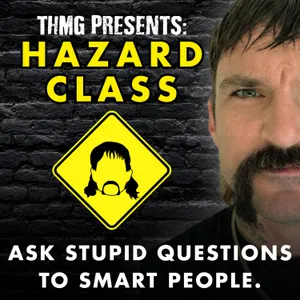
HAZARD CLASS is the podcast where the curiosity of genuine questions in and around the world of emergency services is met with the knowledge of leading experts in their fields.
Latest Episodes
The most recent episodes — sign up to get AI-powered summaries of each one.
- 2 days ago1h 3m
Are You Leading or Just in Charge? | Frank Viscuso | HC0092
What actually makes someone a great leader in the fire service? Is it experience, rank, confidence, or the ability to bring out the best in the people around them?In this episode of Hazard Class, Jake Ryks sits down with retired Deputy Chief, bestselling author, and nationally recognized leadership instructor Frank Viscuso for a candid conversation about leadership, humility, accountability, and what it really means to serve.Viscuso shares his unlikely journey into the fire service, from trying to outperform his older brother on the firefighter entrance exam to spending 27 years on the job and ultimately retiring as a deputy chief. Along the way, he reflects on the influence of his father, the importance of family, and the experiences that shaped his approach to leadership.Through powerful stories of life-saving rescues, operational mistakes, and lessons learned, Viscuso explains why storytelling can be more effective than simply teaching tactics. He and Ryks explore how departments can build cultures where firefighters are comfortable acknowledging mistakes, conducting meaningful after-action reviews, and learning from one another.The conversation also examines the challenges of promotion, the dangers of micromanagement, and why effective leaders must recognize that their way isn't always the only way. Viscuso challenges officers to focus on results, develop their people, and understand the difference between providing direction and unnecessarily controlling the process.Viscuso also shares how the events of September 11 inspired his writing career, the challenges of publishing his first book, and the leadership principles behind his newest novel, One Degree of Difference.Ultimately, this episode is a reminder that leadership isn't about being the smartest person in the room. It's about creating an environment where everyone has the opportunity to become better.Frank Viscuso is a retired Deputy Chief of the Kearny Fire Department in New Jersey, where he served for 27 years. A nationally recognized speaker, leadership instructor, and accomplished author of 15 books, Viscuso has become a prominent voice in fire service leadership and professional development.His books include Step Up and Lead, Flash Point, Common Valor, and his newest leadership novel, One Degree of Difference.Through his Step Up and Lead platform, books, and approximately 60 speaking engagements annually, Viscuso shares practical leadership principles focused on accountability, teamwork, personal development, and building high-performing organizations.THANK YOU TO OUR EPISODE SPONSORS!HAIX Bootshttps://www.haixusa.com/Rigaku Analytical Deviceshttps://rigaku.com/products/handheld-raman/products
- 1 weeks ago1h 41m
Stop Trying to Make Firefighters Care | Scott Hewlett | HC0091
What does it really mean to care about the job, and whose responsibility is it to make firefighters better?In this episode of Hazard Class, Jake Ryks sits down with Scott Hewlett, host of the Multiple Calls Podcast, for a candid conversation about firefighter training, leadership, accountability, mental health, and the pursuit of excellence.Drawing on 28 years in the fire service, Hewlett shares his journey from an aspiring pilot to a second-generation firefighter and explains how mentorship, humility, and a commitment to continuous improvement have shaped his career.The conversation takes a provocative turn when Hewlett challenges one of the fire service's most common training philosophies: the need to get firefighters to "buy in." He argues that instructors are responsible for making firefighters aware and able, but the willingness to improve must ultimately come from the individual.Ryks and Hewlett explore the battle between high-performing and disengaged firefighters, the importance of developing future leaders, and why departments must create cultures where admitting mistakes and learning from them become standard practice.They also examine the relationship between operational competence and mental health. Hewlett challenges the belief that firefighters must emotionally detach themselves from the people they serve, arguing that compassion and toughness can coexist and may help responders process traumatic experiences.The discussion concludes with a powerful examination of firefighter fitness, preparation, and the responsibility to be ready for the call that could define an entire career.This episode challenges firefighters, instructors, and officers to reconsider what professionalism, commitment, and service truly demand.Scott Hewlett is a second-generation firefighter, instructor, mentor, and host of the Multiple Calls Podcast, with 28 years of experience in the Canadian fire service.Throughout his career, Hewlett has been deeply involved in firefighter training, recruit development, mentorship, and mental health advocacy. His experience includes serving in the training division of Brampton Fire, teaching fire academy students, and helping lead a firefighter peer support team.Known for his emphasis on combining operational competence with compassion, Hewlett advocates for a fire service culture built on accountability, continuous learning, humility, and genuine care for others. Through his podcast, educational content, and instructional work, he encourages firefighters to pursue professional excellence while maintaining their humanity.Learn more at www.multiplecalls.com.Guest Biography: Scott Hewlett
- 2 weeks ago1h 7m
Who Is Minneapolis' New Fire Chief? Meet Dr. Reggie Freeman | HC0090
In this episode of Hazard Class, Jake Ryks sits down with newly appointed Minneapolis Fire Chief Dr. Reggie Freeman for a candid conversation about leadership, overcoming adversity, and his vision for the future of the Minneapolis Fire Department.Freeman shares his unconventional journey through the fire service, beginning with his early career in Mississippi, where financial struggles led him to accept a firefighting position in Iraq. He reflects on being thrust into leadership before he was ready, the mistakes he made as a young officer, and the experiences that fundamentally changed his approach to leading people.The conversation follows Freeman's career through leadership positions in Hartford, Oakland, and Saudi Arabia, including his efforts to restore organizational discipline and address longstanding public safety concerns. In a story he says he has never shared publicly, Freeman reveals how he was offered the position of Toronto Fire Chief, only to have the opportunity unravel over political concerns about appointing an American.Turning to Minneapolis, Freeman outlines the challenges facing the department, particularly inadequate staffing, firefighter health and safety, and the need to modernize emergency services. He discusses his proposed $15 million staffing expansion, his commitment to a "firefighter-first" philosophy, and his vision for expanding the fire department's role in EMS, behavioral health, and community services.Throughout the discussion, Freeman offers his perspective on transformational servant leadership, building trust with firefighters, navigating city politics, and making unpopular decisions without sacrificing integrity. He also reflects on the influence of fatherhood, personal faith, and the importance of mentorship.The conversation concludes with Freeman sharing what he hopes will define his legacy: being remembered as a servant leader who put firefighters first.Guest Bio:Dr. Reggie Freeman is the 19th Fire Chief of the Minneapolis Fire Department and an internationally experienced fire service leader whose career has included senior leadership positions across the United States and abroad.Freeman began his fire service career in Mississippi in 2001, developing a strong technical background in rescue operations, firefighting, and instruction. From 2004 to 2008, he served in Iraq, providing fire and emergency services in support of Department of Defense operations.His subsequent leadership positions included serving as Fire Chief for Lockheed Martin in Atlanta, Georgia, and leading the Hartford Fire Department in Connecticut and the Oakland Fire Department in California. He also served as an executive director of fire and emergency services operations in Saudi Arabia.Throughout his career, Freeman has developed a reputation for organizational improvement, accountability, and transformational servant leadership. As Minneapolis Fire Chief, his priorities include improving staffing, strengthening departmental operations, supporting firefighter health and wellness, and expanding the department's role in community public safety.A passionate advocate for mentorship and professional development, Freeman emphasizes transparent communication, consistent leadership, and his signature "firefighter-first" philosophy.THANK YOU TO OUR EPISODE SPONSORS!HAIX USA | Firefighter Boots & Emergency Services FootwearPremium structural firefighting boots, station boots, and footwear designed for fire, EMS, and emergency response professionals.https://www.haixusa.com/Rigaku Analytical Devices | Handheld Raman Chemical IdentificationAdvanced handheld Raman spectroscopy and chemical identification technology for hazardous materials response teams, law enforcement, and first responders.https://www.rigakuanalytical.com/
- 3 weeks ago1h 12m
Leadership Under Pressure: Lessons From 33 Years in the FDNY | Deputy Chief (Ret.) Thomas Dunne | HC0089
In this episode of Hazard Class, Jake Ryks sits down with retired FDNY Deputy Chief Thomas Dunne to reflect on his 33-year career with the New York City Fire Department, the experiences that shaped his approach to leadership, and the lessons learned from some of the most devastating emergencies in American history.Dunne begins with his unlikely entry into the fire service, initially planning to spend just one year as a firefighter. He recalls learning from FDNY veterans of New York City's infamous "War Years" and how their experience, confidence, and composure influenced his development as a firefighter and eventually an incident commander. The conversation examines the relationship between competence and confidence, whether people can learn to perform under extreme stress, and why good leaders must remain calm even when they are anything but.The discussion moves into several defining incidents from Dunne's career, including his response to the 1990 Happy Land Social Club fire, which claimed 87 lives, and an early firefighter rescue that fundamentally changed his understanding of the dangers of the job. He also shares an extraordinary story of how that rescue came full circle decades later.Dunne then recounts his experience on September 11, 2001, from hearing the initial FDNY radio transmissions and witnessing the collapse of the World Trade Center towers to supervising rescue and recovery operations at Ground Zero. He discusses the chaos of those first hours, the remarkable coordination that developed in the weeks that followed, the personal losses he continues to carry, and why he has returned to the memorial site only once.Throughout the conversation, Dunne explores the realities of fireground leadership, the responsibility of making decisions that affect other people's lives, and the uncomfortable truth that even good decisions cannot eliminate risk. Drawing on the principles behind his book, Pressure Proof: A Guide to Performing Under Stress, he explains why preparation, experience, and the ability to anticipate the unexpected are essential for anyone responsible for leading others through a crisis.Guest Bio:Thomas Dunne is a retired Deputy Chief and 33-year veteran of the Fire Department of New York (FDNY). Throughout his career, he served in Midtown Manhattan, the Bronx, and other areas of New York City, rising through the ranks of firefighter, lieutenant, captain, battalion chief, and deputy chief. He served as incident commander at hundreds of emergencies involving residential, commercial, and high-rise buildings.His career included responding to the 1990 Happy Land Social Club fire in the Bronx, where 87 people lost their lives, and supervising rescue and recovery operations at the World Trade Center following the September 11 terrorist attacks.Since retiring, Dunne has lectured nationally on incident command, decision-making, human behavior during disasters, and performing under stress. He has served as an adjunct instructor for the National Fire Academy and Kean University and has contributed numerous articles to Fire Engineering and other fire service publications.Dunne is the author of Notes from the Fireground: Memoir of a New York Firefighter, the novel A Moment in Time, and his latest book, Pressure Proof: A Guide to Performing Under Stress, released in March 2026.SPONSORS:Hiax USAhttps://www.hiaxusa.com/Rigaku Analytical Deviceshttps://www.rigakuanalytical.com/
- Oct 7, 20261h 8m
THE IBOGAINE DIARIES: Trauma, Healing & Starting Over | Dr. David Griffin | HC0088
In this deeply personal episode of Hazard Class, Jake Ryks sits down with Dr. David Griffin, retired assistant chief with the Charleston Fire Department and author of The Ibogaine Diaries, to talk about what happened after he walked away from the fire service and began rebuilding his life.Griffin traces the cumulative weight of nearly two decades of trauma, beginning with the 2007 Sofa Super Store fire that killed nine Charleston firefighters. He describes years of anger, depression, isolation, strained relationships, prescription medication, and the pressure of rising through the ranks while feeling increasingly disconnected from himself. After deciding to retire, Griffin traveled to Mexico for medically supervised ibogaine treatment, an experience he describes in vivid and sometimes brutal detail.The conversation follows the flood dose, booster doses, visions of the Charleston fire, and the difficult work of processing guilt and trauma. Griffin also emphasizes the integration that followed: therapy, meditation, prayer, rebuilding his marriage, reconnecting with family, and changing how he approaches work, identity, and purpose.This is a raw conversation about trauma, forgiveness, identity, relationships, and learning how to build a life you actually want to live.GUEST BIO:Dr. David Griffin is a retired assistant chief with the Charleston Fire Department, author, educator, speaker, and longtime fire service instructor. His career was profoundly shaped by the 2007 Sofa Super Store fire, where nine Charleston firefighters were killed. Griffin went on to serve as an engineer, captain, battalion chief, shift commander, and assistant chief while dedicating much of his career to teaching leadership and fire service operations.His newest book, The Ibogaine Diaries, documents his decision to retire, his experience undergoing ibogaine treatment in Mexico, and the personal work that followed. Today, Griffin continues to teach, speak, podcast, and share his story with a focus on trauma, mental health, leadership, family, authenticity, and personal growth.CONNECT WITH DR. DAVID GRIFFINDr. David Griffin:www.drdavidgriffin.comThe Ibogaine Diaries:The Ibogaine Diaries | Dr. David GriffinTHANK YOU TO OUR EPISODE SPONSORSHAIX USA:www.haixusa.comRigaku Analytical Devices:www.rigakuanalytical.com
- Sep 30, 202654 min
Free Speech, Retaliation, and the Cost of Integrity | Erik Holt Returns | HC0087
What happens when doing what you believe is right costs you your career, your home, your financial security, and years of your life?Erik Holt returns to Hazard Class for the next chapter in one of the wildest stories we’ve ever covered.In Episode 47, Erik told us how he went from Army veteran and career firefighter to fire chief of a struggling Colorado fire district. In a matter of months, he helped rebuild the department from only a handful of responders into a 60-plus-member combination department, dramatically improving staffing, EMS capability, and response times.Then came a fire district election, allegations of misconduct, security footage, a criminal investigation, and Erik’s sudden termination.And somehow, that was only the beginning.This time, Erik catches us up on everything that has happened since. We talk about his federal First Amendment case, his appeal to the Tenth Circuit Court of Appeals, newly uncovered evidence obtained through discovery, and his ongoing wrongful termination and breach-of-contract litigation in Colorado state court.But this episode is about more than court filings.Erik explains why he believes the oath taken by firefighters and public servants has to mean something, especially when honoring it becomes personally expensive. He talks about whistleblower protections, free speech, integrity, and the example he wants to leave for his daughters.We also discuss his new book, Free Speech, Retaliation, and the Cost of Integrity, which documents the fire department, the election controversy, the legal battles, and the personal consequences his family experienced along the way.If you heard Episode 47, this is the update you’ve been waiting for.If you didn’t, start there first.Because somehow, the Erik Holt story keeps getting crazier.Book Link: https://www.amazon.com/Free-Speech-Retaliation-Cost-Integrity/dp/B0H8K257B5/ref=mp_s_a_1_1?crid=TYJ2JB6V4A1J&dib=eyJ2IjoiMSJ9.ssxEwq1W9emmsURVM_TzuZt-nedUVr_RI2VGYVjw_WO3ymdJJliR1MZW3JJWTGIFiN88XqaioNjde1SQrLKMpw.JZcwmtnOOjIFrC_iGqrp3uHgPjxjPj3LK9iEuxCuiL0&dib_tag=se&keywords=free+speech+retaliation+and+the+cost+of+integrity&nsdOptOutParam=true&qid=1790717256&sprefix=free+speech+ret%2Caps%2C241&sr=8-1GoFundMe Link: https://www.gofundme.com/f/free-speech-retaliation-and-the-cost-of-integrityGiveSendGo Link: https://www.givesendgo.com/JusticeForHoltWebsite: www.justiceforholt.com Social Media:https://www.facebook.com/justiceforholt?mibextid=wwXIfrhttps://x.com/JusticeForHolthttps://www.tiktok.com/@justiceforholt?_t=ZP-8ylXnP9WaYY&_r=1YouTube: https://youtube.com/@justiceforholt?si=fHsg-0Phqqbp3dStTenth Circuit Decision: https://www.ca10.uscourts.gov/sites/ca10/files/opinions/010111463857.pdfOral argument recording:https://www.ca10.uscourts.gov/sites/ca10/files/oralarguments/25-1159.mp3HAIX USA: https://www.haixusa.com/Rigaku Analytical Devices: https://rigakuanalytical.com/
- Sep 23, 202649 min
(BONUS EPISODE) Tradition, Progress & Why the Fire Service Matters | Dennis LeGear | Peter Matthews | Ryan Provencher
In this special bonus episode of Hazard Class, Jake hits record during a late-night drive across Minnesota and lets the conversation go wherever the road takes it.Part solo episode, part road-trip journal, and part rapid-fire interview show, the episode moves through engine company operations, fire service culture, training, fitness, leadership, and the constant challenge of balancing tradition with progress. Jake reflects on the ongoing transition to low-pressure smoothbore operations, the role of the engine company in supporting search, and why simply getting the fire out is not a high enough standard. The real goal is creating searchable, survivable space and continually finding ways to make fireground operations faster, simpler, and more effective.Along the way, three friends join the ride..Dennis DeGear digs into pump operations, discharge pressures, gating, apparatus plumbing, and the concept of moving toward more standardized pump discharge pressures across different attack lines. The conversation gets deep into the practical realities of making modern hose and nozzle packages work from the pump panel to the nozzle.Peter Matthews, Editor-in-Chief of Firehouse Magazine, joins Jake for a conversation about the relationship between fire service history and innovation. They discuss why understanding where our practices came from is essential to knowing what should change, what should remain, and how lessons from incidents like Worcester and September 11 continue to influence the modern fire service.Ryan Provencher of Firefighter Peak Performance talks about maintaining firefighter fitness when life gets busy. Ryan explains the idea of "movement snacks," short, intentional periods of activity or exercise that can help firefighters continue training movement patterns, maintain conditioning, and stay physically prepared even when a traditional workout does not fit into the day...The episode ultimately lands on something bigger than hose, nozzles, fitness, or tactics: purpose.The fire service cannot improve simply for the sake of innovation, and it cannot preserve tradition simply because something has always been done a certain way. Training, studying, experimenting, and refining the craft matter because eventually someone will be depending on those skills when everything has gone wrong.Keep learning. Keep training. Keep pushing for better.It is not for us. It is for them.Dennis DeGearDennis DeGear is a nationally recognized fire service instructor and subject-matter expert in engine company operations, hose, nozzles, hydraulics, and water delivery. In this episode, Dennis joins Jake for a technical conversation about pump discharge pressures, apparatus plumbing, gating practices, and the possibilities created by designing hose and nozzle packages around more consistent operating pressures.Peter MatthewsPeter Matthews is the Editor-in-Chief of Firehouse Magazine. He joins the episode to discuss the importance of understanding fire service history while continuing to evolve operational practices, equipment, training, and technology. Peter reflects on lessons passed down through major incidents and generations of firefighters, and why meaningful progress depends on understanding how the fire service arrived where it is today.Ryan ProvencherRyan Provencher is the founder of Firefighter Peak Performance and a former fire service training officer with extensive experience developing fitness programs specifically for firefighters. In this episode, Ryan discusses practical ways firefighters can maintain strength, mobility, and conditioning during demanding periods of life, including the use of short, intentional "movement snacks" throughout the day.
- Sep 16, 20261h 32m
Lessons From a Lifetime in the FDNY | Batt. Chief (Ret.) Jerry Tracy | HC0086
Retired FDNY Battalion Chief Jerry Tracy joins Hazard Class for a wide-ranging conversation about fire service leadership, mentorship, training, professional standards, and the lessons learned over a lifetime in the New York City Fire Department.Tracy reflects on the firefighters and officers who shaped his career, the importance of staying humble and teachable, and why the fire service depends on each generation passing its knowledge to the next. He shares stories from busy FDNY engine and ladder companies, discusses the standards that defined companies like Ladder 108 and Ladder 4, and explains how experience, discipline, teamwork, and preparation create competent firefighters.The conversation also explores Tracy’s role in helping build FDNY Squad 18, including his decision to select legendary firefighter and instructor Andy Fredericks as one of the company’s original members. Tracy discusses Fredericks’ influence on firefighter training, the Back to Basics program, fireground credibility, and the importance of learning outside your own department or organization.Jerry and Jake also dig into fire service leadership and the relationship between firefighters and chief officers. They discuss firefighter safety, aggressive fire attack, decision-making, training, operational competence, leadership credibility, and why safety is often achieved through knowledge, repetition, discipline, and strong fundamentals rather than policy alone.Part FDNY history lesson and part kitchen-table firehouse conversation, this episode is packed with stories and lessons for firefighters, company officers, instructors, chief officers, and anyone interested in becoming more competent in the fire service.GUEST BIO:Jerry Tracy is a retired Battalion Chief of the New York City Fire Department and one of the fire service’s most respected voices on firefighting, training, leadership, and fireground operations.During his FDNY career, Tracy served in engine and ladder companies throughout New York City and later became the captain of FDNY Squad 18, one of the department’s newly formed Special Operations Command squad companies. While assembling the company, Tracy selected firefighters and officers based on their experience, professionalism, and ability to train across multiple disciplines, including legendary FDNY firefighter and instructor Andy Fredericks.Tracy was also involved in the development and delivery of FDNY training programs, including the department’s Back to Basics initiative, and has spent decades teaching firefighters about engine and truck company operations, fireground decision-making, leadership, professional standards, and operational readiness.Known for combining extensive fireground experience with a strong commitment to mentorship and firefighter education, Tracy continues to share the lessons, traditions, and hard-earned knowledge of the FDNY with firefighters across the country. His approach emphasizes competence, discipline, teamwork, preparation, and the responsibility experienced firefighters have to pass what they have learned to the next generation.THANK YOU TO OUR SPONSORS!HAIX Firefighting Boots:https://www.haixusa.com/Rigaku Analytical Devices:https://rigaku.com/
Get HAZARD CLASS summaries in your inbox
Free AI-powered daily recaps. Key takeaways, quotes, and mentions — in a 5-minute read.
Get Free Summaries →Free forever for up to 3 podcasts. No credit card required.
You Might Also Like
Listeners also like.
Better Every Shift
Firefighters discuss station life, personal growth, and challenges in the fire service with a focus on solutions and positivity.
FDNY Pro
Firefighters and EMS professionals share frontline experiences and insights from their work in emergency response.
Inside EMS
A long-running podcast exploring clinical care, leadership, and operational challenges in emergency medical services.

Cleared Hot - Powered By BRCC
A former military pilot shares stories of adventure, fitness, and leadership to explore resilience and personal growth.
The Debrief with Jon Becker
Leadership lessons from military and law enforcement commanders on teamwork, decision-making, and training in high-stakes environments.

Water Rescue with Dr. Michael Kachmar, DPM
Conversations with water rescue professionals about their real-world experiences, training, and operations in saving lives on the water.
The Jedburgh Podcast
Leaders and high performers from military, business, and athletics share strategies for elite performance, leadership, and personal growth.

The EMS Lounge
A casual podcast for firefighters and EMS workers discussing public safety topics without formal education or training focus.
The CopDoc Podcast: Aiming for Excellence in Leadership
Examines police leadership and innovation through interviews with experts focused on improving law enforcement and community relationships.
Flight Suit Friday
Coast Guard aviators share stories and insights about search and rescue missions and life in aviation.
Law Enforcement Talk: True Crime and Trauma Stories
Crime survivors, law enforcement, and first responders share true stories of trauma, investigations, and recovery.
ICU Ed and Todd-Cast
Eddie and Todd
About HAZARD CLASS
HAZARD CLASS is the podcast where the curiosity of genuine questions in and around the world of emergency services is met with the knowledge of leading experts in their fields.
Customized Recaps
AI-powered recaps with compact key takeaways, quotes, and insights.
Straight to Your Inbox
Get key takeaways from HAZARD CLASS in a 5-minute read.
Save Hours Every Week
Stay current on your favorite podcasts without falling behind.
Frequently Asked Questions
What is Podzilla's HAZARD CLASS daily summary?
It's a free AI-powered email that summarizes new episodes of HAZARD CLASS as soon as they're published. You get the key takeaways, notable quotes, and links & mentions — all in a quick read.
How does the HAZARD CLASS podcast summary work?
When a new episode drops, our AI transcribes and analyzes it, then generates a personalized summary tailored to your interests and profession. It's delivered to your inbox every morning.
Is this an official HAZARD CLASS product?
No. Podzilla is an independent service that summarizes publicly available podcast content. We're not affiliated with or endorsed by Jake Ryks.
Can I get summaries of other podcasts too?
Absolutely! The free plan covers up to 3 podcasts, any in the catalog. Basic raises that to 15, Pro to 40 and Max to 100. Browse our full catalog at /podcasts.
What topics does HAZARD CLASS cover?
HAZARD CLASS covers topics including Education, Self-Improvement. Our AI identifies the specific themes in each episode and highlights what matters most to you.
Start getting HAZARD CLASS summaries tomorrow morning.
Free forever for up to 3 podcasts. No credit card required.
Free forever for up to 3 podcasts. No credit card required.