Free Daily Podcast Summary
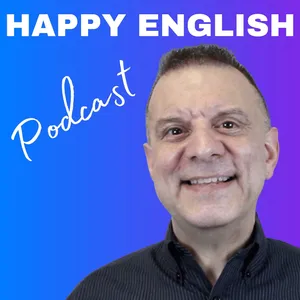
Happy English Podcast (Natural American English): Daily Summaries Delivered
by Michael Digiacomo Happy English
The Happy English Podcast helps English learners learn natural American English with clear lessons, practical phrases, everyday conversation tips, and listening practice. Hosted by American English teacher Michael DiGiacomo, the show features short and practical lessons to help you build vocabulary, improve pronunciation, and speak English confidently in real conversations. Episodes range from quick tips to longer explanations and cover useful topics like phrasal verbs, idioms, pronunciation, grammar, and natural conversation patterns used by native speakers. If you want to learn English, improve your American English pronunciation, practice English listening, and speak English more confidently in everyday conversation, the Happy English Podcast will help you step by step. Since 2014, the podcast has published over 1,000 episodes and reached more than 8 million downloads worldwide.
Latest Episodes
The most recent episodes — sign up to get AI-powered summaries of each one.
- 4 days ago8 min
1097 – Everyday Phrasal Verbs with “Off”
You know, I keep putting off cleaning the garage. They called off the game because of the rain. I’ll drop you off at the station. What time does your flight take off? My alarm went off at five. Off is one of those little words that shows up in a lot of phrasal verbs, and the meaning can change quite a bit depending on the verb. Have you been confused by expressions like put off, call off, drop off, take off, and go off? If so, you’re in luck - because today, we’re going to look at five useful phrasal verbs with off that you can use in everyday English.The Happy English PodcastHelping people speak English better since 2014Over 1,000 episodes • 8 million downloads📘 Get free weekly English lessons plus instant access to my FREE Vocabulary Workshop.:https://learn.myhappyenglish.com/free-english-lessons🎥 Watch video versions of the Happy English Podcast on YouTubehttps://www.youtube.com/@HappyEnglishNY/podcasts🌐 Learn more about my English lessons and courseshttps://www.myhappyenglish.com
- 1 weeks ago7 min
1096 – How to Use “At Least” Naturally
It’ll take at least an hour. At least nobody was hurt. You could at least say thank you. At least I tried. At least is a very common expression in everyday English, and we use it in several different ways. Sometimes it means the minimum amount. Sometimes it helps us look at the positive side of a bad situation. And sometimes we use at least to tell someone, hey! You could have done something! Have you ever wondered how you an use at least? If so, you’re in luck - because today, we’re going to look at all the ways you can use at least naturally in everyday English.The Happy English PodcastHelping people speak English better since 2014Over 1,000 episodes • 8 million downloads📘 Get free weekly English lessons plus instant access to my FREE Vocabulary Workshop.:https://learn.myhappyenglish.com/free-english-lessons🎥 Watch video versions of the Happy English Podcast on YouTubehttps://www.youtube.com/@HappyEnglishNY/podcasts🌐 Learn more about my English lessons and courseshttps://www.myhappyenglish.com
- 1 weeks ago8 min
1095 – How to Use “Pretty” in Everyday English
1095 – How to Use “Pretty” in Everyday EnglishIt’s pretty good. I’m pretty sure. That was pretty expensive. We’re pretty busy today. That’s pretty much it. Pretty is a very common word in everyday English, and I’m not talking about pretty meaning beautiful. In conversation, pretty often means something like fairly, quite, or rather, and we use it all the time to soften or adjust how strong an adjective sounds. Have you wondered about expressions like pretty good, pretty sure, or pretty much? If so, you’re in luck—because today, we’re going to look at how you can use pretty naturally in everyday English.The Happy English PodcastHelping people speak English better since 2014Over 1,000 episodes • 8 million downloads📘 Get free weekly English lessons plus instant access to my FREE Vocabulary Workshop.:https://learn.myhappyenglish.com/free-english-lessons🎥 Watch video versions of the Happy English Podcast on YouTubehttps://www.youtube.com/@HappyEnglishNY/podcasts🌐 Learn more about my English lessons and courseshttps://www.myhappyenglish.com
- 1 weeks ago8 min
1094 – How to Use “Thing” Naturally
The thing is, I’m busy tomorrow. Here’s the thing... That’s the thing. The funny thing is, I actually liked it. The good thing is, nobody was hurt. One thing I like about this neighborhood is how quiet it is. The word Thing is pretty basic word, but in daily English conversation, we use it in a lot of useful ways that go far beyond simply talking about an object. We use this word in phrases like the thing is, here’s the thing, that’s the thing, and, funny thing! So for today's English lesson podcast, we’re going to look at some very natural ways you can use the word thing in everyday English.The Happy English PodcastHelping people speak English better since 2014Over 1,000 episodes • 8 million downloads📘 Get free weekly English lessons plus instant access to my FREE Vocabulary Workshop.:https://learn.myhappyenglish.com/free-english-lessons🎥 Watch video versions of the Happy English Podcast on YouTubehttps://www.youtube.com/@HappyEnglishNY/podcasts🌐 Learn more about my English lessons and courseshttps://www.myhappyenglish.com
- 2 weeks ago7 min
1093 – How to Use “Anyway” Naturally
Anyway, what were you saying? Anyway, I should get going. I didn’t really want to go, but I went anyway. It was expensive, but I bought it anyway. Anyway is one of those very common conversational words that can do a few different jobs. Sometimes we use it to return to the main topic. Sometimes we use it to move a conversation forward or bring it to an end. And sometimes we use it to mean that something happened despite a reason for it not to happen. Have you ever wondered about the different ways we use anyway? If so, you’re in luck—because today, we’re going to look at all the ways you can use anyway naturally in everyday English.The Happy English PodcastHelping people speak English better since 2014Over 1,000 episodes • 8 million downloads📘 Get free weekly English lessons plus instant access to my FREE Vocabulary Workshop.:https://learn.myhappyenglish.com/free-english-lessons🎥 Watch video versions of the Happy English Podcast on YouTubehttps://www.youtube.com/@HappyEnglishNY/podcasts🌐 Learn more about my English lessons and courseshttps://www.myhappyenglish.com
- 2 weeks ago9 min
1092 – How to Use “Deal” in Everyday Conversation
That’s fair. That’s not fair. Fair enough. To be fair, he did warn us. Give her a fair chance. Let’s split it fairly. Fair is a common word in everyday English, but we use it in several different ways. Sometimes it means reasonable or acceptable. Sometimes it means treating people equally. And sometimes we use expressions like fair enough and to be fair to react to what someone says or add balance to a conversation. Have you been confused by these different uses of fair? If so, you’re in luck—because today, we’re going to look at how you can use fair naturally in everyday English.The Happy English PodcastHelping people speak English better since 2014Over 1,000 episodes • 8 million downloads📘 Get free weekly English lessons plus instant access to my FREE Vocabulary Workshop.:https://learn.myhappyenglish.com/free-english-lessons🎥 Watch video versions of the Happy English Podcast on YouTubehttps://www.youtube.com/@HappyEnglishNY/podcasts🌐 Learn more about my English lessons and courseshttps://www.myhappyenglish.com
- 3 weeks ago9 min
1091 – How to Use “Fair” and “Fair Enough”
That’s fair. That’s not fair. Fair enough. To be fair, he did warn us. Give her a fair chance. Let’s split it fairly. Fair is a common word in everyday English, but we use it in several different ways. Sometimes it means reasonable or acceptable. Sometimes it means treating people equally. And sometimes we use expressions like fair enough and to be fair to react to what someone says or add balance to a conversation. Have you been confused by these different uses of fair? If so, you’re in luck—because today, we’re going to look at how you can use fair naturally in everyday English.The Happy English PodcastHelping people speak English better since 2014Over 1,000 episodes • 8 million downloads📘 Get free weekly English lessons plus instant access to my FREE Vocabulary Workshop.:https://learn.myhappyenglish.com/free-english-lessons🎥 Watch video versions of the Happy English Podcast on YouTubehttps://www.youtube.com/@HappyEnglishNY/podcasts🌐 Learn more about my English lessons and courseshttps://www.myhappyenglish.com
- 4 weeks ago11 min
1090 – Six Everyday Ways to Use “Way”
I stopped at the store on the way home. By the way, did you call John? Either way, we need to decide today. No way! You won the tickets? This jacket is way too big. Way is a simple word, but it shows up in a lot of very natural everyday phrases. And in many of these expressions, the word way has very little to do with a road or direction. Have you been confused by expressions like by the way, either way, no way, and way too...? If so, you’re in luck—because today, we’re going to look at six everyday situations you can use way in conversational English.The Happy English PodcastHelping people speak English better since 2014Over 1,000 episodes • 8 million downloads📘 Get free weekly English lessons plus instant access to my FREE Vocabulary Workshop.:https://learn.myhappyenglish.com/free-english-lessons🎥 Watch video versions of the Happy English Podcast on YouTubehttps://www.youtube.com/@HappyEnglishNY/podcasts🌐 Learn more about my English lessons and courseshttps://www.myhappyenglish.com
Get Happy English Podcast (Natural American English) summaries in your inbox
Free AI-powered daily recaps. Key takeaways, quotes, and mentions — in a 5-minute read.
Get Free Summaries →Free forever for up to 3 podcasts. No credit card required.
You Might Also Like
Listeners also like.

All Ears English Podcast
Learn American English through conversations on idioms, culture, and daily life for intermediate to advanced learners.

American English Podcast
Learn American English through everyday expressions, pronunciation practice, and cultural insights from the United States.

Conversation & Pronunciation: Learn English with The Rachel's English Podcast
Learn natural English conversation and pronunciation through discussions on stress, rhythm, slang, idioms, and cultural nuances.
Learning English Conversations
Practical English phrases and conversational skills for everyday situations, with tips to overcome speaking anxiety.
Learning Easy English
Short, conversational English lessons on everyday topics with clear, natural speech and optional subtitles.

BBC英语教学
Learn English through authentic British expressions, cultural insights, and listening practice from BBC Learning English.
English in a Minute
BBC Radio

Japanese podcast for beginners (Nihongo con Teppei)
A Japanese language podcast for beginners that teaches natural, conversational Japanese in a fun and engaging way.
How to Spanish Podcast
Spanish lessons and cultural discussions delivered in a natural Mexican accent to improve listening skills.
Learning English For Work
Practical English lessons focused on workplace communication, from emails to job applications and office jargon.
6 Minute English
Learn practical English vocabulary and phrases through short, topical discussions using real BBC audio clips.

Dreaming Spanish Podcast – Chats in Beginner Spanish
Real conversations in slow, simple Spanish help beginners build vocabulary and listening skills through everyday topics.
About Happy English Podcast (Natural American English)
The Happy English Podcast helps English learners learn natural American English with clear lessons, practical phrases, everyday conversation tips, and listening practice. Hosted by American English teacher Michael DiGiacomo, the show features short and practical lessons to help you build vocabulary, improve pronunciation, and speak English confidently in real conversations. Episodes range from quick tips to longer explanations and cover useful topics like phrasal verbs, idioms, pronunciation, grammar, and natural conversation patterns used by native speakers. If you want to learn English, improve your American English pronunciation, practice English listening, and speak English more confidently in everyday conversation, the Happy English Podcast will help you step by step. Since 2014, the podcast has published over 1,000 episodes and reached more than 8 million downloads worldwide.
Customized Recaps
AI-powered recaps with compact key takeaways, quotes, and insights.
Straight to Your Inbox
Get key takeaways from Happy English Podcast (Natural American English) in a 5-minute read.
Save Hours Every Week
Stay current on your favorite podcasts without falling behind.
Frequently Asked Questions
What is Podzilla's Happy English Podcast (Natural American English) daily summary?
It's a free AI-powered email that summarizes new episodes of Happy English Podcast (Natural American English) as soon as they're published. You get the key takeaways, notable quotes, and links & mentions — all in a quick read.
How does the Happy English Podcast (Natural American English) podcast summary work?
When a new episode drops, our AI transcribes and analyzes it, then generates a personalized summary tailored to your interests and profession. It's delivered to your inbox every morning.
Is this an official Happy English Podcast (Natural American English) product?
No. Podzilla is an independent service that summarizes publicly available podcast content. We're not affiliated with or endorsed by Michael Digiacomo Happy English.
Can I get summaries of other podcasts too?
Absolutely! The free plan covers up to 3 podcasts. Upgrade to Pro for 15, or Premium for 50. Browse our full catalog at /podcasts.
How often does Happy English Podcast (Natural American English) release new episodes?
Happy English Podcast (Natural American English) publishes 2x weekly. Our AI generates a summary within hours of each new episode.
What topics does Happy English Podcast (Natural American English) cover?
Happy English Podcast (Natural American English) covers topics including Education, Learning, How To, Language Learning. Our AI identifies the specific themes in each episode and highlights what matters most to you.
Start getting Happy English Podcast (Natural American English) summaries tomorrow morning.
Free forever for up to 3 podcasts. No credit card required.
Free forever for up to 3 podcasts. No credit card required.