Free Daily Podcast Summary
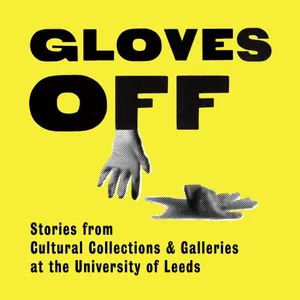
Gloves Off: Stories from Cultural Collections & Galleries at the University of Leeds: Daily Summaries Delivered
by University of Leeds Cultural Collections & Galleries
Documentaries, panel discussions, interviews with artists and writers and more from Cultural Collections & Galleries at the University of Leeds.
Latest Episodes
The most recent episodes — sign up to get AI-powered summaries of each one.
- 5 days ago53 min
Death of a Poet Episode III: The Summer of his Life
The Bingley Byron is the toast of the Bradford arts scene, but trouble’s brewing as he sets out his stall as an establishment rhymer. And back in the present, a descendant of the poet meets his likeness at the University of Leeds. Also known as The Orpheus of Bradford and The Airedale Poet, John Nicholson was a Methodist preacher and a tormented drinker, a rambler on Rombald’s Moor and a champion of industry, a conservative and a radical, a woolsorter and a classically-inclined poet. He got arrested in London for arguing with a bust of Shakespeare; became a pawn in one of the great political scraps of the 19th century; played the oboe; fathered nine children; and ad-libbed untold quantities of rhyme for his pals in the pub, most of which has been lost to intoxication and the passage of time. In 1993 Northern Broadsides legend Barrie Rutter brought him back to life on the stage in Tony Harrison’s play Poetry or Bust. We’ve used Harrison’s archive, held here in Cultural Collections at the University of Leeds, to retrace his steps, in the steps, in turn, of John Nicholson. Only a brief biography on The Bingley Byron survives, but we’ve gathered a cast of poets, actors, artists, bellringers, historians, enthusiasts – and a direct descendant – to return to the poems that Nicholson did write down, and the places where he lived and died, to unearth his chaotic, charismatic story. Through his life and work, we think about art, joy, memory, grief, and what we leave behind us. From the meadow pipits, skylarks and standing stones of Ilkley Moor to the river at Saltaire where he met his end, join us in the footsteps of The Bingley Byron. Series credits Presented by Dr RJ Wade with Paul Bennett Dr Adam Bridgen Dr Vic Clarke Felix Cryer Alex Duxbury Tom Duxbury Karl Grave Allan Mirfield Conrad Nelson Hadley Nicholson Sarah Prescott Catherine Robinson Elaine Robinson Harold Robinson Barrie Rutter Siân Thomas Dom Basil Watkins OSB Glyn Watkins Professor John Whale The Bellringers of All Saints Church, Bingley Jane Callaghan Ann Cossavella Karl Grave Jane Lynch Helen Mitchell-Hall Mary Picken Gary Picken Peter Tedder Hydrophone recordings made on location in the River Aire, Saltaire by Daniel Skevington Produced and edited by Rowland Thomas Music The Farmer’s Boy (Traditional) Air: ‘O, much lov'd Son, if Death’, from Artaxerxes (Thomas Arne) Arranged and performed by Alice Gilmour and The Infernal Cauldron Sound design by The Infernal Cauldron Trailer edit by Alex Ramseyer-Bache. Wildlife footage by Tom Duxbury.
- 1 weeks ago37 min
Death of a Poet Episode II: Life is Wasting, Death is Hasting
Grief pulls John Nicholson back to his family’s devout Methodism – for now – as The Bingley Byron turns the loss of his young bride into art that retains the power to console the bereaved. Also known as The Orpheus of Bradford and The Airedale Poet, John Nicholson was a Methodist preacher and a tormented drinker, a rambler on Rombald’s Moor and a champion of industry, a conservative and a radical, a woolsorter and a classically-inclined poet. He got arrested in London for arguing with a bust of Shakespeare; became a pawn in one of the great political scraps of the 19th century; played the oboe; fathered nine children; and ad-libbed untold quantities of rhyme for his pals in the pub, most of which has been lost to intoxication and the passage of time. In 1993 Northern Broadsides legend Barrie Rutter brought him back to life on the stage in Tony Harrison’s play Poetry or Bust. We’ve used Harrison’s archive, held here in Cultural Collections at the University of Leeds, to retrace his steps, in the steps, in turn, of John Nicholson. Only a brief biography on The Bingley Byron survives, but we’ve gathered a cast of poets, actors, artists, bellringers, historians, enthusiasts – and a direct descendant – to return to the poems that Nicholson did write down, and the places where he lived and died, to unearth his chaotic, charismatic story. Through his life and work, we think about art, joy, memory, grief, and what we leave behind us. From the meadow pipits, skylarks and standing stones of Ilkley Moor to the river at Saltaire where he met his end, join us in the footsteps of The Bingley Byron. Series credits Presented by Dr RJ Wade with Paul Bennett Dr Adam Bridgen Dr Vic Clarke Felix Cryer Alex Duxbury Tom Duxbury Karl Grave Allan Mirfield Conrad Nelson Hadley Nicholson Sarah Prescott Catherine Robinson Elaine Robinson Harold Robinson Barrie Rutter Siân Thomas Dom Basil Watkins OSB Glyn Watkins Professor John Whale The Bellringers of All Saints Church, Bingley Jane Callaghan Ann Cossavella Karl Grave Jane Lynch Helen Mitchell-Hall Mary Picken Gary Picken Peter Tedder Hydrophone recordings made on location in the River Aire, Saltaire by Daniel Skevington Produced and edited by Rowland Thomas Music The Farmer’s Boy (Traditional) Air: ‘O, much lov'd Son, if Death’, from Artaxerxes (Thomas Arne) Arranged and performed by Alice Gilmour and The Infernal Cauldron Sound design by The Infernal Cauldron Trailer edit by Alex Ramseyer-Bache. Wildlife footage by Tom Duxbury.
- 2 weeks ago48 min
Death of a Poet Episode I: Birth of a Poet
Also known as The Orpheus of Bradford and The Airedale Poet, John Nicholson was a Methodist preacher and a tormented drinker, a rambler on Rombald’s Moor and a champion of industry, a conservative and a radical, a woolsorter and a classically-inclined poet. He got arrested in London for arguing with a bust of Shakespeare; became a pawn in one of the great political scraps of the 19th century; played the oboe; fathered nine children; and ad-libbed untold quantities of rhyme for his pals in the pub, most of which has been lost to intoxication and the passage of time. In 1993 Northern Broadsides legend Barrie Rutter brought him back to life on the stage in Tony Harrison’s play Poetry or Bust. We’ve used Harrison’s archive, held here in Cultural Collections at the University of Leeds, to retrace his steps, in the steps, in turn, of John Nicholson. Only a brief biography on The Bingley Byron survives, but we’ve gathered a cast of poets, actors, artists, bellringers, historians, enthusiasts – and a direct descendant – to return to the poems that Nicholson did write down, and the places where he lived and died, to unearth his chaotic, charismatic story. Through his life and work, we think about art, joy, memory, grief, and what we leave behind us. From the meadow pipits, skylarks and standing stones of Ilkley Moor to the river at Saltaire where he met his end, join us in the footsteps of The Bingley Byron. Series credits Presented by Dr RJ Wade with Paul Bennett Dr Adam Bridgen Dr Vic Clarke Felix Cryer Alex Duxbury Tom Duxbury Karl Grave Allan Mirfield Conrad Nelson Hadley Nicholson Sarah Prescott Catherine Robinson Elaine Robinson Harold Robinson Barrie Rutter Siân Thomas Dom Basil Watkins OSB Glyn Watkins Professor John Whale The Bellringers of All Saints Church, Bingley Jane Callaghan Ann Cossavella Karl Grave Jane Lynch Helen Mitchell-Hall Mary Picken Gary Picken Peter Tedder Hydrophone recordings made on location in the River Aire, Saltaire by Daniel Skevington Produced and edited by Rowland Thomas Music The Farmer’s Boy (Traditional) Air: ‘O, much lov'd Son, if Death’, from Artaxerxes (Thomas Arne) Arranged and performed by Alice Gilmour and The Infernal Cauldron Sound design by The Infernal Cauldron Trailer edit by Alex Ramseyer-Bache. Wildlife footage by Tom Duxbury.
- Jul 16, 20261h 2m
Contemporary Conversations: AI and the Creative Industries – Brace or Embrace?
“I think there’s never been a more exciting time to be a human being…” In this special instalment of Contemporary Conversations, produced in partnership with the Cultural Institute, we explore the rapid rise of artificial intelligence (AI) and the urgent questions the technology is raising about skills, ethics, the future of work and what it means to be creative. Writer and broadcaster Nick Ahad chairs a panel of AI specialists: Omar Karim, AI Creative Director and filmmaker, Digital Strategist Katie Moffat, and Dr Dibyadyuti Roy, Associate Professor in Cultural Studies, Media Studies and Digital Humanities in the School of Fine Art, History of Art and Cultural Studies at the University of Leeds, discuss the opportunities and the threats that AI presents for the creative industries. They underscore the importance of demystifying the technology behind large language models – and recognising its limitations. They ask whether it’s possible to use AI ethically, and how the disproportionately negative effects of its expansion on the Global South might be addressed. Who controls the pace of its evolution? What can we expect to see in the coming months and years? How can we keep human judgement and imagination at the centre of creative practice? Produced by University of Leeds Galleries & Cultural Collections in partnership with the Cultural Institute. Recorded in HELIX at the University of Leeds, 18 March 2026.
- Jul 8, 202652 min
Curating Class 5: Them & [uz]
How does the art world invite, or restrict, the expression of working-class identity? What are the advantages and disadvantages of being a “fugitive” from the mainstream? How might you make art outside “the system”? The final instalment of our Curating Class series is a live recording of a panel discussion featuring six of the artists who exhibited in ‘[uz], [uz], [uz]: Artists from Working-Class Backgrounds’ in The Stanley & Audrey Burton Gallery. Curator Dr Laura Claveria chairs a panel comprising Simeon Barclay, Kedisha Coakley, Will Hughes, Sam Metz, Beth Smith and Bethany Stead. They tell us how they came to art and how class has shaped and informed their lives and work; how it’s dealt with or subverted in their art - if at all. They speak from experience about how class intersects with race, culture, queerness and neurodivergence. Co-produced by University of Leeds Cultural Collections & Galleries and the Working-Class British Art Network. Recorded by Matthew Harrup at stage@leeds, University of Leeds, 19 March 2026. Image: Beth Smith, Comfort Food (1990), Pastel on paper © Beth Smith. Cultural Collections and Galleries, University of Leeds Libraries, Art Collection. Biographies Born in Huddersfield, Simeon Barclay spent his formative years during the 90s employed as a machine operative whilst being devoted to the transformative potential of clubs, music, fashion and youth culture movements across the UK. Channelling those alternative modes of expression, he would later attend night school before taking up a place at art college, graduating in 2014 with an MFA from Goldsmiths College. Barclay is the recent recipient of the Kenneth Armitage Sculpture Fellowship; also received the Roberts Institute of Art, Practising Performance Commission; the Ares Art Award, and was included in the Hayward Gallery touring exhibition British Art Show 9. Shortly after this recording, his nomination for the 2026 Turner Prize was announced. Barclay lives and works in West Yorkshire and London. Kedisha Coakley is a British-Caribbean artist whose practice spans sculpture, printmaking, archival research, and community engagement. Her work challenges inherited interpretations of history, inviting viewers to reconsider social and cultural narratives from alternative perspectives. Rooted in reflections on selfhood, childhood memory, and personal ritual, Coakley’s practice engages cultural history and material memory to reframe African-Caribbean presence within British narratives. She examines the afterlives of colonialism through objects that carry historical and emotional weight, using materially transformative processes such as casting, imprinting, cyanotype, collagraph, and metalwork. Alongside her artistic practice, Coakley works as a Collections Assistant at The Hepworth Wakefield, where she catalogues and archives the Ronald Moody Trust Gift. Will Hughes’ work deals with concepts of aspiration, queerness and glamour. They graduated from a BA in Fine Art from Bath Spa University in 2018 and was awarded the Kenneth Armitage Foundation Graduate Award. Following a year-long studio fellowship at spike island in Bristol, Hughes moved to the North East in 2019 to study an MFA at the BxNU [Box-New] institute. In 2021 Hughes was artist in residence at BB15 in Linz, Austria and in 2024 was artist in residence at Lightpool festival in Blackpool. Career highlights include selection for the YSI Sculpture Network 2022 and in 2023 was a Nominated Recipient of the Henry Moore Foundation. They were selected as Tees Valley Visual Artist of the Year 2025. Born in Wakefield, Bethany Stead is based in Newcastle-upon-Tyne. Through drawing, painting and sculpture, Stead uses figuration and visual language which disrupts our fragile social fabric. Her work is concerned with the sense of discomfort of inhabiting bodies, forming a kind of psychological dissection. She examines themes of health, hierarchy, deviance, worship, garment and the posthuman, filtered through the lens of class and sexuality. Stead graduated from Newcastle University, 2019. She was awarded the Henry Moore Foundation Artist Award, selected for the Girlpower Residency, South-France, and recently had her first international solo exhibition at Cub_ism_ Artspace in Shanghai, China. Sam Metz is an artist working in between East Yorkshire and the East Midlands. They make drawing, animation and sculptural installation in response to neurodivergence and the body, often relating to stimming and ecology. They are interested in questioning sensory modality hierarchies and exploring bodily movement. Their work seeks to answer the question: what might an embodied ethics of encounter that centred neurodivergence look like? Sam was the Aesthetica Emerging Art Prize winner 2025 and a nominated recipient of the Henry Moore Foundation Award 2023. Beth Smith was born in Salford. Her
- May 28, 202627 min
Curating Class 4: Samantha Manton on ‘Lives Less Ordinary: Working-class Britain Re-seen'
“This wasn’t an exhibition of ‘working-class art’, but an attempt to reframe working-class experience by utilising a gaze from within, bringing together a plurality of working-class voices”. Samantha Manton, curator of ‘Lives Less Ordinary: Working-Class Britain Re-seen' at Two Temple Place in 2025 talks about her methodologies and the decisions she made – consciously and unconsciously – in initiating and putting together the exhibition. “I had a rolling list of the ways in which I felt working-class artists and subjects have had their nuanced experiences, perspectives and contributions misinterpreted, misrepresented and dismissed completely in the service of sustaining narrow, simplistic and derogatory views of working-class life. “In some cases I narrated these oppressions directly, but in others it was simply about actively resisting the oppressive tendencies that artists had been subject to in the past.” https://twotempleplace.org/exhibitions/lives-less-ordinary/ This content has been adapted from an illustrated talk, introduced by curator, researcher and founder of the Working Class British Art Network Beth Hughes, and recorded in front of a live audience at Curating Class: Rethinking Art Exhibitions Methodologies. This day of talks and discussions was hosted by the University of Leeds Cultural Collections & Galleries in spring 2026 to coincide with the 2025-26 exhibition ‘[uz], [uz], [uz]: Artists from Working-Class Backgrounds’ at The Stanley & Audrey Burton Gallery. Co-produced by University of Leeds Cultural Collections & Galleries and the Working Class British Art Network. Image: A visitor to the exhibition ‘Lives Less Ordinary: Working-Class Britain Re-seen' at Two Temple Place, London. Credit: Richard Eaton. Biography Samantha Manton is a London-based curator, researcher and cultural producer with over fifteen years of experience across the creative sector. She spent six years as part of the team developing the V&A’s two new east London sites — the V&A East Storehouse and the recently opened V&A East Museum — and curated the latter’s Why We Make collection galleries. As an independent practitioner, she recently curated Lives Less Ordinary: Working-class Britain Re-seen for Two Temple Place, an exhibition which challenged stereotypical and reductive representations of working-class lives in art and ran from January to April 2025. Drawing on her own working-class background, Samantha’s practice centres underrepresented perspectives within museums and cultural institutions. She will shortly be embarking on a 'New Narratives' research fellowship with the Paul Mellon Centre to deepen her research into class and museum collections.
- May 20, 202625 min
Curating Class 3: Beth Hughes on Class Biases in Curatorial Practices
“The role of an organisation is not to force the artwork to adapt to the conventions of the institution, but to adapt its methods to the needs of the artwork… “Curating can itself become a class-conscious methodology.” How do curatorial practices reproduce or challenge class-based inequalities, and what practical changes might make the art world more equitable? Curator, researcher and founder of the Working Class British Art Network Beth Hughes discusses her experiences of institutional and curatorial class bias, and her own sense of responsibility for changing how class is represented in collections and exhibitions. The institutional reception for works such as Jo Spence’s Beyond the Family Album (1979), or Sean Edwards’ 2020 film Maelfa exemplifies how class is so frequently “softened, displaced, washed over or under-articulated” in curatorial practices and institutions. With reference to the sociologist Pierre Bourdieu’s concept of habitus – ingrained patterns of thought, behaviour and taste – Hughes identifies historic and contemporary prejudices, omissions and blind spots relating to class in art. These can range from critical tendencies to minimise the importance of class in art practices, to concerns about the conservation and care of works made with non-traditional materials, and the effect of this in turn on acquisitions. She discusses the practices of three artists featured in our exhibition ‘[uz], [uz], [uz]’ – Conor Rogers, Charlotte Dawson and Grace Clifford – and talks about her aspirations for ‘The Way We Live’, a group exhibition that she is currently preparing for The Box, Plymouth. Introduced by Dr Laura Claveria, University of Leeds Library Galleries Exhibitions Curator (Art), this was the third paper in Curating Class: Rethinking Art Exhibitions Methodologies. Hosted by the University of Leeds Cultural Collections & Galleries, this day of talks and discussions coincided with the 2025-26 exhibition in The Stanley & Audrey Burton Gallery, ‘[uz], [uz], [uz]: Artists from Working-Class Backgrounds’. Co-produced by University of Leeds Cultural Collections & Galleries and the Working Class British Art Network. http://www.bethhughescurator.com/ Image: Beth Hughes In Conversation with Joe Tucker, Manchester International Festival, 2025.
- May 13, 202632 min
Curating Class 2: Laura Claveria and Simon Marginson on Curating and Researching [uz], [uz], [uz]
“Being faithful to the diversity of the artists involved; avoiding tropes; challenging stereotypes... Celebrating the enormous vitality and creativity of artists from working-class backgrounds...” Exhibitions Curator at The Stanley & Audrey Burton Gallery Dr Laura Claveria gives a brief introduction to the process of curating the 2025-26 exhibition [uz], [uz], [uz]: Artists from Working-Class Backgrounds. Dr Simon Marginson discusses how he researched the University of Leeds’ Art Collection in preparation for the exhibition, and the methodology he developed for what’s thought to be the first full class audit attempted by a gallery or collection. Recorded in front of a live audience at Curating Class: Rethinking Art Exhibitions Methodologies, a day of talks and discussions hosted by the University of Leeds Cultural Collections & Galleries in spring 2026 to coincide with the 2025-26 exhibition ‘[uz], [uz], [uz]: Artists from Working-Class Backgrounds’ at The Stanley & Audrey Burton Gallery. Co-produced by University of Leeds Cultural Collections & Galleries and the Working Class British Art Network. Image: Mary Lord, Sunset (detail), oil on board, 1964. Orphan work. Cultural Collections and Galleries, University of Leeds Libraries, Art Collection
About Gloves Off: Stories from Cultural Collections & Galleries at the University of Leeds
Documentaries, panel discussions, interviews with artists and writers and more from Cultural Collections & Galleries at the University of Leeds.
Customized Recaps
AI-powered recaps with compact key takeaways, quotes, and insights.
Straight to Your Inbox
Get key takeaways from Gloves Off: Stories from Cultural Collections & Galleries at the University of Leeds in a 5-minute read.
Save Hours Every Week
Stay current on your favorite podcasts without falling behind.
Frequently Asked Questions
What is Podzilla's Gloves Off: Stories from Cultural Collections & Galleries at the University of Leeds daily summary?
It's a free AI-powered email that summarizes new episodes of Gloves Off: Stories from Cultural Collections & Galleries at the University of Leeds as soon as they're published. You get the key takeaways, notable quotes, and links & mentions — all in a quick read.
How does the Gloves Off: Stories from Cultural Collections & Galleries at the University of Leeds podcast summary work?
When a new episode drops, our AI transcribes and analyzes it, then generates a personalized summary tailored to your interests and profession. It's delivered to your inbox every morning.
Is this an official Gloves Off: Stories from Cultural Collections & Galleries at the University of Leeds product?
No. Podzilla is an independent service that summarizes publicly available podcast content. We're not affiliated with or endorsed by University of Leeds Cultural Collections & Galleries.
Can I get summaries of other podcasts too?
Absolutely! The free plan covers up to 3 podcasts. Upgrade to Pro for 15, or Premium for 50. Browse our full catalog at /podcasts.
How often does Gloves Off: Stories from Cultural Collections & Galleries at the University of Leeds release new episodes?
Gloves Off: Stories from Cultural Collections & Galleries at the University of Leeds publishes weekly. Our AI generates a summary within hours of each new episode.
What topics does Gloves Off: Stories from Cultural Collections & Galleries at the University of Leeds cover?
Gloves Off: Stories from Cultural Collections & Galleries at the University of Leeds covers topics including History, Arts, Visual Arts. Our AI identifies the specific themes in each episode and highlights what matters most to you.
Start getting Gloves Off: Stories from Cultural Collections & Galleries at the University of Leeds summaries tomorrow morning.
Free forever for up to 3 podcasts. No credit card required.
Free forever for up to 3 podcasts. No credit card required.