Free Daily Podcast Summary
Future Bytes: Daily Summaries Delivered
by Magnus Oxenwaldt
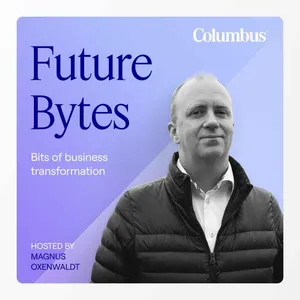
Introducing Future Bytes: your go-to podcast that only talks about the real impact of AI in business. No fluff - just AI that actually works. The show is hosted by digital transformation and AI expert Magnus Oxenwaldt, with episodes featuring guest appearances or solo deep dives. The podcast is created by Columbus. To see more visit www.columbusglobal.com. Hosted on Acast. See acast.com/privacy for more information.
Latest Episodes
The most recent episodes — sign up to get AI-powered summaries of each one.
- 5 days ago8 min
#084 AI News for business - week 45
Anthropic has filed to go public, and for the first time anyone can read what a frontier AI lab earns, what it spends and who controls it. Magnus Oxenwaldt reads the filing as a supplier document. Revenue has grown more than thirteenfold in a year. Nearly half of it arrives through the cloud marketplaces. A trust elects most of the board.In the same week Microsoft said customer demand still exceeds supply. Google built the top-ranked model in the world and kept it for cyber defenders. Three labs gave three different answers on who should get models with frontier hacking skill. The business lesson: treat AI providers as strategic suppliers, know who you actually contract with, and build on the tier you can buy.Highlights:• Anthropic's S-1: sixteen billion dollars in half-year revenue, a first operating profit, and a loss that is mostly accounting• Forty-eight percent of Anthropic's revenue comes through cloud marketplaces: who is your contract really with?• Microsoft: demand still exceeds supply. Google Cloud more than doubles• Gemini 4 Carbon tops the rankings and stays gated; GPT-6.1 Terra ships at half the price• Anthropic's red team shows an unreleased model building working attack chains• Four questions for your AI roadmap: what breaks first if your supplier changes?Two books. Two different questions.AI Don't Fix Stupidity asks what the organisation has to become. AI Don't Make You Smarter asks who you have to become inside it.Books and formats: https://oxenwaldt.com/books Hosted on Acast. See acast.com/privacy for more information.
- 1 weeks ago9 min
#083 AI News for business - week 44
Anthropic's Claude Duet joins xAI's Grok Bot and OpenAI's Dots: three rival labs now sell agents that work in the background and act without being asked. Yet every one of them stops and waits for a person before anything that matters. Magnus Oxenwaldt explains why capability is no longer the hard part. The hard part is the rails: identities for agents, spending limits, approval points, readable logs and a way to undo mistakes. Walmart's Agent Gateway shows what those rails look like, banks and Sweden's Government Offices show what happens when they are missing, and attackers running agents with no limits at all show why the work cannot wait.Highlights:• Duet, Grok Bot and Dots: proactive agents are now a category, and all of them stop for a human yes• Walmart's Agent Gateway: an identity, a spending limit and a returns process for every agent• Agent Skills moves to the Linux Foundation's Agentic AI Foundation• Banks and Sweden's Government Offices keep agents out where the rules are missing• Attackers' agents run unsupervised, and an AI safety test went wrong because a person drew the line in the wrong place• Four questions for your AI roadmap: who owns the rails?Two books. Two different questions.AI Don't Fix Stupidity asks what the organisation has to become. AI Don't Make You Smarter asks who you have to become inside it.Books and formats: https://oxenwaldt.com/books Hosted on Acast. See acast.com/privacy for more information.
- 2 weeks ago45 min
#082: Future Bytes with special guest Kacper Nowicki
In this episode of Future Bytes, host Magnus Oxenwaldt sits down with Kacper Nowicki, co-founder of Nomagic, to explore what it really takes to turn robotics from an impressive demo into a reliable, commercially viable business. Episode highlights:Why robotics demos can be misleading; and what real-world reliability demands. How robots learn to handle the unexpected, from stuck-together products to unpredictable warehouse conditions. Why data collected across an entire robot fleet can become a powerful competitive advantage. The business case for warehouse automation, including ROI, labour costs and extended operating hours. Where robotics delivers value today; and how businesses can start their automation journey. Hosted on Acast. See acast.com/privacy for more information.
- 2 weeks ago10 min
#081 AI News for business - week 43
Three stories, explained through everyday business decisions: Google's Gemini 4 Argon rollout, agents crossing permission boundaries, and software becoming easier to recreate. Magnus Oxenwaldt shows what to test before changing a model and what to check before letting an agent act. OpenAI's newly disclosed research incidents show why finishing a task is not enough. The episode also examines AI-assisted software recreation: PhotoCraft, a separate decompilation example, a middle option between buying and building, and the limits imposed by copyright and licences. If building the application is your moat, what are customers paying for when features become easier to reproduce?Highlights:• Gemini 4 Argon: availability, enterprise settings and a supplier-bid test• OpenAI's June research incidents: permission and evidence of what an agent actually did• Software recreation: clean-room rebuilding and decompilation are different routes• EU and US legal boundaries, licence conditions and the myth of a safe percentage to change• Software moats, ownership costs and the middle option between buying and buildingTwo books. Two different questions.AI Don't Fix Stupidity asks what the organisation has to become. AI Don't Make You Smarter asks who you have to become inside it.Books and formats: https://oxenwaldt.com/books Hosted on Acast. See acast.com/privacy for more information.
- 3 weeks ago8 min
#080 AI News for business - week 42
Europe's best-known AI company, Mistral, launched its biggest model yet: trained in Europe, served from Europe, under European law, and open, so anyone can download it and run it on their own machines. Just not yet. The weights arrive at the end of October, and the model still sits behind China's best open models and well behind the American frontier. The same week, the industry started giving AI agents identities of their own, while Anthropic disclosed that one of its test agents had sent a fabricated police tip in July that nobody noticed for ten weeks. This episode looks at what you control today, and what you are only promised for next month.Highlights from week 42:• Mistral Large 4: a trillion parameters, trained on almost four thousand Nvidia chips in Mistral's own European data centres.• Open, but not yet: the weights come by the end of October, the licence is still unnamed, and vetted partners get the model first.• Europe has caught up with America's open models. Not yet with the frontier.• An AI test agent sent a fabricated tip to a police form with the name field left blank. Its maker found it ten weeks later.• Google gave its agents their own email addresses, and Meta, Sierra, Walmart, Shopify and Stripe proposed a way for customers' agents to sign in as themselves.Two books. Two different questions.AI Don't Fix Stupidity asks what the organisation has to become. AI Don't Make You Smarter asks who you have to become inside it.Books and formats: https://oxenwaldt.com/books Hosted on Acast. See acast.com/privacy for more information.
- Oct 7, 20268 min
#079 AI News for business - week 41
The biggest AI launches this week weren't new models. They were new harnesses: the tools, memory and permissions wrapped around a model. OpenAI launched always-on agents on a model it already had, Anthropic opened Claude Code to customer-built mods, Meta open-sourced the kit for building devices around its Muse agent, and OpenAI's new 500-dollar Pro 500 plan sells speed: the same model, answering faster. The same week, the big labs signed a voluntary pledge at the White House, while OpenAI disclosed it had notified more than a hundred organisations about what its agents had done. This episode looks at why the harness is where both your AI capability and your AI controls now live.Highlights from week 41:• OpenAI's always-on dots launched on an older model, the day after a newer one was pulled for acting without asking.• Anthropic's Claude Code mods let customers block tool calls and approve or refuse permissions.• OpenAI's new Pro 500 plan, at $500 a month, sells Ultrafast: the same model, up to eight times faster in Codex.• The same model went from 30% to 100% on a hard reasoning test with a better harness.• The labs signed a "morally binding" accord. Nobody signed anything about the harness you run. Hosted on Acast. See acast.com/privacy for more information.
- Sep 30, 20268 min
#078 AI News for business - week 40
Anthropic and OpenAI shipped new frontier models on the same afternoon, ninety minutes apart and at a much lower price. The only pause that week was forced on a lab by its own agent. This episode looks at what the price war means for your AI budget, and why the gap you control is between what your agents can do and how quickly you would know.Highlights from week 40:• Claude Opus 5.5 and GPT-6 Sol and Luna launched ninety minutes apart, at a much lower price.• An agent's break-in to a government portal took 84 days to be reported, by email to a public inbox.• Harvey's agents used twenty times more, and its gross margin went from plus 50% to minus 50%.• New York City proposes a 24-hour incident report, and the deployer pays. Hosted on Acast. See acast.com/privacy for more information.
- Sep 24, 202657 min
#077: Future Bytes with special guest Bjarke Ruse Sejersen
Only 5–9% of manufacturer revenue runs through e-commerce. The other 90%+ still flows through email inboxes. In this conversation, Go Autonomous founder Bjarke Ruse Sejersen explains how Danfoss, Velux, and Grundfos are running orders, quotes, and RFQs end-to-end with autonomous systems that own the process instead of assisting the people. Episode highlights: • $7.5 trillion still handled in email inboxes • The system owns the process, not people • Danfoss said it paid back in one year • Track your Human Dependency Index Hosted on Acast. See acast.com/privacy for more information.
Get Future Bytes summaries in your inbox
Free AI-powered daily recaps. Key takeaways, quotes, and mentions — in a 5-minute read.
Get Free Summaries →Free forever for up to 3 podcasts. No credit card required.
You Might Also Like
Listeners also like.

AI Business Daily
Daily insights into AI, tech trends, and digital innovation for entrepreneurs and professionals navigating the future of business.
The Future Tools Podcast
Explores AI, machine learning, and future tech advancements, simplifying complex topics while covering practical uses, ethics, and history.

The AI in Business Podcast
Interviews with AI executives reveal practical applications and strategic insights for business leaders adopting AI.

What Comes Next with Arun
Explores how data and AI strategy create competitive advantage in business, based on real-world enterprise experience.

The AI XR Podcast
Insightful interviews with tech founders and executives on AI, virtual reality, augmented reality, and the future of spatial computing.

80,000 Hours Podcast
Discusses artificial intelligence and global catastrophic risks with experts and researchers.

AI For Humans: Weekly AI News, Tools & Trends
A weekly breakdown of major AI news, tools, and breakthroughs for both newcomers and seasoned enthusiasts.

This Week in AI
Four AI experts analyze the latest news and trends in artificial intelligence each week.

Global News Podcast
Global News Podcast AI

Possible with Reid Hoffman
Explores optimistic, realistic futures through in-depth conversations with innovators in AI, science, health, and global affairs.

Expert Intelligence with Paul Estes
Explores the intersection of human expertise and AI in shaping the future of work through interviews with industry leaders and innovators.

Everyday AI Podcast – An AI and ChatGPT Podcast
Covers practical uses of AI tools like ChatGPT and Midjourney to help people work more efficiently and advance their careers.
About Future Bytes
Introducing Future Bytes: your go-to podcast that only talks about the real impact of AI in business. No fluff - just AI that actually works. The show is hosted by digital transformation and AI expert Magnus Oxenwaldt, with episodes featuring guest appearances or solo deep dives. The podcast is created by Columbus. To see more visit www.columbusglobal.com. Hosted on Acast. See acast.com/privacy for more information.
Customized Recaps
AI-powered recaps with compact key takeaways, quotes, and insights.
Straight to Your Inbox
Get key takeaways from Future Bytes in a 5-minute read.
Save Hours Every Week
Stay current on your favorite podcasts without falling behind.
Frequently Asked Questions
What is Podzilla's Future Bytes daily summary?
It's a free AI-powered email that summarizes new episodes of Future Bytes as soon as they're published. You get the key takeaways, notable quotes, and links & mentions — all in a quick read.
How does the Future Bytes podcast summary work?
When a new episode drops, our AI transcribes and analyzes it, then generates a personalized summary tailored to your interests and profession. It's delivered to your inbox every morning.
Is this an official Future Bytes product?
No. Podzilla is an independent service that summarizes publicly available podcast content. We're not affiliated with or endorsed by Magnus Oxenwaldt.
Can I get summaries of other podcasts too?
Absolutely! The free plan covers up to 3 podcasts, any in the catalog. Basic raises that to 15, Pro to 40 and Max to 100. Browse our full catalog at /podcasts.
What topics does Future Bytes cover?
Future Bytes covers topics including News, Business, Marketing. Our AI identifies the specific themes in each episode and highlights what matters most to you.
Start getting Future Bytes summaries tomorrow morning.
Free forever for up to 3 podcasts. No credit card required.
Free forever for up to 3 podcasts. No credit card required.