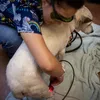
Have you ever been petting your dog and suddenly felt something — a lump, a bump, something that wasn’t there before? My returning guest, Dr. Randy Hutchison of Animal Clinic Northview, walks us through exactly what to do when that happens. From simple fatty lipomas to cancer diagnosis and cutting-edge immunotherapy treatments — this episode covers it all. Improvements continue to be made in the rehabilitation department. Not all injuries require surgery. Animal Clinic Northview has a new and expanding rehab facility. Dr. Grace Schmeiser oversees canine patients in need of rehabilitation from arthritis discomfort, sports injuries and surgeries. Many different therapies are offered: acupuncture, shock wave therapy, laser therapy, and massages. Dr. Randy also shares with us some new capabilities which improve the overall recovery process for canine patients. Animal Clinic Northview has equipped their ICU unit with central lines - an advanced way to administer medications quickly. They also reduce the stress and pain by allowing multiple treatments and drawing blood samples through one port. Another improvement to the ICU is the addition of high flow oxygen. This provides more direct oxygen flow to canine patients via nasal cannulas who may be in respiratory distress. Oxygen can be delivered via these cannulas before, during, and after surgery. Patients can also receive oxygen via their state- of-the-art environmentally controlled Snyder oxygen cages. Recently, Dr. Randy shares with us how the high oxygen flow process aided in ensuring that a bulldog who came in for airway surgery received the appropriate amount of oxygen. He believes this accelerates the recovery process and promotes a swift recuperation. Animal Clinic Northview employs a full time doctor, or hospitalist, whose sole responsibility is to oversee the ICU and make sure it runs efficiently. The ICU can accommodate up to 40 patients. This relieves the 34 veterinarians in the practice of checking in whenever they have a spare moment to visit their critically ill patients while also maintaining a heavy client workload. Having a hospitalist on duty is an excellent way to give the patients the attention they need. They also rely on the staff dedicated to working and assisting with cases that are admitted to the ICU. Dr. Randy says “From the technicians to the assistants to the kennel staff - they are really the heroes. They’re the ones that are in it minute by minute, hour by hour, taking care of these patients.”Vets are expected to be jack of all trades. This can be very challenging. However, Dr. Randy’s staff has the freedom to choose what they would like to specialize in. He always tells his new doctors they are allowed “five No’s”. It is important to know the types of cases they are uncomfortable with and leave them to other vets who want to be treating them. He wants them to choose what they are passionate about so they become very good at what they do. This allows Dr. Randy to direct specific issues to vets who see these types of cases often. “It’s all about putting patients in the hands that are most likely to give them a chance to help them.” - Dr. RandyOne common reason to bring your dog in for a checkup is when you notice a lump or bump. You may notice a lump while petting your dog. You may see it when they roll over. The lump could be as innocuous as a wart, a skin tag, or the result of an allergic reaction. Others could be a fatty lipoma, a sebaceous cyst or a mass. Some dogs have a predisposition to forming lumps and bumps. Certain breeds are prone to them. However, every dog is susceptible. Dr. Randy always recommends bringing the dog in to get it checked out.Sometimes, groomers find lumps that the owner never saw or felt. Lumps can be in hard to see areas and places you don’t typically touch. For example, a groomer will feel inside a back leg while they are combing the dog’s fur or they have to shave the rear end and a lump is discovered. In my podcast about grooming, Sharyn Ugan has found lumps on dogs that the pet parents had no idea were there. When Dr. Randy is assessing a lump or bump, he typically manipulates it with his fingers. He can feel if it is hard or soft. The dog usually does not seem to be in any discomfort. The texture and the look of the lump does not indicate whether it is benign or malignant. In fact, he has learned over the years - never assume anything. Screening is necessary to determine exactly what the lump is. It is done with a fine needle aspirate of the lump. A needle is injected into it to draw a sample of cellular material. This is transferred onto a slide to be examined and will reveal two things immediately: whether it is benign or malignant. The cells in the sample may be benign cystic junk aspir
Podzilla Summary coming soon
Sign up to get notified when the full AI-powered summary is ready.
Free forever for up to 3 podcasts. No credit card required.
Listen to This Episode
More from From A Dog's Eye View

Search and Rescue Canines at Ground Zero on 9/11/01

How Border Collies Work with Ohio Geese Control
A Guide to Making the Best Food Choices for Your Dog and Cat - Part 2

An Overview of Dog/Cat Nutrition
Get summaries like this every morning.
Free AI-powered recaps of From A Dog's Eye View and your other favorite podcasts, delivered to your inbox.
Free forever for up to 3 podcasts. No credit card required.