Free Daily Podcast Summary
Freedom for Wild Horses: Daily Summaries Delivered
by Carol J. Walker
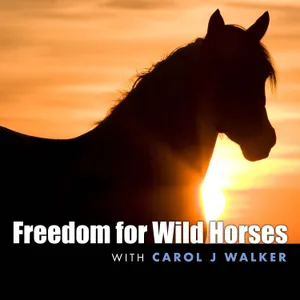
Freedom for Wild Horses Podcast explores wild horses and their families, behavior, and iconic symbol of our western heritage.Join Carol J. Walker, leading Advocate for wild horses and award-winning author and photographer, as she leads you to discover why wild horses deserve a place on our public lands, why we need the tonic of their wildness in our lives, the threats they are facing from the agency that manages them, and what you can do to help.Learn more at http://WildHoofbeats.com.This is the show for you if you find yourself asking questions like:-Are there wild horses in the United States?-How do I find out about wild horses?-What are the issues facing wild horses on our public lands?-Is livestock ranching in conflict with wild horses?-How are domestic horses different from wild horses?-What is the family structure and the relationships of wild horses?-Are wild horses being sent to slaughter?-What organizations are actively helping wild horses?
Latest Episodes
The most recent episodes — sign up to get AI-powered summaries of each one.
- Today41 min
72. Interview with Terri Farley on Her New Book, Horse Girl, about Wild Horse Annie
What can the story of Wild Horse Annie teach us about standing up for wild horses today? In this episode, I speak with award-winning author Terri Farley about her new book, "Horse Girl: How Velma Bronn Johnston Became Wild Horse Annie and Outsmarted the Mustang Killers of the West." We talk about how Velma became an advocate for wild horses and the experiences that shaped her work. Terri shares what she discovered while researching Velma's personal papers, including stories that reveal the woman behind the name Wild Horse Annie. From her childhood and struggles with public speaking to the first time she witnessed horses being taken to slaughter, Velma persisted in speaking out even when it was difficult. In this episode, you'll hear why Terri believes Velma's story is especially relevant today, what advocates can learn from her approach, and why facts, education, and the willingness to speak up remain so important. We also talk about wild horse family bonds, what people misunderstand about wild horses, and why Terri wants readers to rethink what they know about these animals. Get full show notes and more information here: https://www.wildhoofbeats.com/72 Learn more about Terri Farley and her books: https://terrifarley.com/ If you'd like to know more about my book, "Wild Hoofbeats: America's Vanishing Wild Horses," click here: https://www.wildhoofbeats.com/product/wild-hoofbeats-americas-vanishing-wild-horses
- Aug 17, 202614 min
71. The Resilience of Wild Horses: The Story of Looking Glass
What does it take for a wild horse to survive when everything around him changes? In this episode, I share the story of Looking Glass, a leopard Appaloosa stallion I first encountered in the Lost Creek Herd Management Area and have followed for years through changing families, harsh weather, injuries, and loss. Looking Glass survived the devastating winter of 2022 to 2023, when I believe roughly half of the wild horses remaining in the Red Desert Complex did not survive. I followed his journey as he lost his family, found new companions, recovered from a serious wound, and eventually established a family of his own. The Red Desert Complex is now at risk of another major roundup. The BLM's environmental assessment calls for removing 1,800 or more wild horses from the area, and Looking Glass and the other horses have no way of knowing which animals will remain free. Their ability to adapt and continue living in these wild lands is a powerful reminder of why they belong here. Get full show notes and more information here: https://www.wildhoofbeats.com/71 If you'd like to know more about my book, "Wild Hoofbeats: America's Vanishing Wild Horses," click here: https://www.wildhoofbeats.com/product/wild-hoofbeats-americas-vanishing-wild-horses
- Jul 20, 202610 min
70. Wild Horses: What's Real and What's True
What makes wild horses worth fighting for? In this episode, I reflect on why I continue to advocate for wild horses. They are valuable not for what they symbolize but for who they are as sentient beings living on public lands. I share stories from recent trips to the Salt Wells Creek and Red Desert Complex herds in Wyoming, observing their families, foals, and the challenges they face. I describe the experiences that have had the greatest impact on me, including witnessing foals being comforted by mares other than their own and tracking stallions recovering from harsh winters. These encounters highlight both the resilience of the horses and the uncertainty they face when environmental pressures and planned roundups can change everything in a moment. This episode also addresses the ongoing threat of BLM management decisions. With environmental assessments out for public comment and roundups scheduled in the Red Desert Complex, no horses in these herds are fully safe. I explain why these wild horses deserve to remain in their homes, living freely with their families, and why it is so important to continue advocating for their protection. Get full show notes and more information here: https://www.wildhoofbeats.com/70 If you'd like to know more about my book, "Wild Hoofbeats: America's Vanishing Wild Horses," click here: https://www.wildhoofbeats.com/product/wild-hoofbeats-americas-vanishing-wild-horses
- Jun 15, 202628 min
69. Interview with Manda Kalimian of Rewilding American Now: Petition to Audit BLM's Wild Horse Sale Program
Why does the BLM's Wild Horse sale authority program need an audit? In this episode, I speak with Manda Kalimian, founder of Rewilding America Now, about the urgent need to bring transparency and accountability to the way wild horses are sold from holding facilities. Together, we explore how the current system is failing the horses and what actions you can take to help ensure their welfare. Manda shares her firsthand experience rescuing horses from auctions and feedlots, the challenges of working within the current system, and how the volume of horses being funneled from holding into private sales is creating serious risks. We discuss why a government accountability audit is a crucial first step and how it can put pressure on the BLM to follow proper procedures before more horses are removed from public lands. You'll also learn how advocacy, education, and partnerships with organizations like Rewilding America Now can make a difference. Manda explains how signing the petition to audit the BLM's sale program gives the public a voice, and why even small actions such as sharing information, supporting campaigns, and contacting members of Congress can help protect wild horses from mismanagement and slaughter. Petition: https://actionnetwork.org/petitions/count-every-horse-stop-bureau-of-land-management-wild-horse-sales-to-slaughter? Letter to Congress: https://116a2349-892a-41a5-94ab-9a6f9a7a78b7.filesusr.com/ugd/e899a9_99d8d25ce65040c2839f9c71c91078b8.pdf Get full show notes and more information here: https://www.wildhoofbeats.com/69 If you'd like to know more about my book, "Wild Hoofbeats: America's Vanishing Wild Horses," click here: https://www.wildhoofbeats.com/product/wild-hoofbeats-americas-vanishing-wild-horses
- May 25, 20268 min
68. Closing in on Wild Horses
What happens when the people shaping public lands policy are closely tied to the very industries competing with wild horses for those lands? In this episode, I look at the growing influence of grazing and extractive interests on public land policy, and why these changes could have serious consequences for America's wild horses. I explain how proposed grazing changes could reduce public oversight, weaken protections for land health, and prioritize livestock grazing above wildlife conservation. I also discuss the expanding sale authority program for wild horses, the increase in online sales and transport to states with nearby slaughter auctions, and why many advocates are deeply concerned about where these policies are heading. You'll hear why these developments matter right now, how Project 2025 connects to current policy changes, and what actions you can take to speak up for wild horses. I also outline why contacting senators and representatives is so important as Congress considers the fiscal year 2027 budget and ongoing public lands policies. Get full show notes and more information here: https://www.wildhoofbeats.com/68 If you'd like to know more about my book, "Wild Hoofbeats: America's Vanishing Wild Horses," click here: https://www.wildhoofbeats.com/product/wild-hoofbeats-americas-vanishing-wild-horses
- Apr 20, 202614 min
67. Planning for the Red Desert Complex Wild Horses Needs Your Comments
Have you heard about the new herd management plan for the Red Desert Complex? If not, now is the time to pay attention. The Bureau of Land Management (BLM) has released a plan that will impact the wild horses in this area, and the comment period is open. In this episode, I explain why submitting your comments is crucial and how they can influence the future of these horses. The BLM is planning how to manage the wild horses across 753,000 acres of the Red Desert Complex. This is your chance to speak up. I outline the main concerns with the current management plan, including water availability, drought conditions, sterilization, genetic diversity, and the continued reliance on non-scientific approaches in managing the horses. I also explain how these factors could affect the horses' ability to thrive in the Red Desert Complex. You'll learn what specific issues you should address when submitting your comments and why it's so important to ensure that the BLM considers long-term sustainability for these wild horses. Get full show notes and more information here: https://www.wildhoofbeats.com/67 Submit your comments here by May 4, 2026: https://eplanning.blm.gov/Project-Home/?id=6c9a6ab7-c027-f111-8341-001dd804183b& If you'd like to know more about my book, "Wild Hoofbeats: America's Vanishing Wild Horses," click here: https://www.wildhoofbeats.com/product/wild-hoofbeats-americas-vanishing-wild-horses
- Mar 16, 202611 min
66. The Winter that Wasn't with the Wild Horses of Salt Wells Creek
What is it like to visit the wild horses of Salt Wells Creek during a winter with almost no snow? In this episode, I share what I saw during my recent trip to this Wyoming range, where unusually dry conditions made travel easier but also raised concerns about the lack of moisture across the region. You'll hear about several of the families and bachelor stallions I observed during my time in the range, including familiar horses I have followed for years and new foals born outside the official foaling window defined by the Bureau of Land Management. This visit also highlights how wild horses organize themselves during winter, when survival takes priority and conflicts between stallions are often subdued. I reflect on the families I observed, the young horses growing within those bands, and why understanding the realities of wild horse life on the range matters when decisions are made about how they are managed. Get full show notes and more information here: https://www.wildhoofbeats.com/66 If you'd like to know more about my book, "Wild Hoofbeats: America's Vanishing Wild Horses," click here: https://www.wildhoofbeats.com/product/wild-hoofbeats-americas-vanishing-wild-horses
- Feb 16, 20266 min
65. A Year for Wild Horses
What could this year mean for wild horses? As we enter the Year of the Fire Horse, a symbol of movement, passion, and freedom, I reflect on what lies ahead for the horses who embody those qualities more than any other. Wild horses represent vitality and resilience, yet their future remains uncertain as policies and priorities continue to shift. More than 64,000 wild horses are currently confined in holding facilities, and over 22 million acres have been removed from herd management areas. Oversight remains limited, roundups continue to loom, and transparency has steadily declined, leaving the public with fewer tools to ensure these horses are protected. In this episode, I share what I believe must change, from ending roundups and restoring habitat to creating independent oversight and returning horses to public lands. Get full show notes and more information here: https://www.wildhoofbeats.com/65 If you'd like to know more about my book, "Wild Hoofbeats: America's Vanishing Wild Horses," click here: https://www.wildhoofbeats.com/product/wild-hoofbeats-americas-vanishing-wild-horses
About Freedom for Wild Horses
Freedom for Wild Horses Podcast explores wild horses and their families, behavior, and iconic symbol of our western heritage.Join Carol J. Walker, leading Advocate for wild horses and award-winning author and photographer, as she leads you to discover why wild horses deserve a place on our public lands, why we need the tonic of their wildness in our lives, the threats they are facing from the agency that manages them, and what you can do to help.Learn more at http://WildHoofbeats.com.This is the show for you if you find yourself asking questions like:-Are there wild horses in the United States?-How do I find out about wild horses?-What are the issues facing wild horses on our public lands?-Is livestock ranching in conflict with wild horses?-How are domestic horses different from wild horses?-What is the family structure and the relationships of wild horses?-Are wild horses being sent to slaughter?-What organizations are actively helping wild horses?
Customized Recaps
AI-powered recaps with compact key takeaways, quotes, and insights.
Straight to Your Inbox
Get key takeaways from Freedom for Wild Horses in a 5-minute read.
Save Hours Every Week
Stay current on your favorite podcasts without falling behind.
Frequently Asked Questions
What is Podzilla's Freedom for Wild Horses daily summary?
It's a free AI-powered email that summarizes new episodes of Freedom for Wild Horses as soon as they're published. You get the key takeaways, notable quotes, and links & mentions — all in a quick read.
How does the Freedom for Wild Horses podcast summary work?
When a new episode drops, our AI transcribes and analyzes it, then generates a personalized summary tailored to your interests and profession. It's delivered to your inbox every morning.
Is this an official Freedom for Wild Horses product?
No. Podzilla is an independent service that summarizes publicly available podcast content. We're not affiliated with or endorsed by Carol J. Walker.
Can I get summaries of other podcasts too?
Absolutely! The free plan covers up to 3 podcasts. Upgrade to Pro for 15, or Premium for 50. Browse our full catalog at /podcasts.
How often does Freedom for Wild Horses release new episodes?
Freedom for Wild Horses publishes monthly. Our AI generates a summary within hours of each new episode.
What topics does Freedom for Wild Horses cover?
Freedom for Wild Horses covers topics including Science, Arts, Nature, Visual Arts. Our AI identifies the specific themes in each episode and highlights what matters most to you.
Start getting Freedom for Wild Horses summaries tomorrow morning.
Free forever for up to 3 podcasts. No credit card required.
Free forever for up to 3 podcasts. No credit card required.