Free Daily Podcast Summary
Free Thoughts: Daily Summaries Delivered
by Libertarianism.org
Get key takeaways, quotes, and insights from Free Thoughts in a 5-minute read. Delivered straight to your inbox.
Latest Episodes
The most recent episodes — sign up to get AI-powered summaries of each one.
- Oct 2, 20233 min
Coming Soon: The Liberty Exchange
Coming soon, a brand new podcast from Libertarianism.org... Hosted on Acast. See acast.com/privacy for more information.
- Oct 21, 202252 min
Fighting Government Secrecy (with Patrick Eddington)
The Jones Act biases American shippers and shipbuilders at the expense of international competition, passing higher prices onto consumers and kneecapping free trade. The Cato Institute (and others) have been urging the government to reform this protectionist policy for several years now. But new findings prompt us to ask; how could such an ordinary task for a think tank constitute treason?Cato Institute Senior Fellow Patrick Eddington joins Trevor today to explain how the Freedom of Information Act (FOIA) sheds light onto the dark and hidden memos, documents, and recommendations shuffled between bureaucrats behind closed doors—when it can. But how did FOIA come about? What is the process involved? And how do agencies avoid complying with requests? Hosted on Acast. See acast.com/privacy for more information.
- Oct 14, 202246 min
When Is Democracy Undemocratic? (with Emily B. Finley)
The rise of global populism reveals a tension in Western thinking about democracy. Warnings about the "populist threat" to democracy and "authoritarian" populism are now commonplace. However, as Emily B. Finley argues in The Ideology of Democratism, dismissing "populism" as anti-democratic is highly problematic. In effect, such arguments essentially reject the actual popular will in favor of a purely theoretical and abstract "will of the people."On today’s episode, Emily Finley and Trevor sit down to trace a line from Jean-Jacques Rousseau and Thomas Jefferson to Woodrow Wilson and John Rawls, point out the flaws in deliberative democratic practices, and try to find a way to conceive of a better democratism—one without mob rule. Hosted on Acast. See acast.com/privacy for more information.
- Oct 7, 202249 min
Floods, Nuclear Power, and Wages (with Peter Van Doren)
The illustrious, ingenious, notorious PVD is back with us once again. Today, he and Trevor sit down to discuss dilemmas of flood damages following Hurricane Ian, the viability of subsidies for nuclear energy, and minimum wage increase’s effects on workers’ wages.Peter references the following:The National Flood Insurance Program: Solving Congress’s Samaritan’s Dilemma by Peter Van DorenHurricane Ian’s Toll Is Severe. Lack of Insurance Will Make It Worse.Subsidies to Nuclear Power in the Inflation Reduction Act by David Kemp and Peter Van DorenHow Important are Minimum Wage Increases in Increasing the Wages of Minimum Wage Workers? by Jeffrey Clemens and Michael R. Strain Hosted on Acast. See acast.com/privacy for more information.
- Sep 30, 202252 min
How the 14th Amendment Changed America (with Randy Barnett and Evan Bernick)
Adopted in 1868, the Fourteenth Amendment profoundly changed the Constitution, giving the federal judiciary and Congress new powers to protect the fundamental rights of individuals from being violated by the states. Yet, according to Randy Barnett and Evan Bernick in their new book The Original Meaning of the Fourteenth Amendment: Its Letter and Spirit, the Supreme Court has long misunderstood or ignored the original meaning of the amendment’s key clauses, covering the privileges and immunities of citizenship, due process of law, and the equal protection of the laws.On today’s episode, they join us to answer questions as simple as; what is the fourteenth amendment, and why is it possibly one of our most important? As well as more complex ones, including; does the equal protection clause guarantee positive rights? And what can libertarians learn from the anti-slavery Republicans who wrote the 14th Amendment? Hosted on Acast. See acast.com/privacy for more information.
- Sep 23, 202255 min
Free Market: The History of an Idea (with Jacob Soll)
After two government bailouts of the US economy in less than twenty years, free market ideology is due for serious reappraisal. In his new book Free Market: The History of an Idea, MacArthur Fellow and USC professor Jacob Soll details how we got to this current crisis, and how we can find our way out by looking to earlier iterations of free market thought. He helps us answer questions such as; what role did early market theorists believe that states had in building and maintaining free markets? How do many get John Stuart Mill, John Locke, and Adam Smith wrong? And what do stoicism, Christianity, friendship, and love have to do with free markets? Hosted on Acast. See acast.com/privacy for more information.
- Sep 16, 202253 min
Can Public Schools Work? (with Neal McCluskey)
American public schooling was established to unify diverse people and prepare citizens for democracy. Intuitively, it would teach diverse people the same values, preferably in the same buildings, with the goal that they will learn to get along and uphold government by the people. But intuition can be wrong; significant evidence suggests that public schools have not brought diverse people together, whether from legally mandated racial segregation, espousing values many people could not accept, or human beings simply tending to associate with others like themselves.Neal McCluskey, Director of the Cato Institute’s Center for Educational Freedom and author of the forthcoming book The Fractured Schoolhouse: Reexamining Education for a Free, Equal, and Harmonious Society, joins the show today to explain how the fear of community balkanization, the panic over critical race theory and “gender ideology”, and reactions to the COVID-19 crisis have only further driven rifts between the right and left on the topic of education. But how many of these are new problems, and how many are simply old ones in new forms? In the end, we may be forced to ask; is the intractable problem of not agreeing on what “our” children should learn solvable? And if not, is funding public education even worth it? Hosted on Acast. See acast.com/privacy for more information.
- Sep 9, 202253 min
Why More People Means More Wealth (with Marian Tupy and Gale Pooley)
Generations of people have been taught that population growth makes resources scarcer. In 2021, for example, one widely publicized report argued, “The world's rapidly growing population is consuming the planet's natural resources at an alarming rate . . . the world currently needs 1.6 Earths to satisfy the demand for natural resources . . . [a figure that] could rise to 2 planets by 2030.” But is that true?Today’s guests, Marian Tupy and Gale Pooley, authors of the new book Superabundance: The Story of Population Growth, Innovation, and Human Flourishing on an Infinitely Bountiful Planet analyzed the prices of hundreds of commodities, goods, and services spanning two centuries, and found that resources became more abundant as the population grew. The two sit down with Trevor to answer questions like; how can we innovate enough to cover the resources needed for 8 billion people? How sustainable is our current mode of sustained innovation? And how is the total sum of atoms different than the sum total of knowledge? Hosted on Acast. See acast.com/privacy for more information.
Get Free Thoughts summaries in your inbox
Free AI-powered daily recaps. Key takeaways, quotes, and mentions — in a 5-minute read.
Get Free Summaries →Free forever for up to 3 podcasts. No credit card required.
You Might Also Like
Listeners also like.
The Liberty Exchange
Libertarianism.org
The Free Thought Project Podcast
The Free Thought Project
The Free Thought Project Podcast
The Free Thought Project
Free To Choose Media Podcast
Free To Choose Media
The Curious Task
Institute for Liberal Studies
Libertarianism.UK Podcast
@Andy009Duncan
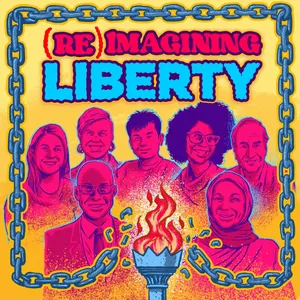
ReImagining Liberty
Aaron Ross Powell
Complete Liberty Podcast
Wes Bertrand

Liberty Conspiracy
Liberty Conspiracy
Liberty Curious
Kate Wand
Lions of Liberty
LionsOfLibertyPodcast
The Practical Liberty Podcast
Henry Bingaman
About Free Thoughts
A weekly show about politics and liberty, featuring conversations with top scholars, philosophers, historians, economists, and public policy experts. Hosted by Trevor Burrus. Hosted on Acast. See acast.com/privacy for more information.
Customized Recaps
AI-powered recaps with compact key takeaways, quotes, and insights.
Straight to Your Inbox
Get key takeaways from Free Thoughts in a 5-minute read.
Save Hours Every Week
Stay current on your favorite podcasts without falling behind.
Frequently Asked Questions
What is Podzilla's Free Thoughts daily summary?
It's a free AI-powered email that summarizes new episodes of Free Thoughts as soon as they're published. You get the key takeaways, notable quotes, and links & mentions — all in a quick read.
How does the Free Thoughts podcast summary work?
When a new episode drops, our AI transcribes and analyzes it, then generates a personalized summary tailored to your interests and profession. It's delivered to your inbox every morning.
Is this an official Free Thoughts product?
No. Podzilla is an independent service that summarizes publicly available podcast content. We're not affiliated with or endorsed by Libertarianism.org.
Can I get summaries of other podcasts too?
Absolutely! The free plan covers up to 3 podcasts. Upgrade to Pro for 15, or Premium for 50. Browse our full catalog at /podcasts.
How often does Free Thoughts release new episodes?
Free Thoughts publishes weekly. Our AI generates a summary within hours of each new episode.
What topics does Free Thoughts cover?
Free Thoughts covers topics including News, History, Politics, Philosophy, Culture, Society & Culture. Our AI identifies the specific themes in each episode and highlights what matters most to you.
Start getting Free Thoughts summaries tomorrow morning.
Free forever for up to 3 podcasts. No credit card required.
Free forever for up to 3 podcasts. No credit card required.