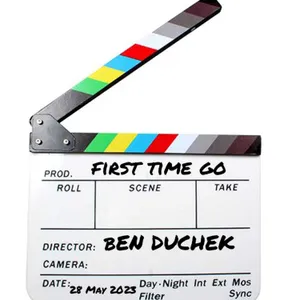
Free Daily Podcast Summary
First Time Go: Daily Summaries Delivered
by Benjamin Duchek
A weekly podcast highlighting the creators of independent film and the business behind it. Hosted by Ben Duchek.
Latest Episodes
The most recent episodes — sign up to get AI-powered summaries of each one.
- 3 days ago45 min
Mylissa Fitzsimmons On Running Away And The Making of MACKENZIE (2026)
My guest today, director Mylissa Fitzsimmons, previously released two features -- EVERYTHING IN THE END (2021) and THE LONG RUN (2025) -- and never got a premiere. She suffered from burnout of the excruciating process of making these brilliant films. And yet:here she is in 2026 with MACKENZIE (2026), opening at Film Fest Oldenburg this year. What does that say about perseverance? Resilience? A never quit attitude and the ability to keep going on even though this is really, really, fucking really hard?I think it says everything. I'm so motivated hearing her story and so excited for the journey of her new film and her renewed love of the art form.Hat tip to the best friend any indie filmmaker can have, Scott Monahan, for making this interview happen.In this episode, Mylissa and I talk about:why Oldenburg?how she's NEVER gotten an opportunity to have a full premiere for her films;what people should expect to see when watching MACKENZIE;why she waited till her third feature to tell her most personal story;the burnout she felt after her first two features;the incredible story in her film EVERYTHING IN THE END;directing actors to not really be actors in THE LONG RUN;where did the motif of running away comes from;the process of working with a non-professional actor as the star of MACKENZIE;why she has ambiguous endings in her films;what's next for her.Mylissa's Indie Film/Filmmaker Highlight: Frank Mosley in JACKRABBIT (2026); Leonora Pitts in I HATE MYSELF AND WANT TO DIE (2024) dir. by J. DavisMemorable Quotes:" So the baby is ready to walk, and we're gonna be there all as proud parents watching."" This kind of moment in childhood that we all have where we realize like the reality of the real world is seeping through the cracks of your childhood innocence and you are growing up."I don't want to have to worry about saying, "hey, I really want you to work on this, but it's a microbudget and I can't really pay you a lot," and then feel guilty and then have them not really be 100% committed."" When MACKENZIE came along, my only goal was like, "hey, I just wanna make a movie and have fun again.""I actually set out to make a movie about people who are lost."" I had worked with kids before, and I know it's like you don't really direct them, they direct you."Links:Follow Mylissa On Instagram
- 1 weeks ago32 min
Thrilling sci-fi films, parenthood, and acting in your 60s: The Amazing Story of Ace Thor & Glen Steele
Expectations are good in a lot of ways. They hold us to a standard and promote accountability. But they can also be creatively limiting. For actor and executive producer Glen Steele of the film INFINITELY DENSE, who you heard in the intro, he took the shackles off the word expectation and made his art, giving the middle finger to age or any other perceived limitation.INFINITELY DENSE is having its market screening at the Toronto International Film Festival on September 16th, 2026. If you have the ability to go, you should. It's a near-realistic sci-fi look at what happens if a guy unhappy with his life experimented with augmented AI.I'm also joined by writer and director Ace Thor, who met Glen through his mom's acting class. This is an insane story of two people pushing the boundaries of independent film, both through the subject matter of their work and their overall art.And -- Ace Thor & Glen Steele should be in a cop buddy comedy, right? I'd love it, because it would be another opportunity to have them on the podcast.In this episode, Ace, Glen, and I talk about:how they describe the film;the many hats that independent filmmakers have to wear;the crazy story of how they ended up working together and how they got involved in filmmaking;the reality of acting in your 60s;making a scifi film that feels realistic and not having genre as the focus;casting for this film, why Ace watched every single tape, and why Glen kept his hands off the process;Glen's feelings on massive influencers taking over acting -- it's been happening for years in different forms;the process of a market screening at TIFF;should more actors get involved in making their own roles;advice for raising a family while acting and directing;what's next for them.Ace's Indie Filmmaker Highlight: Nicolas RoegMemorable Quotes:" It's more of a story of what happens when we are only in relationship with ourselves.""It's just like no matter what you try and do in my family, if you wanna do something else, it's just not possible."" No one's gonna hire me to be a lead in a movie at this point in my life."" I didn't want the sci-fi to be the focus, right?"" It's hard for the 64-year-old Glenn to tell a 25-year-old what to do because I wouldn't have listened to me when I was 25.Links:INFINITELY DENSE @ TIFFINFINITELY DENSE Website
- 2 weeks ago1 min
Indie Film Highlight: RYE LANE (2023)
Watch This Episode On YouTubeEvery Sunday, I'll post a quick video -- and podcast -- about an indie film from at least a year ago. Today's film: RYE LANE (2023)Director: Raine Allen MillerSYNOPSISTwo twenty-somethings reeling from bad breakups spend an eventful day wandering South London, helping each other face their nightmare exes and rediscovering the possibility of romance. Subscribe to our YouTube channelFollow us on LetterboxdFollow us on InstagramFollow us on XFollow us on FacebookFollow us on TikTokFollow us on LinkedIn
- 2 weeks ago52 min
Betting Big On Yourself Through Helping Others: Dylan Mulick and HOW TO CHANGE THE WORLD
When you normally see a series like HOW TO CHANGE THE WORLD, put together by my guest, filmmaker Dylan Mulick (and the team at World Within Studios), the tendency is to brush it off as do-gooders doing good things. Where is the conflict in that? A lot of great documentaries aren't seen because of these assumptions.Dylan turns the usual tropes of the series upside down in so many ways by going there: inner city Chicago; the Bahamas; wherever there is actual conflict for people who are looking to change our planet.The result is something altogether fresh: a ten part series, starting September 10th, 2026 that's shot cinematically and doesn't make you feel like you're watching an infomercial or about to see a Gofundme link roll across the screen. It's premiering on YouTube, it has the clout of Mark Cuban and others behind it, and the team's end goal is to launch a studio through their nonprofit.This is what the future looks like.Hat tip to David Goldblum for making this interview happen. If you haven't heard my conversation with him, it's a must-listen.In this episode, Dylan and I talk about:the layout of HOW TO CHANGE THE WORLD;the strategy of betting big on putting this series on YouTube;how he able to recruit high-level EPs like Chris Pratt and Mark Cuban for his projects;ENTOURAGE shout-out (it truly was a whole thing for dudes in the 2000s);the mentorship role he now takes on for people starting out in film;the lessons he took from his first feature documentary -- HELEN BELIEVE (2023) -- into this project;the story behind World Within Studios, which bills itself as " a nonprofit focused on tackling extreme wealth consolidation by investing in community-owned projects";what keeps him up at night regarding this huge risk;whether EPs matter anymore and why Mark Cuban is the perfect fit for this project;how cool it is when people post about their challenges in making films;what success looks like for this series.Memorable Quotes:" How to Change the World is a 10-episode documentary series that is essentially like Chef's Table for social entrepreneurs."" They're not the people that you often see in the headlines. And we believe what they're doing should be rewriting the definition of what a founder and a CEO should be. So we wanted to show them cinematically. We wanted to shoot them heroically."" Mentorship is so critical, and I think it's lost in today's Hollywood because the jobs are so competitive and the jobs are so few." These are all ideas that are probably pretty close to us, whether consciously or just like the mysterious stresses in our lives. But if you don't show a solution and then you don't take that solution and clearly communicate it to an audience, you can't build a movement, and ultimately World Within wants to build a movement from these ideas."" I don't know that [EPs] move the needle, unless of course they're the sole person on camera, right?"" The buyers are too reluctant nowadays, and I think quite honestly, like every famous person is pitching their own show."" And I'm trying to walk the walk of this idea of always trying to be failing, Links:Follow World Within Studios For The SeriesFollow Dylan On Instagram
- 2 weeks ago16 min
War Zones And Walks To Legendary Romances: Orlando von Einsiedel, director of THE CYCLE OF LOVE (2025)
One of the most fascinating things I've learned about in conducting interviews are how top awards can end up meaning -- nothing.Think back -- can you name who won the Oscar for best documentary short five years ago? Two years ago?So often, it doesn't show a noticeable trajectory change in the filmmakers' careers. That's not true of my guest today, Orlando von Einsiedel, whose film, THE CYCLE OF LOVE (2025) opened in New York on August 28th and later in September for the rest of the country, has continually built on his success through taking on larger projects.In the last 16 years, he's directed or produced at least 31 shows and series, an incredible workflow that speaks both to his work ethic and the value of awards (maybe?).It's hard to tell whether the latter part mattered. What we can say is his filmmaking is sincerely moving, and I'm so glad to see him tackle evermore ambitious topics like THE CYCLE OF LOVE.In this episode, Orlando and I talk about:he's won Oscars and opened at top festivals; is there's an achievement out there that he's aiming for in filmmaking?;his description of THE CYCLE OF LOVE;the decision to incorporate mostly reenactments into the film and where he drew the line between "how it feels" and what actually happened;how EVELYN (2018) helped make THE CYCLE OF LOVE happen the way it did;how he went from snowboarding into filmmakingthe ways in which awards enabled his climb and how documentary filmmakers should view them;the role of EPs for documentary filmmakers;the value proposition of his production company, Grain Media, and how he'll use crowdfunding if it's the path for a particular film;the theatrical prospects for this film and the landscape for documentary filmmakers;what's next for him.Memorable Quotes:" Every story, every film we make, I just want people, audiences to connect with it."" The challenge was there was very little archive footage from PK's journey, and and normally that is what kills a documentary in its tracks."" I don't think anyone should start a film project thinking about awards."" It doesn't matter how experienced you are, it doesn't matter how many awards you've won, every project needs a different path."Links:Follow Orlando On InstagramGrain Media's Website
- 3 weeks ago1 min
Indie Film Highlight: EVELYN (2018)
Every Sunday, I'll post a quick video -- and podcast -- about an indie film from at least a year ago. Today's film: EVELYN (2018).Director: Orlando von EinsiedelSYNOPSISWhen a 22-year-old kills himself, his three siblings try to bury their pain. Ten years later, they go on a hiking trip and seek out the places he liked to walk in the English countryside, allowing them to contemplate their brother's life. Subscribe to our YouTube channelFollow us on LetterboxdFollow us on InstagramFollow us on XFollow us on FacebookFollow us on TikTokFollow us on LinkedIn
- 3 weeks ago23 min
Shooting A Coming Of Age Story From A Child's Perspective: Ang Geck Geck Priscilla, dir. of AH GIRL (2026)
If you are staying up till 1030 pm to talk with me from Milan, Italy, well, I'm going to be grateful no matter what.But even better if your film is truly exceptional. My guest, Ang Geck Geck Priscilla, director of AH GIRL (2026), which premiered at Rotterdam and now screens at the Toronto International Film Festival next month, made a fantastic coming of age story from a child's perspective, cinematically. She wrote a semi-autobiographical story -- 70-80% true -- that her parents haven't even seen. And she's a Singaporean filmmaker making waves at huge festivals in ways that, if we're being blunt, we don't usually see.But she didn't want to play the comparison game; she doesn't care about all that. She wants to tell her own story. I'm absolutely here for it, and if you're at TIFF, you should be there, too. What a great talent in director Ang Geck Geck Priscilla.Ang and I talk about:how she describes the film and how much is true to life (70-80%);a coming of age story that she hasn't even shown her parents!;why she cast good looking people as her parents;shooting the film from a child's perspective;how she knew she'd become a filmmaker;why she cut the film to 99 minutes, including a wedding scene that I really want to see!;the genre of films that are tackling this coming of age, especially from an Asian perspective (e.g. LEFT-HANDED GIRL; A GIRL UNKNOWN);her thoughts on distribution;filmmaking in Singapore and the lack of theatrical opportunities;expectations coming out of screening at TIFF;what's next for her.Ang's Indie Film Highlights: WE ARE ALL STRANGERS (2026) dir. by Anthony Chen (a fellow Singaporean and also playing at TIFF); THE VIOLINIST (2026) dir. by Ervin Han & Raul GarciaMemorable Quotes:" The small part that is not real is actually the message that I want to tell my parents."" My producer would tell me about this film, and then they will start comparing. I honestly, I don't really care."" I'm really happy to be able to tell a Singapore story because I think as Singaporean, a lot of people always say we don't have our own identity."" I'm writing a psychological horror film next. I love horror."Links:Follow Ang Geck Geck Priscilla On InstagramFollow AH GIRL On Instagram
- 3 weeks ago34 min
TWO UGLY PEOPLE (2025), One Exceptional Director: Peter Skinner
It always fascinates me when people with other artistic backgrounds settle on making films. They end up creating an art form that is noticeably different than their peers. My guest, Australian director Peter Skinner, spent five years as a sculptor, and then with the precision that art form requires, turned his focus into making astonishing films like his most recent, TWO UGLY PEOPLE (2025).It's a hard film to describe but a beautiful one to watch. The impetus for the story of TWO UGLY PEOPLE came in the form of a question: " how do I tell a story about two people who want be together, but the only way they can be together is by being strangers?" and Peter actualized that here, in a work worthy of a sculptor.In this episode, Peter and I talk about:the Letterboxd comment of " Peter Skinner is one of Australia's most exciting emerging filmmaking talents";how he got involved in filmmaking and the path of his classmates;sculpture's role in telling stories, directing, and cinematography;what he learned from making four shorts before his feature;how he describes TWO UGLY PEOPLE;the title!;the role of feedback for a film that is pushing boundaries of what people normally see on screen;the cinematography and production design of the film;how they found a space six hours away from Sydney;the festival and release strategy for the film -- and the crazy "pre-selection" process for Venice (is this common?!);the distribution process for the film;what's next for him.Peter's Indie Film Highlight: BABYTEETH (2019) dir. by Shannon MurphyMemorable Quotes:"I made figurative sculptures and that were based on myths and obviously very, narrative-based. But a sculpture is a, a physical object that sits in a space that if it's a static object, doesn't do anything other than sit there. So you have to tell a story as economically as possible, but also as much as you can in the static frame. So then when you look at filmmaking, filmmaking is just that 24 times a second over an hour and a half of a film." " Imagine you're a painter and you have to buy all the materials and you have to paint all the thing, and you've never painted a big painting before, but it's gonna cost you a million dollars, and then people have to really like it. It's almost a fool's errand.""I wanted to make a film I've never seen before."" It's like these places that hold every room is its own story, and I'm just telling you the story of these two people in these two rooms."Links:Follow Seymour Pictures On Instagram
About First Time Go
A weekly podcast highlighting the creators of independent film and the business behind it. Hosted by Ben Duchek.
Customized Recaps
AI-powered recaps with compact key takeaways, quotes, and insights.
Straight to Your Inbox
Get key takeaways from First Time Go in a 5-minute read.
Save Hours Every Week
Stay current on your favorite podcasts without falling behind.
Frequently Asked Questions
What is Podzilla's First Time Go daily summary?
It's a free AI-powered email that summarizes new episodes of First Time Go as soon as they're published. You get the key takeaways, notable quotes, and links & mentions — all in a quick read.
How does the First Time Go podcast summary work?
When a new episode drops, our AI transcribes and analyzes it, then generates a personalized summary tailored to your interests and profession. It's delivered to your inbox every morning.
Is this an official First Time Go product?
No. Podzilla is an independent service that summarizes publicly available podcast content. We're not affiliated with or endorsed by Benjamin Duchek.
Can I get summaries of other podcasts too?
Absolutely! The free plan covers up to 3 podcasts. Upgrade to Pro for 15, or Premium for 50. Browse our full catalog at /podcasts.
How often does First Time Go release new episodes?
First Time Go publishes every few days. Our AI generates a summary within hours of each new episode.
What topics does First Time Go cover?
First Time Go covers topics including Arts, Film, TV & Film, Visual Arts, Comedy Interviews. Our AI identifies the specific themes in each episode and highlights what matters most to you.
Start getting First Time Go summaries tomorrow morning.
Free forever for up to 3 podcasts. No credit card required.
Free forever for up to 3 podcasts. No credit card required.