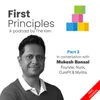
Part 2: Mukesh Bansal on hiring for loyalty to a mission, "no means not now", writing three books, and compounding sideways
Where Part 1 followed the companies, Part 2 is about the person behind them. Picking up from Mukesh Bansal's move from one venture to the next, this half gets into how he finds talent ("work with them for six months"), the mental models he runs his life by, and the beliefs underneath them. He explains why rationally no one should start a company, how he processes every rejection as "no means not now", why he writes three books by simply showing up to a blank page, and how he separated the longevity basics he trusts from the biohacking he no longer does. It ends close to home: loyalty as loyalty to a mission, what he wants for his two children, why parents' expectations matter less than they did, and a life he rates an 8 out of 10.Chapters0:00 Where we left off1:46 Finding talent: "work with them for six months"3:23 The one open-ended question he asks5:57 Winning vs looking good8:00 The compounding argument, revisited9:40 Learning vs winning: drawing the 2x211:17 Three books, and the annual look-back16:18 Making time to think in a full life18:45 What a chief of staff is actually for21:27 "No means not now" and other mental models25:57 How he writes a book28:30 How health became a throughline31:24 From ecosystem to the longevity basics34:29 Why strength training matters after 5038:08 Why he runs SparX, and the deep-tech turn44:05 Loyalty to a mission, and the number two50:35 The Apple teaching model52:52 Three adjectives, and being "scary" to juniors55:30 His kids' worldview57:54 Do parents' expectations still matter?1:00:12 Weekends, food, and reading now1:02:17 Rating his life an 8Quotes[8:44] "I don't know if this rocket thing will work. But if it works, it'll take at least ten years… they said, we are willing to work on it for the rest of our lives."[21:56] "I call this no means not now. That's how I process all the nos in my life."[24:59] "Zomato was started in 2007. They did not pivot into food delivery till 2017."[26:05] "Just show up and stare at a blank page for an hour. Sooner or later you'll start writing."[61:43] "I feel very privileged and very fortunate. So many lucky breaks have worked out for me."Frameworks & mental modelsNo means not now: process every rejection as timing, not a verdict; it protects the ego and the relationship.Long-term patient, short-term aggressive / product is marketing: charge hard daily, give the ten-year game room, and let a product people love do the selling.Horizontal compounding: compound entrepreneurial skill across ventures, not tenure in one sector.Loyalty to a mission: the durable teams are bound to an unfinished job, not to a person; build a number two and give people room.The longevity basics beat biohacking: sleep, eat less, move, strength-train after 50, tend emotional health; the exotic stuff is largely unproven.Credits & sharingThis episode was produced by Rohin Dharmakumar and mixed and mastered by Rajiv CN.Write to us at fp@the-ken.com with your feedback, suggestions, and guests you would want to see on First Principles.If you enjoyed this episode, please help us spread the word by sharing and gifting it to your friends and family.
Podzilla Summary coming soon
Sign up to get notified when the full AI-powered summary is ready.
Free forever for up to 3 podcasts. No credit card required.
Listen to This Episode
More from First Principles
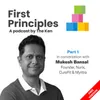
Part 1: Mukesh Bansal on founder mode in the AI age, the three kinds of professionals in the AI age, and the Haridwar boy who found entrepreneurship in a library
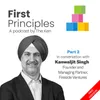
Fireside Ventures' Kanwaljit Singh on the decade at Hindustan Lever that gave him consumer, raising half the fund he could have, and keeping a coach in his sixties
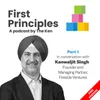
Fireside Ventures' Kanwal Singh on the consumer-brands bet nobody believed in, why "for a 5x, nobody will call you legendary," and on refusing the one-100x-outlier game
Part 2: Saahil Goel of Shiprocket on wanting a paisa of every Indian transaction outside the marketplaces, who doesn't survive at Shiprocket, and still playing Pink Floyd on a Fender
Get summaries like this every morning.
Free AI-powered recaps of First Principles and your other favorite podcasts, delivered to your inbox.
Free forever for up to 3 podcasts. No credit card required.