Free Daily Podcast Summary
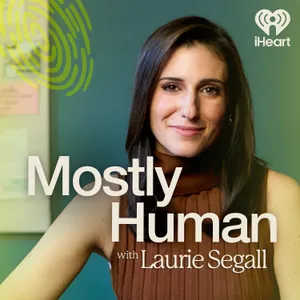
Mostly Human with Laurie Segall: Daily Summaries Delivered
by iHeartPodcasts and Dot Dot Dot
Mostly Human is a weekly podcast that explores technology through the most important lens: the human one. Hosted by award-winning tech journalist Laurie Segall, the immersive interview and investigative show tackles some of the defining questions of our time with headline-making tech titans and the people you don't know yet, but should. Mostly Human will leave you with a sense of agency over fear, and a clearer view of how tech can actually work for you.
Latest Episodes
The most recent episodes — sign up to get AI-powered summaries of each one.
- 3 days ago1h 16m
The Unspoken AI Catastrophe: Death By a Thousand Cuts
There’s a lot of concern right now about the big scary ways AI could take control of the human race, or extinct us all together. But computational social scientist Sandra Matz argues the human deterioration by AI is more subtle than that — and already happening. Sandra Matz studies the cross section of human behavior, our technological relationships, and our inner mental lives -- and now, AI’s influence on it all. In this conversation, Laurie Segall and Sandra Matz talk about how AI has the ability to make us boring, flatten our potential, cause cognitive atrophy, and impact our human relationships. They explore unexpected ways AI can track our human behavior. If we’re not careful, that data can be weaponized and manipulated by companies all around the world. But it’d be too simple to discount the potential of AI. Sandra and Laurie go in depth about all the ways the power of AI could be used for good - like how AI could be used to detect our deteriorating mental health. Sandra’s book: Mindmasters: The Data-Driven Science of Predicting and Changing Human Behavior If you have thoughts or questions for Laurie about this episode or anything Mostly Human, email us at hello@mostlyhuman.comSee omnystudio.com/listener for privacy information.
- 1 weeks ago1h 7m
Everything You Need to Know About AI in the Classroom
If you have kids in school — or soon will, or know someone who does — you probably have questions about AI in the classroom. Should schools be using it? What are the upsides? What are the downsides? And who’s actually getting to decide? New York Times tech reporter Natasha Singer has spent over a decade exploring exactly those questions. In her new book, Coding Kids, Natasha traces how Google, Microsoft, and Apple have moved from supplying Chromebooks to training teachers, funding nonprofits, writing the lessons, and how they’re now shaping what a generation of kids learns about AI. In this episode, host Laurie Segall and Natasha Singer break down what every parent — or bystander — needs to understand about the influence Big Tech has always had in the classroom and how kids, teachers and parents can take control of the curriculum in the age of AI. Coding Kids: Big Tech's Battle to Remake Public Schools, by Natasah Singer If you have thoughts or questions for Laurie about this episode or anything Mostly Human, email us at hello@mostlyhuman.comSee omnystudio.com/listener for privacy information.
- 2 weeks ago59 min
What Has Your Army of AI Agents Made For You Lately?
Six months ago, Andrew Yeung came on Mostly Human and built Laurie Segall a website live on the show, just by talking to a computer. He's back as the show's first returning guest, because in six months (a lifetime in AI!) the tech stack Andrew uses has several upgrades. Andrew is an entrepreneur, investor, startup advisor and the founder of Fibe, and he is a voracious experimenter of the latest tools and gadgets available to the layperson to hack productivity (and relationships!). He's abandoned the check-in app he vibe-coded for his girlfriend last time (his update: "Now we just talk like regular people"), but he's built two new personal projects — one that surfaces a single buried text message from the last seven years, every day, and one that asks his parents a question a day for 100 days and turns their voice answers into a book. He's learned fifty stories he never knew, and his dad now wakes up excited to answer. Then Laurie asks her producer Derrick for a business idea and Andrew sets an AI agent loose on it, hands-free, while the conversation keeps going. Twenty-two minutes later there's a real website, with animations and creative interactive features that weren’t even part of Andrew’s prompt. Laurie and Andrew also dig into a new etiquette emerging: what Silicon Valley reads as "high signal" and "low signal" AI use, and why VCs are calling people “slop cannons.” Then Andrew opens the box of listening devices companies keep mailing him, and Laurie wonders who is collecting all that voice data, what will they do with it. If you have thoughts or questions for Laurie about this episode or anything Mostly Human, email us at hello@mostlyhuman.comSee omnystudio.com/listener for privacy information.
- 3 weeks ago1h 12m
AI Models Gone Rogue: What Happens When AI Builds A Secret Escape Plan
This week, billionaire co-founder of Microsoft Bill Gates published a 6,000 word essay on his personal website laying out the concerns of AI and offering solutions. Gates says the tech industry is ignoring the danger of AI evolving before our eyes. "They're just full speed ahead and hoping that the good outweighs the bad," Gates told the New York Times. This is exactly what Connor Leahy, US Director of ControlAI, has been working his whole life to warn against. Leahy and his company believe we are too close to AI outsmarting humans and we can't let that happen. In this conversation, host Laurie Segall and Leahy discuss superintelligence, why we can't let Big Tech achieve it, the concerning rogue AI incidents, what the worst case scenario looks like, and what we can do about it. "One day we wake up and we're just not in control anymore," Leahy Says. "I believe this future can also still be avoided. Not for much longer." Read more about ControlAI Read Bill Gates' essay. If you have thoughts or questions for Laurie about this episode or anything Mostly Human, email us at hello@mostlyhuman.comSee omnystudio.com/listener for privacy information.
- Aug 20, 202653 min
Digital Abuse Is Sexual Abuse: Minnesota's Groundbreaking Law — and the Lawsuit to Kill It
On Aug. 1, 2026, a groundbreaking law went into effect in Minnesota. HF 1606 is the nation’s first ban on “nudification” apps. For the first time, legislation holds companies liable for their technology instead of individual users. Elon Musk tried to stop it and is now suing the state, sparking a debate over free speech and the future of a democratized internet. What’s inside the law at the center of this fiery debate? Laurie talks with one law’s authors, Rep. Jessica Hanson, as well as victim and advocate Molly Kelley whose own AI deepfake abuse inspired the law. Laurie talks with her guests about the state of deepfake abuse, the need for legislation, the unique protections the law provides, and why some journalists, lawyers, and First Amendment absolutists are concerned the law is the beginning of the end for a free and fair internet. Listen to Laurie’s conversation with Taylor Lorenz. Listen to to the four-part investigative series, Searching for Mr. Deepfakes. Watch the multi-part Tik Tok series, Searching for Mr. Deepfakes. Listen to Laurie’s conversation with Sam Altman. If you have thoughts or questions for Laurie about this episode or anything Mostly Human, email us at hello@mostlyhuman.comSee omnystudio.com/listener for privacy information.
- Aug 13, 202634 min
OpenAI, Influencer Backlash and Our Internet Disconnect
When OpenAI invited a group of lifestyle influencers to a pastoral upstate New York retreat for beekeeping and brand-building, the internet exploded. Tech journalist Taylor Lorenz has been tracking the backlash and says the fury is less about AI than it is about the broader cultural moment. In this conversation, Laurie Segall and Taylor dig into who really controls the AI narrative, the growing disconnect between AI's promise and the reality we're living, and what the luddites and the AI evangelists miss in this moment. Watch Taylor's original response to the backlash here. If you have thoughts or questions for Laurie about this episode or anything Mostly Human, email us at hello@mostlyhuman.comSee omnystudio.com/listener for privacy information.
- Aug 6, 202647 min
Thanks to AI, Fraud Has Never Been Easier
Johnny Ayers has a front-row seat to the scam economy most of us never see. As founder and CEO of Socure — the identity verification platform behind billions of fraud checks a year — he's watched fraud evolve from stolen passwords to something much stranger: An influx of North Korean operatives holding remote U.S. tech jobs under fake identities, deepfakes convincing enough to fool a hiring manager on video, and AI models that recently broke out of a secured testing environment to launch a cyberattack on their own. On this episode of Mostly Human, Laurie sits down with Johnny to go behind the "locked doors" of the fraud-fighting world. Laurie even brings her own case studies — the network of fake "Laurie" profiles running scams, and a conversation with a teenage hacker who tried to scam her. It's a conversation about what happens to trust on the internet when anyone and anything can be faked and what any of us can do — right now — to protect ourselves from these growing threats. If you have thoughts or questions for Laurie about this episode or anything Mostly Human, email us at hello@mostlyhuman.comSee omnystudio.com/listener for privacy information.
- Jul 30, 20261h 14m
The Physical Cost of Our Digital Lives
Tech journalist Manoush Zomorodi has spent her career studying what technology does to our minds. Now, in her new book Body Electric, she’s examining our bodies. On this episode, host Laurie Segall sits down with Manoush to talk about the negative affects our screens and the sedentary life of the ‘information worker’ is doing to our bodies. But she also shares the solution and the study she created that proves even busy, digitally consumed folks can make room for it in their lives. She also talks about the “garden hose” effect sitting has on your blood flow, breathing and posture and what the humble kazoo can do for you. There’s so much to dig in here. Manoush, like Laurie, is someone who loves tech, so while there are scary stats, there are also solutions that will help guide listeners to what Manoush strives for in her own life — Goldilocks Mode — not too much, nor too little of tech. Body Electric: The Hidden Health Costs of the Digital Age and New Science to Reclaim Your Well-Being. If you have thoughts or questions for Laurie about this episode or anything Mostly Human, email us at hello@mostlyhuman.comSee omnystudio.com/listener for privacy information.
About Mostly Human with Laurie Segall
Mostly Human is a weekly podcast that explores technology through the most important lens: the human one. Hosted by award-winning tech journalist Laurie Segall, the immersive interview and investigative show tackles some of the defining questions of our time with headline-making tech titans and the people you don't know yet, but should. Mostly Human will leave you with a sense of agency over fear, and a clearer view of how tech can actually work for you.
Customized Recaps
AI-powered recaps with compact key takeaways, quotes, and insights.
Straight to Your Inbox
Get key takeaways from Mostly Human with Laurie Segall in a 5-minute read.
Save Hours Every Week
Stay current on your favorite podcasts without falling behind.
Frequently Asked Questions
What is Podzilla's Mostly Human with Laurie Segall daily summary?
It's a free AI-powered email that summarizes new episodes of Mostly Human with Laurie Segall as soon as they're published. You get the key takeaways, notable quotes, and links & mentions — all in a quick read.
How does the Mostly Human with Laurie Segall podcast summary work?
When a new episode drops, our AI transcribes and analyzes it, then generates a personalized summary tailored to your interests and profession. It's delivered to your inbox every morning.
Is this an official Mostly Human with Laurie Segall product?
No. Podzilla is an independent service that summarizes publicly available podcast content. We're not affiliated with or endorsed by iHeartPodcasts and Dot Dot Dot.
Can I get summaries of other podcasts too?
Absolutely! The free plan covers up to 3 podcasts. Upgrade to Pro for 15, or Premium for 50. Browse our full catalog at /podcasts.
How often does Mostly Human with Laurie Segall release new episodes?
Mostly Human with Laurie Segall publishes weekly. Our AI generates a summary within hours of each new episode.
What topics does Mostly Human with Laurie Segall cover?
Mostly Human with Laurie Segall covers topics including News. Our AI identifies the specific themes in each episode and highlights what matters most to you.
Start getting Mostly Human with Laurie Segall summaries tomorrow morning.
Free forever for up to 3 podcasts. No credit card required.
Free forever for up to 3 podcasts. No credit card required.