Cause of Gravity Hole Underneath Antarctica's Ice Sheet Gets Mapped Out in New Study
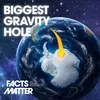
The story I’m bringing you today is one that you’ve probably never heard of before. Because, for one, it involves a continent that very few people have been on: Antarctica; and secondly, it involves a concept that very few people are familiar with: gravity holes. And right off the bat, I’ll mention that it’s not science fiction, nor is it a conspiracy theory. Gravity holes really do exist. The earth’s outer layers have different densities in different places (because the distribution of mass beneath the crust and the mantle isn’t consistent)—the effect of gravity is not perfectly uniform across the whole planet. It’s weaker in places that are less dense. In those places, you get what are known as gravity anomalies, where the gravitational pull is measurably weaker than the global average. Colloquially, these are known as gravity holes. These gravity holes can affect a person’s weight (you would weigh a little bit less if you were standing in one of these regions)—and also, they can affect sea levels (weaker gravity means that the ocean surface sits a little bit lower in those places). Interestingly, the largest gravity hole on the planet happens to be located beneath the most sparsely populated continent on the planet: Antarctica. Just earlier this year, a new study was published that worked to map out not only the mantle layer of the Earth beneath Antarctica, but also the 70-million-year-long process in which it was formed. Let’s go through it together.
Podzilla Summary coming soon
Sign up to get notified when the full AI-powered summary is ready.
Free forever for up to 3 podcasts. No credit card required.
Listen to This Episode
More from Facts Matter

Multiple US Embassies Issue Warnings to Americans

Texas Woman Arrested Over Facebook Post, Goes on Legal Offensive

Federal Judge Issues Ruling on Trump IRS Lawsuit

The Imported Asian Disease That Wiped Out 95 Percent of Florida’s Orange Industry in One Generation
Get summaries like this every morning.
Free AI-powered recaps of Facts Matter and your other favorite podcasts, delivered to your inbox.
Free forever for up to 3 podcasts. No credit card required.