Free Daily Podcast Summary
Eyes On: How Hollywood Works: Daily Summaries Delivered
by Retrofit Films
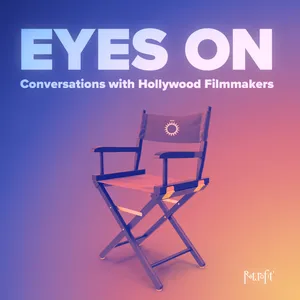
Ever wonder how a movie actually gets made? Eyes On: How Hollywood Works is the filmmaking podcast that pulls back the curtain on the people who bring films and TV to life, the artists, technicians, and storytellers working up and down the call sheet. Hosts Chris Hanada and Tanner Kling sit down with the cinematographers, production designers, casting directors, script supervisors, special effects makeup artists, sound designers, puppeteers, VFX artists, and crew whose work you've seen in your favorite movies, even if you've never heard their names. Each episode is an honest, jargon-free conversation about craft, collaboration, career paths, and the wild reality of working in the entertainment industry. Whether you're a film student trying to break in, a working professional curious about other departments, or just a movie lover who wants to know how the magic really happens, Eyes On gives you a front-row seat to the business and the art of moviemaking. Past guests include script supervisor Hannah Driscoll, casting director Jeff Gafner, production designer Meg Bell, cinematographer Garrett O'Brien, sound designer Mark Camperell, and special effects makeup artist Carleigh Herbert.
Latest Episodes
The most recent episodes — sign up to get AI-powered summaries of each one.
- Sep 30, 202639 min
Eyes On: TV Writer / Horror Novelist Tom Hanada
A shy kid who could only express himself on the page spent 15 years chasing a screenwriting career, then self-published a horror novel Hollywood had passed on, and it changed everything. Meet Tom Hanada, who writes as T.J. Payne. Tom is a working screenwriter and TV writer (Motherland, Little House on the Prairie, and the Duffer Brothers series on Netflix, The Boroughs) and co-host Chris Hanada’s brother. He taught himself screenwriting in Rob Reiner’s edit bay, took 15 years to earn his WGA card, and is honest about how the path really works: why the assistant, not the star, is your way in, and how a genuine six-year friendship landed his first staff job. He also unpacks the best writing advice on the show: why pitching is an archaic ritual you still must master, what “voice” really means, and how his self-published novel Intercepts, a script his own reps buried, found a grassroots audience, sold well over ninety thousand copies, and got picked up by Penguin Random House. Plus a clear-eyed take on AI: it can do 95 percent of the job, but the last 5 percent is where the soul is.
- Sep 23, 202642 min
Eyes on Unit Production Manager David Witz
When a movie goes over budget or a location falls through, everyone looks at one person: the unit production manager. David Witz has been that person for 30 years, on Dunkirk, War of the Worlds, Mission: Impossible III, and Escape from L.A. David calls himself the general contractor of a film set, the person who turns a director’s vision into a number and then makes that number happen. He breaks down what a UPM and a line producer really do, how he ground out the DGA qualification list, and how the biggest directors handle money: Nolan announcing Dunkirk would cost $100 million and cutting a whole country to get there, and Spielberg making War of the Worlds for scale and Witz building the budget off a bullet-point outline. Then the war stories: a 1986 shoot in Barcelona where the office was bombed the week before cameras rolled and he carried $85,000 out of a bank in his jacket, Tom Cruise on a crane in a lightning warning, why production has left Los Angeles, and the real flyable Spitfire they built for Dunkirk because Nolan will not do green screen. His advice for the next generation: there is no single path, so learn everything.
- Sep 16, 202635 min
Eyes on Photo Producer Sarah Brookshaw
Every movie poster and billboard you walk past was produced by someone. Not the photographer, the photo producer. Sarah Brookshaw is the person who makes that single image come together, and she says if she does her job right, you never notice her at all. Sarah produces the photo side of the big 360 campaigns behind the shows and films on Disney, Hulu, and beyond: key art, posters, bus-stop ads, and editorials. She breaks down what a photo producer actually does, the difference between editorial, advertising, and key art, why unit photographers on set are basically ninjas, and how some photographers prep a single shot down to the lens. She goes into her unlikely career story: from wanting to be a lawyer at age eight, through a year of law school she hated, video game publishing, automotive PR, and wedding photography, to photo production almost by accident. Plus a genuinely balanced take on where AI fits in photography, and the line she will not cross. You cannot AI human connection away.
- Sep 9, 202635 min
Eyes on TV Director Andi Armaganian
There is no straight path to directing television. Andi Armaganian’s ran through 22 years as an editor, a $100,000 feature she could not afford, and the one word you can never say when someone finally offers you the chance to direct. The hosts met Andi as an editor on Smallville, back when it still cut on film. She spent 22 years in post before the Berlanti camp asked her to direct, did the Warner Bros. directing program, and went on to direct Arrow, Supergirl, Stargirl, and multiple Star Treks. She explains why editors make great directors, and how she made herself indispensable by giving directors an escape route in the edit. Then the real job: why broadcast TV is cut to the exact frame, what it is like to be the guest director dropped into a machine that already has its crew and cast, how the business shrank from 22 directing slots to about four, directing Rescue: HI-Surf from a jet ski in the open ocean, and the best advice she gives every newcomer. Do not mess up the coffee.
- Sep 1, 202635 min
Eyes On Talent Agent for Crew and More Matt Birch
Everyone knows what an actor’s agent does. But who represents the cinematographer, the production designer, and the producer, the production service companies, the people who physically make the movie? Talent agent Matt Birch has spent 25 years on every side of that question. The hosts met Matt as a coordinator on Vanilla Sky. He went on to supervise production on Mission: Impossible III, Transformers, Elizabethtown, and Constantine before founding Mockingbird Media, a talent agency for producers, production designers, cinematographers, costume designers, second unit directors, studio and network executives, vfx producers and companies, production service companies and sound stages internationally. He breaks down what a crew agent really does: tracking jobs before they are announced, getting a client in the room, and why he wants to retire the phrase “below the line.” The human side, he says, is the real job: being the shoulder to cry on, delivering bad news when all you can say is “we’re going in another direction,” and his father’s advice about cutting a “cancer” from a team. Plus the origin story that has to be heard: a 21-year-old PA, a ten-ton truck he had no business driving, and the boss reaction that saved his career.
- Aug 26, 202639 min
Eyes on Studio AI Consultant Barbara Ford Grant
Is AI ending film careers or reinventing them? Barbara Ford Grant has watched it from every side, as a digital artist, a studio CTO, and the expert studios now hire to plan their AI strategy. Barbara spent 30 years bridging art and technology, from hand-drawn animation on Prince of Egypt, through six years of Shrek at PDI, to early machine learning at Sony Imageworks, Digital Domain, HBO in the Game of Thrones and Westworld era, and a run as CTO of Meow Wolf. That history is why her take on generative AI cuts differently. She is not reacting to a headline, she is describing a continuum she helped build. She lays out the real watershed, the collapse of the framework the industry has used for decades, the legal grey zone where almost no case law exists yet, and the existential math facing studios now that a handful of people anywhere can make something of cinema quality. She is just as clear about the limits: you can imitate a Roger Deakins shot, but you cannot predict what Deakins would do next, and that is the artistry no model can reach. Her advice to working crew is simple and urgent: get access to the tools and help define what they become.
- Aug 19, 202624 min
Eyes On Fight Coordinator / Stunt Performer Christopher Troy Pt. 2
Who actually does what on a fight scene? Stuntman, stunt coordinator, and second unit director Christopher Troy maps the whole hierarchy, from the performer who gets “burned” on day one to the second unit director running the sequence. Troy breaks down the roles most viewers never see: the stunt double who stays for a show’s entire run, the core team building fight previs in “box land” (a technique from the late Brad Allen of Jackie Chan’s team), the new “action designer” role, and the coordinators who carry the insurance when a stunt goes wrong. Then he explains how a stunt lead climbs to directing, the way J.J. Perry did with Day Shift. From there it gets forward-looking. He has motion-captured God of War, Mortal Kombat, and Call of Duty, and he is honest about generative AI: it is already fooling him, it will take some jobs, and it still cannot replace a human in the room. Plus how set safety really changed, why Christopher Nolan going all-practical still feels different, and the one piece of advice he would give his 17-year-old self. This is Part 2 of two. Part 1, his breakdancer-to-stuntman origin and the Hawaii fall, is out now.
- Aug 12, 202631 min
Eyes On Fight Coordinator / Stunt Performer Christopher Troy Pt. 1
How do you actually become a Hollywood stunt performer? Christopher Troy, a former professional breakdancer turned stunt performer, has the motion-capture resume (God of War, Mortal Kombat, Call of Duty) and the scars from live action movies and TV shows to explain it. He got discovered at 15 on a Huntington Beach pier, booked his first job at 17 (a music video, one second of screen time, the $200 pay stub now framed on his wall), and spent years striking out as an actor before he realized dance was a skill set that skips the line. A favor at a stunt gym, doubling a kid thrown through a table, turned into a decade of stunt work. Then it gets real. Why breaking into stunts is who you know, precisely because the work is dangerous. Why you can fake almost anything in Hollywood except a stunt. Why comedy hurts more than action. And the whole anatomy of a 15-foot fall for The Wrong Missy in Hawaii: the world-champion high-faller who called him, the one thing that kept him up all night, and the split-second decision that saved his vacation. This is Part 1 of two. Part 2 drops next week.
Get Eyes On: How Hollywood Works summaries in your inbox
Free AI-powered daily recaps. Key takeaways, quotes, and mentions — in a 5-minute read.
Get Free Summaries →Free forever for up to 3 podcasts. No credit card required.
You Might Also Like
Listeners also like.
The Town with Matthew Belloni
A Hollywood insider explores the business and power dynamics behind movies, TV, and streaming with executives, dealmakers, and journalists.
Hollywood Handbook
Two aspiring actors parody self-help advice and celebrity culture while interviewing famous guests about their paths to fame.

Cinema Spectator
Discusses classic films from the cinematic canon to evaluate their relevance and entertainment value for modern, casual audiences.

Table Read
Hollywood actors perform acclaimed screenplays with cinematic sound design and immersive audio.
The Lensrentals Podcast
A bi-weekly discussion on photography, videography, film, history, and technology aimed at educating and inspiring visual creators.
Documentary First: Conversations on Documentary Filmmaking
Filmmakers discuss the personal and creative journeys behind making documentaries, from idea to release.
Critical Darlings
Film critics Richard Lawson and Alison Willmore analyze new movie releases, from blockbusters to indie darlings and awards contenders.
INSIDE THE ARTHOUSE with Greg Laemmle & Raphael Sbarge
Filmmakers, actors, and cinema professionals discuss independent film, international movies, and the craft of filmmaking.
HOLLYWOODLAND
Examines crimes connected to Hollywood figures and film history, from murders to conspiracies and scandals.
The Writers Hangout
A podcast exploring the writing process through conversations with entertainment industry professionals.
Script Apart with Al Horner
Screenwriters discuss the evolution of their scripts from first draft to final film, revealing what changed and why.

Gloss Angeles
Beauty journalists discuss makeup, skincare, and wellness trends alongside industry experts and celebrities.
About Eyes On: How Hollywood Works
Ever wonder how a movie actually gets made? Eyes On: How Hollywood Works is the filmmaking podcast that pulls back the curtain on the people who bring films and TV to life, the artists, technicians, and storytellers working up and down the call sheet. Hosts Chris Hanada and Tanner Kling sit down with the cinematographers, production designers, casting directors, script supervisors, special effects makeup artists, sound designers, puppeteers, VFX artists, and crew whose work you've seen in your favorite movies, even if you've never heard their names. Each episode is an honest, jargon-free conversation about craft, collaboration, career paths, and the wild reality of working in the entertainment industry. Whether you're a film student trying to break in, a working professional curious about other departments, or just a movie lover who wants to know how the magic really happens, Eyes On gives you a front-row seat to the business and the art of moviemaking. Past guests include script supervisor Hannah Driscoll, casting director Jeff Gafner, production designer Meg Bell, cinematographer Garrett O'Brien, sound designer Mark Camperell, and special effects makeup artist Carleigh Herbert.
Customized Recaps
AI-powered recaps with compact key takeaways, quotes, and insights.
Straight to Your Inbox
Get key takeaways from Eyes On: How Hollywood Works in a 5-minute read.
Save Hours Every Week
Stay current on your favorite podcasts without falling behind.
Frequently Asked Questions
What is Podzilla's Eyes On: How Hollywood Works daily summary?
It's a free AI-powered email that summarizes new episodes of Eyes On: How Hollywood Works as soon as they're published. You get the key takeaways, notable quotes, and links & mentions — all in a quick read.
How does the Eyes On: How Hollywood Works podcast summary work?
When a new episode drops, our AI transcribes and analyzes it, then generates a personalized summary tailored to your interests and profession. It's delivered to your inbox every morning.
Is this an official Eyes On: How Hollywood Works product?
No. Podzilla is an independent service that summarizes publicly available podcast content. We're not affiliated with or endorsed by Retrofit Films.
Can I get summaries of other podcasts too?
Absolutely! The free plan covers up to 3 podcasts. Upgrade to Pro for 15, or Premium for 50. Browse our full catalog at /podcasts.
How often does Eyes On: How Hollywood Works release new episodes?
Eyes On: How Hollywood Works publishes weekly. Our AI generates a summary within hours of each new episode.
What topics does Eyes On: How Hollywood Works cover?
Eyes On: How Hollywood Works covers topics including Film, TV & Film, Comedy Interviews. Our AI identifies the specific themes in each episode and highlights what matters most to you.
Start getting Eyes On: How Hollywood Works summaries tomorrow morning.
Free forever for up to 3 podcasts. No credit card required.
Free forever for up to 3 podcasts. No credit card required.