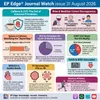
EP Edge Journal Watch Issue 31, August 2026: Caffeine, Wine, Atrial Fibrillation, Pulsed-Field Ablation and Sudden Cardiac Death
In EP Edge® Journal Watch Issue 31, August 2026, Dr. Sharma examine new evidence that challenges several familiar assumptions in cardiac electrophysiology.Should patients with atrial fibrillation routinely stop drinking coffee? An American Heart Association scientific statement reviews the cardiovascular effects of caffeine, including randomized evidence showing a 39% lower risk of recurrent AF among habitual coffee drinkers who continued coffee after cardioversion. The discussion separates ordinary coffee consumption from energy drinks and concentrated caffeine while considering premature ventricular contractions, blood pressure, sleep, and individualized patient counseling.The episode also investigates whether wine adds cardiovascular benefit to the Mediterranean diet. The apparent benefit weakened when moderate drinkers were compared with very-light drinkers, demonstrating how the reference group can change the statistical narrative. Importantly, these studies did not evaluate AF outcomes and do not support prescribing wine as cardiovascular therapy.Other studies covered include:• Pulsed-field ablation for persistent AF, with pooled one-year freedom from atrial arrhythmia of 72.3%, but no proven superiority over thermal ablation.• Broad and predominantly left-sided pulmonary vein reconnection patterns during redo procedures after pentaspline pulsed-field ablation.• Real-world Sphere-9 safety reports involving ventricular arrhythmias, implanted-device interactions, stroke, AV block, and other signals, interpreted in the absence of a procedural denominator.• The SMARTBEATS randomized trial of smartphone rhythm monitoring before cardioversion, which prevented approximately one same-day cancellation for every six patients monitored.• Autopsy-based sudden cardiac death research showing that myocardial infarction accounted for 41% of confirmed sudden cardiac deaths and highlighting the limitations of ejection fraction alone.• End-tidal carbon dioxide trajectories during out-of-hospital cardiac arrest and why no single value should become a stand-alone termination rule.• Atrial fibrillation, bradycardia, conduction disease, and ventricular ectopy in masters athletes, reinforcing that exceptional fitness does not provide immunity from clinically important arrhythmias.Listen for the study rationale, methodology, clinically meaningful statistics, limitations, and the EP Edge take on how these findings may influence practice.Complete references, graphics, and detailed analysis are available through the LinkedIn newsletter EP Edge® Journal Watch and at epedge.substack.com.
Podzilla Summary coming soon
Sign up to get notified when the full AI-powered summary is ready.
Free forever for up to 3 podcasts. No credit card required.
Listen to This Episode
More from EP Edge Journal Watch: Cardiac Electrophysiology Research
EP Edge Journal Watch 36: ESC 2026, AF Ablation and Sham Trials | PVI-SHAM-AF, PFA-SHAM, SHAM-PVI, FlexPulse, NEXAF, IDEAL-AF, ENRICH-AF
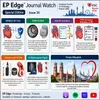
EP Edge Journal Watch Issue 35: ESC 2026 Munich Special Edition | SINGLE-AF, CMR GUIDE, New HF Guidelines & Fifth Universal Definition of MI
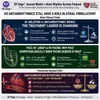
EP Edge × HRS: Rethinking the Defaults: AFib Ablation vs Antiarrhythmics, Flecainide Beyond CAST, and Physiologic Pacing
EP Edge Journal Watch Issue 34 August 2026: ICD Shocks, Troponin, PFA Safety, LOSE-AF Weight Loss and POTS, Radiation Expose in the EP Lab
Get summaries like this every morning.
Free AI-powered recaps of EP Edge Journal Watch: Cardiac Electrophysiology Research and your other favorite podcasts, delivered to your inbox.
Free forever for up to 3 podcasts. No credit card required.