Free Daily Podcast Summary
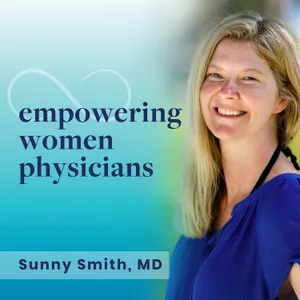
Empowering Women Physicians: Daily Summaries Delivered
by Sunny Smith MD
Medicine is truly the most noble profession. It is an honor and a privilege to be responsible for the health and well being of our society. As physicians, we aim to relieve human suffering. Then why are so many of us unhappy, stressed, and even considering leaving medicine? Characteristics of self sacrifice and delayed gratification allowed women physicians to get through medical school and residency. Yet these very same traits can cause increasing distress and may no longer be serving us. This podcast encourages women physicians to reflect on the wise words of the Hippocratic Oath and consider what more they could be doing to maintain the utmost respect for their OWN human life and its quality. Women physicians are strong, intelligent, resilient, hard working, insightful, and live their lives in service of others. Through this podcast, Dr Sunny Smith reminds them that they must first care for themselves so that they may care for others. As a practicing physician and certi
Latest Episodes
The most recent episodes — sign up to get AI-powered summaries of each one.
- Today58 min
Episode # 41 - Going Part Time
In this episode we follow up on the last episode on attrition in women physicians by discussing women physicians going part time. This can be a strategy for well being as well as prevention for attrition. We discuss data on the percentage of women physicians who want to go part time and those who do go part time. We discuss the societal issues as well as reasons within the medical system that may lead to women physicians going part time. We talk about the cost, the benefits, and using agency and autonomy to for each individual to decide what is best for them in each stage of their career. I then talk about my own personal story and the systemic and individual situations that led to me going part time and eventually leaving clinical medicine. References EWP newsletter https://empoweringwomenphysicians.com/newsletter/ EWP coaching guide https://empoweringwomenphysicians.com/guide/ EWP coach certification wait list https://empoweringwomenphysicians.com/certificationwl/ Rotenstein LS, He Z, Dziura J, Tsugawa Y, Venkatesh AK, Melnick ER, Gettel CJ. Sex differences in physician attrition from clinical practice across specialties: a nationwide, longitudinal analysis. J Gen Intern Med. Published online April 2, 2026. doi:10.1007/s11606-026-10362-1 Gettel CJ, Courtney DM, Agrawal P, et al. Emergency medicine physician workforce attrition differences by age and gender. Acad Emerg Med. 2023;30(11):1092-1100. PMC10973949 Kim E, Sinco BR, Zhao Z, Fang Y, Frank E, Sen S, Bohnert A, Hughes TM. Factors in considering and adopting part-time work schedules among early-career physicians. JAMA Netw Open. 2026;9(8):e2631241. doi:10.1001/jamanetworkopen.2026.31241 Garvey G. Which physicians are considering part-time work? American Medical Association. October 27, 2026. Includes the quotes from Dr. Tiffani Bell Washington, AMA Women Physicians Section. ama-assn.org Frank E, Zhao Z, Sen S, Guille C. Gender disparities in work and parental status among early career physicians. JAMA Netw Open. 2019;2(8):e198340. doi:10.1001/jamanetworkopen.2019.8340 Lachish S, Svirko E, Goldacre MJ, Lambert T. Factors associated with less-than-full-time working in medical practice: results of surveys of five cohorts of UK doctors, 10 years after graduation. Hum Resour Health. 2016;14:62. doi:10.1186/s12960-016-0162-3 American Medical Association. AMA Women Physicians Study. Survey of 1,439 practicing women physicians. Chicago, IL: American Medical Association; July 2024. ama-assn.org Kim J, Tran V, Marsteller D, Holthaus J, Dennis A, McAllen K. Retaining and advancing female physicians. J Organ Cult Commun Confl. 2020;23(2):1-15. Source of the women physicians' quotes. abacademies.org Shanafelt TD, Dyrbye LN, West CP, et al. Career plans of US physicians after the first 2 years of the COVID-19 pandemic. Mayo Clin Proc. 2023;98(11):1629-1640. PubMed 37923521 Hysong SJ, et al. Beyond task load: how understanding why physicians leave-and why they stay-safeguards healthcare quality and safety. BMJ Qual Saf. 2026;35(12):796-800. doi:10.1136/bmjqs-2026-021064
- 1 weeks ago52 min
Episode # 40 - Attrition of Women Physicians
Recent research reveals a shocking difference in physician attrition: the median age for women physicians leaving clinical medicine is 49 years old. Forty-nine. After at least 12 years of training half of women physicians stop practicing medicine by the time they are 49 years old. Perhaps even more shocking is that this is in stark contrast to the median age men retire from clinical medicine which was 64 years old. That's a 15 year difference. Being a physician is hard. Being a woman physician is harder. In this episode we discuss this study and many more regarding the attrition of women physicians in medicine. We discuss the sustainability of medical careers for women, the financial and personal implications of leaving clinical practice earlier, and the need for systemic change. In this episode, we also discuss if awareness of all-or-nothing thinking may be able to create some alternative options for women physicians. When we believe our only choices are to continue practicing medicine exactly as we are or leave altogether, we may be overlooking other possibilities. By questioning our assumptions and exploring a third option, or allowing ourselves to search for multiple pathways forward, we may be able to approach our careers and our lives with greater psychological flexibility and intentionality. You can sign up for the EWP newsletter here: http://empoweringwomenphysicians.com/newsletter 1. Nationwide physician attrition (2026) Rotenstein LS, He Z, Dziura J, Tsugawa Y, Venkatesh AK, Melnick ER, Gettel CJ. Sex Differences in Physician Attrition from Clinical Practice Across Specialties: A Nationwide, Longitudinal Analysis. Journal of General Internal Medicine. Published online April 2, 2026. https://doi.org/10.1007/s11606-026-10362-1 2. Emergency medicine physician attrition (2023) Gettel CJ, Courtney DM, Agrawal P, Madsen TE, Rothenberg C, Mills AM, et al. Emergency medicine physician workforce attrition differences by age and gender. Academic Emergency Medicine. 2023;30(11):1092–1100. https://doi.org/10.1111/acem.14764 3. Physician workforce transitions and temporary exits (2026) Fraher E. Physician transitions out of clinical practice: age, sex, generational, and specialty effects. Health Affairs Scholar. 2026;4(10). https://doi.org/10.1093/haschl/qxag257 4. Attrition from academic medicine (2023) Chen YW, Orlas C, Kim T, Chang DC, Kelleher CM. Workforce Attrition Among Male and Female Physicians Working in US Academic Hospitals, 2014–2019. JAMA Network Open. 2023;6(7). https://doi.org/10.1001/jamanetworkopen.2023.23872 5. Physician retirement planning — systematic review (2016) Silver MP, Hamilton AD, Biswas A, Warrick NI. A systematic review of physician retirement planning. Human Resources for Health. 2016;14:67. https://doi.org/10.1186/s12960-016-0166-z 6. The $2 million lifetime physician earnings gap (2021) Whaley CM, Koo T, Arora VM, Ganguli I, Gross N, Jena AB. Female Physicians Earn An Estimated $2 Million Less Than Male Physicians Over A Simulated 40-Year Career. Health Affairs. 2021;40(12):1856–1864. https://doi.org/10.1377/hlthaff.2021.00461 7. Marriage, children, and the physician earnings gap (2023) Skinner L, Yates M, Auerbach DI, Buerhaus PI, Staiger DO. Marriage, Children, and Sex-Based Differences in Physician Hours and Income. JAMA Health Forum. 2023;4(3). https://doi.org/10.1001/jamahealthforum.2023.0136 8. Characteristics of physician marriages (2018) Ly DP, Seabury SA, Jena AB. Characteristics of U.S. Physician Marriages, 2000–2015: An Analysis of Data From a U.S. Census Survey. Annals of Internal Medicine. 2018;168(5):375–376. https://doi.org/10.7326/M17-1758 9. Parenting and domestic responsibilities among physician-researchers (2014) Jolly S, Griffith KA, DeCastro R, Stewart A, Ubel P, Jagsi R. Gender differences in time spent on parenting and domestic responsibilities by high-achieving young physician-researchers. Annals of Internal Medicine. 2014;160(5):344–353. https://doi.org/10.7326/M13-0974 10. Early-career physicians' work and parental status (2019) Frank E, Zhao Z, Sen S, Guille C.
- 2 weeks ago42 min
Episode #39 - Adult Development & Self-authoring mind
Psychologist Robert Keagan taught about how adults make meaning can change over time. He states that most adults are living with a Socialized Mind which means that how we conduct ourselves is shaped by the expectations, values, and validation of those around us. We observe others and learn to behave in ways that conform to what is socialized as the norm. The Self-Authoring Mind is being willing to conduct one's self based on one's own values, even if others may disapprove. The Self-Transforming Mind is when one can also recognize the possible limitations of holding only their own views and values and is able to hold space for the views and values of others, even holding contradictory perspectives. In this episode we discuss how we have all been socialized in medicine to certain kinds of behaviors and how we may consider moving into a Self-Authoring or Self-Transforming Mind to be able to live in alignment with what is most important to us, even if it may not align with others.
- 3 weeks ago36 min
Episode #38 - The Work with Byron Katie
Byron Katie is one of the matriarchs of modern thought work. Her process, known as The Work, is a powerful tool for examining how our thoughts, our perspectives, and our interpretation of the world around us may be serving us or may be causing undue suffering. It offers the opportunity for cognitive reappraisal where we question the thought, notice it's impact on us, and notice what changes when we offer ourselves a more helpful perspective. You can sign up for the EWP newsletter here: http://empoweringwomenphysicians.com/newsletter The Work of Byron Katie worksheets are found here: https://thework.com/instruction-the-work-byron-katie/
- Sep 10, 20261h 2m
Episode # 37 - Perfectionism
In this episode we discuss how medicine selects for people who have a strong tendency for perfectionism. We reflect on the socialization and enculturation we have experienced that creates that and amplifies that. We then talk about how being willing to take messy imperfect action or allowing ourselves to do "B minus" work can help move us forward. References from this episode Thomas Curran TED talk: https://www.ted.com/talks/thomas_curran_our_dangerous_obsession_with_perfectionism_is_getting_worse Amna Shabbir TEDx talk: https://www.youtube.com/watch?v=oNIzzM4Vg3s
- Apr 22, 202634 min
Episode # 36 - Fierce Self Compassion with Dr. Kristen Neff
This episode included clips from a workshop inside the Empowering Women Physicians coaching program with Dr. Kristen Neff on self-compassion. We discuss the difference between tender self-compassion and fierce self-compassion. Dr. Neff speaks up about the need for women to advocate for themselves and how that is indeed an act of self-compassion. We discussed that self-compassion can be measured using the Clinical Self-Valuation Scale and that it can be significantly improved in just a short period of time, as documented by a change from 18% to 64% of women physicians inside EWP meeting criteria for a self-compassionate perspective in just 8 weeks. Links for resources mentioned in this episode. EWP coaching guide https://empoweringwomenphysicians.com/guide EWP Newsletter: https://empoweringwomenphysicians.com/newsletter EWP Published data: https://pubmed.ncbi.nlm.nih.gov/38840137/ Stanford Clinician Self Valuation Scale https://med.stanford.edu/wellmd/selfassessment.html Self-valuation. Attending to the most important instrument in the practice of medicine. https://pubmed.ncbi.nlm.nih.gov/31543254/ Study on self-valuation being the largest mediator in the difference in burnout between male and female physicians: https://jamanetwork.com/journals/jamanetworkopen/fullarticle/2846632
- Mar 12, 20262h 18m
Episode # 35 - Jill Bolte Taylor (the neuroanatomy of psychology)
In this episode, we listen to a full two hour workshop held inside the EWP Coaching Program with Dr. Jill Bolte Taylor. She is a Harvard neuroanatomist who had a stroke that led her to see her brain and psychology in a whole new way. Her TED talk is one of the most watched of all time and author of the books My Stroke of Insight and Whole Brain Living. She shares her neuroanatomically based psychological paradigm to help others live more peaceful lives. In this workshop she discusses how this framework applies to us as physicians. For more information on our Physician Coach Certification visit https://empoweringwomenphysicians.com/certification To get on on the waitlist / interest list go to https://empoweringwomenphysicians.com/certificationwl
- Mar 2, 202625 min
Episode #34 - Radical Responsibility vs Over-Responsiblity
In this episode, we discuss the unseen burden and mental load of taking over-responsibility for things that aren't ours to carry. We discuss the difference between taking Radical Responsibility for those things that are yours to control (your thoughts, feelings, actions, and results) as opposed to taking responsibility for things that are not yours to control (such as others thoughts, feelings, actions, and results).
About Empowering Women Physicians
Medicine is truly the most noble profession. It is an honor and a privilege to be responsible for the health and well being of our society. As physicians, we aim to relieve human suffering. Then why are so many of us unhappy, stressed, and even considering leaving medicine? Characteristics of self sacrifice and delayed gratification allowed women physicians to get through medical school and residency. Yet these very same traits can cause increasing distress and may no longer be serving us. This podcast encourages women physicians to reflect on the wise words of the Hippocratic Oath and consider what more they could be doing to maintain the utmost respect for their OWN human life and its quality. Women physicians are strong, intelligent, resilient, hard working, insightful, and live their lives in service of others. Through this podcast, Dr Sunny Smith reminds them that they must first care for themselves so that they may care for others. As a practicing physician and certi
Customized Recaps
AI-powered recaps with compact key takeaways, quotes, and insights.
Straight to Your Inbox
Get key takeaways from Empowering Women Physicians in a 5-minute read.
Save Hours Every Week
Stay current on your favorite podcasts without falling behind.
Frequently Asked Questions
What is Podzilla's Empowering Women Physicians daily summary?
It's a free AI-powered email that summarizes new episodes of Empowering Women Physicians as soon as they're published. You get the key takeaways, notable quotes, and links & mentions — all in a quick read.
How does the Empowering Women Physicians podcast summary work?
When a new episode drops, our AI transcribes and analyzes it, then generates a personalized summary tailored to your interests and profession. It's delivered to your inbox every morning.
Is this an official Empowering Women Physicians product?
No. Podzilla is an independent service that summarizes publicly available podcast content. We're not affiliated with or endorsed by Sunny Smith MD.
Can I get summaries of other podcasts too?
Absolutely! The free plan covers up to 3 podcasts, any in the catalog. Basic raises that to 15, Pro to 40 and Max to 100. Browse our full catalog at /podcasts.
How often does Empowering Women Physicians release new episodes?
Empowering Women Physicians publishes monthly. Our AI generates a summary within hours of each new episode.
What topics does Empowering Women Physicians cover?
Empowering Women Physicians covers topics including Medicine, Fitness, Health & Fitness, Mental Health. Our AI identifies the specific themes in each episode and highlights what matters most to you.
Start getting Empowering Women Physicians summaries tomorrow morning.
Free forever for up to 3 podcasts. No credit card required.
Free forever for up to 3 podcasts. No credit card required.