Free Daily Podcast Summary
Elevating Motherhood: Daily Summaries Delivered
by Lori Beth Auldridge
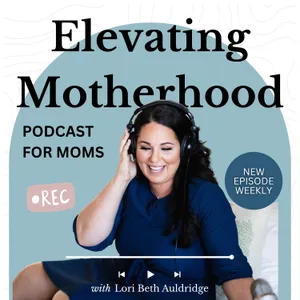
All things honest motherhood with host Lori Beth Auldridge. Helping moms find their confidence with resources & fresh perspectives.
Latest Episodes
The most recent episodes — sign up to get AI-powered summaries of each one.
- 2 days ago51 min
208. Powerful Habits to Own Your Thoughts, Understand Your Feelings, & Change Your Life with Debra Fileta
Three years ago, I read a book that greatly influenced my mothering journey.It was RESET by Debra Fileta, and I loved it so much that I named it my favorite book of the year. So naturally, I invitedDebra onto the podcast. We recorded this conversation, I was excited to share it with you…and then my whole world got flipped upside down.And this episode stayed in the archives.For a while, I was a little embarrassed that I had let three years go by without releasing it. But I've also learned that God's timing is rarely mine, and I'm much more willing these days to trust that He knows what He's doing.So when I pulled this episode out recentlyand listened to it again, I was kind of blown away by how relevant it is. There are stories in this conversation that I remembered immediately, and there is so much wisdom here that doesn't have an expiration date.And then I looked up Debra to see what she's been up to these last few years, and I couldn't believe the timing. She just released a brand-new book this week.So if you've never heard of Debra Fileta before, I'm really excited that you're meeting her through this conversation.Debra is a faith-forward licensed professional counselor, bestselling author, speaker, podcast and nationally syndicated radio host, and the founder of the Debra Fileta Counselors Network, where faith and clinically-informed counseling come together to help people navigate their mental, emotional, and relational health.She's now the author of eight books, including True Love Dates, Are You Really OK?, Soul Care, RESET, and her newest book, Relationship Skills.I still 10/10 recommend RESET. It was such an important book for me when I read it, and I would also encourage you to go see what Debra is writing about now, because she has continued to do really thoughtful work around emotional and relational health.But today, we're going back to this conversation from three years ago.Debra and I talk about something I think moms especially need to hear: the importance of taking care of ourselves, notas an indulgence, but because when we aren't well, we can't function the way God intends us to.We talk about saying no as a way of prioritizing what matters, taking a ten-minute pause in the middle of a busy day, why our triggers can reveal places where we still need healing, and how our thoughts lead to our feelings and eventually become our words and behaviors.We discuss what happens when we get angry and frustrated with our children, underlying beliefs that can hold us back,cognitive distortions, burnout, and what it looks like to mother from a place of discipleship rather than anger.There are so many lines in this conversation that I could pull out, but one that has stayed with me is this:“The work of faith is not in the avoiding, it’s in the work of facing.”And maybe that's part of why this conversation needed to wait.Three years later, I hear some of these things differently. Maybe you will too.Debra’s Links: Website: www.debrafileta.com IG: @debrafileta RESET Book: https://link.amazon/B0cc8tNCi Her Latest Book: https://link.amazon/B09OKcTQk Elevating Motherhood Links: Website: www.elevatingmotherhood.com IG: @loribethauldridge @elevatingmotherhoodThis episode was edited & mixed by: Jordan Tallon
- 1 weeks ago52 min
207. Professional Surfing & Motherhood: Danielle Zirkelbach on Building a New Path for Moms in Sports
Teaching Textbooks Free Trial: HEREToday’s topic is a little bit different but I’m very excited to share this conversation I had with Danielle Zierkelbach because Danielle and I share a Hawaiʻi connection. I spent nearly 20 years on Maui, and Danielle lives on Oahu and is a professional surfer and three-time Hawaiʻi State Champion who grew up in the world of surfing.But this conversation isn’t really about surfing. It is…but it isn’t. Danielle became a mother while pursuing her athletic career and quickly realized that there was almost no roadmap for women trying to navigate motherhood and high-level sport. So instead of waiting for someone else to create what she needed, she built it herself.Danielle founded Imua Moms and created the first surf competition specifically honoring mothers, while also spending six years documenting her own journey through pregnancy, postpartum, and returning to the ocean.In this conversation, we talk about motherhood, ambition, faith, generational cycles, and what it looks like to follow anassignment from God when there really isn’t a roadmap for where you’re going.And as someone who loves talking with other moms from Hawaiʻi, I especially loved hearing Danielle’s perspective and getting a glimpse into her story.I think you’re going to find there’s a lot more here than surfing.Danielle’s Links: Website: www.imuamoms.com Instagram: @imuamoms Lori Beth’s Links: Website: www.elevatingmotherhood.com Lori Beth’s IG: @loribethauldridge @elevatingmotherhood Please Visit Our Sponsors: www.elevatingmotherhood.com/sponsors Teaching Textbooks Free Trial: https://www.teachingtextbooks.com/?cid=LORIBETH We completely switched up the way we’re doing math in our homeschool this year…we are using Teaching Textbooks—and it has been a game changer. It has freed up so much time in our homeschool day, and honestly, it has helped me overcome some of my own insecurities as a homeschool mom when it comes to teaching math. My kids are learning at a much faster pace and our homeschool and my relationships with my kids are better for it. I love that my kids can work independently, get immediate feedback, and still have a highly effective math education without me feeling like I have to carry the entire weight of teaching everything. If you’re looking for a stress-free, effective math solution for your homeschool, I highly recommend trying Teaching Textbooks. They offer a free trial, and you can access that free trial using the link in the show notes.This episode was edited & mixed by: Jordan Tallon
- 2 weeks ago1h 8m
206. Homeschooling High School: How to Homeschool Teens with Joy & Purpose | Rachel Kovac
Buy Rachel’s Book Here: https://amzn.to/4dgzkX5 If you’ve ever wondered whether homeschooling can really work through the high school years, this conversation is for you.Today I’m talking with Rachel Kovac, a homeschooling mother of six and author of Their Future Is Shining Bright: AGuide to Homeschooling in High School. And I have to tell you—this conversation is about so much more than transcripts, college applications, and checking boxes. (Although she provides incredible detailed lists for all ofthose things!) We’re talking about commitment, family relationships, friendships, careers, college, and what it looks like toeducate the whole person during those pivotal teenage years.Rachel shows up with so much hope and encouragement, helping us to understand that the high school years aren’tthe years we need to survive—but they are some of the very best years of our homeschool.Thanks for being here as Rachel and I talk about homeschooling high school with joy and purpose. Please Visit Our Sponsors: I have to tell you about the homeschool planner I keep coming back to year after year: Sparrow HomeschoolPlanner.I’ve used a LOT of homeschool planners over the last 20 years, and this is the only one I’ve actually used multiple years in a row—and written in every single day. It’s full color,beautifully designed, has plenty of space to actually plan your days, meal plan, budget, and even plan your field trips and travels. I especially love the perforated lists. You can write out your to do lists, shopping lists, packing lists, cleaning lists--whatever you want!--then tear them out, and take them with you.It’s one of those homeschool tools that makes planning feel easier instead of adding another thing to your plate.If you’re looking for a homeschool planner you’ll actuallyuse, check out Sparrow Homeschool Planner and use my code LORIBETH for 10% off. Sparrow Homeschool Planner: www.sparrowhomeschool.com Use the Code: LORIBETH for 10% off your planner!Podcast Edited & Mixed By: Jordan Tallon
- 3 weeks ago44 min
205. Hard-Won Wisdom: What Motherhood Is Teaching Us About Identity, Home & Becoming with Kim Walker Kerkvliet
Today I’m talking with Kim, a mom of five, faith-rooted encourager, and the woman behind Ellie & the Boys and the Moms Collective Journal.Kim has walked through some incredibly hard seasons of motherhood—including single parenting and remarriageafter losing a spouse—and she brings a beautiful perspective to what it means to show up intentionally, not perfectly, in the everyday work of making a house a home.She started a life long dream of creating a magazine for moms and we’re talking about her fall issue of Moms Collective Journal, but really, we’re talking about something much deeper: the stories and hard-wonwisdom we carry as mothers, the rhythms that bring warmth back into our homes, and what motherhood is actually doing in us. She welcomes us to make a shift ifwe need to...right as we are shifting into fall. The timing of this conversation is truly *chef's kiss.*Please join me in welcoming Kim Walker Kerkvliet to the show. Kim Walker Kerkvliet’s Links: Website: https://www.ellieandtheboys.co/ Instagram: @ellieandtheboys.co Elevating Motherhood Links: Website: www.elevatingmotherhood.com Instagram: @loribethauldridge Please Visit Todays Sponsor: It’s back to school season and I want to take a minute to tell you about my favorite planner from Sparrow Homeschool. It's the only planner I've used multiple years in a row. It helps me organize my homeschool schedule, keep records, make book lists, budget, meal plan, organize travel plans, track personal goals…all while feeding me constant drips of scripture along the way. Did I mention it has a bookmark AND perforated lists? The Sparrow Homeschool Planner just gets better and better every year. And to make it even sweeter for you, the code LORIBETH will get you 10% off this year's planner! It's available in a full color printed (that I think is totally worth it for the perforated lists alone) or as digital download. Go to www.sparrowhomeschool.com to get yours and usethe code LORIBETH at checkout for 10% off your order.
- 4 weeks ago53 min
204. Helping Your Kids Navigate Dating: A Christian Parent’s Guide to Healthy Relationships with Monica Swanson
Click Here for Your Teaching Textbooks Free Trial What do you do when your teenager wants to start dating?What if they’re already dating—and you’re not sure you love the relationship they’re in?What if you have preteens? How do you talk to your kids about attraction, boundaries, healthy relationships, heartbreak, and ultimately marriage without making them feel like you’re completely out of touch with their world?These are conversations so many parents find themselves navigating, and honestly, they aren’t always easy.Today I’m talking with someone I’m especially excited to have back on the show: Monica Swanson. Monica is the author of Boy Mom, Raising Amazing, and Becoming Homeschoolers, and she hosts the Monica Swanson Podcast. She and her husband, Dr. Dave, have raised their four sons on the North Shore of Oahu in Hawaii, so we have that fun Hawaii connection as well.Monica is passionate about helping parents apply biblical wisdom to family life and encouraging moms to live whole and healthy lives. She is an author and podcaster after my own heart. This is actually Monica’s second time on Elevating Motherhood. Monica was one of my very first author interviews when this podcast was just getting started. So it was really special to reconnect with her for this conversation.Today we’re getting practical about helping our kids navigate dating from a biblical perspective—how to guide them toward healthy friendships and relationships, how to communicate with them, what to do when you have concerns about someone they’re dating, and how to help them understand dating as something we pursue when we’re ready to find a spouse.And if your kids aren’t dating yet, don’t tune this one out. The conversations you have before they start dating can make a tremendous difference in how they navigate relationships when the time comes.God’s ways are always best. And helping our kids understand that—while also giving them practical wisdom for navigating real relationships—is one of the most important conversations we can have with them.Monica also has a character training course coming out this Fall! I trust Monica’s parenting wisdom so much and am really looking forward to the course for my own family. Be sure to check today’s show notes for the link to that course (which includes even more dating insights!). Please Visit Today’s Sponsor: Teaching TextbooksWe completely switched up the way we’re doing math, and we’re now using Teaching Textbooks—and it has been a game changer. It has freed up so much time in our homeschool day, and honestly, it has helped me overcome some of my own insecurities as a homeschool mom when it comes to teaching math. My kids are learning at a much faster pace and our homeschool and my relationships with my kids are better for it. I love that my kids can work independently, get immediate feedback, and still have a highly effective math education without me feeling like I have to carry the entire weight of teaching everything. If you’re looking for a stress-free, effective math solution for your homeschool, I highly recommend trying Teaching Textbooks. They offer a free trial, and you can access that free trial using the link in the show notes. Full Show Notes at: www.elevatingmotherhood.comPlease Visit Today’s Sponsors: www.elevatingmotherhood.com/sponsorsLori Beth’s IG: @loribethauldridgeMonica’s IG: @monicaswanson_ Monica’s Website: www.monicaswanson.comEdited & Mixed by: Jordan Tallon
- Aug 15, 202659 min
203. Raising Independent Kids: Teaching Life Skills That Prepare Children for Adulthood with Katie Kimball
Teaching Textbooks Free Trial: https://www.teachingtextbooks.com/?cid=LORIBETHTeens Cook Real Food Link: https://sl290.isrefer.com/go/teenscook/loribeth/What does it actually look like to raise kids who are confident, capable, and ready for the world?As parents, we spend so much time protecting our children, helping them, and making life run smoothly for them—but sometimes the very things we do out of love can unintentionally keep them from developing the skills and confidence they need to thrive.Today, I’m excited to welcome Katie Kimball back to Elevating Motherhood for the second time. Katie is the founder of Kids Cook Real Food and creator of Teens Cook Real Food, and she has a passion for helping families raise healthy, independent adults.But this conversation goes far beyond cooking.We’re talking about what it means to empower our kids at every age, how to give them opportunities to grow, and why independence isn’t something we suddenly hand over when they turn 18—it’s something we cultivate throughout childhood.Katie shares some hilarious stories, including the story of her daughter’s college orientation, the infamous knucklehead and the steak story, and some moments that perfectly illustrate what happens when we let our kids practice, fail, learn, and become more capable.Whether you have toddlers, elementary-aged kids, teenagers, or kids who are already preparing to launch, this conversation is full of wisdom and encouragement for any parent who wants to raise children who are confident in who they are and capable of caring for themselves and others.I always appreciate Katie’s practical, grounded approach, and I know this conversation is going to give you plenty to thinkabout. More on Today's Sponsor: We completely switched up the way we’re doing math, and we’re now using Teaching Textbooks—and it has been agame changer. It has freed up so much time in our homeschool day, and honestly, it has helped me overcome some of my own insecurities as a homeschool mom whenit comes to teaching math.I love that my kids can work independently, get immediate feedback, and still have a highly effective math education without me feeling like I have to carry the entire weight of teaching it.If you’re looking for a stress-free, effective math solution for your homeschool, I highly recommend trying Teaching Textbooks. They offer a free trial, and you can access thatfree trial using the link in the show notes.Love the show? Leave me a review! 🌟🌟🌟🌟🌟Join my email list: www.elevatingmotherhood.com
- Aug 9, 20261h 1m
202. Homemaking Matters: Everyday Wisdom That Will Transform Your Home with Marci Ferrell
Homeschool Mega Bundle Here: https://www.fortheloveofhomeschooling.com/?ref=loribeth Marci's Book Here: https://amzn.to/4xvVHQ9 I think we’ve misunderstood homemaking. I do. Because the best homemakers I know aren’t just creating beautiful homes. They’re creating environments where people feel known, loved, and deeply cared for.Today’s conversation is one I have been so excited to share with you. I’m talking with Marci Ferrell, author of Homemaking Matters—a book that has landed in my top two favorite books I’ve read this year.And I have to tell you… this book is about so much more than homemaking.Yes, we talk about creating a home. But what I love most about Marci’s message is that she gets to the heart behind it all: our mindset, our attitudes, our priorities, and the posture of our hearts as we move through everyday life.This conversation is filled with wisdom that reaches far beyond homemaking. It’s about becoming the kind of woman who intentionally creates beauty, connection, and meaning in the spaces God has placed her.Marci is one of those people whose wisdom feels both grounding and encouraging. I walked away from thisconversation with so many things to think about, and I truly believe you will too.So whether you consider yourself a homemaker, or you’re simply a woman who wants to live with more intention and purpose, I think this conversation is going to encourage youdeeply.The For the Love of Homeschooling Back-to-School Mega Bundle, Volume 6 is officially here, and if you're looking for fresh inspiration for the school year ahead, you're going to love this.For just $25, you'll get over 100 digital homeschool resources covering everything from language arts and math to history, science, nature study, geography, art, planners, encouragement for moms, and so much more. Altogether,these resources are valued at more than $799, but they're only available at this price through August 10th.I've actually been purchasing these bundles for years because they're such an incredible value. But this year is extra special because I'm one of the contributors!When you purchase Volume 6, you'll also receive my homeschool planning workshop—the same planning process Iteach at my homeschool retreats, use in private coaching sessions, and rely on every year to plan my own homeschool. I truly hope it helps you create a peaceful, purposeful school year.You'll find the link to the bundle in today's show notes. Don't wait--the bundle disappears after August 10th, and once it's gone, it's gone.Love the podcast? Please leave a 5 star review!
- Aug 2, 20261h 22m
201. Outdoor Learning: Why Nature Is One of Your Child's Best Teachers with Rachel Tidd
Get the Homeschool Bundle Here: https://www.fortheloveofhomeschooling.com/?ref=loribethIf you've ever felt like your kids are happier, calmer, and more engaged after spending time outside, you're not imagining it. There is something incredibly life-giving about learning inGod's creation. The beautiful part is that outdoor learning doesn't have to be a special event or an elaborate field trip. It can become a natural extension of your homeschool day.Today's guest is Rachel Tidd, author of Wild Learning, Wild Math®, and Wild Reading™. Rachel is passionate about helping families and educators use the outdoors as aclassroom, showing us that subjects like reading and math don't have to stay at the kitchen table. Instead, nature can become one of our greatest teaching tools.In this episode, Rachel shares practical, simple ways to weave outdoor learning into your everyday homeschool, along with the many benefits children experience when they're given theopportunity to explore, move, observe, and learn outside. Whether you're homeschooling preschoolers, elementary-aged children, or simply looking for fresh inspiration, I think you'll come away with ideas you can put into practice right away.So grab your favorite drink, head outside if you can, andjoin me for this encouraging conversation with Rachel Tidd. Please Visit Today's Sponsor: The For the Love of Homeschooling Back-to-School Mega Bundle, Volume 6 is officially here, and if you're looking for fresh inspiration for the school year ahead, you're going to love this.For just $25, you'll get over 100 digital homeschoolresources covering everything from language arts and math to history, science, nature study, geography, art, planners, encouragement for moms, and so much more. Altogether,these resources are valued at more than $799, but they're only available at this price through August 10th.I've actually been purchasing these bundles for years because they're such an incredible value. But this year is extra special because I'm one of the contributors!When you purchase Volume 6, you'll also receive my homeschool planning workshop—the same planning process I teach at my homeschool retreats, use in private coaching sessions, and rely on every year to plan my own homeschool. I truly hope it helps you create a peaceful, purposeful school year.You'll find the link to the bundle in today's show notes. Don't wait--the bundle disappears after August 10th, and onceit's gone, it's gone.Full Show Notes at: www.elevatingmotherhood.com
About Elevating Motherhood
All things honest motherhood with host Lori Beth Auldridge. Helping moms find their confidence with resources & fresh perspectives.
Customized Recaps
AI-powered recaps with compact key takeaways, quotes, and insights.
Straight to Your Inbox
Get key takeaways from Elevating Motherhood in a 5-minute read.
Save Hours Every Week
Stay current on your favorite podcasts without falling behind.
Frequently Asked Questions
What is Podzilla's Elevating Motherhood daily summary?
It's a free AI-powered email that summarizes new episodes of Elevating Motherhood as soon as they're published. You get the key takeaways, notable quotes, and links & mentions — all in a quick read.
How does the Elevating Motherhood podcast summary work?
When a new episode drops, our AI transcribes and analyzes it, then generates a personalized summary tailored to your interests and profession. It's delivered to your inbox every morning.
Is this an official Elevating Motherhood product?
No. Podzilla is an independent service that summarizes publicly available podcast content. We're not affiliated with or endorsed by Lori Beth Auldridge.
Can I get summaries of other podcasts too?
Absolutely! The free plan covers up to 3 podcasts. Upgrade to Pro for 15, or Premium for 50. Browse our full catalog at /podcasts.
How often does Elevating Motherhood release new episodes?
Elevating Motherhood publishes weekly. Our AI generates a summary within hours of each new episode.
What topics does Elevating Motherhood cover?
Elevating Motherhood covers topics including Parenting, Kids & Family, Family. Our AI identifies the specific themes in each episode and highlights what matters most to you.
Start getting Elevating Motherhood summaries tomorrow morning.
Free forever for up to 3 podcasts. No credit card required.
Free forever for up to 3 podcasts. No credit card required.