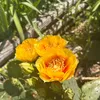
Actualizing Care, Recognizing Beauty
Greetings and Happy Early Summer!We are continuing our Summer Read of the Hidden Lamp again this year. Every week we will explore a different koan story from the collection. If you would like to follow along, check out the calendar page for up to date information on the koan selections. On Monday night during the live online meditation event, I will give a dharma talk themed around the reading for the week and then we will have time for discussion. I will post the talk here too.This past Monday we started the Summer Read with Case 19 from the Hidden Lamp: The Flower Hall on the Buddha’s Birthday.The nuns of Tokeiji were famous for their beautiful and elaborate flower decorations on the Buddha’s birthday. Master Yodo, the abbess of Tokeiji wrote a verse for this occasion:Decorate the heart of the beholder, for the Buddha of the flower hallis no where else.The Buddha’s birthday, also called Hanna Matsuri or the flower festival, usually takes place when the flowers of Spring are in full bloom. In the ceremony we decorate a flower bower with fresh flowers (in Oregon we would do this on Mother’s Day and the rhododendron’s were often a main feature). The baby buddha is placed in the center of the flower bower, in a bowl of sweet tea. During the ceremony each participant is invited up to the altar to bathe the baby buddha, while we chant a simple mantra together.To me this ceremony feels ancient. I imagine it is an evolution of a much older ceremony celebrating mid-spring, the abundance of new life, flowers and perhaps the Great Mother. For the story of the Buddha’s birth starts with Maha Maya, the Buddha’s mother. It starts with Maha Maya’s great dream, reminding us that this very life, this very moment is sourced from the great mystery and is dream-like in its nature.As many of you know, I could dwell on this theme of dream and the Great Mother for a long time. But today, I want to highlight another aspect of this koan—the quality of care.We meet Yodo and the nuns of Tokeiji decorating the buddha hall. Taking great care to make a beautiful and elaborate offering of flowers. Flowers which will start to whither and die as the ceremony ends. Flowers that speak the language of beauty and innocence, of desire and abundance, of the purity of our buddha-nature.The activity that the nuns are engaged in is the activity of their life.We often wonder how to bring our meditation practice off of the cushion into our daily lives.Here the nuns demonstrate this—with care—they say through their actions.Care is how love is expressed.Care involves attending, meeting the moment. Care awakens appreciation.Through our care, our life becomes an offering, a gift. And we are the recipients as well as the ones making the offering.In monastic life we have ceremonies and activities that give form to the expression of care. From the way we place our shoes on the shoe rack, to choosing the serving dishes for a meal to making flower arrangements for the altars, we have these opportunities to express love through our actions.I was never formally trained in the art of Ikebana, flower arranging. But I did learn some basics over the years, two of which stick with me and can be applied to so many areas of life in exploring care and beauty.The first is that space is just as important as the physical elements of the flower arrangement. So as you choose your vessel, and begin to arrange the flowers you also consider the space between the flowers, leaves and branches. In flower arranging the space is alive.The second principle is that you appreciate how the different elements grow in nature and accentuate them. You recognize that you are also an active participant in creation, so you listen to how the elements are in relationship to each other and respond.I find these two principles invite care, attention, love, appreciation and open me up to seeing the beauty in life itself. What if we moved through our days with an awareness of the space that surrounds us, with an appreciation that we are in relationship with everything we encounter. That it is our life.Listen to the dharma talk for more explorations of this koan in relationship to care, nurturing the heart and seeing our buddha nature. And as always you are invited to take this story and practice into your life. This week notice beauty, practice appreciating your life, see your life as an offering, a gift. What happens when you do?Awakening happens in relationship. Hope to see you in-person or on zoom sometime soon. Starting this coming Monday, we will return to studying the teaching stories of the women ancestors found in The Hidden Lamp.</p
Podzilla Summary coming soon
Sign up to get notified when the full AI-powered summary is ready.
Free forever for up to 3 podcasts. No credit card required.
Listen to This Episode
More from Earth Dreams: Zen Buddhism and the Soul of the World
Nothing in this World Frightens Me
equanimity's full range
the size of awakening?

Let the soft animal of your body, love what it loves
Get summaries like this every morning.
Free AI-powered recaps of Earth Dreams: Zen Buddhism and the Soul of the World and your other favorite podcasts, delivered to your inbox.
Free forever for up to 3 podcasts. No credit card required.