Free Daily Podcast Summary
Doggy Dan Podcast Show: Daily Summaries Delivered
by Doggy Dan
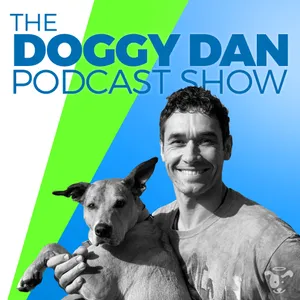
Unleash The Greatness Within Your Dog! - Expert Dog Trainer, Doggy Dan, shares his ’No Force, No Fear, No Aggression’ method of dog and puppy training. His kind and gentle way of training your dog is also fun and easy to learn, and solves the growing problem of dog reactivity. In these podcasts he’ll teach you how to become the pack leader and get genuine results - often within minutes. You’ll also learn everything you need to know about raising a happy and healthy dog. Doggy Dan runs TheOnlineDogTrainer.com that has over 250 videos of Dan in action training real dogs of all breeds, with every kind of problem. Whether you’re a seasoned pro, or just bringing home your first puppy, there’s something for everyone!
Latest Episodes
The most recent episodes — sign up to get AI-powered summaries of each one.
- Jan 3, 20248 min
Show 88: Two Most Important Types of Dog Walks EVERY Dog Owner Needs to Know
Walking your dog is a crucial part of raising and training them; thus, knowing the two types of dog walks can make a HUGE difference to your training experience. "Doggy Dan, is there more than just one way to do dog walks?" Yes… and my goal is to help dog owners tap into the power of switching walking styles to make the most out of dog walks. In this blog, I will talk about the two types of dog walks, why you need to know both, and how to know which type to use best. Read on to learn more. The Two Types of Dog Walks: Why You Need More Than Just One Type of Walk All walk and no play makes your dog a very irritable and restless pet. A common misconception among dog owners regarding walking dogs is that there's only one walking style to follow from start to finish. As a dog trainer who has helped dogs and their owners make walks effective while having fun, I know that sticking to one walking style can make your time outdoors an absolute struggle! Because let's be honest: our dogs are playful, and the outdoors is the perfect setting for unleashing their love for fun! Expecting them to follow one style of walking (and nothing else!) sets you and your dog up for frustration! So, what do you do to make outdoor walks more effective? Here are the two types of dog walks you should follow. The Structured Walk The first dog-walking style is the “structured walk”. Even though it is not THE ONLY walk you can do, it is undoubtedly the most important walk you should master. Most dog owners feel this type of walk is the gold standard, the only way to do things. (More on this later.) During the structured walk, your dog walks with a leash, and you absolutely are in control of the entire walk. You give commands, you decide what your dog can and can't do, and your dog is expected to follow your charge. This is the walking style that tells your dog, "I am in charge of the walk. I make the decisions. You listen to my commands." When you engage in a structured walk, you drive the entire walk, and your dog has to follow YOUR charge. The Social Walk Now, this walking style is what your dog loves! The walk becomes social when your dog can roam free and do what they want for a time. The walk doesn't have a structure, and dogs are more accessible to sniff posts, or check out areas they want to see. Compared to The Structured Walk, this more relaxed option allows your dog to really have fun and socialize! Two Types of Dog Walks: What the Structured Walk Teaches Your Dog Walking your dog the structured way sends them this important message: you're in charge of the walk, not them. The Structured Walk is crucial because it can solve typical dog walking problems such as leash pulling, aggression, overexcitement, and outdoor anxiety. Sure, you will be giving your dog the freedom to roam around and freely explore, but before you do that, your dog must understand you make the calls. And it is during the structured walks that your dog firmly gets the message that makes them say, "Ahh, I should listen to my owner's commands before I do anything during the walk." I actually talk more about The Structured Walk in my blog on the best way to walk dogs, the fifth in my Five Golden Rules series. In a nutshell, The Structured walk is critical because it teaches your dog they're not in charge. And when your dog knows they don't make the calls, they relax, they become less aggressive, and they come to your call (which is an absolute need if you're going to switch to The Social Walk). What the Social Walk Teaches Your Dog The Social Walk is about having fun! Here's the truth: we can't expect our dogs to spend the entire 30 minutes of their time outdoors just following a structured walk. They're already outdoors; they need to explore, run, sniff, and play. The social walk allows your dog to enjoy a little fun and downtime during your walk. Which Should You Do With Your Dog: How to Know Which Walk to Choose So, how do you know which walk to choose between the types of dog walks? When To Use the Structured Walk If you live in a city with limited free space for your dog to roam around, most of your dog walks will be structured (aka, dog on a leash with you commanding your dog what to do). However, if your place has ample space, I recommend using the first five to ten minutes of your time outdoors doing a structured walk BEFORE letting your dog walk more freely. I also recommend using a Structured Walk at the start and the end of EVERY walk to establish and re-establish your role as the one in charge of your time outside. Before you stop the Structured walk to make the switch to Social, I encourage you to ask the following questions: Is my dog coming to me when I call them? Do they have s
- Dec 28, 20236 min
Show 87: Why Dogs Pull On Leash At The Start of Every Walk: The BIGGEST Reason + Stop Leash Pulling Hack
When dog owners come to me for help on how to stop leash pulling, I feel for them, especially when I hear the frustration in their voices. It's understandable why having a dog pulling the leash can be such a pain! If all you want is to enjoy a quiet, peaceful walk with your dog, the constant struggle for control can be exhausting. And most of the time, the leash pulling happens at the start of the walk, making you wonder, "Is going out for a walk even worth it?" Why do dogs do this? Why is there even a power struggle? And should you persist? In this blog, I will talk about my biggest theory of why dogs pull the leash at the start of every walk… and what you can do to change it. Read on to learn more. Key Takeaways: Understand the Instincts: Dogs pull on the leash due to instincts derived from their wolf ancestors, seeing walks as a time for hunting and leading. They will naturally take the Alpha role if they don't sense a leader, hence the pulling. Be the Alpha Leader: To stop leash pulling, you must establish yourself as the leader in all aspects of your dog's life, not just during walks. This means setting boundaries, giving consistent consequences for pulling, and showing calm, assertive energy. Prepare and React Appropriately: How you start the walk sets the tone. Go out first, decide when to walk, and be ready with calm responses to pulling, like pauses or changing direction. Letting your dog lead or not giving consequences encourages pulling. Stop Leash Pulling: Understanding Why Dogs Pull the Leash Right Before You Start Your Walk You walk to the door; your is already pulling on the leash. You step outside down the stairs, and your dog pulls and pulls as if telling you to "Hurry up!" Your time outdoors is all about having to regain control of the leash. If you've experienced the things I mentioned above, you get how challenging it is to have a dog who wants to take charge of the walk from start to finish. But why do dogs pull the leash at the start of every walk? Let me answer that using dog psychology. You see, our dogs have the DNA of a wolf — 99.98%, to be exact. Why is this significant? Because how your dog acts can be connected to how wolves act in the wild. For the wolves, everything is about survival. When they head outdoors, a walk is not just a walk; it's all about hunting for food. The most interesting thing about wolves is they don't push through with their walk until the Alpha — the pack leader — steps in to lead the way, signals "Let's go!" and goes on to make all the big decisions. Even though our dogs have become more domesticated than their ancestors, they still think like wolves. Someone has to lead, someone has to decide, someone has to be followed, someone has to call the BIG shots. FACT: If your dog doesn't feel like an Alpha is in charge, they will take over. Why? Because dogs, by nature, will always look for the leader. If that isn't filled, they immediately have to assume the role. It’s hardwired into the DNA. And leaders lead…thus, your dog is out front and there is endless leash pulling, especially at the start of every walk. Have you ever observed your dog becoming more in tune whenever the walk happens? They're gearing up to make the big decisions! So… what can you do? To Stop Leash Pulling, You Have to Know That Control Matters to Dogs Control is a powerful concept in dog psychology! Why? Because your dog knows control is essential for survival. The Alpha is their protector! The Alpha tells them how to survive the wild and find food. Your dog pulling the leash shows they have taken the role of the Alpha. Their pulling sends the message, "I'm making the big decisions now. I will tell you what to do!" So when your dog pulls the lead, they aren't deliberately disobeying you or getting on your nerves. They pull the lead because they feel they're the pack leader, and they need to make every crucial decision to make the walk successful because that's what pack leaders do. 5 Things You Can Do To Stop The Dog From Pulling the Leash The biggest solution to stop leash pulling is to actually show your dog they can pass on the hat of l
- Dec 20, 20236 min
Show 86: How to Exit the Car with Dogs: Why Dogs Need to Calmly Exit the Car
Seeing dog owners letting their dogs run wild when the car door opens is quite a familiar scene. It’s adorable at face value… but it’s a tricky if you want to have calm walks with dogs. “Doggy Dan, do you mean I also have to keep an eye on how my dogs exit the car so I can have peace while I walk outdoors with them?” Yes, you’re right. All your problems with leash pulling, aggression, overexcitement, and yes, even protectiveness will be reduced by simply ensuring you take control WAY BEFORE your dog steps out of the car. Key Takeaways: Control Starts with the Car Exit: The way dogs exit the car sets the tone for the walk. Controlling this aspect ensures a more manageable and enjoyable outdoor experience. Calmness is Key: Encouraging calm behavior from the start, such as opening the car door calmly and giving clear commands, can significantly influence your dog's energy and responsiveness during the walk. Establishing Leadership: Teaching dogs to exit cars calmly reinforces the idea that you are in control. This understanding helps in reducing undesirable behaviors like leash pulling and overexcitement, leading to more peaceful and enjoyable walks. LEARN HOW TO WALK YOUR DOG THE RIGHT WAY WITH DOGGY DAN GOLDEN RULE #5! Table of Contents A Quick Recap of Doggy Dan Rule #5: How You Can Control the Walk The Way Dogs Exit Cars Influences How Your Walks Will Go How to Help Dogs Exit Calmly What Happens When You Help Your Dogs Calmly Exit Cars Learn More About How You Can Take Charge of Your Dog's Walks with the Dog Calming Code A Quick Recap of Doggy Dan Rule #5: How You Can Control the Walk In my previous blog about the Doggy Dan Golden Rule #5, I discussed how you can truly gain control of the walk. In the same blog, I mentioned three pillars for a successful walking experience: #1: You control the walk and the energy. #2: You set the rules on what is acceptable and what is not. #3: Your dog has to know that it’s you who calls the shots. Using this Golden Rule as a guide, letting your overexcited dog run out of the car like a sprinter immediately strikes out your chances of becoming in control of the walk. Read on to learn more about why the way dogs exit cars can make or break your outdoor walks. DOG CALMING CODE: THE PROGRAM THAT HELPS YOU LEARN MORE ABOUT THE DOGGY DAN FIVE GOLDEN RULES The Way Dogs Exit Cars Influences How Your Walks Will Go If your dog sprints out the moment you open your door, they will be hard to control throughout your time outdoors. You see, the one who controls the walk matters to dogs. If you control the walk, your dog will listen. If you let them run the show, they'll do things on their terms. Now, most dog owners don't make anything big out of the way your dog eject themselves out of cars. But I'm here to tell you that how they leave the car matters in the grand scheme of your dog's time outside. Let me give you an analogy… When I was younger, my parents brought us to exciting trips. My siblings and I would run out of the car, so excited to just be out there. That often gave my parents a hard time because calling us back was impossible once we were out. They needed our help, but we shut them off. My parents learned some hard lessons from those experiences. The next time we went on a trip, they made sure to talk to us before we headed out. BE THE LEADER IN YOUR DOG’S EYES WITH THE DOG CALMING CODE "You help out first before you play," mom and dad would say. It was e
- Dec 13, 20235 min
Show 85: Take Control: How to Make Dog Walks Work EVERYTIME!
If I asked you to write down at least three dog-walking problems, I am sure I’d find leash pulling and misbehaving somewhere on that list. Why? Because almost 80% of those who come to me for help on walking their dog have those issues. And here’s the truth: the solution is fairly simple. The problem starts when dog owners dismiss their dog's little quirks and defiance during walks as nothing serious… until they are. Fortunately, you can flip the switch by doing one simple thing: really making your dog see you’re in charge. How? Read on to learn more. Key Takeaways Leash pulling, barking, and overexcitement during dog walks often stem from a common root: your dog believes it's in charge. If you take charge, your dog will start to relax. Thus, your walks will be more calmer, controlled, smooth. Gentle gestures the walk like calmly pausing to tell your dog they’re not the one in charge can help you retain control from start to finish. LEARN HOW TO WALK YOUR DOG THE RIGHT WAY WITH DOGGY DAN GOLDEN RULE #5! Table of Contents Stop Dog-walking Problems By Taking Control of the Walk Stop Dog-Walking Problems: What Happens When You Take Control of the Walk with Dogs Stop Dog-Walking Problems By Taking Charge… Not Only On Walks. The Dog Calming Code Will Help You! Stop Dog-walking Problems By Taking Control of the Walk The most common cause of dog-walking issues like leash pulling, barking, and getting excited by just about anything is this: your dog thinks they're in control. It's like the case of "whoever gets in the driver's seat first decides where the trip goes." When the dog sees they have taken over the "driver duties" during the walk, expect them to drive… even if it requires pulling the leash, running without your permission, and chasing everything! Yes, they would do all these things despite your non-stop commands of "No, no, no, no!" So it's absolutely critical that control is in your court… and your dog has to know it! Here are some ways you can do that. #1: Take Control Even Before You Start the Walk If you start exhibiting control after leaving the house, you already lost it. Control is solidified when you're the one to decide when to take the walk. "Doggy Dan, what do you mean by this?" I want you to think of this: who decides to go for a walk? If your dog approached you with a leash in their mouth, prodding you to take them outside, AND YOU AGREED, you have lost control. Let's say your dog goes to you to signal they want to go out; here's what you can do… Ignore them for five minutes, then give the cue that it's time for a walk. You're doing this not to make your dog feel ignored but to establish your role as the ultimate decision-maker in walk-related matters. DOG CALMING CODE: THE PROGRAM THAT HELPS YOU LEARN MORE ABOUT THE DOGGY DAN FIVE GOLDEN RULES #2: Your Dog Will Persist in Regaining Control… You Can Gently Remind Them With This Move Dogs understand control. In fact, dogs are so keen in having it because it's programmed in them that control is necessary for survival. So you will see a lot of attempts to take charge of the walk or get in front of you so they can control the walk. (Bonus note: dogs also try to take control of the walk because they are sometimes very protective and feel responsible for protecting you.) The great thing about dogs is they're quick to get the message. Once you do something that tell
- Dec 7, 202335 min
Show 84: How To Train Your Dog To Be Calm - The Easy Way
- Dec 7, 20237 min
Show 83 - Doggy Rumbles: What It Means When Your Dog Yelps Out of Nowhere
Dogs don’t always say what they’re feeling, so it’s understandable why we want to know the reason why dogs yelp. Each sound our dog makes is crucial; it can signify hunger, distress, and pain. So it’s no surprise our dogs’ sudden yelping sounds can make us spring into protective, worrying mode. Yes, a yelping dog can be a dog in pain. But a dog letting out a high-pitched, petrifying sound isn’t always a pained dog… and it’s an essential truth owners should understand. Key Takeaways: Dogs yelp for various reasons, not always due to pain. It's important to discern the context of their yelping, which can indicate hunger, distress, or leadership struggles. Yelping during interactions with other dogs can be a way of establishing or conceding leadership, not necessarily a sign of pain. The concept of The Dog Calming Code emphasizes the importance of human leadership in a dog's life. By establishing themselves as the leader, owners can reduce dog fights and power struggles. BE THE LEADER YOUR DOG NEEDS WITH THE DOG CALMING CODE™️ Table of Contents: The Other Reason Why Dogs Yelp: For Dogs, It’s All About Leadership Why Do Dogs Yelp During an Intense Interaction With Other Dogs Why Dogs Yelp Reason #1: Yelping is a Sound of Conceding Why Dogs Yelp Reason #2: Yelping is a Shock Factor to Make the Other Dog Stop Charging Why You Should Not Immediately Intervene Between Two Dogs in a Rumble Dealing with Dog Rumbles: When Do I Step In? The Doggy Dan Dog Calming Code: Becoming the Leader In Your Dog’s Eyes… The Gentle Way The Other Reason Why Dogs Yelp: For Dogs, It’s All About Leadership Here’s a truth I truly embrace: dogs are all about the hierarchy. Knowing who leads and who follows is business #1. When dogs meet, they first sort out leadership because dogs are BIG on leadership. (Thus, the reason for the creation of my popular course, The Dog Calming Code™️ , which you can learn more about below.) If you can observe two dogs that just met at the park, there’s a high chance you’ll catch them growling and seemingly testing the other. Eventually, they will engage in a brawl, a classic way of challenging one another. After a few minutes of commotion, everything gets back to normal. The two dogs fighting earlier will start to interact without any aggression. When two dogs stop fighting or challenging each other, they have already settled who the leader is and who the follower is. THE DOG CALMING CODE: THE #1 PROGRAM YOU NEED FOR CALMER, WELL-BEHAVED DOGS Why Do Dogs Yelp During an Intense Interaction With Other Dogs Where does yelping come in? Somewhere during the brawl, one of the dogs might let out a sharp cry. (Think: loud, human shriek). It’s a sound that can make any dog owner spring to their feet. But here’s what I want dog owners to know: a yelp isn’t always an indication of pain. Of course, keep an eye on the dog fight and intervene when physical harm is involved. However, I encourage you to also assess the situation BEFORE immediately getting between two dogs. <a href='https://theonlinedogtrainer.com/ck/dcc-free-
- Dec 1, 20236 min
Show 82 - How to Calm Dogs Down: Top Dog Trainer Doggy Dan Shows the Power of The Calm Freeze
What do you do when your dog's energy levels spike from a 3 to an 8? My answer as a top dog trainer: the Calm Freeze. I know it's daunting seeing your dog transform from well-behaved and calm to rowdy and agitated in the blink of an eye. But here's an important fact I've learned from years of working with dogs and their owners: you, as a dog owner, possess the remarkable ability to transform your dog's behavior from hyperactive and agitated to calm and relaxed. And the Calm Freeze has been proven to bring back your dog's calm and relaxed demeanor WITHOUT having to use any product or tool. I trust it so much I even use it on my dogs. In today's blog, I will talk about the Calm Freeze and how this technique can calm your dogs without tools, words, products, or even force. Key Takeaways The technique is effective in various situations, including overexcitement, aggression, dog fights, disobedience, and anxiety. It reinforces the owner's leadership by showing calm confidence in handling different dog behaviors. The Calm Freeze is about understanding a dog's emotional state, not just a physical technique. LEARN HOW TO BE THE LEADER YOUR DOG NEEDS WITH THE DOG CALMING CODE™️ Table of Contents What is a Calm Freeze? How Do You Perform The Calm Freeze? Here's a Step-by-Step Process Why The Calm Freeze Works in Calming Dogs When Can You Use the Calm Freeze? The Calm Freeze is a Great Way to Let Your Dogs Know You're in Charge The Calm Freeze: The Technique That Tells Dogs "Look at Me, I'm Calm. I Want You to Be Calm, Too." What is a Calm Freeze? The Calm Freeze is a strategic approach to soothe a hyperactive, stressed, anxious, or restless dog. It's more than just a technique; it's an understanding of your dog's emotional state and a way to communicate peace and stability. This method isn't about physical restraint but about emotional resonance. By using the Calm Freeze, you're not just controlling your dog's actions but also influencing their emotional state, bringing them from a place of hyper to stillness. How Do You Perform The Calm Freeze? Here's a Step-by-Step Process Step 1: Begin By Calmly Guiding Your Dog Towards You This initial step sets the tone for the entire process — it's crucial that your approach is cool and composed. Don't start the Calm Freeze by shouting or forcing your dog to come to you; this can potentially create more resistance. Step 2: With a Gentle, Upturned hand, Lightly Hold Your Dog's Collar The emphasis here is on gentleness. Your dog will pick up on your calm energy, which, in turn, helps them to relax. Use a finger or two to hold the collar securely. Like I mentioned above, your dog will understand your energy more than your words. When you are calm, your dog will replicate that. THE DOG CALMING CODE: THE #1 PROGRAM YOU NEED FOR CALMER, WELL-BEHAVED DOGS Step 3: Maintain Your Calm Demeanor Your steady presence can be a powerful calming force even if your dog shows signs of agitation, fear, or restlessness. Your calming presence also helps your dog regulate their energy and emotions. Step 4: If Your Dog Tries to Bite You, Put Them in Timeout If your dog reacts negatively, such as attempting to bite, guide them calmly into a timeout. This pause allows both you and your dog to settle any heightened emotions. Step 5: Gradually Loosen Your Hold and Release Your Dog Once you start to sense their energy level
- Nov 23, 20238 min
Show 81 - Timeout for Dogs: The Number 1 Tool for Disciplining Dogs!
The reason why dogs need timeout is because they don't naturally understand human language. If you want to give consequences or correction for a specific dog behavior, you must speak a language your dog totally understands. And that’s where timeouts come in. The thing about timeout for dogs is that it's so simple. And because it's so simple, it's also so easy to overcomplicate and done wrong. Some dog owners don't tap into the power of using timeouts to correct behavior. Some also fail to apply it effectively, leaving dogs to miss the significance of their actions' consequences. As a top dog trainer who swears by timeouts, I'm here to tell you that if you're training your dog, timeout is something you should NEVER overlook or toss aside. Read on to know more. Key Takeaways Unlike shouting or using force, timeouts provide a clear, non-violent message to dogs that their behavior is unacceptable. It offers a direct and consistent response, teaching dogs that their actions have consequences. Dogs, like humans, learn from consequences. Timeout serves as a powerful consequence, indicating that certain behaviors are not acceptable. Gentle consistency is key, avoiding the need for force or intimidation. Combining attention and love when deserved with timeouts for correction helps dogs understand both rewards and consequences. The key to an effective timeout lies in maintaining calm consistency and ensuring control during and after the timeout, reinforcing your role as a reliable leader. DOG CALMING CODE: THE TRAINING PROGRAM FOR RAISING CALMER, WELL-BEHAVED DOGS Table of Contents Dogs Need Timeout: The Number One Mistake Dog Owners Do When Correcting Negative Behavior Why Dogs Need Timeout: Why a Timeout Is An Effective Way of Disciplining Dogs Why Dogs Need Timeout The Two Things You Can Do to Make Timeout for Dogs Effective FAQs About Timeout for Dogs Using Timeout for Dogs Can Speed Up Your Training Success! Dogs Need Timeout: The Number One Mistake Dog Owners Do When Correcting Negative Behavior Let me share a common scenario I'm sure you're familiar with. Your dog shows negative behaviors — perhaps barking non-stop or chewing on cables, or jumping on guests — which finally gets to your nerves. If you don't do timeouts, you’d more than likely reprimand your dog in a booming voice, "STOP IT!" and then never follow through with a correction or a form of discipline that teaches the dog not to repeat the behavior. The dog knows you are angry, but do they know why? Addressing dog behavior requires a thoughtful approach, and it goes beyond mere reactionary measures. Shouting might momentarily startle the dog, but it fails to instill a lasting lesson that prompts your dog to change negative behavior. The dog, bewildered and possibly frightened, may temporarily stop the behavior, yet the underlying issue remains unaddressed. In such circumstances, your dog is likely to repeat the undesirable action, as the shouting has not effectively communicated correction or what is expected of them. PUPPY COACH: START TRAINING YOUR PUPPIES WITH THE PROGRAM THAT HAS HELPED THOUSANDS This is where the concept of timeout plays a pivotal role in behavioral correction. In dog communication, a timeout is an essent
About Doggy Dan Podcast Show
Unleash The Greatness Within Your Dog! - Expert Dog Trainer, Doggy Dan, shares his ’No Force, No Fear, No Aggression’ method of dog and puppy training. His kind and gentle way of training your dog is also fun and easy to learn, and solves the growing problem of dog reactivity. In these podcasts he’ll teach you how to become the pack leader and get genuine results - often within minutes. You’ll also learn everything you need to know about raising a happy and healthy dog. Doggy Dan runs TheOnlineDogTrainer.com that has over 250 videos of Dan in action training real dogs of all breeds, with every kind of problem. Whether you’re a seasoned pro, or just bringing home your first puppy, there’s something for everyone!
Customized Recaps
AI-powered recaps with compact key takeaways, quotes, and insights.
Straight to Your Inbox
Get key takeaways from Doggy Dan Podcast Show in a 5-minute read.
Save Hours Every Week
Stay current on your favorite podcasts without falling behind.
Frequently Asked Questions
What is Podzilla's Doggy Dan Podcast Show daily summary?
It's a free AI-powered email that summarizes new episodes of Doggy Dan Podcast Show as soon as they're published. You get the key takeaways, notable quotes, and links & mentions — all in a quick read.
How does the Doggy Dan Podcast Show podcast summary work?
When a new episode drops, our AI transcribes and analyzes it, then generates a personalized summary tailored to your interests and profession. It's delivered to your inbox every morning.
Is this an official Doggy Dan Podcast Show product?
No. Podzilla is an independent service that summarizes publicly available podcast content. We're not affiliated with or endorsed by Doggy Dan.
Can I get summaries of other podcasts too?
Absolutely! The free plan covers up to 3 podcasts. Upgrade to Pro for 15, or Premium for 50. Browse our full catalog at /podcasts.
How often does Doggy Dan Podcast Show release new episodes?
Doggy Dan Podcast Show publishes weekly. Our AI generates a summary within hours of each new episode.
What topics does Doggy Dan Podcast Show cover?
Doggy Dan Podcast Show covers topics including Kids & Family, Animals, Family, Pets & Animals. Our AI identifies the specific themes in each episode and highlights what matters most to you.
Start getting Doggy Dan Podcast Show summaries tomorrow morning.
Free forever for up to 3 podcasts. No credit card required.
Free forever for up to 3 podcasts. No credit card required.