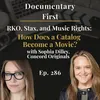
Ep. 286 l RKO, Stax, and Music Rights: How Does a Catalog Become a Movie?
Do you have a documentary, or do you have a Wikipedia entry?Music rights for film are the reason a lot of documentaries never get finished. Sophia Dilley has cleared them at a scale most filmmakers will never face. Her team's Stax: Soulsville U.S.A. needed more than thirty artists, multiple publishers and several estates on side before it could exist. And in June 2025, the company she helps run bought RKO Pictures, more than 5,000 titles including King Kong, Citizen Kane and It's a Wonderful Life.In Episode 286, Christian sits down with Sophia Dilley, Executive Vice President of Concord Originals and Co-President of RKO, to talk about music rights for film, how a music catalog becomes a movie, what Concord actually bought when it acquired RKO, and what to say to a record label when you genuinely cannot afford the rights to the song.The spine of the conversation is a question Dilley asks before her team commits to anything: is this a Wikipedia story we're telling? If the whole thing is already available in twelve seconds of searching, there may not be a film in it. Around that sit her two other threshold questions, a working answer to why the documentary business feels impossible right now, and the plainest reassurance in the episode. "It's scary," she says. "It's scary for everybody." Along the way: a punk band that played CBGB's, a production designer father who left for set at four forty-five in the morning, Roger Deakins as a case study in how to write to someone you admire, and the difference between distribution rights and derivative rights, which is the thing almost everyone got wrong about the RKO deal. If you have ever been told that music rights for film are impossible on an independent budget, she has a different answer.In this episode, you'll learn:What Concord actually acquired when it bought RKO, and why distribution rights and derivative rights are two entirely different thingsThe three questions Sophia Dilley asks before committing to any storyHow to tell whether you have a film or a Wikipedia entryThe difference between sync and publishing, and why one song can mean two negotiations with two different companiesWhat to say to a music company when the budget you have is the only budget there isWhy acknowledging that you need the music rights early saves you years laterWhy a music documentary takes five years on average, and what eats the timeWhy a rejection is usually about the marketplace rather than about your filmHow to open a door with someone you admire without being, in her words, a scary, creepy fanWhat it looks like inside a company that generates most of its projects out of its own catalogCHAPTERS0:00 What Concord Actually Bought With RKO5:34 From CBGB's to Running a Studio Division11:42 Reaching Out to People Above You16:32 Why Distribution Is Scary for Everybody21:26 Who Are You Really Competing With?26:02 Music Rights for Film: Sync and Publishing29:49 Why a Doc Takes Five Years34:54 How Does She Decide What Gets Made?41:44 Women, Allies, and Your Replacement46:05 What if You Can't Afford the Song?50:05 Closing Argument and DocuView Deja VuFREQUENTLY ASKED QUESTIONSHow do you get music rights for a documentary?You need permission from more than one owner. The song belongs to a publisher and the specific recording belongs to a label, so most documentaries need both a sync license and a master use license. On Stax: Soulsville U.S.A., that meant clearing more than thirty artists, multiple publishers and several estates. Concord Originals EVP Sophia Dilley says the first step is acknowledging you need those rights before you build the film around them.What if I can't afford to license a song for my film?Call anyway, and be honest about the budget. Sophia Dilley advises independent filmmakers to say who they are, name what the film was made for, show the actual scene the song would sit under, and ask directly for help. "Behind every door at every music company, there are real people," she says. A studio with a real budget cannot use that approach. A genuine independent often can.What is the difference between sync rights and publishing rights?They cover two different things and you usually need both. Publishing covers the composition, the notes and the words, and is controlled by a publisher. Sync covers putting a specific recording against your picture, and that recording is controlled by whoever owns the master, usually a label. Because those owners are frequently different companies, one song can require two separate negotiations and two separate invoices.How long does it take to make a music documentary?Longer than most filmmakers expect. Sophia Dilley
Podzilla Summary coming soon
Sign up to get notified when the full AI-powered summary is ready.
Free forever for up to 3 podcasts. No credit card required.
Listen to This Episode
More from Documentary First
Ep. 285 l How to Make a Documentary With No Film School: 5 Lessons

Why Can't Your Documentary Find an Audience? l Deep Dive on Ep. 284

Ep. 284 I How to Fund a Documentary Without the Industry

Who Believed in You First? I Deep Dive on Ep. 238
Get summaries like this every morning.
Free AI-powered recaps of Documentary First and your other favorite podcasts, delivered to your inbox.
Free forever for up to 3 podcasts. No credit card required.