Free Daily Podcast Summary
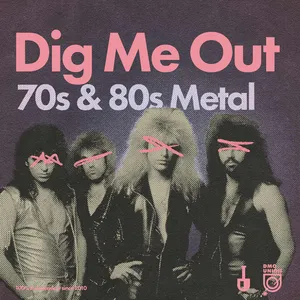
Dig Me Out: 70s & 80s Metal: Daily Summaries Delivered
by Beyond the hits—exploring the albums, bands, and moments that shaped the heavy 70s & 80s metal
J, Chip, and Tim dig into the heavy rock and metal that defined two decades—from Black Sabbath and Led Zeppelin’s pioneering riffs to Mötley Crüe’s sonic excess, the unsung heroes, and the stories behind it all. One album at a time. Let’s relive the magic. www.digmeoutpodcast.com
Latest Episodes
The most recent episodes — sign up to get AI-powered summaries of each one.
- 5 days ago57 min
Holland’s Little Monsters: The Chicago Metal Album That Got Lost Between Scenes
What if one of 1985’s most overlooked metal albums was not from the Sunset Strip at all?This week, Jay, Tim, and Chip dig into Holland’s 1985 Atlantic Records debut, Little Monsters. The album won an 80 percent community runoff, and it became a first listen for all three of us. Featuring powerhouse vocalist Tom Holland and future guitar virtuoso Michael Angelo Batio, it is a tight 34-minute hard-rock record with equal parts melodic songwriting, technical guitar, Chicago identity, and mid-’80s major-label ambition.We get into the power-pop instincts beneath the riffs, Batio’s surprisingly disciplined shred work, “Wake Up the Neighborhood” appearing in Girls Just Want to Have Fun, the album’s strongest songs, and why Holland may have needed one more record to find its real commercial lane.If you love Cheap Trick, Vinnie Vincent Invasion, Enuff Z’Nuff, early Def Leppard, or overlooked ’80s hard rock, this episode is for you.00:44: The poll result and Holland’s underdog victory01:40: Holland’s short history and Chicago roots02:22: Michael Angelo Batio before Nitro02:37: “Wake Up the Neighborhood” and its movie connection03:09: The album’s best riffs, hooks, and influences04:04: What keeps Little Monsters from being a complete statement04:50: Final verdictSubscribe to Dig Me Out at digmeoutpodcast.com | Join the community at dmounion.comHave a lost or forgotten album that deserves the spotlight? Suggest it here. This is a public episode. If you'd like to discuss this with other subscribers or get access to bonus episodes, visit www.digmeoutpodcast.com/subscribe
- 2 weeks ago1h 3m
Hawkwind Made Proto-Stoner Rock Before Anyone Had a Name for It
A Swedish band nobody outside Scandinavia ever heard live sounds like it was mixed by people who actually understood 80s post-punk instead of just imitating it. This episode, guest Darren Leach brings his first pick from the 2000s: Cut City's 2007 debut Exit Decades, a nine-song, 34-minute record that channels Joy Division, The Sound, and early Interpol while arriving a few years after the post-punk revival's commercial peak. We dig into the mechanical-versus-expressive tension in the arrangements, the mix that lets every instrument breathe, and why the album might be missing the one quirky vocal hook that made its peers famous. If you love Interpol, Editors, Bloc Party, or 2000s post-punk revival, this episode is for you.Highlights:01:49: Darren introduces Cut City and the album08:51: The mechanical/expressive dynamic breakdown19:05: The mix and bass discussion26:49: What doesn't fully land on the record33:09: The post-punk revival timeline37:41: Ratings revealedSubscribe to Dig Me Out at digmeoutpodcast.com | Join the community at dmounion.com Have a lost or forgotten album that deserves the spotlight? Suggest it here. This is a public episode. If you'd like to discuss this with other subscribers or get access to bonus episodes, visit www.digmeoutpodcast.com/subscribe
- Aug 18, 20261h 0m
Tora Tora Sounds Like Judas Priest Fighting Aerosmith
Tora Tora beat Metallica in a poll. That alone should tell you something about how this show works.This 80s Metal episode covers Tora Tora's 1989 debut Surprise Attack, the surprise winner of a four-way Patreon poll against Metallica's Master of Puppets, Slade's Keep Your Hands Off My Power Supply, and Motörhead's Iron Fist. The Memphis band's blend of Judas Priest style riffing and Beale Street blues set them apart from the Sunset Strip pack, and the hosts dig into the record's three singles, its reverb-heavy production, a firsthand tour bus story from 1992, and the band's ongoing reissue campaign and 2019 reunion. If you love Tesla, Badlands, or late-80s hard rock that never quite got its due, this episode is for you.Episode highlights:00:00: Poll results and Tora Tora's landslide win06:35: A 1992 tour bus story from backstage at a Newport headlining show20:39: What works on Surprise Attack40:04: The production issue holding the record back49:43: Final host ratingsSubscribe to Dig Me Out at digmeoutpodcast.com | Join the Board of Directors at dmounion.com Have a lost or forgotten album that deserves the spotlight? Suggest it here. This is a public episode. If you'd like to discuss this with other subscribers or get access to bonus episodes, visit www.digmeoutpodcast.com/subscribe
- Aug 4, 20261h 0m
The 1970 Billy Joel Metal Album That Time Forgot
Billy Joel in a metal band sounds like a late night joke, but Attila’s lone 1970 album is a lot stranger and heavier than the punchlines suggest. In this episode, we dig into the self titled organ driven proto metal record he cut with drummer Jon Small for Epic Records, from the meat locker cover photo to the stories of audiences fleeing their short lived club sets. We trace Joel’s path from Long Island psych rockers The Hassles to Attila’s Hammond through Marshall tone, then forward to Cold Spring Harbor and Piano Man, asking how one songwriter could pivot from medieval siege riffs to precise piano ballads in just a few years. Along the way we debate whether Attila deserves its “worst rock album ever” reputation, why the first three tracks feel like a lost EP for Deep Purple and Sabbath fans, and what this record might sound like filtered through Fu Manchu or Jack White’s world.If you love heavy organ, stoner rock, early 70s hard rock, or the weird chapters in big artists’ careers, this one is for you. Highlights: 01:18 poll ballot rundown; 10:13 legendary negative review; 17:21 Hammond through Marshall breakdown; 24:14 proto metal EP inside the LP; 53:38 dream reissue and cover band ideas.Subscribe to Dig Me Out at digmeoutpodcast.com | Join the community at dmounion.comHave a lost or forgotten album that deserves the spotlight? Suggest it here. This is a public episode. If you'd like to discuss this with other subscribers or get access to bonus episodes, visit www.digmeoutpodcast.com/subscribe
- Jul 21, 20261h 3m
Yngwie J. Malmsteen's Rising Force Turns 41: Why It Still Matters
A nineteen year old singer, a guitarist who barely wanted him there, and a record that split guitar playing into two schools for the rest of the decade. This week our 90s specialist Jeremy Amend crosses into 80s metal for his first time, bringing us Yngwie J. Malmsteen's Rising Force, the 1984 debut that crystallized neoclassical shred into an actual genre. We dig into the mystery of the "J" in his name, Jeff Scott Soto's wild resume, why this album opened the door for Shrapnel Records and guys like Steve Vai and Joe Satriani, and whether the two vocal tracks help or hurt the record. If you love Deep Purple, early Van Halen, or neoclassical metal, this episode is for you.Highlights:00:02: Jeremy's first 80s pick after years of 90s deep cuts04:11: The real story behind Yngwie's name change30:14: Is this the first neoclassical solo guitar album in rock history35:38: What doesn't work on the record52:15: Final ratings and poll resultsSubscribe to Dig Me Out at digmeoutpodcast.com | Join the community at dmounion.com Have a lost or forgotten album that deserves the spotlight? Suggest it here. This is a public episode. If you'd like to discuss this with other subscribers or get access to bonus episodes, visit www.digmeoutpodcast.com/subscribe
- Jul 7, 20261h 15m
1976: The Year Guitar Rock Split In Two
1976 was supposed to belong to disco, soft rock, and singer‑songwriters. Yet in the shadows of “Disco Lady,” “A Fifth of Beethoven,” and “Silly Love Songs,” guitar bands were quietly rebuilding what hard rock and metal could be. Boston’s basement‑crafted debut exploded onto Epic Records, Thin Lizzy dropped Jailbreak and Johnny the Fox in the same year, and Judas Priest, Scorpions, Rainbow, and Rush started sketching out the next decade of heavy music.In this roundtable, we go deep into the albums of 1976 that still matter for 70s and 80s metal and hard rock. We talk Kiss’ double‑punch of Destroyer and Rock and Roll Over, the strange transitional energy of Zeppelin’s Presence and Sabbath’s Technical Ecstasy, and the way Ramones, Sex Pistols, and Blondie cracked open a punk and new wave future while classic rock giants were already burning out.If you love Boston, Thin Lizzy, Judas Priest, Aerosmith, or any corner where 70s hard rock collides with early punk and European deep cuts, this episode is for you.Highlights:• 02:30: Billboard’s 1976 snapshot vs the albums we care about• 12:10: The accidental birth of Johnny the Fox• 24:10: Kiss in hi‑gloss and raw form, in one year• 29:20: Gasolin’ and Solid Ground, Scandinavian heaviness in 1976Subscribe to Dig Me Out at digmeoutpodcast.com | Join the community at dmounion.com This is a public episode. If you'd like to discuss this with other subscribers or get access to bonus episodes, visit www.digmeoutpodcast.com/subscribe
- Jun 30, 20261h 25m
1986: The Year Glam and Thrash Both Peaked at the Same Time
On daytime MTV, Bon Jovi was becoming the biggest pop-rock act on the planet. Poison was setting the blueprint for everything pop culture now calls hair metal. At the same time, Metallica, Slayer, and Megadeth: were building massive and devoted audiences. These two worlds shared MTV, shared tour bills, and shared fans who were being asked to pick a side. That tension is what makes 1986 unlike any other year in metal history.The Glam Explosion That Broke Daytime MTVHere’s what happened between 1984 and 1986: metal expanded beyond just being scary.After Quiet Riot became the first hard rock band to score a number-one album in 1984, the genre broke into mainstream consciousness. Then the PMRC Senate hearings of 1985 gave the music a problem: it needed to stop being threatening. By 1986, the solution was in the videos. Make them colorful. Make them fun. Start somewhere relatable: a bedroom, a garage, a studio. Then escalate into an idealized fantasy of concert performance. Replace leather and skulls with neon and teased hair. What had been relegated to late-night Headbangers Ball slots now fit the 3 PM MTV daypart. The music and the medium found each other.Bon Jovi’s Slippery When Wet is the commercial monument to that shift. Released August 18, 1986, it rolled out singles for nearly a full year after release: “You Give Love a Bad Name” in July, “Livin’ on a Prayer” in October, “Wanted Dead or Alive” the following March, “Never Say Goodbye” in June of 1987. Each one was bigger than the last. The year before, Bon Jovi had been opening for Billy Squier. The key differentiator from their earlier work: the arrival of Desmond Child as co-writer on the two biggest singles, bringing professional hit-making infrastructure to what was already a committed band.Poison’s Look What the Cat Dragged In was doing the same thing with less money. Their starting address was Enigma Records, home to They Might Be Giants, The Cramps, Dead Milkmen, and Devo. An underground punk label, not a hair metal machine. Capitol entered the picture later, which explains why “Cry Tough” barely moved and “Talk Dirty to Me” became an MTV staple. Poison didn’t just succeed with this blueprint; they franchised it.Van Halen’s 5150 added keyboards and landed the best Sammy Hagar-era album in the process. David Lee Roth’s Eat ‘Em and Smile amplified the campy fun of his Van Halen years into a career highlight. Cinderella’s Night Songs made the sharpest glam debut of the year: darker and more concise than anything they’d produce later, before the bluesy detours took over. Jon Bon Jovi helped them record it. That’s how fast the food chain was moving in 1986.The Thrash Revolution Running in ParallelHere’s the thing about thrash in 1986: it wasn’t hidden. Headbangers Ball existed. The magazines covered it. Metallica opened for Ozzy on the Ultimate Sin arena tour. But in the daytime MTV ecosystem, thrash was not the default. If you wanted it, you had to find itMaster of Puppets is eight songs long, 54 minutes, and sounded like nothing on daytime MTV or rock radio. It is heavy and precise and expansive in equal measure: a record where the title track alone runs over eight minutes and earns every second. It was Metallica’s third album, the last one with Cliff Burton, and it was recorded without a single thought given to MTV rotation or radio airplay. No videos. No singles. Just the record, and the word that spread through tape trading, zines, college radio metal shows, and the underground networks that thrash metal relied on before the internet existed.What makes 1986 extraordinary is that Metallica wasn’t alone. Slayer’s Reign in Blood came out the same year: 29 minutes of something faster and more extreme than Master of Puppets, an album that even people who don’t follow Slayer know by reputation. Megadeth’s Peace Sells... But Who’s Buying? completed what might be the single most concentrated year of output from the Big Four of thrash metal: three of the four bands releasing arguably their best records in a twelve-month span. Anthrax didn’t have an album in 1986. If they had, it would ha
- Jun 16, 20261h 4m
Black Roses Original Motion Picture Soundtrack (1988): The King Kobra Album Hidden Inside a B-Movie
In 1988, a straight-to-VHS satanic panic horror film called Black Roses went nowhere fast. The movie itself is, by any honest assessment, terrible: bright red fake blood, rubber monster suits, Vincent Pastore as a concerned father, and a teacher who kills a possessed student with a tennis racket. What the film left behind, almost accidentally, was a soundtrack worth arguing about.The musicians behind the fictional band Black Roses are King Cobra's core lineup: Marcie Free, Mick Sweda, Carmine Appice, and Chuck Wright. They show up alongside Lizzy Borden, Bang Tango (in their first commercial recording ever, predating Psycho Cafe by a year), Tempest, Hallow's Eve, and a second King Kobra lineup featuring Johnny Edwards, who later sang for Foreigner. Metal Blade Records put full-page ads in every metal magazine. The CD now sells for $50 to $300 on Discogs. Patron Keith Miller paid $100 for his.This week, Jay, Tim, and Chip work through whether this is a hidden gem, a curiosity, or something more complicated: a record that does not fit the artist album model or the showcase compilation model, and lands somewhere between the two.🎧 Listen to the episode on DigMeOutPodcast.comEpisode HighlightsIntro : Poll reveal. Black Roses wins a four-way race at 30.4%, beating Venom, Death Angel, and Marry My Hope. Patron Keith Miller spent $100 on the CD to make this happen.6:23: The movie. Jay watched it on Tubi: satanic band, small-town teacher, monster from a speaker, tennis racket murder, Vincent Pastore, an open ending where Black Roses heads to Madison Square Garden.14:07: Is it fun-bad or just bad? Jay: "Worst movie I've ever seen." Taken completely seriously, no camp wink at the camera, zero budget.17:45: The Keith Miller subplot. An actor named Keith Miller appears in the film's credits. Running gag: he is possessed, much older than we realize, a satanic demon.20:07: Rock Invasion. Carmine Appice's drumming is most audible here; a conventional anthemic verse gives way to a minor-key trippy middle section nobody expected.22:27: Two versions of King Cobra on one record. The Black Roses band is the Marcie Free/Mick Sweda/Carmine Appice lineup; "Take It Off" is King Kobra with Johnny Edwards, who later sang for Foreigner.26:34: Paradise (We're On Our Way). Power ballad that divides the hosts: sounds like Winger or Stan Bush's "The Touch," overly positive, no edge.30:10: Bang Tango's first commercial recording. "I'm No Stranger" predates Psycho Cafe by a year. Joe Leste's name is spelled differently in the liner notes.32:13: Me Against the World. The best song on the record by a clear margin. Used twice in the film. Already had a video before the movie existed.36:03: Take It Off (King Kobra). Johnny Edwards, later of Foreigner. Jay: "Could have been a Gene Simmons song."41:40: Trick or Treat comparison. The 1986 Fastway soundtrack as a contrast: bigger budget, theatrical release, now retroactively a Fastway album. Future episode pairing suggested.44:38: Carmine and Pink Floyd. While filming in Canada, Carmine walked into a record store and heard himself on A Momentary Lapse of Reason for the first time. Nick Mason had a hand injury; Floyd called Carmine for "Dogs of War."47:07: Bill and Ted comparison. Black Roses falls between a cohesive all-artist album and a showcase compilation, satisfying neither. Hosts rattle off both Bill and Ted soundtracks from memory.53:20: Dance on Fire. Jay: "I kept singing Bon Jovi's 'In and Out of Love': same cadence." Could have had a Headbangers Ball video.Outro: Verdicts delivered. Keith Miller shoutout.Subscribe to Dig Me Out at digmeoutpodcast.comJoin the community at <a targ
About Dig Me Out: 70s & 80s Metal
J, Chip, and Tim dig into the heavy rock and metal that defined two decades—from Black Sabbath and Led Zeppelin’s pioneering riffs to Mötley Crüe’s sonic excess, the unsung heroes, and the stories behind it all. One album at a time. Let’s relive the magic. www.digmeoutpodcast.com
Customized Recaps
AI-powered recaps with compact key takeaways, quotes, and insights.
Straight to Your Inbox
Get key takeaways from Dig Me Out: 70s & 80s Metal in a 5-minute read.
Save Hours Every Week
Stay current on your favorite podcasts without falling behind.
Frequently Asked Questions
What is Podzilla's Dig Me Out: 70s & 80s Metal daily summary?
It's a free AI-powered email that summarizes new episodes of Dig Me Out: 70s & 80s Metal as soon as they're published. You get the key takeaways, notable quotes, and links & mentions — all in a quick read.
How does the Dig Me Out: 70s & 80s Metal podcast summary work?
When a new episode drops, our AI transcribes and analyzes it, then generates a personalized summary tailored to your interests and profession. It's delivered to your inbox every morning.
Is this an official Dig Me Out: 70s & 80s Metal product?
No. Podzilla is an independent service that summarizes publicly available podcast content. We're not affiliated with or endorsed by Beyond the hits—exploring the albums, bands, and moments that shaped the heavy 70s & 80s metal.
Can I get summaries of other podcasts too?
Absolutely! The free plan covers up to 3 podcasts. Upgrade to Pro for 15, or Premium for 50. Browse our full catalog at /podcasts.
How often does Dig Me Out: 70s & 80s Metal release new episodes?
Dig Me Out: 70s & 80s Metal publishes biweekly. Our AI generates a summary within hours of each new episode.
What topics does Dig Me Out: 70s & 80s Metal cover?
Dig Me Out: 70s & 80s Metal covers topics including History, Music, Commentary. Our AI identifies the specific themes in each episode and highlights what matters most to you.
Start getting Dig Me Out: 70s & 80s Metal summaries tomorrow morning.
Free forever for up to 3 podcasts. No credit card required.
Free forever for up to 3 podcasts. No credit card required.