Free Daily Podcast Summary
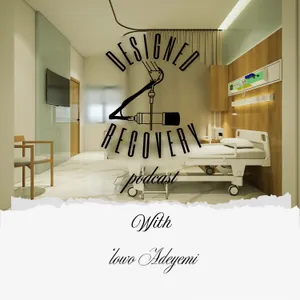
Designed 4 Recovery: Daily Summaries Delivered
by ‘lowo Adeyemi
A groundbreaking show that explores the intersection of healthcare and design, focusing on creating environments that foster healing, support staff well-being, and optimize outcomes for patients and providers alike. Through evidence-based design solutions, the show enlightens designers, healthcare professionals, and facility owners on how thoughtful design can enhance patient satisfaction, improve operational efficiency, and maximize returns on investment. Join us as we uncover the transformative power of healthcare design in shaping environments of care.
Latest Episodes
The most recent episodes — sign up to get AI-powered summaries of each one.
- Today29 min
D4R Episode 36: Sensory Rooms in Hospitals: Design Beyond Sight and Sound
Hey! I'd love to hear your thoughts, send me a voice note.In this conversation, Adelowo Adeyemi explores the intersection of healthcare, psychology, and architecture, focusing on the importance of sensory design in hospitals. He emphasizes that hospitals should not only be functional but also consider the sensory experiences of patients. Adeyemi discusses the need for sensory rooms and environments that allow patients to control their sensory conditions, highlighting the significance of smell, touch, temperature, and proprioception in design. He advocates for a holistic approach to hospital design that prioritizes patient autonomy and comfort, ultimately aiming for a healthcare environment that supports recovery. TakeawaysHospitals should consider the sensory experience of patients.Sensory design goes beyond sight and sound.Patients need control over their sensory environment.Privacy and sensory control are not the same.Sensory overload is subjective and varies by individual.Design should accommodate both hypersensitivity and hyposensitivity.Choice in sensory conditions empowers patients.Technology in sensory rooms should serve a purpose, not distract.The future of healthcare design may not require dedicated sensory rooms.Involving patients in the design process is crucial. Support us by visiting our sponsorsCozy Earth redefines luxury sleep with its best-selling Bamboo Sheet Set, made from 100% premium viscose from bamboo, and its ultracomfortable Pyjamas. Known for cooling and moisture-wicking properties, Cozy Earth's bamboo bedding is perfect for hot sleepers seeking a restful night's sleep. The oversized fit and incredibly soft drape of these sheets only improve with each wash, making them a standout in luxury bedding.Visit them at www.cozyearth.com. Use promo code: D4RCARE and get 21% off whatever you are buying from them.Visit them today and support us.
- 1 weeks ago20 min
D4R Episode 35: THE AIR WE HEAL IN : How Healthcare Design Shapes Indoor Air Quality and Patient Recovery
Hey! I'd love to hear your thoughts, send me a voice note.SummaryIn this conversation, Adelowo Adeyemi explores the critical role of healthcare design in promoting healing and recovery. He emphasizes that the healthcare environment extends beyond aesthetics to include factors like indoor air quality, moisture management, and ventilation. The discussion highlights the importance of creating spaces that not only avoid harm but actively contribute to patient recovery. Adeyemi advocates for a holistic approach to healthcare design that considers the biological experience of patients and the invisible qualities of the environment they inhabit. Takeaways· Indoor air quality is a crucial aspect of healthcare design.· The environment interacts with patients' bodies from the moment they enter a facility.· Poor indoor air can add unnecessary stress to patients.· Moisture management is essential to prevent mold and maintain a healthy environment.· Ventilation systems must be tailored to the specific needs of different spaces in healthcare facilities.· Designing for prevention should be a priority in healthcare architecture.· Healthy buildings should be a standard in all environments, not just hospitals.· Architecture shapes behavior and environmental exposure.· The responsibility of healthcare design extends beyond aesthetics to include patient well-being.· Every healthcare encounter begins with a breath, emphasizing the importance of air quality.TitlesTHE AIR WE HEAL INHow Healthcare Design Shapes Indoor Air Quality and Patient Recovery Sound Bites 00:00 "Can a building designed to help us heal?" 08:29 "Healing design is not only about creating something beautiful." 18:07 "A healthy building is not a one-time architectural achievement." 25:54 "The air should not be an afterthought." 28:23 "Keep designing for recovery." Chapters 00:00 The Healing Environment: More Than Just Aesthetics 08:59 Understanding Indoor Air Quality and Its Impact 11:37 The Role of Moisture Management in Healthcare Design 14:57 Ventilation: Balancing Efficiency and Health 19:04 Designing for Prevention: A New Paradigm 20:25 Beyond Hospitals: The Broader Implications of Healthy Design 24:05 The Biological Experience of Space: A Call to Action
- 2 weeks ago29 min
D4R Psychology of Perception Final Episode: The Future of Recovery-Centered Design
Hey! I'd love to hear your thoughts, send me a voice note.What if the hospital of the future could do more than treat illness—what if it could actively support the experience of healing?In the final episode of The Psychology of Perception, Designed 4 Recovery looks toward a future where healthcare environments are shaped by neuroarchitecture, psychology, technology, and evidence-based emotional design.We explore how hospitals can be designed around human experience, supporting emotional wellbeing, autonomy, connection, dignity, and recovery.Because architecture may not be medicine—but it can help create the conditions in which healing happens.The future of healthcare isn't simply about smarter hospitals. It's about more human hospitals.#Designed4Recovery #HealthcareDesign #RecoveryCenteredDesign #Neuroarchitecture #EvidenceBasedDesign #HealingEnvironments #HealthcareArchitecture #PatientExperience
- 3 weeks ago19 min
D4R The Psychology of Perception Ep 9: Healing Through Human Connection
What if one of the most important elements in recovery isn't found in a piece of medical equipment—but in the feeling that someone is there with you?Illness can be deeply isolating. Patients may find themselves separated from family, disconnected from their communities, or surrounded by people while still feeling emotionally alone. But healthcare environments can either reinforce that isolation or create opportunities for connection, belonging, and support.In this episode of Designed 4 Recovery, we explore the powerful relationship between healthcare design and human connection.From patient rooms and family spaces to communal areas, gardens, rehabilitation environments, and community clinics, we examine how architecture can create opportunities for meaningful interaction without compromising privacy or personal autonomy.We also explore an important shift in healthcare design:What if we stopped designing only for the patient and started designing for the relationships surrounding the patient?Because recovery rarely happens in isolation.It happens through relationships—with family, caregivers, clinicians, friends, communities, and sometimes even strangers who remind us that we are not alone.
- 4 weeks ago21 min
D4R The Psychology of Perception Ep 8: The Emotional Weight of Waiting
In this conversation, Adelowo Adeyemi discusses the critical role of design in healthcare waiting areas, emphasizing the importance of acoustic design, privacy, and emotional support. He highlights how the waiting experience can significantly impact patients' perceptions and emotional states, advocating for thoughtful design that caters to diverse needs and transforms waiting into a meaningful part of the healthcare journey.TakeawaysNoise can create sensory fatigue in waiting areas.Acoustic design is essential for a calming environment.Privacy should begin at arrival, not just in consultation rooms.Waiting experiences differ greatly among individuals.Inclusive design must cater to various patient needs.Waiting areas can influence first impressions of healthcare institutions.Design should help patients prepare for what comes next.Comfort and dignity are crucial during uncertain times.Waiting is filled with emotion and should be designed accordingly.Design for recovery starts the moment someone enters the facility.
- Aug 18, 202618 min
D4R The Psychology of Perception Ep 7: Biophilia and the Healing Mind
In this conversation, Lowo Adeyemi explores the profound relationship between nature and healthcare design, emphasizing the importance of biophilia in creating healing environments. He discusses how natural elements can positively impact patients' psychological well-being, the significance of natural light, and the need for thoughtful design that integrates nature into healthcare settings. Adeyemi highlights the role of healthcare workers in these environments and advocates for a holistic approach that combines technology with nature to enhance patient care and recovery.TakeawaysNature can significantly influence emotional states.Biophilic design goes beyond decoration; it addresses human needs.Natural light is crucial for regulating circadian rhythms.Views of nature can expand a patient's psychological space.Attention restoration is vital for patient recovery.Healing environments should consider the needs of healthcare workers.Therapeutic landscapes must be intentionally designed for various users.Nature should be seen as supportive infrastructure for well-being.Integrating nature and technology can enhance healthcare environments.The narrative surrounding illness can be changed through design.
- Aug 3, 202614 min
D4R Psychology of Perception Ep 6: The Healing Power of Control
Healing is not only influenced by medicine—it is also shaped by a person's sense of control.In this episode of Designed 4 Recovery, we explore how healthcare environments can either reinforce feelings of helplessness or empower patients to actively participate in their own recovery. When illness disrupts daily life, patients often lose control over their routines, privacy, decisions, and independence. While some of these changes are unavoidable, the built environment can either intensify that loss—or help restore a sense of agency.Drawing from environmental psychology, neuroscience, and evidence-based healthcare design, this episode examines why autonomy is a fundamental human need and how even small opportunities for personal choice can significantly influence emotional well-being, resilience, and engagement with care.From adjustable lighting and room personalization to intuitive wayfinding and family-inclusive spaces, we discuss how healthcare design can provide patients with meaningful control over their surroundings, reinforcing dignity and confidence throughout the healing journey.
- Jul 20, 202612 min
D4R Psychology of Perception Ep 5: Restoring Identity: Designing Beyond the "Sick Role"
Illness can change more than the body—it can change how people see themselves.In this episode of Designed 4 Recovery, we explore one of the most profound yet overlooked dimensions of healthcare design: its ability to preserve and restore patient identity. While clinical care focuses on treating disease, the built environment continuously influences how patients perceive themselves, their dignity, their independence, and their place in the world.When individuals enter a healthcare facility, they often leave behind familiar routines, personal spaces, and roles that define who they are. Without careful attention to the patient experience, healthcare environments can unintentionally reinforce what psychologists describe as the "sick role," where individuals begin to identify more with their illness than with the person they have always been.This episode examines how thoughtful, human-centered design can help patients maintain their sense of self throughout the healing journey. Through evidence-based healthcare design, environmental psychology, and neuroscience, we explore how architecture can communicate dignity, autonomy, belonging, and hope—helping patients see themselves not simply as recipients of care, but as whole human beings capable of recovery.
About Designed 4 Recovery
A groundbreaking show that explores the intersection of healthcare and design, focusing on creating environments that foster healing, support staff well-being, and optimize outcomes for patients and providers alike. Through evidence-based design solutions, the show enlightens designers, healthcare professionals, and facility owners on how thoughtful design can enhance patient satisfaction, improve operational efficiency, and maximize returns on investment. Join us as we uncover the transformative power of healthcare design in shaping environments of care.
Customized Recaps
AI-powered recaps with compact key takeaways, quotes, and insights.
Straight to Your Inbox
Get key takeaways from Designed 4 Recovery in a 5-minute read.
Save Hours Every Week
Stay current on your favorite podcasts without falling behind.
Frequently Asked Questions
What is Podzilla's Designed 4 Recovery daily summary?
It's a free AI-powered email that summarizes new episodes of Designed 4 Recovery as soon as they're published. You get the key takeaways, notable quotes, and links & mentions — all in a quick read.
How does the Designed 4 Recovery podcast summary work?
When a new episode drops, our AI transcribes and analyzes it, then generates a personalized summary tailored to your interests and profession. It's delivered to your inbox every morning.
Is this an official Designed 4 Recovery product?
No. Podzilla is an independent service that summarizes publicly available podcast content. We're not affiliated with or endorsed by ‘lowo Adeyemi.
Can I get summaries of other podcasts too?
Absolutely! The free plan covers up to 3 podcasts. Upgrade to Pro for 15, or Premium for 50. Browse our full catalog at /podcasts.
What topics does Designed 4 Recovery cover?
Designed 4 Recovery covers topics including Arts, Design. Our AI identifies the specific themes in each episode and highlights what matters most to you.
Start getting Designed 4 Recovery summaries tomorrow morning.
Free forever for up to 3 podcasts. No credit card required.
Free forever for up to 3 podcasts. No credit card required.