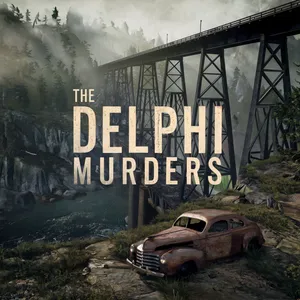
Free Daily Podcast Summary
Delphi Murders: Richard Allen & The Search For The Truth: Daily Summaries Delivered
by True Crime Today
Injustice isn’t just a possibility—it’s a reality. Delphi Murders: Richard Allen & The Search For The Truth dives deep into the shocking failures of the investigation into the brutal murders of Abby Williams and Liberty German. Hosted by Tony Brueski, this podcast unpacks the glaring inconsistencies, the ignored evidence, and the disturbing judicial process that led to the conviction of a man who may very well be innocent.Why did investigators shift focus away from Ron Logan, the man whose property was the crime scene? Why was Richard Allen, with no direct physical evidence linking him to the crime, put on trial in what many are calling a sham? And how did law enforcement and prosecutors seemingly manipulate the narrative to fit a conclusion they needed rather than the truth?We explore every angle, every lead that was dismissed, and every questionable move made by those in charge. Featuring exclusive interviews, expert analysis, and in-depth reporting,
Latest Episodes
The most recent episodes — sign up to get AI-powered summaries of each one.
- Yesterday2h 43m
An Officer on the Delphi Case Wrote That FBI Profilers Pointed to Nordic Beliefs
An officer who worked the Delphi case wrote to prosecutors that the FBI’s Behavioral Analysis Unit had determined whoever killed Abby Williams and Libby German was involved in Nordic beliefs. That’s according to a filing by Richard Allen’s trial lawyers. The same filing says that when another investigator was asked about it under oath, he said he didn’t remember what the unit decided.Richard Allen’s jury never heard the ritual theory. Bob Motta and Todd Michaels join me to go through the depositions, the interview tapes and the appeal record. We read the search warrant affidavit against the words of the two trail witnesses it leans on, Sarah Carbaugh and Betsy Blair. We cover the Purdue professor police consulted and then couldn’t name, and the questions about Brad Holder and Elvis Fields, two men the defense named in court filings. The state calls that theory speculation.Allen was held in solitary at Westville for 13 months before trial, and an investigator testified he hadn’t confessed once before he got there. He was convicted and sentenced to 130 years. The Indiana Court of Appeals has heard his case and hasn’t ruled.Listen Anywhere You Get Podcasts: https://pod.link/1655749292Want to comment and watch this podcast as a video? Check out our YouTube Channel. https://www.youtube.com/@hiddenkillerspod?sub_confirmation=1Join Our SubStack For AD-FREE ADVANCE EPISODES & EXTRAS!: https://hiddenkillers.substack.com/Instagram https://www.instagram.com/hiddenkillerspod/Facebook https://www.facebook.com/hiddenkillerspod/Tik-Tok https://www.tiktok.com/@hiddenkillerspodX Twitter https://x.com/tonybpodThis publication contains commentary and opinion based on publicly available information. All individuals are presumed innocent until proven guilty in a court of law. Nothing published here should be taken as a statement of fact, health or legal advice.#DelphiMurders #RichardAllen #Delphi #AbbyAndLibby #Odinism #BradHolder #BobMotta #DelphiAppeal #HiddenKillers #TrueCrime
- Oct 16, 202656 min
Delphi: The Investigation That Lost Its Own Evidence and Still Got a Conviction
This is the complete four-part docu-series covering the Delphi case from the bridge to the appeal. Every lead the investigation buried. Every piece of evidence the jury never heard. And the case the system built from what was left.Part one: two girls walk onto the Monon High Bridge on February 13, 2017. Libby German's phone captures a man's voice and image. The only person who comes forward is cleared by a ghost and lost in a drawer for five years. A composite sketch runs on every billboard for two years before police reverse course. The FBI serves a warrant on the property owner — sealed and shelved. The station's recording system erases every early interview.Part two: a catfish account communicates with Libby German and is allegedly used to arrange a meeting on the day she is killed. Police wait four years to tell the public. The defense names men with alleged confessions, crime scene connections, and a car with dried blood. The FBI's behavioral analysts allegedly point to Nordic beliefs. The trial judge excludes all of it.Part three: the state puts Richard Allen — a CVS clerk with no criminal record — into solitary confinement for thirteen months. He descends into documented psychosis. He confesses more than sixty times. The state plays those confessions for a jury and leaves out the ones that don't help.Part four: an appellate judge tells the prosecution "You protected him into psychosis." The trial judge excludes every alternative suspect and makes one final decision after the verdict. The pattern becomes undeniable. Every failure moved in one direction.Allen is serving a hundred and thirty years. His appeal is pending. Three judges are reading the briefs.Listen Anywhere You Get Podcasts: https://pod.link/1655749292Want to comment and watch this podcast as a video? Check out our YouTube Channel. https://www.youtube.com/@hiddenkillerspod?sub_confirmation=1Join Our SubStack For AD-FREE ADVANCE EPISODES & EXTRAS!: https://hiddenkillers.substack.com/Instagram https://www.instagram.com/hiddenkillerspod/Facebook https://www.facebook.com/hiddenkillerspod/Tik-Tok https://www.tiktok.com/@hiddenkillerspodX Twitter https://x.com/tonybpodThis publication contains commentary and opinion based on publicly available information. All individuals are presumed innocent until proven guilty in a court of law. Nothing published here should be taken as a statement of fact, health or legal advice.#DelphiMurders #RichardAllen #HiddenKillers #AbbyAndLibby #TrueCrime #DocuSeries #InvestigationFailure #BridgeGuy #MononHighBridge #SystemFailure
- Oct 15, 202615 min
Delphi: Judge Gull Excluded Everything. What She Did Before the Appeal Is Worse.
Three appellate judges are now reading the briefs, the surveillance footage, and nine years of investigative decisions in the Delphi case of Richard Allen. They will decide whether Allen received a fair trial or whether the state of Indiana built a conviction on a foundation of failures.On September 21, 2026, those judges heard oral arguments. Defense attorney Mark Leeman argued the state put Allen — a man with depression and dependent personality disorder — into solitary confinement for thirteen months and watched him lose his mind, then walked his confessions into a courtroom.Judge Elaine Brown responded to the prosecution with five words: "You protected him into psychosis."The appeal rests on three grounds. First: the search warrant that produced the only physical evidence — a single unspent bullet linked to Allen's gun — was allegedly built on misrepresentations by the lead detective. Second: more than sixty confessions were made during documented psychosis after thirteen months of isolation the defense calls unconstitutional pretrial punishment. Third: the trial judge excluded every piece of alternative-suspect evidence the defense tried to present.This episode follows the full pattern. The erased interviews. The tip in the drawer. The catfish account that went unannounced for four years. The Franks memorandum and every person it named — with alleged confessions, crime scene connections, and forensic leads — all excluded. A man put in a concrete box until his mind came apart, then convicted on the words that came out of it.And it follows the judge who made every one of those rulings — Frances Gull — to a decision she made after the verdict and before the appeal. What she did tells the last part of this story.Listen Anywhere You Get Podcasts: https://pod.link/1655749292Want to comment and watch this podcast as a video? Check out our YouTube Channel. https://www.youtube.com/@hiddenkillerspod?sub_confirmation=1Join Our SubStack For AD-FREE ADVANCE EPISODES & EXTRAS!: https://hiddenkillers.substack.com/Instagram https://www.instagram.com/hiddenkillerspod/Facebook https://www.facebook.com/hiddenkillerspod/Tik-Tok https://www.tiktok.com/@hiddenkillerspodX Twitter https://x.com/tonybpodThis publication contains commentary and opinion based on publicly available information. All individuals are presumed innocent until proven guilty in a court of law. Nothing published here should be taken as a statement of fact, health or legal advice.#DelphiMurders #RichardAllen #HiddenKillers #JudgeGull #IndianaAppeal #TrueCrime #SystemFailure #OralArguments #FranksMemorandum #DocuSeries
- Oct 14, 202614 min
Richard Allen Gave Over 60 Confessions From Solitary. Not All of Them Helped Indiana.
In October 2022, Richard Allen voluntarily surrendered to police in connection with the murders of Abby Williams and Libby German. He weighed roughly a hundred and eighty pounds. He was a CVS pharmacy clerk. He had no criminal record. He had told a conservation officer in 2017 that he was on the trail that afternoon.The state placed him in Westville Correctional Facility — a state prison — in a maximum-security segregated unit. Solitary confinement. A twelve-by-eight-and-a-half-foot cell. One hour of recreation five days a week. A correctional officer stationed outside his door around the clock. The only pretrial detainee in the unit.By April 2023, Allen's weight had dropped nearly fifty pounds. Prison records document him consuming his own waste, rolling on the ground, banging his head against concrete walls. Dr. Monica Wala noted a "grave disability" and diagnosed brief psychotic disorder.During this period, Allen confessed more than sixty times — to guards, the warden, inmates, and his wife on recorded phone calls. The state recorded every word. Then it played those confessions for a jury and asked them to accept them as the truth.The defense argued those confessions came from a mind destroyed by thirteen months of isolation. And there was one statement Allen made during the same period that the prosecution chose not to use — a statement that raises questions about everything else he said in that cell.Two of three mental health experts who examined Allen's condition testified that his mind was broken by his confinement. One said he was faking. She had not conducted formal neuropsychological testing. The jury sided with her.Allen is serving a hundred and thirty years. His appeal is pending.Listen Anywhere You Get Podcasts: https://pod.link/1655749292Want to comment and watch this podcast as a video? Check out our YouTube Channel. https://www.youtube.com/@hiddenkillerspod?sub_confirmation=1Join Our SubStack For AD-FREE ADVANCE EPISODES & EXTRAS!: https://hiddenkillers.substack.com/Instagram https://www.instagram.com/hiddenkillerspod/Facebook https://www.facebook.com/hiddenkillerspod/Tik-Tok https://www.tiktok.com/@hiddenkillerspodX Twitter https://x.com/tonybpodThis publication contains commentary and opinion based on publicly available information. All individuals are presumed innocent until proven guilty in a court of law. Nothing published here should be taken as a statement of fact, health or legal advice.#DelphiMurders #RichardAllen #HiddenKillers #SolitaryConfinement #FalseConfession #TrueCrime #WrongfulConviction #IndianaAppeal #Westville #DocuSeries
- Oct 13, 202616 min
Kegan Kline Failed His Delphi Polygraph. His Phone Search Said the Rest.
Before Richard Allen was arrested in October 2022, the Delphi investigation had already found other people the evidence pointed to. The defense's Franks memorandum — a hundred and thirty-six pages filed in September 2023 — lays out who they were and what the investigation found.One man's son was dating Abby Williams at the time of the murders. According to the filing, he was a self-described follower of Norse pagan beliefs and posted imagery on social media that allegedly matched symbols found at the crime scene. Knowledge of those symbols was never made public. Another man allegedly confessed to his own sisters that he had been on a bridge with two girls that were killed. His sister reported the confessions and passed a polygraph. A third man's car allegedly came back from Delphi with dried blood.The FBI's behavioral analysts allegedly examined the crime scene and concluded those responsible held "Nordic beliefs."None of these men were charged. Every piece of evidence naming them was excluded from Allen's trial by Judge Frances Gull.And then there is Kegan Kline. He ran a catfish account called "anthony_shots" that communicated with Libby German. Someone using his account allegedly said they were supposed to meet her that day. Police knew about the account by 2017. They told the public about it in December 2021 — nearly five years later. After failing a polygraph about the investigation, Kline searched his phone for one phrase. He pled guilty to twenty-five felony counts involving illegal material. Sentenced to decades in prison. The state says his case has nothing to do with the murders.The only physical evidence against Richard Allen was a single unfired bullet linked to his gun through a contested forensic method.Listen Anywhere You Get Podcasts: https://pod.link/1655749292Want to comment and watch this podcast as a video? Check out our YouTube Channel. https://www.youtube.com/@hiddenkillerspod?sub_confirmation=1Join Our SubStack For AD-FREE ADVANCE EPISODES & EXTRAS!: https://hiddenkillers.substack.com/Instagram https://www.instagram.com/hiddenkillerspod/Facebook https://www.facebook.com/hiddenkillerspod/Tik-Tok https://www.tiktok.com/@hiddenkillerspodX Twitter https://x.com/tonybpodThis publication contains commentary and opinion based on publicly available information. All individuals are presumed innocent until proven guilty in a court of law. Nothing published here should be taken as a statement of fact, health or legal advice.#DelphiMurders #KeganKline #HiddenKillers #AnthonyShots #FranksMemorandum #TrueCrime #LibbyGerman #AbbyWilliams #InvestigationFailure #DocuSeries
- Oct 12, 202612 min
Richard Allen Told Police He Was on That Bridge. One Word Made His Name Disappear.
The Delphi investigation had forty-two thousand tips, an FBI search warrant with probable cause on the property owner, a recording of a man's voice saying three words to two girls on a bridge, and the only person who ever came forward to say he was there that day. It lost nearly all of it.Richard Allen told a conservation officer three days after the February 2017 murders that he had been on the Monon High Bridge trail that afternoon. The tip was entered into the system. Someone wrote one word across the form in red ink. Cleared. It went into a desk drawer and disappeared for five years.The FBI's search warrant on Ron Logan — the man who owned the property where the girls were found — stated there was probable cause he committed the murders. Logan had allegedly asked a cousin for a false alibi before the bodies were even discovered. The warrant was sealed. Logan was never charged. He died in January 2022.In 2017, police released a composite sketch and asked the public to find that face. Two years later, they released a different face and said the first was wrong. The second sketch came from witness Betsy Blair's description — a younger man with curly brown hair who looked nothing like the first composite.The station's DVR erased every interview conducted with early persons of interest. Then-chief Steve Mullin later testified the device had a recording problem. No one was re-interviewed. The content of those interviews was never reconstructed.In 2022, a retired volunteer named Kathy Shank found Allen's tip while organizing old paperwork. She pulled it from a drawer. Sheriff Liggett later credited her as the reason the case moved forward. A volunteer did for free what the investigation could not do in half a decade.Listen Anywhere You Get Podcasts: https://pod.link/1655749292Want to comment and watch this podcast as a video? Check out our YouTube Channel. https://www.youtube.com/@hiddenkillerspod?sub_confirmation=1Join Our SubStack For AD-FREE ADVANCE EPISODES & EXTRAS!: https://hiddenkillers.substack.com/Instagram https://www.instagram.com/hiddenkillerspod/Facebook https://www.facebook.com/hiddenkillerspod/Tik-Tok https://www.tiktok.com/@hiddenkillerspodX Twitter https://x.com/tonybpodThis publication contains commentary and opinion based on publicly available information. All individuals are presumed innocent until proven guilty in a court of law. Nothing published here should be taken as a statement of fact, health or legal advice.#DelphiMurders #RichardAllen #HiddenKillers #AbbyAndLibby #BridgeGuy #MononHighBridge #TrueCrime #ColdCase #InvestigationFailure #DocuSeries
- Oct 4, 202633 min
Richard Allen Appeal: The Other Suspect, the Bullet and the Sketch
The Delphi appeal now asks the Indiana Court of Appeals to examine not only what the jury heard about Richard Allen, but what Judge Frances Gull kept out. Defense attorney Bob Motta joins Tony Brueski for a combined look at the Brad Holder alternate-suspect argument, the unfired cartridge evidence, William Tobin’s excluded expert testimony, and Betsy Blair’s missing sketch.Holder was investigated during the original 2017 Delphi murders investigation and has never been charged. At the September 21, 2026 oral argument, Allen’s appellate lawyer Mark Leeman said police later learned of a rune-like marking Holder posted on his hand and social-media content the defense believed resembled aspects of the scene where Abby Williams and Libby German were found. Gull excluded that theory from trial under Indiana’s direct-connection rule. The State says Holder’s time records put him at a landfill about 25 miles away during the critical period and argues the defense never established a legally sufficient connection to the murders.Allen’s lawyers also say the jury received an incomplete picture of the evidence pointing toward him. A State Police examiner testified that an unfired .40-caliber cartridge recovered near the girls had been cycled through Allen’s Sig Sauer. Gull did not allow former FBI metallurgist William Tobin to testify about the reliability of that comparison. The jury also did not see the sketch created with witness Betsy Blair, who had encountered a man near the bridge shortly before the girls arrived.The State counters that Blair identified the Bridge Guy image as the man she saw and that Allen’s own 2017 statement placed him on the trail. Bob Motta breaks down which exclusions can support reversal, which can be treated as harmless, and why the appellate panel’s eventual ruling could turn on the difference.Listen Anywhere You Get Podcasts: https://pod.link/1655749292Want to comment and watch this podcast as a video? Check out our YouTube Channel. https://www.youtube.com/@hiddenkillerspod?sub_confirmation=1Join Our SubStack For AD-FREE ADVANCE EPISODES & EXTRAS!: https://hiddenkillers.substack.com/Instagram https://www.instagram.com/hiddenkillerspod/Facebook https://www.facebook.com/hiddenkillerspod/Tik-Tok https://www.tiktok.com/@hiddenkillerspodX Twitter https://x.com/tonybpodThis publication contains commentary and opinion based on publicly available information. All individuals are presumed innocent until proven guilty in a court of law. Nothing published here should be taken as a statement of fact, health or legal advice.#DelphiMurders #RichardAllen #Delphi #DelphiAppeal #BradHolder #BobMotta #BridgeGuy #AbbyAndLibby #IndianaCourtOfAppeals #TrueCrime
- Oct 3, 202653 min
Richard Allen's Appeal Put Westville Under the Microscope
This Delphi Channel special is a combination of the “Before the Appeal” commentary followed by discussion of the appeal hearing with defense attorney Bob Motta. The first section lays out Richard Allen’s appellate claims before oral argument. The second returns after the September 21 hearing to examine which issues the judges themselves chose to press.Allen’s lawyers are asking the Indiana Court of Appeals for a new trial after his conviction for the 2017 murders of Abby Williams and Libby German. Their confinement argument centers on the months Allen spent in restrictive housing at Westville Correctional Facility before trial and the incriminating statements that followed. The defense says his mental condition deteriorated badly enough that the statements should not have been admitted.The State answered that Allen was placed at Westville for safety, that restrictive custody alone is not unconstitutional coercion, and that key admissions occurred outside periods of active psychosis. Judge Nancy Vaidik crystallized the dispute when she told the State: “You protected him into psychosis.” The court also questioned both sides about evidence excluded at trial and whether any error was harmless in light of the rest of the State’s case.Tony Brueski and Bob Motta walk through what the hearing revealed about the panel’s concerns without pretending questions equal votes. They examine the legal standards for involuntary statements, the right to present a defense, and what happens next. The three-judge panel took Allen’s appeal under advisement; his convictions remain in effect unless and until the court issues a decision changing them.Listen Anywhere You Get Podcasts: https://pod.link/1655749292Want to comment and watch this podcast as a video? Check out our YouTube Channel. https://www.youtube.com/@hiddenkillerspod?sub_confirmation=1Join Our SubStack For AD-FREE ADVANCE EPISODES & EXTRAS!: https://hiddenkillers.substack.com/Instagram https://www.instagram.com/hiddenkillerspod/Facebook https://www.facebook.com/hiddenkillerspod/Tik-Tok https://www.tiktok.com/@hiddenkillerspodX Twitter https://x.com/tonybpodThis publication contains commentary and opinion based on publicly available information. All individuals are presumed innocent until proven guilty in a court of law. Nothing published here should be taken as a statement of fact, health or legal advice.#DelphiMurders #RichardAllen #DelphiChannel #BobMotta #DelphiAppeal #IndianaCourtOfAppeals #Westville #AbbyAndLibby #RichardAllenAppeal #TrueCrime
Get Delphi Murders: Richard Allen & The Search For The Truth summaries in your inbox
Free AI-powered daily recaps. Key takeaways, quotes, and mentions — in a 5-minute read.
Get Free Summaries →Free forever for up to 3 podcasts. No credit card required.
You Might Also Like
Listeners also like.
Admissible: Shreds of Evidence
A reporter investigates a forensic analyst tied to 13 wrongful convictions and allegations of misconduct at a state crime lab.

Hidden True Crime
Explores the psychology, motives, and relationships behind compelling criminal cases through expert analysis and real-world investigations.

Dateline: True Crime Weekly
Andrea Canning examines current true crime cases weekly with reporters, legal experts, and field updates.

Zone 7 with Sheryl McCollum
An investigator and guests analyze unsolved crimes, examining evidence and case files to uncover new leads.
The Burden
A documentary series exploring corruption in law enforcement and the criminal justice system through real investigations and insider accounts.

Killer Psyche
A retired FBI agent examines the psychological motives behind notorious criminals and their crimes.

Earwitness
A journalist investigates the 1995 murder of a deputy and the flawed evidence behind a man’s death row conviction despite no physical proof or eyewitnesses.
Murder in Illinois
A man convicted of killing his wife and children in 2007 claims amnesia and innocence, prompting a reexamination of forensic evidence.
Everything They Missed
An investigation into the 2007 murder of Danny Harris, uncovering overlooked evidence and voices in the unsolved Memphis case.
Murder in Oregon
Investigates the 1989 murder of Oregon’s corrections director and claims of a wrongful conviction tied to prison corruption.
Undisclosed: Toward Justice
Attorneys investigate wrongful conviction cases to exonerate innocent incarcerated individuals.

True Crime All the Time: Police Interrogations, Bodycams, and Investigations
A deep dive into true crime cases through police interrogations, bodycam footage, and investigative details.
About Delphi Murders: Richard Allen & The Search For The Truth
Injustice isn’t just a possibility—it’s a reality. Delphi Murders: Richard Allen & The Search For The Truth dives deep into the shocking failures of the investigation into the brutal murders of Abby Williams and Liberty German. Hosted by Tony Brueski, this podcast unpacks the glaring inconsistencies, the ignored evidence, and the disturbing judicial process that led to the conviction of a man who may very well be innocent.Why did investigators shift focus away from Ron Logan, the man whose property was the crime scene? Why was Richard Allen, with no direct physical evidence linking him to the crime, put on trial in what many are calling a sham? And how did law enforcement and prosecutors seemingly manipulate the narrative to fit a conclusion they needed rather than the truth?We explore every angle, every lead that was dismissed, and every questionable move made by those in charge. Featuring exclusive interviews, expert analysis, and in-depth reporting,
Customized Recaps
AI-powered recaps with compact key takeaways, quotes, and insights.
Straight to Your Inbox
Get key takeaways from Delphi Murders: Richard Allen & The Search For The Truth in a 5-minute read.
Save Hours Every Week
Stay current on your favorite podcasts without falling behind.
Frequently Asked Questions
What is Podzilla's Delphi Murders: Richard Allen & The Search For The Truth daily summary?
It's a free AI-powered email that summarizes new episodes of Delphi Murders: Richard Allen & The Search For The Truth as soon as they're published. You get the key takeaways, notable quotes, and links & mentions — all in a quick read.
How does the Delphi Murders: Richard Allen & The Search For The Truth podcast summary work?
When a new episode drops, our AI transcribes and analyzes it, then generates a personalized summary tailored to your interests and profession. It's delivered to your inbox every morning.
Is this an official Delphi Murders: Richard Allen & The Search For The Truth product?
No. Podzilla is an independent service that summarizes publicly available podcast content. We're not affiliated with or endorsed by True Crime Today.
Can I get summaries of other podcasts too?
Absolutely! The free plan covers up to 3 podcasts, any in the catalog. Basic raises that to 15, Pro to 40 and Max to 100. Browse our full catalog at /podcasts.
How often does Delphi Murders: Richard Allen & The Search For The Truth release new episodes?
Delphi Murders: Richard Allen & The Search For The Truth publishes daily. Our AI generates a summary within hours of each new episode.
What topics does Delphi Murders: Richard Allen & The Search For The Truth cover?
Delphi Murders: Richard Allen & The Search For The Truth covers topics including News, True Crime, Commentary. Our AI identifies the specific themes in each episode and highlights what matters most to you.
Start getting Delphi Murders: Richard Allen & The Search For The Truth summaries tomorrow morning.
Free forever for up to 3 podcasts. No credit card required.
Free forever for up to 3 podcasts. No credit card required.