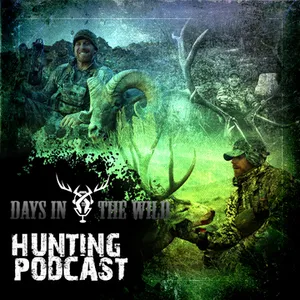
Free Daily Podcast Summary
Days In The Wild - Big game Hunting podcast: Daily Summaries Delivered
by John Stallone
Get key takeaways, quotes, and insights from Days In The Wild - Big game Hunting podcast in a 5-minute read. Delivered straight to your inbox.
Latest Episodes
The most recent episodes — sign up to get AI-powered summaries of each one.
- 1 weeks ago45 min
California Draw with Brandon Nelson
Brandon and i talk about the big game hunting opportunity in California and the draw system. We also talk about the upcoming 1st inaugural Howl for Wildlife banquet
- 3 weeks ago31 min
Scouting Mule Deer with Henry Furguson | Finding Bucks, Reading Terrain
Scouting Mule Deer with Henry Furguson | Finding Bucks, Reading Terrain, and Lessons That Transfer Show Notes Welcome back to the Days in the Wild Big Game Hunting Podcast, brought to you by Phoenix Shooting Bags. In this episode, I sit down once again with P.J. Reilly — one of the first guests I ever had on the podcast — to talk about mule deer, scouting, patterning bucks, and the lessons hunting teaches that carry over into every part of the game. We get into why scouting can be just as rewarding as the hunt itself, how to shorten the learning curve in brand-new country, and what it really takes to find and stay on mature bucks. P.J. breaks down how he approaches unfamiliar units, what terrain features consistently hold deer, and why looking at a buck from more than one angle can be the difference between killing him and losing him. We also talk about Arizona desert mule deer, OTC pressure, closures, hunting competition, and how increased pressure changes hunter behavior in the field. This episode is loaded with practical takeaways for anyone who wants to become a better scout, a better hunter, and a more disciplined thinker in the outdoors. In This Episode We Cover Why I stepped back from the podcast for a while Why not every passion needs to become a business The difference between going through the motions and creating meaningful content Why scouting is one of the most rewarding parts of hunting The satisfaction that comes from finding the animal before the hunt ever begins Hunting velvet bucks and why they are often more patternable The difference between scouting bucks in velvet, hard horn, and during the rut Why rut hunting mature mule deer can feel like finding a needle in a haystack How Arizona OTC closures are changing hunter pressure and competition Why quota-style closures may be creating more crowding and conflict How P.J. approaches scouting brand-new country Why elevation and glassing are still the foundation of his system Adjusting strategy when every high point is crowded with hunters Using alternative glassing angles to uncover what other hunters are missing Why it is important to understand not just where a buck is, but why he is there How to identify terrain features that consistently attract and hold deer How lessons learned in one unit or state can transfer to another The similarities between archery, rifle shooting, and hunting discipline Key Takeaways Scouting is more than finding animals — it’s solving a puzzle. The real reward comes from learning how an animal uses the terrain, what brings it there, and how to use that knowledge later. If you want to consistently find deer, learn what makes a place attractive to deer. Escape routes, feed, security, and terrain that limits pressure all matter. One vantage point only tells part of the story. If you lose a buck, it may be because you only understood him from one angle. Multiple glassing angles reveal the bigger picture. Pressure changes everything. When hunters flood the obvious spots, success often comes from finding overlooked country that is just off the beaten path. The lessons transfer. Whether it’s scouting deer, shooting a bow, or settling behind a rifle, success comes from learning a repeatable process and executing it consistently.
- Apr 13, 202620 min
Kyle Lopez Colorado Draw 2026
Here are polished, on-brand show notes for your episode — written in your Days in the Wild voice and optimized for your audience. Mile High Conversations: Colorado Changes, Tag Strategy & Why It’s Not Always About Bigger After a bit of a break, we’re back — recording live from the Mile High Hunt Expo in Denver. In this episode, I sit down with my good friend Kyle Lopez to talk about what’s happening right now in the hunting world — from major changes to Colorado’s draw system to the reality of chasing points, expectations, and what actually matters as a hunter. We dive into strategy, mindset, and something that doesn’t get talked about enough… when is enough, enough? And of course, we get into the stuff that really matters — hunting with your kids, passing it on, and why those moments mean more than anything hanging on the wall. If you’ve been playing the points game, planning your next hunt, or just trying to figure out what your goals are as a hunter… this one hits. 🏹 What We Cover Live from the Mile High Hunt Expo Conservation efforts and donated hunts Major changes coming to Colorado’s draw system (2028) Hybrid draw system breakdown (points vs random draw) Why hunters are dumping points right now Arizona vs Colorado draw strategies Late season vs early season opportunities The reality of “top tier” hunts vs second tier hunts When to burn your points (and when not to) Elk vs deer — how your priorities change over time The trap of chasing bigger and bigger animals Why some hunters stop pulling the trigger Hunting with your kids and passing it on 🔥 Key Takeaways The new Colorado system is moving toward a 50/50 split between point holders and random draw, giving everyone a chance. Point creep is real — but the system may actually normalize over time. You don’t need a “top tier tag” to have a great hunt experience. At some point, hunting becomes less about size and more about experience and meaning. Hunting with your kids will change your perspective completely. 🧠 Memorable Moments “I’ve probably got five elk hunts left in me… after that, I’m good.” The reality of sitting on points for years and never “catching” the tag you want A powerful story of a father hunting with his daughters — and his daughter finding his buck The shift from chasing trophies to chasing experiences 🎯 Why This Episode Matters There’s a point in every hunter’s journey where things change. You start asking different questions: Why am I doing this? What am I really chasing? And who do I want to share this with? This episode is about that shift. 📍 From the Field Recorded live at the Mile High Hunt Expo in Denver — one of the premier hunting expos bringing together conservation groups, outfitters, and hunters from across the country. 👊 Stay Connected If this podcast has ever brought you value — whether it’s knowledge, perspective, or just something to think about — make sure you’re subscribed. Episodes won’t always be weekly… but when they drop, they’ll be worth your time. Colorado draw changes, hunting points system, elk hunting strategy, mule deer hunting, Arizona elk tags, hunting with kids, hunting podcast, Days in the Wild, Mile High Hunt Expo, hunting conservation
- Apr 1, 202633 min
Jason Phelps Turkey Hunting tips
Welcome back to Days in the Wild Big Game Hunting Podcast, brought to you by Phoenix Shooting Bags. In this episode, recorded live from the Mile High Expo, I sit down with Jason Phelps to talk all things turkey hunting. We dive into late-season turkey behavior, why older toms can actually become more killable in mid-May, and how subtle calling can make all the difference when birds start hanging up. If you’ve ever struggled with late-season gobblers, wondered when to call and when to shut up, or tried to figure out Merriam’s birds in the West, this episode is full of practical insight you can take straight into the field. Jason breaks down how he approaches a brand-new area, how he likes to roost birds, where he sets up in relation to the tree, and why turkey hunting in the mountains often feels a whole lot like elk hunting. We also get into subspecies differences, decoy use for archery, late-season patterns, and why some birds seem easy while others humble you quick. In This Episode We Cover Why late-season turkey hunting can be deadly on older toms How the breeding cycle changes gobbler behavior Why mid-May can be a prime time to target mature birds The mistake of overcalling once a bird answers on the roost Why subtle calling — or silence — often works better How to think about a gobbler’s visual expectations when he pitches down Merriam’s vs Rio’s vs Easterns and how their behavior differs Why archery turkey hunting often benefits from a decoy setup How Jason scouts and roosts birds in unfamiliar country Why turkey hunting in the West feels a lot like elk hunting The challenge and reward of aggressive run-and-gun turkey tactics Stories from Arizona, Florida, Long Island, Nebraska, California, and Mexico Key Takeaways Late season can be the best time to kill older birds. Once hens begin laying and spending more time on the nest, gobblers often become easier to work because they suddenly find themselves alone and looking. Once a bird answers from the roost, less is often more. One of the biggest mistakes hunters make is continuing to call too much. Once he knows where you are, silence can be your best move. Setups matter as much as calling. A gobbler expects to see the hen where he heard her. If your setup doesn’t account for that, you can get hung up birds no matter how well you call. Merriam’s birds are different. They roam more, change roost trees more often, and can require a more aggressive, mobile style of hunting. Turkey hunting in the mountains has a lot in common with elk hunting. Covering country, using terrain, cutting distance, locating vocal birds, and making smart moves all carry over. Memorable Topics from the Conversation Why Jason likes to hunt that May 5 to May 15 window for mature gobblers The importance of knowing when a hen should be visible to a bird How bobcats and predators can affect when birds come off the roost in certain areas Why decoys may matter more in late-season archery setups The difference between hunting a bird’s routine and hunting a bird that has become more erratic Why running ridges for gobbles in Merriam’s country feels just like chasing elk Quote Worth Remembering “As soon as I know that my tree yelp got that gobble, do not call again until that bird pitches out of the roost. All you can do is screw it up from there.” Why This Episode Matters Turkey hunting can seem simple until you start trying to consistently kill mature birds. Then you realize it’s a game of timing, setup, patience, and reading behavior. This episode is a great reminder that success often comes from doing less, paying attention, and understanding where the bird is in the season — not just how good you are on a call. Stay Connected If you’ve been getting value from the show, make sure you’re subscribed so you don’t miss upcoming episodes. turkey hunting tactics, late season turkey hunting, Jason Phelps turkey hunting, Merriams turkey hunting, archery turkey hunting, turkey calling tips, roosted gobbler tactics, western turkey hunting, Days in the Wild podcast, Phoenix Shooting Bags
- Nov 24, 202551 min
The Sporting Chef Scott Leysath
Guest: Scott Leysath — The Sporting Chef Episode: Field-to-Table Made Simple What’s inside (quick hits): The three biggest mistakes that make wild game “gamey”—and how to fix them Field care that actually matters (cooling, cleanliness, trim) Cut-to-method pairings for deer, elk, upland, and waterfowl Weeknight formulas: fast marinades, hot-and-fast sears, smart sides Gateway dishes that win over non-hunters (and why they work) Takeaway: Respect the animal, manage heat and fat, add acid and texture—great wild game is technique, not luck. Follow Scott: @thesportingchef Follow John: @johnstallone
- Nov 17, 20251h 19m
Layering systems, mule deer hunting Graylight Hunter
Guest: Marlon Holden Episode: Fall 2025 – Mule deer hunting, Camo, Boots, gear What we cover (quick hits): Hunting mule deer in South Dakota recap Layering systems, camo to wear Boots, socks AZ mule deer quota system Connect with Marlon: @graylighthunter Connect with the show: @johnstallone
- Nov 10, 20251h 3m
Rifle vs Archery Hunting Matt Rege
Rifle vs. Archery — strengths, limits, and how to choose What we cover (quick hits): Why Matt hunts with both weapons—and what each teaches the other Ethical effective range: defining it for your skills, terrain, and conditions Fieldcraft vs. ballistics: closing inside 40 yards vs. building a rock-solid rifle position Calling, wind, and movement discipline—what changes with bow vs. rifle Practice plans: 4-week tune-ups for bowhunters and rifle hunters Gear that matters (and what’s overrated) for real-world hunts Links: IG: https://www.instagram.com/mattrege/ If you enjoyed this one, share it with a hunting buddy and leave a quick rating—it helps a ton.
- Nov 3, 20251h 2m
Jordan Blisset Whitetail Rut Tactics + Buying Land
Whitetail Rut Tactics + Buying Land John sits down with Jordan Blissett to break down practical rut strategies—how to read phases (seeking, chasing, lockdown), pick high-odds terrain, manage wind the smart way, and decide when to call or stay silent. Then they pivot to buying land for whitetails: access and neighborhood first, must-have habitat features, quick-win improvements, and rookie pitfalls to avoid. Highlights Rut stand selection: leeward edges, hub scrapes, ditch/creek crossings Calling & decoys: when they help—and when they burn a spot Pressure management on small tracts Land buying: access, cover diversity, neighbors, red flags First-year improvements that move the needle Follow Jordan IG: https://www.instagram.com/jordanblissett/ Team page: https://openseasonproperties.com/our-team/jordan-blissett/
Get Days In The Wild - Big game Hunting podcast summaries in your inbox
Free AI-powered daily recaps. Key takeaways, quotes, and mentions — in a 5-minute read.
Get Free Summaries →Free forever for up to 3 podcasts. No credit card required.
You Might Also Like
Listeners also like.
Jay Scott Outdoors Western Big Game Hunting and Fishing Podcast
Interviews, Tactics, Gear, Field Judging
Big Game Hunting Podcast - Hunting Africa, North America, & More!
John McAdams
The WHTL Podcast - Whitetail Deer Hunting Tactics, Stories & Expert Guests
Jake Hofer
The 100% Wild Podcast
Drury Outdoors
Backcountry Hunting Podcast
Joseph von Benedikt
The Western Huntsman Podcast
Jim Huntsman
East Meets West Hunt
Beau Martonik
The Southern Outdoorsmen Hunting Podcast
Andrew Maxwell & Jacob Myers
Bowhunter Chronicles Podcast
Adam Miller and John Boersema
Out of State Hunter
Chad Ryker
ElkShape
Dan Staton
Whitetail Legacy Podcast
Whitetail Legacy Podcast
About Days In The Wild - Big game Hunting podcast
John Stallone Host of Days in The Wild Interviews professional hunters , and hunting industry leaders on bowhunting, deer hunting, elk hunting, big game hunting, whitetail, mule deer, antelope, moose, bear, ibex and everything in between to bring you the best tips and tactic to help you improve your hunting success. The goal of this podcast is to educate and inform by covering topics ranging from hunting, fishing, wildlife, elk, moose, bighorn sheep, mule deer and coues deer, ibex, wild turkey, whitetail, hunting tips and tactics, guides, outfitters, archery, bowhunting, rifle hunting, and much more
Customized Recaps
AI-powered recaps with compact key takeaways, quotes, and insights.
Straight to Your Inbox
Get key takeaways from Days In The Wild - Big game Hunting podcast in a 5-minute read.
Save Hours Every Week
Stay current on your favorite podcasts without falling behind.
Frequently Asked Questions
What is Podzilla's Days In The Wild - Big game Hunting podcast daily summary?
It's a free AI-powered email that summarizes new episodes of Days In The Wild - Big game Hunting podcast as soon as they're published. You get the key takeaways, notable quotes, and links & mentions — all in a quick read.
How does the Days In The Wild - Big game Hunting podcast podcast summary work?
When a new episode drops, our AI transcribes and analyzes it, then generates a personalized summary tailored to your interests and profession. It's delivered to your inbox every morning.
Is this an official Days In The Wild - Big game Hunting podcast product?
No. Podzilla is an independent service that summarizes publicly available podcast content. We're not affiliated with or endorsed by John Stallone.
Can I get summaries of other podcasts too?
Absolutely! The free plan covers up to 3 podcasts. Upgrade to Pro for 15, or Premium for 50. Browse our full catalog at /podcasts.
How often does Days In The Wild - Big game Hunting podcast release new episodes?
Days In The Wild - Big game Hunting podcast publishes weekly. Our AI generates a summary within hours of each new episode.
What topics does Days In The Wild - Big game Hunting podcast cover?
Days In The Wild - Big game Hunting podcast covers topics including Sports, Wilderness. Our AI identifies the specific themes in each episode and highlights what matters most to you.
Start getting Days In The Wild - Big game Hunting podcast summaries tomorrow morning.
Free forever for up to 3 podcasts. No credit card required.
Free forever for up to 3 podcasts. No credit card required.