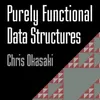
Designed for programming languages that prohibit destructive updates, requiring specialized techniques like copying and sharing to achieve persistence, where old and new versions coexist. While basic structures can be adapted directly, others require advanced mechanisms like lazy evaluation to reconcile the conflict between amortization and persistence. By delaying computations until needed and memoizing the results, algorithms can maintain efficient amortized time bounds even when used persistently. Various data structures—such as leftist heaps, binomial heaps, red-black trees, and queues—demonstrate how to balance performance and functional constraints. Furthermore, analyzing these lazy data structures involves tracking unshared costs and managing debt, ensuring that complex operations remain efficient and predictable across multiple logical futures.You can listen and download our episodes for free on more than 10 different platforms:https://linktr.ee/cyber_security_summaryGet the Book now from Amazon:https://www.amazon.com/dp/0521631246?lv=shuf&channelId=500&plpRedirect=mhFallback&linkCode=ll2&tag=cvthunderx-20&linkId=b64f406d0ad75bef7eace2ead89fa960&language=en_US&gaOptInStatus=true&ref_=as_li_ss_tlDiscover our free courses in tech and cybersecurity, Start learning today:https://linktr.ee/cybercode_academy
Podzilla Summary coming soon
Sign up to get notified when the full AI-powered summary is ready.
Free forever for up to 3 podcasts. No credit card required.
Listen to This Episode
More from CyberSecurity Summary

Programming iOS 12: Dive Deep into Views, View Controllers, and Frameworks

Python Web Penetration Testing Cookbook

Python Machine Learning: The Ultimate Beginner's Guide to Learn Python Machine Learning Step by Step using Scikit-Learn and Tensorflow
Python Network Programming Cookbook
Get summaries like this every morning.
Free AI-powered recaps of CyberSecurity Summary and your other favorite podcasts, delivered to your inbox.
Free forever for up to 3 podcasts. No credit card required.