Free Daily Podcast Summary
Cricket Mind Podcast: Daily Summaries Delivered
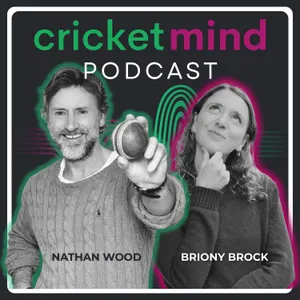
by Nathan Wood & Briony Brock
The Cricket Mind Podcast explores the mindset, psychology, and decision-making behind high performance in cricket. Hosted by Nathan Wood and Briony Brock from Cricket Mind Online, each episode breaks down the mental skills that help players focus, perform, and succeed under pressure. With insights from sport psychology, coaching experience, and real conversations with cricketers and high-performance experts, Nathan and Briony share practical tools to improve confidence, concentration, emotional control, performance routines, and match awareness. You’ll learn how to train your mind with the same intention as your technique — and apply strategies that create consistency, resilience, and clear decision-making. Whether you’re a player aiming to make more impact, a coach developing young cricketers, or a parent supporting your child’s journey, this podcast gives you simple, actionable methods to enhance performance and enjoy the game more. Play the way you see it. Learn more at www.cricketmind.online
Latest Episodes
The most recent episodes — sign up to get AI-powered summaries of each one.
- Jul 17, 202656 min
The Indian Way | Raj Chaudhuri
Why does India continue to produce so many outstanding cricketers — and what can young players and coaches in England learn from the Indian approach?In this episode of The Cricket Mind Podcast, Nathan Wood and Briony Brock are joined by former Indian first-class cricketer Raj Chaudhuri, founder of the First Class Cricket Academy in Sussex.Raj reflects on growing up within India’s fiercely competitive cricket culture, where young players learned through street cricket, high-volume practice and exposure to older, stronger opponents. He also explores the differences between developing players in India and England — from talent identification and coaching standards to playing surfaces, junior formats and attitudes towards winning.The conversation also examines Raj’s philosophy of confidence through competence: building genuine self-belief through strong fundamentals, repetition and the ability to perform skills consistently under pressure.In this episode:Raj’s journey from street cricket in India to first-class cricket and coaching in EnglandThe influence of Sunil Gavaskar and MS Dhoni on Indian cricketWhy young Indian players regularly train and compete alongside older playersIndia’s uncompromising approach to talent identificationThe role of repetition, volume and strong fundamentals in player developmentRaj’s first experience of English club cricket — and the culture shock it createdThe strengths and weaknesses of cricket development in India and EnglandWhy junior playing conditions can influence which players receive recognitionWhat Raj means by confidence through competenceWhat young players can learn from Virat Kohli, Rohit Sharma and KL RahulTimestamps00:00 – Why does India produce so many great cricketers?01:56 – Raj’s journey from street cricket to first-class cricket06:32 – India’s ruthless approach to selection and talent identification16:25 – Street cricket, Sunil Gavaskar and MS Dhoni’s influence20:25 – How Indian academies test commitment and character23:00 – Raj’s culture shock playing club cricket in England30:26 – How coaching and practice differ between India and England39:10 – What Indian and English cricket can learn from each other41:04 – Building confidence through competence42:57 – What young cricketers can learn from India’s best playersFind out more about the First Class Cricket AcademyRaj is the founder of the First Class Cricket Academy, which provides cricket coaching and player-development opportunities in Sussex.Website: www.fccaltd.co.ukBecome a Cricket Mind Coach PartnerAre you a cricket coach interested in offering your players access to specialist mental-performance support?The Cricket Mind Coach Partner Programme enables coaches and academies to partner with Cricket Mind Online and provide additional support to the players and families they work with.Find out more:www.cricketmind.online/coach-partner-programmeConnect with Cricket Mind OnlineWebsite: www.cricketmind.onlineEmail: info@cricketmind.onlineInstagram: @cricket.mind.onlineFacebook: cricket.mind.onlineYouTube: @cricket.mind.onlineEnjoyed the episode? Subscribe to The Cricket Mind Podcast, leave us a rating and review, and share the episode with a player, parent or coach who may find it useful.
- Jun 28, 202646 min
Help… My Child’s Got Another Duck!
A duck can feel much bigger than it looks on a scorecard.In this episode of the Cricket Mind Podcast, Nathan Wood and Briony Brock answer real questions from parents of young cricketers: what to say after another duck, how to help when a child puts huge pressure on themselves, and how to support them through the inevitable highs and lows of the game.They discuss how parents can be a steady source of support without accidentally making cricket feel heavier — whether that means handling difficult emotions, navigating trials, or balancing the roles of parent, coach, manager or umpire.In this episode:What to say — and what not to say — when your child gets out for noughtWhy cricket can feel so individual, even though it is a team sportHow Play-Cricket, statistics and comparison can add pressureHow to support a child who puts huge pressure on themselvesWhat to do when emotions spill over after a poor performanceHow to help a young player approach cricket trials with more clarityThe challenges of being a parent as well as a coach, manager or umpireWhy your child does not need you to be perfect — but does need to know you are on their sideTimestamps00:00 — Supporting young cricketers: the questions parents ask02:58 — What should you say when your child gets a duck?05:50 — Why cricket feels so individual14:20 — When your child puts huge pressure on themselves21:01 — Anger, tears and meltdowns after poor performances30:19 — Supporting a child at cricket trials35:55 — Being a parent, coach, manager or umpire45:44 — Preparing for Trials WorkshopIf you have found this episode helpful, please subscribe to the Cricket Mind Podcast so you do not miss future episodes. And, if you have a moment, a rating and review on your podcast app makes a huge difference in helping more players, parents and coaches find the show.For more support for players, parents and coaches, visit:https://cricketmind.onlineFind out more about our upcoming live workshops:https://cricketmind.online/coaching-events/Follow Cricket Mind Online:Instagram: @cricket.mind.onlineFacebook: cricket.mind.onlineYouTube: cricket.mind.online
- Jun 14, 202657 min
Can You Survive the Bad Days? | Faisal Shahid
What helps some young cricketers grow through adversity while others become stuck?Why do some players lose confidence after a setback, while others use it as a catalyst for improvement?In this episode of the Cricket Mind Podcast, Nathan Wood is joined by Faisal Shahid, Academy Manager for Warwickshire Women, to explore the psychology of long-term player development.Drawing on his experiences as an England U17 player, MCC Young Cricketer, professional cricketer and high-performance coach, Faisal shares his insights on confidence, resilience, motivation, identity and the ability to "survive bad days".Whether you're a player, parent or coach, this conversation is packed with practical lessons to help young cricketers navigate setbacks, maintain motivation and continue developing through the ups and downs of the game.In this episode:• What long-term development actually looks like• Why confidence is about surviving bad days• The dangers of becoming obsessed with outcomes• How setbacks can become opportunities for growth• Why some players thrive through adversity while others struggle• The role parents play in shaping confidence• How to balance ambition with enjoyment• Why identity and performance should remain separate• What boys' and girls' cricket can learn from each other• The biggest myths in youth cricket⏱️ Timestamps⏱️ Timestamps00:00 – Introduction02:41 – Long-Term Player Development12:37 – Confidence and Surviving Bad Days21:47 – Setbacks, Adversity and Resilience34:09 – Motivation and Enjoyment45:43 – Identity and Performance48:44 – Coaching Boys and Girls53:27 – Quickfire Questions⭐ Enjoying the Cricket Mind Podcast?Please subscribe to the show, leave a rating and review, and share this episode with a player, parent or coach who you think might find it helpful.🏏 Supporting Young Cricketers WorkshopCricket Mind Online is hosting an online workshop for cricket parents on Tuesday 16th June at 7pm.The workshop will explore practical ways parents can support confidence, resilience, enjoyment, motivation and long-term development in young cricketers.Book your place here:https://cricketmind.online/supporting-young-cricketers-workshop/🔗 Connect with Cricket Mind OnlineWebsite: www.cricketmind.onlineEmail: info@cricketmind.onlineInstagram: @cricket.mind.onlineFacebook: cricket.mind.onlineYouTube: @cricket.mind.online
- May 31, 20261h 6m
The Truth About Talent Pathways & Trials
Why do so many talented young cricketers stop enjoying the game?And do players really need to be in a talent pathway from a young age to have a realistic chance of becoming a professional cricketer?In this episode of The Cricket Mind Podcast, Nathan Wood and Briony Brock are joined by ECB Level 4 coach and coach developer Ben Silver for an honest conversation about talent pathways, cricket trials, player development, coaching overload, and what actually helps young cricketers improve over the long term.Ben has worked across county cricket, England pathways, ECB Disability Cricket, and high-performance coaching — giving him a unique perspective on what coaches and selectors really look for, why some players thrive while others burn out, and how young cricketers can develop without losing their enjoyment of the game.Alongside this, Ben also works with Cricket Mind Online as a high-performance coach, helping players optimise the quality of their training and practice routines.In this episode:What selectors actually look for in cricket trialsWhy “high ceiling” players stand outThe truth about county age-group pathwaysWhether players need early pathway selection to succeedWhy some talented players stop enjoying cricketCoaching overload and social media cricket adviceThe importance of messy practice and game-based learningWhy player development is rarely linearWhat parents should really focus onTimestamps:00:00 — Jimmy Anderson and the Lancashire U15 “B” team02:05 — Introducing Ben Silver03:17 — What coaches and selectors look for at trials07:33 — Risk vs reward during cricket trials11:13 — Confidence, bravery and coachability16:35 — Do players need to be in talent pathways early?22:57 — Why some talented players stop enjoying cricket34:38 — Are young cricketers being over-coached?42:42 — Long-term development vs short-term winning55:58 — What “messy practice” actually means🎧 Listen on Spotify, Apple Podcasts and all major podcast platforms.🏏 Learn more about Cricket Mind Online: www.cricketmind.online📩 Get in touch: info@cricketmind.online📱 Follow Cricket Mind Online:Instagram: @cricket.mind.onlineYouTube: @cricket.mind.podcast • • Facebook: cricket.mind.online
- May 17, 202649 min
You’re Not Unlucky | A Coach & Player Perspective
Why do some players stay in cricket for years… while others quietly drift away?In this episode of The Cricket Mind Podcast, Nathan Wood and Briony Brock are joined by coach Laura de Silva and player Charlotte Bernstein for a powerful conversation about confidence, pressure, enjoyment, and the environments that keep players coming back.This episode offers a unique perspective from both sides of the same environment — a coach working to build meaningful relationships and supportive cultures, and a young player experiencing those environments firsthand.The conversation explores girls’ cricket, but the lessons apply across the game for players, parents and coaches alike.In This Episode:Why players really drop out of cricketThe importance of confidence and enjoymentWhy “unlucky” is banned in Laura’s coaching environmentsBuilding strong coach–player relationshipsPressure, expectations and performanceThe difference between boys’ and girls’ cricket environmentsHow coaches can create environments players want to return toWhy support matters more than frustrationManaging cricket alongside GCSEs, school and lifeThe role friendships play in long-term engagementWhy great environments help players perform betterTimestamps:00:00 – Are we still losing too many players from cricket? 01:01 – Introducing Laura de Silva & Charlotte Bernstein 02:56 – What makes players want to keep turning up? 06:01 – What great coaches do differently 14:11 – What makes a strong coach–player relationship? 22:44 – Building real confidence in players 27:32 – Why “unlucky” is banned 30:06 – Pressure, expectations and performance 38:15 – Have you ever thought about quitting cricket? 45:06 – Why there still aren’t enough female coaches in cricket 🌐 Website: Cricket Mind Online📩 Get in touch:Email: info@cricketmind.online📱 Follow Cricket Mind Online:Instagram: @cricket.mind.onlineYouTube: @cricket.mind.onlineTikTok: @cricket.mind.onlineIf you enjoyed the episode, please subscribe, leave a review, and share it with another player, parent or coach involved in the game.
- May 3, 202628 min
More Nets Won’t Fix Your Match Performance
Why do so many cricketers perform well in nets… but struggle in matches?In this episode of The Cricket Mind Podcast, Nathan Wood and Briony Brock answer listener questions around early-season performance struggles — from confidence and expectations to training that doesn’t transfer into games.If you’ve ever felt like you’ve “gone backwards” despite a strong winter, this episode will help you understand why — and what to do about it.In this episode:Why how you feel before batting doesn’t predict performanceThe real reason nets don’t transfer into matchesWhy early-season struggles are completely normalHow chasing past performances can hold you backHow to respond to a poor team performance as a coachWhy run outs are so common early season (and how to fix it)⏱ Timestamps00:00 Intro – Are players training the wrong way?01:13 Should you trust how you feel before batting?03:57 Nets vs matches – why it feels different07:30 “I’ve gone backwards after scoring a 50”12:16 Coaching after a poor team performance18:13 Why run outs happen early season27:20 Outro & listener questions📩 Get in touchGot a question for a future episode?Send it in via:📸 Instagram: @cricket.mind.online📘 Facebook: @cricket.mind.online🌐 Website: https://www.cricketmind.online📧 Email: nathan@cricketmind.online
- Apr 19, 202658 min
The Dark Art of Wicketkeeping
Why is wicketkeeping often described as a “dark art”… and why is there nowhere to hide when things go wrong?🎙️ Episode SummaryIn this episode of The Cricket Mind Podcast, Nathan Wood and Briony Brock are joined by Lancashire cricketer Ellie Threlkeld to explore the mental demands of wicketkeeping.Ellie shares her experiences of keeping and captaining at the highest level — from managing concentration and decision-making to dealing with mistakes and supporting young wicketkeepers. This is a must-listen for players, coaches and parents looking to better understand one of the most unique roles in cricket.In this episode:Why wicketkeeping is often misunderstoodThe mental demands of being involved in every ballManaging concentration during “silent periods” in gamesWhy wicketkeeping is mentally more draining than it looksHow to respond to mistakes and avoid things snowballingThe balance between instinct and technical thinkingLeadership challenges as a wicketkeeper-captainHow psychology influences performance and team culturePractical advice for coaches working with young keepersSimple ways parents can support developing wicketkeepers⏱️ Timestamps00:00 – Chris Scott, Brian Lara and “nowhere to hide”01:18 – Introducing Ellie Threlkeld02:05 – The “dark art” of wicketkeeping explained07:21 – What people don’t see (and don’t appreciate)08:30 – Managing concentration ball-to-ball11:10 – Why wicketkeeping is mentally draining13:47 – The isolation of being a wicketkeeper22:17 – Dealing with mistakes and resetting30:48 – Pre-ball routines and staying present40:12 – Ellie’s psychology journey and leadership51:28 – How coaches can support wicketkeepers56:10 – Ellie’s advice for young wicketkeepers🔗 Get in touch🌐 Website: www.cricketmind.online📧 Email: nathan@cricketmind.online📱 Instagram: cricket.mind.online📘 Facebook: cricket.mind.online🎧 Enjoying the podcast?If you enjoyed this episode, make sure you subscribe so you don’t miss future episodes — and please leave a rating or review to help more players, coaches and parents find the show.
- Apr 5, 20261h 4m
Spin Bowling in England Is in Trouble
Spin bowling in England is in trouble — so what actually needs to change?In this episode of The Cricket Mind Podcast, we’re joined by former Kent and Nottinghamshire spinner and leading coach Rob Ferley.We explore why spin bowling is struggling in England, what makes a spinner effective in matches (not just in nets), and how coaching, environments, and captaincy all shape development.Rob also shares his thinking behind Square One Cricket — a new initiative aiming to rethink how players learn and progress in the game.In this episode:What actually makes a good spinner (beyond technique)The psychological challenges spinners face — and why they’re often misunderstoodWhy spinners struggle to transfer performance from nets to matchesHow captains can get more (or less) out of their spinnersWhat we’re getting right — and wrong — in coaching spinPractical advice for young spinners looking to improveInside Square One Cricket and its vision for the futureTimestamps00:00 – Spin bowling in England is “in a bit of a pickle"00:42 – Introducing Rob Ferley04:24 – What makes a good spinner?08:14 – Progression, passion, and development environments18:49 – Psychological challenges of spin & managing pressure23:58 – Getting hit as a spinner: thoughts, feelings, behaviour27:38 – Do captains get the best out of spinners?40:17 – How should we coach and develop young spinners?49:52 – The art vs science of spin bowling55:22 – Square One Cricket: concept and vision🔗 Get in touch / Links🌐 Website: https://www.cricketmind.online📩 Email: nathan@cricketmind.online📱 Instagram: cricket.mind.onlineSquare One Cricket:https://squareoneeducation.co.uk🎧 Enjoyed the episode?If you found this helpful, make sure you subscribe to The Cricket Mind Podcast and leave a rating or review — it really helps us grow and reach more players, parents, and coaches.
About Cricket Mind Podcast
The Cricket Mind Podcast explores the mindset, psychology, and decision-making behind high performance in cricket. Hosted by Nathan Wood and Briony Brock from Cricket Mind Online, each episode breaks down the mental skills that help players focus, perform, and succeed under pressure. With insights from sport psychology, coaching experience, and real conversations with cricketers and high-performance experts, Nathan and Briony share practical tools to improve confidence, concentration, emotional control, performance routines, and match awareness. You’ll learn how to train your mind with the same intention as your technique — and apply strategies that create consistency, resilience, and clear decision-making. Whether you’re a player aiming to make more impact, a coach developing young cricketers, or a parent supporting your child’s journey, this podcast gives you simple, actionable methods to enhance performance and enjoy the game more. Play the way you see it. Learn more at www.cricketmind.online
Customized Recaps
AI-powered recaps with compact key takeaways, quotes, and insights.
Straight to Your Inbox
Get key takeaways from Cricket Mind Podcast in a 5-minute read.
Save Hours Every Week
Stay current on your favorite podcasts without falling behind.
Frequently Asked Questions
What is Podzilla's Cricket Mind Podcast daily summary?
It's a free AI-powered email that summarizes new episodes of Cricket Mind Podcast as soon as they're published. You get the key takeaways, notable quotes, and links & mentions — all in a quick read.
How does the Cricket Mind Podcast podcast summary work?
When a new episode drops, our AI transcribes and analyzes it, then generates a personalized summary tailored to your interests and profession. It's delivered to your inbox every morning.
Is this an official Cricket Mind Podcast product?
No. Podzilla is an independent service that summarizes publicly available podcast content. We're not affiliated with or endorsed by Nathan Wood & Briony Brock.
Can I get summaries of other podcasts too?
Absolutely! The free plan covers up to 3 podcasts. Upgrade to Pro for 15, or Premium for 50. Browse our full catalog at /podcasts.
How often does Cricket Mind Podcast release new episodes?
Cricket Mind Podcast publishes weekly. Our AI generates a summary within hours of each new episode.
What topics does Cricket Mind Podcast cover?
Cricket Mind Podcast covers topics including Education, Sports, Cricket, Self-Improvement. Our AI identifies the specific themes in each episode and highlights what matters most to you.
Start getting Cricket Mind Podcast summaries tomorrow morning.
Free forever for up to 3 podcasts. No credit card required.
Free forever for up to 3 podcasts. No credit card required.