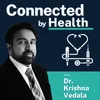
#34 - Polarized Media and Health Misinformation: Undermining Public Health in a Post-Truth World
The episode of Connected by Health examines how media influences public health, political polarization, and the way people understand medical information. Host Dr. Krishna Vedala speaks with Ted Streuli, Executive Director of Oklahoma Watch, about the importance of accurate, evidence-based journalism. They discuss how responsible reporting can build trust in healthcare professionals, scientific research, and public health guidance, while misinformation can create confusion and prevent people from seeking appropriate care. Streuli explains that the repeal of the Fairness Doctrine in 1987 contributed to changes in the media environment. He describes how talk radio, cable news, and eventually the internet blurred the distinction between news and opinion. The rise of politically oriented commentators and opinion-based programming made it more difficult for audiences to distinguish verified reporting from personal viewpoints presented as fact. The conversation focuses heavily on health misinformation during the COVID-19 pandemic. Streuli describes how misinformation about treatments, vaccines, and public health recommendations created frustration among scientists, journalists, and healthcare professionals. Social media algorithms often amplify emotionally charged or controversial claims, while accurate information may receive less attention because it is not perceived as new or exciting. This can lead people to reject reliable evidence and make decisions that put their health and the health of their communities at risk. Streuli argues that misinformation can be a population-level public health threat because mass communication can rapidly influence the behavior of millions of people. He emphasizes that journalism should not present unsupported claims and well-established scientific evidence as equally credible. Instead, journalists should investigate sources, evaluate evidence, identify reliable information, and provide the best available version of the truth. He also cautions that policies such as licensing journalists or financially penalizing misinformation could threaten free speech if government officials were given the power to decide what information is acceptable. The episode concludes with a discussion about rebuilding public trust through personal conversations, media literacy, critical thinking, and education. Streuli believes that people are often less polarized when they discuss issues directly and move beyond broad labels such as "liberal media" or "mainstream media." Although society faces serious challenges in a post-truth environment, he remains optimistic that education can help future generations understand the difference between journalism, propaganda, public relations, opinion, and factual reporting. The central message is that truth, scientific literacy, and responsible communication are essential to public health, democracy, and community well-being.
Podzilla Summary coming soon
Sign up to get notified when the full AI-powered summary is ready.
Free forever for up to 3 podcasts. No credit card required.
Listen to This Episode
More from Connected By Health
#35 - Building a Healthier Oklahoma with the Oklahoma State Medical Association
#33 - The Thrival Code: Moving Beyond Burnout to Sustainable Success with Dr Archana Shrestha
#32 - At Process: Transforming Healthcare Through AI and Process Improvement.
#31 - At the Heart of Care: The Case for Independent Physicians
Get summaries like this every morning.
Free AI-powered recaps of Connected By Health and your other favorite podcasts, delivered to your inbox.
Free forever for up to 3 podcasts. No credit card required.