Free Daily Podcast Summary
Compliance Officers Playbook: Daily Summaries Delivered
by Compliance Officers Playbook
Get key takeaways, quotes, and insights from Compliance Officers Playbook in a 5-minute read. Delivered straight to your inbox.
Latest Episodes
The most recent episodes — sign up to get AI-powered summaries of each one.
- Mar 3, 202621 min
EU AI Act Explained: Compliance Strategy, Risk Categories & Governance Tools for Businesses
In this episode, we break down the EU AI Act and its risk-based approach to regulating artificial intelligence. We explore the obligations placed on providers, deployers, and importers—especially for high-risk systems and general-purpose AI models. The discussion highlights practical compliance tools like checklists and the AI Act Governance Pyramid, while addressing real-world challenges such as missing harmonised standards and the need for cross-functional legal and technical collaboration. Tune in to learn how organisations can turn regulatory complexity into a competitive advantage through ethical, compliant AI.
- Feb 23, 202631 min
Vietnam’s Inclusion on the EU Non-Cooperative Tax Jurisdictions List
In February 2026, the Council of the European Union updated its official list of non-cooperative jurisdictions for tax purposes, a tool designed to combat global tax evasion and promote fair governance. The latest revision notably added Vietnam and the Turks and Caicos Islands to the "blacklist" due to deficiencies in their transparency and information exchange frameworks. Conversely, Fiji, Samoa, and Trinidad and Tobago were removed from the list after successfully implementing required legislative reforms. Vietnam has since defended its record, highlighting ongoing efforts to align its domestic laws with OECD standards to maintain a stable investment climate. Jurisdictions remaining on this list face significant consequences, including increased financial scrutiny, restricted access to EU funds, and potential domestic defensive tax measures imposed by individual member states. These updates reflect the EU’s biannual monitoring process, which encourages third countries to adopt international tax good governance and anti-fraud practices.
- Feb 23, 202641 min
Global Corruption Perceptions and the Decline of Institutional Integrity
The 2025 Corruption Perceptions Index reveals a global decline in public sector integrity, with the worldwide average dropping to its lowest level in over a decade. While Denmark continues to lead as the world's cleanest nation, established democracies like the United Kingdom and the United States have reached record-low scores due to political scandals and weakened oversight. In contrast, Estonia has emerged as a top performer by successfully consolidating its anti-corruption frameworks. The sources highlight how "cash-for-access" ventures and the influence of "big money" in politics undermine trust in government institutions. Furthermore, the reports warn that the erosion of justice systems, media freedom, and civic space directly fuels systemic bribery and state capture. Ultimately, these findings suggest that accountable leadership and independent checks are essential to prevent corruption from becoming a permanent feature of political culture.
- Feb 23, 202627 min
FCA Enforcement: Influencers Fined for Unauthorised Financial Promotions
The UK’s Financial Conduct Authority (FCA) has significantly expanded its enforcement of financial promotion regulations, specifically targeting high-risk investments like cryptoassets and foreign exchange trading. Recent landmark legal actions include High Court proceedings against the exchange HTX and the successful prosecution of several high-profile reality TV stars for promoting illegal schemes on social media. These "finfluencers" received criminal convictions and fines for providing unauthorised investment advice to millions of followers without proper disclosure or expertise. To support this crackdown, the FCA issued updated guidance detailing how digital marketing must be fair, clear, and not misleading, even within private chatrooms or short-form videos. Firms and individuals now face stricter requirements for risk warnings, cooling-off periods, and appropriateness testing to prevent consumer harm. This global regulatory shift involves cooperation with international partners to disrupt offshore entities and remove non-compliant content from social platforms.
- Feb 5, 20268 min
U.S. Treasury Sanctions Iran: Crypto Exchanges Added to SDN List in Major Enforcement Shift
In this episode, we break down the latest U.S. Treasury sanctions targeting the Iranian regime and why they mark a turning point in global financial enforcement. The Department of the Treasury has added several high-ranking Iranian officials and financial facilitators to its Specially Designated Nationals (SDN) list, citing their roles in corruption, repression, and support of the Islamic Revolutionary Guard Corps.For the first time, these sanctions extend beyond traditional banking channels to include digital asset exchanges, signaling a major escalation in the monitoring of cryptocurrency infrastructure used to evade sanctions. This move highlights growing U.S. scrutiny of virtual finance and its role in geopolitical conflict.We also explore what these changes mean for compliance and risk professionals, as real-time screening and advanced monitoring become essential in an increasingly complex sanctions landscape. Finally, we touch on the removal of certain entities from previous sanctions lists, underscoring how dynamic and fast-moving international sanctions management has become.
- Jan 31, 20265 min
Freemium - Australian Government AI Technical Standard Explained: Building Trustworthy and Ethical AI Systems
To listen to the full episode, head to Apple Podcast and search for PREMIUM version under the Same Episode Title. Thank you for supporting the Compliance Officers Playbook podcast show.In the full episode, we unpack the Australian Government AI Technical Standard and how it guides agencies in adopting artificial intelligence responsibly. The standard introduces a clear AI system lifecycle—Discover, Operate, and Retire—providing a structured approach to designing, deploying, and decommissioning AI systems. We explore how national AI ethics principles are translated into practical technical requirements, including human-centred design, strong data quality controls, and rigorous performance testing. The conversation also dives into key governance measures such as bias mitigation, transparency through AI watermarking, and robust version control. Together, these safeguards aim to ensure regulatory compliance, reduce risk, and build lasting public trust in government-led AI initiatives.
- Jan 31, 20267 min
Freemium - Bank of Scotland Sanctioned £160K: Russia Sanctions, Screening Failures, and UK Enforcement Trends
To listen to the full episode, head to Apple Podcast and search for PREMIUM version under the Same Episode Title. Thank you for supporting the Compliance Officers Playbook podcast show.In the full episode, we unpack the £160,000 fine issued by the UK’s Office of Financial Sanctions Implementation (OFSI against the Bank of Scotland in November 2025 for breaches of Russia-related sanctions. Regulators found that a designated individual—former Sevastopol governor Dmitrii Ovsiannikov—was able to open an account and process 24 prohibited transactions without detection.The failure stemmed from weaknesses in both automated sanctions screening and manual compliance reviews, which overlooked a spelling variation in the customer’s name. While the initial penalty was significantly higher, the bank received a 50% reduction after voluntarily disclosing the issue to authorities.Drawing on wider government reports and industry analysis, the episode explores how minor data gaps can lead to serious regulatory exposure. We also examine the UK’s growing emphasis on intelligence-led sanctions enforcement and what this case signals for financial institutions navigating an increasingly unforgiving compliance landscape.
- Jan 31, 20268 min
Freemium - EBA Sanctions Guidelines Explained: New EU Rules for Banks, Payments, and Crypto Firms
To listen to the full episode, head to Apple Podcast and search for PREMIUM version under the Same Episode Title. Thank you for supporting the Compliance Officers Playbook podcast show. In the full episode, we break down the European Banking Authority’s newly issued guidelines designed to standardise how financial institutions across the EU implement restrictive measures and sanctions controls. The rules apply broadly to banks, payment service providers, and crypto-asset firms, aiming to eliminate inconsistencies in how sanctions are enforced across member states.At the heart of the framework is a mandatory restrictive measures exposure assessment, requiring firms to evaluate how their specific business models, customers, and geographies expose them to sanctions risk. This assessment is meant to directly inform risk management strategies, screening systems, and internal controls.The guidelines also introduce clear accountability requirements, including the appointment of a senior staff member responsible for sanctions compliance with direct reporting lines to the management body. We explore additional operational expectations such as screening calibration, staff training, escalation processes, and obligations around asset freezing and potential sanctions matches.Overall, the episode explains how these EBA standards represent a major step toward intelligence-led, harmonised enforcement across the EU—and why firms that fail to adapt risk falling behind in an increasingly stringent regulatory environment.
Get Compliance Officers Playbook summaries in your inbox
Free AI-powered daily recaps. Key takeaways, quotes, and mentions — in a 5-minute read.
Get Free Summaries →Free forever for up to 3 podcasts. No credit card required.
You Might Also Like
Listeners also like.
Risky Business
GAN Integrity
CISO Series Podcast
David Spark, Mike Johnson, and Andy Ellis
AI Engineering Podcast
Tobias Macey
Beyond the Code
Yitzy Hammer
compliance
aparajithacorp
The Privacy Advisor Podcast
Jedidiah Bracy, IAPP Editorial Director
Brussels Playbook Podcast
POLITICO
The FIT4Privacy Podcast - AI and Privacy insights in collaboration with Grow Skills Store
Punit Bhatia - AI, Privacy and Sourcing Expert | Host of FIT4Privacy Podcast
AI in Financial Services Podcast
Daniel Faggella
The AI in Business Podcast
Daniel Faggella
DarshanTalks Podcast
Darshan Kulkarni
Mallesons Podcasts
King & Wood Mallesons
About Compliance Officers Playbook
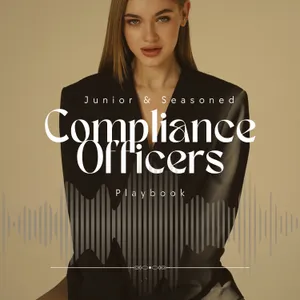
Compliance Officers Playbook is your trusted companion in the evolving world of compliance. Whether you’re new to the field, a junior professional accelerating toward a more senio role, or a seasoned Chief/Compliance Officer sharpening your skills, this podcast delivers practical insights, best practices, and thought-provoking discussions designed to elevate your expertise.This show uses AI-assisted tools to bring you timely content. Every episode is reviewed and published by a human compliance professional to ensure, to the best of our ability, clarity and accuracy. Tune in to level up!
Customized Recaps
AI-powered recaps with compact key takeaways, quotes, and insights.
Straight to Your Inbox
Get key takeaways from Compliance Officers Playbook in a 5-minute read.
Save Hours Every Week
Stay current on your favorite podcasts without falling behind.
Frequently Asked Questions
What is Podzilla's Compliance Officers Playbook daily summary?
It's a free AI-powered email that summarizes new episodes of Compliance Officers Playbook as soon as they're published. You get the key takeaways, notable quotes, and links & mentions — all in a quick read.
How does the Compliance Officers Playbook podcast summary work?
When a new episode drops, our AI transcribes and analyzes it, then generates a personalized summary tailored to your interests and profession. It's delivered to your inbox every morning.
Is this an official Compliance Officers Playbook product?
No. Podzilla is an independent service that summarizes publicly available podcast content. We're not affiliated with or endorsed by Compliance Officers Playbook.
Can I get summaries of other podcasts too?
Absolutely! The free plan covers up to 3 podcasts. Upgrade to Pro for 15, or Premium for 50. Browse our full catalog at /podcasts.
How often does Compliance Officers Playbook release new episodes?
Compliance Officers Playbook publishes every few days. Our AI generates a summary within hours of each new episode.
What topics does Compliance Officers Playbook cover?
Compliance Officers Playbook covers topics including Education. Our AI identifies the specific themes in each episode and highlights what matters most to you.
Start getting Compliance Officers Playbook summaries tomorrow morning.
Free forever for up to 3 podcasts. No credit card required.
Free forever for up to 3 podcasts. No credit card required.