Free Daily Podcast Summary
ChangeMakers with Katie Goar: Daily Summaries Delivered
by Katie Goar
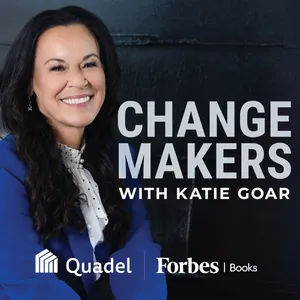
Affordable housing is the backbone of better opportunities for all. ChangeMakers with Katie Goar analyzes the issues and challenges being faced in affordable housing today. In each episode, Katie speaks with finance experts, thought leaders, and change-makers to explore innovative solutions that provide more affordable housing options across the country. Whether you want to learn more about economic development, government funding, why affordable housing makes good economic policy, and why the total community benefits from affordable housing, this is the podcast for you.
Latest Episodes
The most recent episodes — sign up to get AI-powered summaries of each one.
- Today36 min
Episode 159: Meredith Lozar, Chief Impact Officer, Operation Homefront
Freedom isn’t free, and military families often pay part of the bill through housing. In honor of Veterans Day and Military Families Month, Katie Goar talks with Meredith Lozar, Chief Impact Officer at Operation Homefront, a nonprofit that has helped military families and veterans for more than two decades and has given over 700 families mortgage-free homes.Meredith grew up as an Air Force kid and spent 20 years as a Marine Corps spouse. In that time she moved 14 times and lost her job 7 times. She explains the financial pressures that most Americans never see:31% of military spouses are unemployed.41% of military families live paycheck to paycheck.Nearly 80% live outside their assigned ZIP code so their kids can attend safe schools that have the programs they need.She also walks through Operation Homefront’s four housing programs, which include rent-free apartments near major medical centers and mortgage-free homes that families can own after two years. The housing program has a 90% graduation rate and runs with zero government funding.Meredith also shares how the Critical Financial Assistance program helps keep veterans in their homes, tells the story of a mom and her two boys who went from living in their car to owning a home, and explains how builders, banks and companies can help clear wait lists that are hundreds of families deep.🔗 Learn more or get involved: https://operationhomefront.org📲 Follow @OperationHomefront on Instagram and LinkedIn🎙️ Changemakers with Katie Goar: finding the right solutions for the affordable housing community. Learn more at https://quadel.comWhat You’ll LearnWhy the belief that the government takes care of military families is mostly a mythHow frequent moves, spouse unemployment and deployments affect a family’s financesThe “ZIP code problem”: why housing allowances fall short and families pay more to live somewhere safeWhat happens financially when a service member leaves active duty and loses the housing allowanceOperation Homefront’s 4 housing programs and how families graduate to homeownershipHow families go from $500 in emergency savings to “a comma in their savings”How housing stability connects to mental health and preventing veteran suicideConcrete ways companies, builders, banks and neighbors can helpTimestamps00:00 Introduction: Veterans Day and Military Families Month01:20 Meredith’s story: a military child and a Marine spouse with 14 moves02:30 The hidden work of moving: schools, childcare and lost jobs04:15 31% spouse unemployment and life on one income05:45 Meredith’s path from pharma to Operation Homefront07:40 The myth of military financial stability09:00 41% of families live paycheck to paycheck10:00 Deployments, nine schools and constant stress11:00 The ZIP code problem: why 80% live off their allowance12:40 Losing the housing allowance after service13:30 Programs 1 and 2: rent-free transitional apartments14:45 Wraparound support: case management and financial counseling15:10 Programs 3 and 4: mortgage-free single-family homes16:10 How it’s funded, and wait lists hundreds deep17:20 Where they operate and where they’re expanding19:10 Critical Financial Assistance: repairs, rent and disasters21:30 Housing instability and mental health23:30 Impact story: from living in a car to owning a home26:45 “Proud, courageous and quiet”: asking for help28:00 The hidden costs of service28:40 Partnerships: furniture companies, builders, banks and the Home Depot Foundation31:45 No government funding33:00 Meredith’s “messy middle” and serving remotely34:00 Where to follow Operation Homefront34:50 Call to action: look next door
- 2 weeks ago28 min
Episode 158: Steven Johnson, Executive Director, Purple Heart Homes
What happens when a soldier comes home from war and can’t get through his own front door?November is National Veterans and Military Families Month, and this special episode of ChangeMakers, Katie Goar talks with Steven Johnson, Executive Director of Purple Heart Homes and a 27-year U.S. Army veteran. Purple Heart Homes was founded by Dale Beatty and John Gallina after their vehicle hit an anti-tank mine in Iraq in 2004. Their community built Dale an accessible home, and that experience became a national nonprofit that has completed about 1,800 projects for roughly 4,000 service-connected disabled veterans.Steven covers the organization’s three main programs: Veterans Aging in Place, Veteran Home Ownership and the new modular home program. That includes the accessible home they built on the National Mall in Washington, D.C. in six days for a formerly homeless veteran. He also talks about veteran homelessness, why cities should allow ADUs and modular housing, and simple ways civilians can help.“We wouldn’t leave someone behind on the battlefield. Why would we do it at home?” – Dale Beatty, Co-Founder, Purple Heart HomesLearn more or get involved: https://phhusa.orgLearn more about Katie Goar: https://quadel.comWhat You’ll LearnHow two wounded Iraq War veterans turned their own injuries into a national housing nonprofitWhy accessible housing affects veterans’ mental health, not just their physical safetyHow the Veterans Aging in Place program helps veterans stay in their homes with ramps, wider doors, roll-in showers and lowered cabinetsHow the Home Ownership program gives veterans “a hand up, not a handout”: homes at about 60% of value with a soft mortgage that’s waived after five yearsHow a modular home was built on the National Mall in six days and set on its foundation in VirginiaThe scale of the need: possibly 100,000+ veterans who could use helpHow modular homes, ADUs and zoning changes can help address veteran homelessnessWhat a city needs to have in place to partner on a “veteran village”How volunteers, churches and companies get involved through the Bugle sign-up systemSimple ways any civilian can support veterans in their communityTimestamps00:00 – Intro: Steven Johnson and Purple Heart Homes01:00 – Steven’s 27-year Army career and move into construction02:50 – The founding story: Dale Beatty, John Gallina and the anti-tank mine in Iraq04:30 – Accessibility, independence and veterans’ mental health06:45 – “We wouldn’t leave someone behind on the battlefield”08:00 – 1,800 projects and 4,000 veterans: the Aging in Place program09:10 – The Veteran Home Ownership program: a hand up, not a handout10:00 – The modular home program and building on the National Mall in 6 days11:20 – What home ownership changes for a disabled veteran13:00 – How big is the need?14:15 – Serving veterans from World War II and Vietnam to today16:00 – Volunteers, chapters and the Bugle sign-up system18:50 – Veteran homelessness and Mr. Taylor’s story21:50 – ADUs, zoning and why smaller homes are the future22:30 – What a city needs to build a veteran village24:50 – How civilians can make an impact27:00 – Closing thoughts and how to support Purple Heart Homes
- 4 weeks ago37 min
Episode 157: Christianne Brunini, Chief Growth Officer, 30|90 Marketing
On this episode of ChangeMakers with Katie Goar, host Katie sits down with Christianne Brunini, Chief Growth Officer at 30|90 Marketing and founding leader of the Magnolia chapter of the Women in Affordable Housing Network.Christianne's career path wound through PR for luxury brands, culinary school, and employee wellness before landing in affordable housing — and she explains how every stop along the way shaped her current specialty: what she calls "brand infrastructure." She breaks down how 30|90 Marketing helps AEC firms, developers, and housing authorities move beyond surface-level fixes (like "just redo our website") to build cohesive, long-term storytelling strategies.The conversation covers the Comms Exchange podcast, why housing authorities often lack a true strategic plan, the power of consistency in personal and organizational branding, and the origin story behind the Magnolia WAHN chapter — including its annual clay shoot fundraiser and new partnership with Dress for Success.This episode is a must-listen (or watch) for anyone in affordable housing, AEC, or community development who wants to understand why communication isn't an afterthought — it's preventative maintenance for your organization's future.What You'll Learn• Why "brand infrastructure" matters more than a one-off website or logo redesign• How to help clients articulate what they actually need vs. what they think they're asking for• Why most housing authorities don't have a true strategic plan — and what that costs them• The role storytelling and awards play in influencing policy and funding decisions• How consistency (not perfection) builds trust and personal brand over time• The story behind founding a WAHN chapter and building community outside of work• Why communications should be treated as a core line item in every development, not an afterthoughtTimestamps00:00 – Intro to Changemakers & guest introduction01:00 – Christianne's career origin story begins02:00 – PR life: Tiffany & Co., Sony, and luxury clients03:00 – Culinary school, employee wellness, and meeting her husband Tony04:00 – Path to Chief Growth Officer at 30|90 Marketing05:00 – How 30|90 Marketing came together06:00 – Embracing a non-linear career path07:00 – How affordable housing "unlocked" her skill set08:00 – What clients typically struggle with09:00 – Digging past the initial ask to the real problem10:00 – Case study: a build-to-rent developer's rebrand11:00 – Defining "brand infrastructure"12:00 – The doorknob analogy: why small decisions matter13:00 – Helping clients articulate what they can't name14:00 – The power of asking the right questions15:00 – Current favorite project: Harris County Housing Authority16:00 – Do housing authorities have strategic plans?17:00 – Moving beyond the HUD mission statement18:00 – Opportunity for small and mid-size agencies19:00 – Intro to The Comms Exchange podcast20:00 – Guest spotlight: Michael Hecton & New Orleans' Super Bowl rebrand21:00 – Breaking the stigma around personal branding22:00 – Consistency over perfection23:00 – The "10,000 hours" of showing up24:00 – Busting myths about affordable housing25:00 – Why award submissions are storytelling tools26:00 – Building momentum and the "ripple effect"27:00 – The industry-wide push for better storytelling28:00 – Origin story of the Magnolia WAHN chapter29:00 – Building a co-chair partnership and community30:00 – The annual clay shoot fundraiser31:00 – Networking with financiers and developers32:00 – New partnership with Dress for Success33:00 – How the Dress for Success donation drive works34:00 – Closing thoughts and book plug35:00 – Why communications should be a line item on every project
- Sep 29, 202630 min
Episode 156: Cariño Maldonado, Chief of Staff at ICON Builders & Founding President of the Arizona Chapter of the Women’s Affordable Housing
Cariño Maldonado has spent 25 years in construction and over a decade in affordable housing. Today she's Chief of Staff and EOS Integrator at Icon Builders, founder and president of the Arizona chapter of the Women's Affordable Housing Network (AZ WAN), and a board member of the National Association of Women in Construction (NAWIC).In this episode of Changemakers with Katie Goar, Cariño shares how a part-time college job turned into a 25-year career, why occupied renovations require a different kind of trust than new construction, and how Icon Builders is converting a former motel in Anaheim into transitional housing for young adults aging out of foster care. She also talks about launching AZ WAN from scratch, partnering with Sleep in Heavenly Peace to build beds for kids in need, and why exposing girls to construction careers earlier could change the industry's gender gap for good.What You'll Learn:How Cariño's "accidental" start in construction at age 19 turned into a 25-year careerWhat a Chief of Staff actually does inside a construction companyWhy occupied renovations require a unique level of trust with residentsThe story behind Icon Builders' motel-to-housing conversion for foster-care youth in AnaheimHow the Sleep in Heavenly Peace partnership builds beds for kids in needWhat it takes to launch a new chapter of the Women's Affordable Housing Network (AZ WAN) from the ground upNAWIC's role in exposing girls and young women to construction careersWhy "tribal knowledge" retention matters as veteran industry leaders retireWhat the EOS (Entrepreneurial Operating System) framework does for a growing companyWhy prioritization — not multitasking — is Cariño's key to balancing multiple leadership rolesTimestamps00:00 Intro to Changemakers & guest introduction00:01 Meeting at the Women's Affordable Housing Network summit in San Diego00:02 Cariño's start in construction at 19, working around college00:03 Joining Icon Builders in 201300:04 Humble beginnings and why affordable housing feels personal00:05 What a Chief of Staff does day-to-day00:06 Icon Builders' footprint: Arizona HQ, projects in CA & TX00:07 Favorite part of the job: occupied renovations & trust00:08 Partnering with Sleep in Heavenly Peace to build beds00:09 The industry's shared mission: safe homes for everyone00:10 Being a "connector" in the industry00:11 Current project: motel conversion in Anaheim, CA00:12 Transitional housing for youth aging out of foster care00:13 Launching the Arizona chapter of Women's Affordable Housing Network00:14 Connecting local housing authorities, lenders, and contractors00:15 Bridging the "tribal knowledge" gap across disciplines00:16 Giving back: bed builds and backpack drives00:17 Women empowerment within the WAN community00:18 "Even if we're teachers, we're still students"00:19 Why WAN connects the entire housing ecosystem, not just one niche00:20 AZ WAN's growth to 450+ members00:21 Serving on the NAWIC board of directors00:22 NAWIC's 40+ year history and exposing kids to construction early00:23 Bringing her own son into the construction industry00:24 Why women remain a minority in construction00:25 Breaking the glass ceiling and career growth00:26 Reflecting on job opportunities in the industry00:27 Her role as EOS Integrator at Icon Builders00:28 Balancing multiple roles — reading Essentialism00:29 Prioritization over multitasking, retaining company culture00:30 Closing thoughts & outro
- Sep 15, 20261h 1m
Episode 155: Mike Gerber, CEO, Austin Housing Authority
Austin has become one of the country’s fastest-growing cities, creating new opportunities and intense pressure on housing affordability.In this episode of ChangeMakers with Katie Goar, Katie speaks with Mike Gerber, CEO of the Austin Housing Authority, about the difficult work of expanding affordable housing while protecting residents, preserving community history, and rebuilding public trust.Mike explains why affordable housing projects have become so complex, how Austin transformed historic developments such as Chalmers Courts and Rosewood Courts, and why residents must have a meaningful voice in redevelopment decisions. He also shares the Austin Housing Authority’s approach to relocation, including its commitment to protections, improvements, and resident choice.The conversation explores Austin’s history of segregation, the possibility of another rent spike in 2027, digital inclusion, community partnerships, zoning reform, and the collective advocacy work happening through NAHRO.Mike also explains why housing authorities must provide more than a physical home. Access to healthcare, transportation, education, technology, and employment support can determine whether residents truly have an opportunity to thrive.Mike’s career has included work on Capitol Hill, leadership at HUD and the Texas Department of Housing and Community Affairs, and more than a decade leading the Austin Housing Authority.Learn more about Katie Goar and Quadel at Quadel.com.Key TakeawaysAffordable housing projects often require complicated funding structures and years of planning.Inconsistent regulations increase risk and make housing development more difficult.Austin’s rapid population growth has placed significant pressure on housing affordability.A slowdown in new construction could contribute to another rent increase in 2027.Successful redevelopment depends on earning trust from residents and surrounding communities.Residents need clear protections during relocation and redevelopment.Chalmers Courts grew from roughly 158 units to nearly 400 homes.Rosewood Courts combines historic preservation, affordable rental housing, homeownership, and community services.Digital access has become essential for education, healthcare, employment, and daily life.Partnerships allow housing authorities to provide services they couldn’t deliver alone.Industry associations help housing leaders share lessons and avoid expensive mistakes.Stable housing works best when residents also have access to healthcare, transportation, education, and employment support.Chapters00:00 Introduction00:50 Mike Gerber’s path into affordable housing04:34 What people misunderstand about affordable housing06:57 Austin’s growth and affordability pressures08:27 Austin’s history of housing segregation10:19 Why Austin rents could rise again in 202711:24 Transforming Austin’s historic public housing14:43 Rebuilding Chalmers Courts16:51 Preserving the history of Rosewood Courts18:36 Creating affordable homeownership opportunities20:35 Building trust with the community22:31 Explaining RAD to residents24:04 Giving residents a voice in redevelopment25:22 Protecting residents during relocation28:39 Why gardens and community spaces matter30:10 Housing work requires humanity31:52 Austin’s digital inclusion program35:29 What the pandemic revealed about digital access37:23 How housing authorities can begin digital literacy programs41:10 Why housing leaders must tell their stories42:56 Housing Works Austin and local policy43:53 Zoning reform and removing development barriers45:28 Tracking affordable housing across Austin47:10 Austin’s investment in housing49:19 The value of NAHRO51:09 Why housing leaders must work together55:35 State and regional housing collaboration57:57 Learning from other housing authorities58:59 Partnerships that make housing programs possible1:00:45 Final thoughts
- Sep 1, 202648 min
Episode 154: Crystal Wojciechowski, Executive Director, PHADA
America’s housing authorities face growing demand, limited funding, complex regulations, and years-long waiting lists. How can affordable housing leaders continue serving their communities while navigating those pressures?In this episode of ChangeMakers with Katie Goar, Katie speaks with Crystal Wojciechowski, executive director of the Public Housing Authorities Directors Association, commonly known as PHADA.Crystal shares how a temporary position at the King County Housing Authority introduced her to the real-world impact of affordable housing. She explains how watching families receive safe and stable homes inspired a career that has now spanned more than 20 years.Katie and Crystal discuss the changing affordable housing workforce, including the growing number of leaders entering housing from outside the industry. Crystal explains why new perspectives can strengthen housing authorities when paired with experienced professionals who understand regulations, inspections, recertifications, and resident services.The conversation also explores PHADA’s Executive Director Education Program, its partnership with Rutgers University, and the importance of building a trusted network of housing professionals who can help one another solve difficult problems.Crystal explains how PHADA works with Congress and the U.S. Department of Housing and Urban Development to translate federal policy into practical solutions. She also shares why housing authorities must tell their stories, build relationships with elected officials, and position themselves as the leading affordable housing experts in their communities.This conversation offers practical guidance for housing authority executive directors, commissioners, policymakers, developers, and anyone working to improve affordable housing across the United States.Learn more about PHADA at PHADA.org.Learn more about Katie Goar and Quadel at Quadel.com.CHAPTERS00:00 Introduction01:12 Crystal’s unexpected start in affordable housing02:35 Seeing the human impact of housing assistance05:02 How the affordable housing workforce is changing07:05 Bringing outside perspectives into housing leadership08:46 PHADA’s Executive Director Education Program10:00 Building a trusted network of housing experts13:35 PHADA’s policy and advocacy work15:29 Turning federal regulations into practical solutions16:50 Why housing authorities must tell their stories18:22 Translating complex federal rules for local agencies21:13 How PHADA learns from housing authority members22:45 When regulations create more work25:20 Three ways housing leaders can begin advocating27:39 Building long-term relationships with elected officials30:02 Why housing commissioners need specialized training32:03 The difference between governance and operations35:50 Supporting women in affordable housing leadership38:27 Finding new ways to fund affordable housing40:27 Building stronger industry coalitions41:39 The case for Moving to Work flexibility44:09 Maximum funding and maximum flexibility45:41 How to connect with PHADA47:51 Final thoughts
- Aug 18, 202658 min
The Audacity to Lead: A Conversation with Katie Goar
Katie Goar knows affordable housing from every angle.Today, she is the president of Quadel and one of the leading voices in America’s affordable housing sector. But long before she became a housing CEO, Katie experienced homelessness herself. As a child, she lived in a tent with her family, carried the shame of that experience for years, and later transformed that pain into purpose.Katie joins Joe Pardavila to discuss her new book, The Audacity, and the personal story behind her work in housing, leadership, and community impact. She opens up about the moment her younger brother drew a tent when asked to draw his home, why homelessness is a condition rather than an identity, and how stable housing can change the trajectory of an entire family.Katie also explains why “bootstrapping” can only take people so far, how NIMBYism holds communities back, why local solutions matter, and how leaders can build a “yes plan” when the default answer around them is no.This conversation is about housing, but it’s also about shame, survival, leadership, and the power of turning your story into a tool for helping others.What You’ll LearnHow Katie Goar went from housing insecurity to becoming president of QuadelWhy homelessness should be seen as a condition, rather than a permanent identityHow childhood instability can shape leadership, risk, and resilienceWhy “bootstrapping” alone can’t solve homelessness or housing insecurityHow affordable housing impacts education, health, employment, and local economiesWhy NIMBYism often blocks the exact workers communities depend onWhat Katie means by “strategic generosity”How a “yes plan” can help people move from fear to actionWhy leaders need a hype squad, a win journal, and the audacity to start before they feel readyWatch Katies Ted Talk: https://youtu.be/UMIn8_rA5iU?si=FvUg8WDWICYl8WysOrder Audacity: https://www.amazon.com/Audacity-Go-Wannabe-Leader-Others-ebook/dp/B0GZPV5N3C/Chapters00:00 Intro00:28 Why Katie Goar decided to tell her story02:00 Becoming a public voice in affordable housing03:28 Breaking stereotypes about homelessness06:06 Why bootstrapping can only go so far08:16 The moment Katie’s brother drew a tent as his house10:30 Anger, resentment, and growing up in survival mode13:38 The “necklace of shame”15:40 How childhood instability leaves fingerprints later in life18:15 Homelessness as a condition, not an identity19:32 Becoming an audacious problem-solver21:00 From living in a tent to leading Quadel24:26 Saying yes before you feel ready25:45 Why people “fall into” affordable housing27:49 Women leaders in the housing industry30:00 Strategic generosity and solving housing locally33:00 Federal funding, local action, and housing complexity35:18 NIMBYism and the real cost of saying no39:38 Affordable housing as workforce policy40:35 Why Katie believes in a “yes plan”42:02 Quadel’s mission and employee homeownership support43:27 Wannabe leaders vs. leaders others want to follow45:10 Why every leader needs a hype squad46:45 First rodeo, second rodeo, third rodeo48:36 Why Katie recommends starting a win journal56:31 The sliding door moment that changed Katie’s family58:10 Closing
- Aug 4, 202643 min
Episode 153: Sean Gilbert, Executive Director of Tennessee Valley Housing Services & President of NAHRO
Sean Gilbert, executive director of Tennessee Valley Housing Services and president of the National Association of Housing and Redevelopment Officials, joins Katie Goar to explain why affordable housing is essential to economic development, workforce growth, and thriving communities.Sean shares how growing up in southern West Virginia shaped his belief that a house becomes a home through community. He discusses his journey into public service, the affordable housing shortage affecting employers across Tennessee and the country, and the work underway to renovate aging housing, build workforce housing, and expand services for residents.The conversation also explores Sean’s national priorities as president of NAHRO, including stronger storytelling, professional development, collaboration between housing authorities, and bringing a new generation of leaders into the affordable housing industry.Sean explains why housing authorities must move beyond traditional boundaries, pursue creative financing, build stronger partnerships, and show the public how housing investments improve education, employment, local business, and quality of life.You’ll also hear how Tennessee Valley Housing Services partnered with Dolly Parton’s Imagination Library, why childhood literacy can shape a community’s future, and how one conversation with a skeptical business owner changed Sean’s approach to affordable housing advocacy.Timestamps00:00 Introducing Sean Gilbert00:56 Growing Up in Appalachia02:44 Finding a Career in Public Service04:40 Family, Community and Education06:47 Leading Tennessee Valley Housing Services08:21 Renovating Aging Affordable Housing10:59 The Demand for Workforce Housing13:17 Housing Is Economic Development15:30 Partnering With Dolly Parton’s Imagination Library18:08 Why Childhood Literacy Matters21:34 Changing the Story of Affordable Housing22:15 Turning a Housing Critic Into a Supporter25:47 Taking Residents’ Stories to Washington28:33 Sean’s Priorities as NAHRO President32:05 Improving the NAHRO Member Experience34:05 Training the Next Generation of Housing Leaders35:12 What to Expect From NAHRO’s Denver Conference38:38 The Value of Conference Relationships40:19 Why Housing Authorities Must Think Bigger41:46 A Career That Changes Communities
Get ChangeMakers with Katie Goar summaries in your inbox
Free AI-powered daily recaps. Key takeaways, quotes, and mentions — in a 5-minute read.
Get Free Summaries →Free forever for up to 3 podcasts. No credit card required.
You Might Also Like
Podcasts in similar categories.

Coffeez with Joe Shalaby
Conversations with entrepreneurs, investors, and cultural figures reveal the real strategies, struggles, and costs behind success.

All-In with Chamath, Jason, Sacks & Friedberg
Four tech investors discuss technology, markets, politics, and poker with candid, in-depth analysis.

Unblinded with Sean Callagy
A legally blind entrepreneur shares insights on ethical influence, peak performance, and mastering hidden patterns in business and life.

The Code To Winning
Interviews with business leaders, entrepreneurs, and CEOs reveal strategies and insights for success in the modern business world.

Planet Money
Explains how economic forces influence everyday life and global events through storytelling and deep dives into surprising topics.

The Room Podcast
Tech founders and funders share behind-the-scenes stories from pivotal moments in their careers.

Prof G Markets
Daily market news and analysis on earnings, geopolitics, Big Tech, and AI with clear, no-jargon insights.

The Level Up Podcast w/ Paul Alex
A former detective shares real stories and practical strategies on building passive income, financial freedom, and entrepreneurial success.
About ChangeMakers with Katie Goar
Affordable housing is the backbone of better opportunities for all. ChangeMakers with Katie Goar analyzes the issues and challenges being faced in affordable housing today. In each episode, Katie speaks with finance experts, thought leaders, and change-makers to explore innovative solutions that provide more affordable housing options across the country. Whether you want to learn more about economic development, government funding, why affordable housing makes good economic policy, and why the total community benefits from affordable housing, this is the podcast for you.
Customized Recaps
AI-powered recaps with compact key takeaways, quotes, and insights.
Straight to Your Inbox
Get key takeaways from ChangeMakers with Katie Goar in a 5-minute read.
Save Hours Every Week
Stay current on your favorite podcasts without falling behind.
Frequently Asked Questions
What is Podzilla's ChangeMakers with Katie Goar daily summary?
It's a free AI-powered email that summarizes new episodes of ChangeMakers with Katie Goar as soon as they're published. You get the key takeaways, notable quotes, and links & mentions — all in a quick read.
How does the ChangeMakers with Katie Goar podcast summary work?
When a new episode drops, our AI transcribes and analyzes it, then generates a personalized summary tailored to your interests and profession. It's delivered to your inbox every morning.
Is this an official ChangeMakers with Katie Goar product?
No. Podzilla is an independent service that summarizes publicly available podcast content. We're not affiliated with or endorsed by Katie Goar.
Can I get summaries of other podcasts too?
Absolutely! The free plan covers up to 3 podcasts, any in the catalog. Basic raises that to 15, Pro to 40 and Max to 100. Browse our full catalog at /podcasts.
How often does ChangeMakers with Katie Goar release new episodes?
ChangeMakers with Katie Goar publishes biweekly. Our AI generates a summary within hours of each new episode.
What topics does ChangeMakers with Katie Goar cover?
ChangeMakers with Katie Goar covers topics including Business. Our AI identifies the specific themes in each episode and highlights what matters most to you.
Start getting ChangeMakers with Katie Goar summaries tomorrow morning.
Free forever for up to 3 podcasts. No credit card required.
Free forever for up to 3 podcasts. No credit card required.