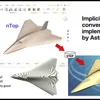
Engineering/Manufacturing Processes With Implicit Modeling
CDFAM Computational Design Symposium — Tokyo 2026George Allen · nTopBy now, implicit modeling technology and its benefits are well understood. In situations where a part is highly complex or its design process is highly iterative, implicit modeling using signed distance fields is uniquely able to deliver the reliability, performance, and scalability that are required for success. However, the novelty of implicit modeling is also a source of problems. Current engineering/manufacturing processes are often heavily dependent on legacy software tools that cannot consume implicit models — they require meshes or boundary representations, instead. So how do we address this problem? There are a few options — we can either convert implicit models to the forms needed by legacy tools, replace the legacy tools with new ones that consume implicit models directly, or change the data flow in the overall process. The talk examines these issues, reports progress and the current status, and suggests some ways forward.LinksTalk page with full transcriptWatch the talk on YouTubeSearch this talk's transcriptCite this talk This is a public episode. If you would like to discuss this with other subscribers or get access to bonus episodes, visit www.designforam.com
Podzilla Summary coming soon
Sign up to get notified when the full AI-powered summary is ready.
Free forever for up to 3 podcasts. No credit card required.
Listen to This Episode
More from CDFAM Computational Design Symposium

Toward Generative Engineering: Case Studies In Computational Creation Of New Design Concepts
Aeroforms: Modeling Olfactory Cartographies Of Japan - Harvard University
The Next Era Of Interaction Layers For Engineering - Generative Engineering
Teaching AI Engineering not Geometry: Why Text-To-Code-To-CAD, The Next Step In Computational Design
Get summaries like this every morning.
Free AI-powered recaps of CDFAM Computational Design Symposium and your other favorite podcasts, delivered to your inbox.
Free forever for up to 3 podcasts. No credit card required.