Free Daily Podcast Summary
Casual Cattle Conversations: Daily Summaries Delivered
by casualcattleconversations
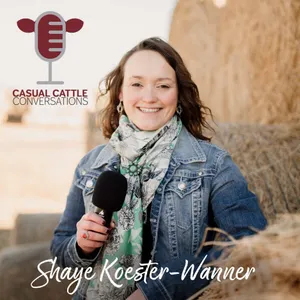
Casual Cattle Conversations is the podcast for beef cattle producers and ranchers to explore new ideas and hear stories that will help them improve their current management practices. Shaye Koester - Wanner connects listeners to other cattle producers and beef industry experts to discover what management practices, industry trends, current events and inspiring stories are impacting today’s beef cattle industry.
Latest Episodes
The most recent episodes — sign up to get AI-powered summaries of each one.
- 1 weeks ago19 min
Warning: Take These Cybersecurity Precautions This Fall
This week, Shaye welcomes back Chris Sherman, CEO of Tech Support Farm, to discuss fall cybersecurity and fraud threats facing farms and ranches. Sherman highlights RFID tag swapping in cattle sales, emphasizing vigilance and real-time verification to prevent animals being sold at incorrect values. He also warns that busy seasons increase bank fraud and vendor-payment scams, advising producers to verify payment changes and urgent requests by phone, watch for spoofed emails, and use simple email folder rules to flag fake invoices. If a bad link is clicked or money is sent, he recommends contacting a cybersecurity provider, reporting significant losses via the FBI’s IC3, and carrying cyber insurance. He notes commercial accounts often have only 24 hours to dispute fraudulent transactions and suggests tools like Positive Pay, along with MFA/2FA, strong passwords, and paid domain email for better protection. You can learn more about what Chris offers at https://techsupport.farm/. Learn more about Performance Livestock Analytics here: https://bit.ly/47PxY3W Learn more about Ambrook here: ambrook.com/casualcattle Learn more about Elanco here: https://farmanimal.elanco.com/us/beef Learn more about Corteva here: RangeAndPasture.com/CattleConversations 00:00 Risk Meets Cybersecurity 01:14 Meet Chris Sherman 02:37 Fall Threats Overview 04:03 RFID Tag Swapping 06:00 Busy Season Bank Fraud 08:22 If You Clicked Or Paid 12:27 Ponzi Schemes Due Diligence 14:15 Harvest Season Digital Hygiene 15:52 Passwords And Paid Email 16:25 Year End Vigilance Wrap Up
- 2 weeks ago23 min
Fall Weed Control Strategies for Grazing and Hay Acres
Today on the Casual Cattle Conversations podcast, Shaye interviews Corteva pasture specialist, Rachel Walker, about prioritizing fall weed control to maximize usable forage and extend grazing days. Walker explains that winter-emerging weeds like plantain, thistles, and poison hemlock should be treated in fall when young, using options such as DuraCor and UltiGraze. She describes DuraCor’s two-actives approach and notes grazing is allowed, with hay sales restrictions depending on state. They discuss why weed control matters in drought and for preventing livestock losses to toxic plants, and how improved control can reduce hay feeding and enable adding diverse grasses and clover. Walker recommends frequent soil testing and taking advantage of free forage testing, and adds fall brush control timing guidance. Learn more about Corteva solutions here: RangeAndPasture.com/CattleConversations Catch more conversations like this one and learn more at https://www.casualcattleconversations.com/ 00:00 Fall Weed Control Urgency 01:10 Meet Rachel Walker 02:43 Drought and Hay Outlook 04:07 Grazing Longer Into Winter 06:19 Targeting Winter Weeds 10:21 Why Weed Control Matters 14:09 UltiGraze and Soil Testing 16:39 Forage Testing and Nutrition 18:23 Clover Integration With NovaGraze 20:16 Brush Control Timing
- 2 weeks ago45 min
Fall Calving and Herd Health
This week, Shaye interviews Dr. Robin Faulkner, a veterinarian with decades of beef industry experience, about fall calving systems and herd health. Faulkner outlines why fall calving can add value by spreading calf supply to better match year-round packing capacity and by producing more mature fall-born bulls, while noting location-specific challenges. He emphasizes aligning calving with weather “thermal neutral” windows to reduce stress, disease risk, and negative fetal programming, and highlights nutrition as the key constraint for rebreeding when forage quality declines into winter. He advocates proactive, season-ahead management: forage testing, equipment readiness, calving kits, and facility preparation. On vaccines, he stresses tailoring protocols to handling and marketing constraints, using vaccination and weaning to improve marketability, and timing products to their effective protection windows, including pre-calving scour vaccines for colostrum immunity. He discusses fall fly pressure and timing fly control to vulnerability periods, and urges responsible treatment and stewardship of insecticides, dewormers, and antibiotics to preserve efficacy. Learn more at https://farmanimal.elanco.com/us/beef Learn more about Noble here: https://bit.ly/3DD7uG0 Learn more about Vence here: https://bit.ly/4kfWrCG Catch more conversations like this one and learn more at https://www.casualcattleconversations.com/ 00:00 Fall Calving Kickoff 01:18 Meet Dr. Faulkner 03:15 Why Calve in Fall 06:06 Weather Stress Window 09:50 Nutrition and Rebreeding 12:44 Pre Calving Prep 17:35 Vaccines for Value 23:20 Vaccine Timing Matters 29:42 Fly Control Strategy 32:46 Treatment Stewardship 42:45 Observe and Adapt
- 4 weeks ago28 min
BRD Prevention and Treatement for Ranchers and Feeders
Today on the Casual Cattle Conversations podcast, Shaye talks with veterinarian Dr. Paige Schmidt-Rios about bovine respiratory disease (BRD), its impact across the cattle supply chain, and key prevention strategies for ranchers. Dr. Paige explains BRD (also called pneumonia or shipping fever) as a complex syndrome involving multiple viruses and bacteria, often triggered when stress and environment compromise immunity; she lists common pathogens and notes BRD is a major cause of post-weaning illness. They discuss treatment limits, including supportive care for viral cases and five antibiotic classes for bacterial pneumonia, highlighting mycoplasma’s lack of a cell wall and fluoroquinolone restrictions, plus the role and timing of diagnostics and the need for a VCPR. Prevention focuses on colostrum within 12 hours, clean/dry calving environments, proper vaccine handling, and timely boosters, including considerations around preconditioning versus vaccinating at weaning. Learn more about Noble here: https://bit.ly/3DD7uG0 Learn more about Vence here: https://bit.ly/4kfWrCG Learn more abou Elanco here: https://farmanimal.elanco.com/us/beef Catch more conversations like this one and learn more at https://www.casualcattleconversations.com/ 01:16 4-H Memories 03:09 What BRD Really Is 06:45 Mycoplasma Spotlight 08:01 Treatment Options 11:09 Diagnostics And Timing 12:59 Vet Partnership And Management 16:29 Prevention Starts At Birth 20:00 Vaccines And Boosters 22:11 Weaning And Preconditioning 24:32 Prevention Recap And Supply Chain
- Aug 17, 202621 min
Artificial Intelligence: Is It Benefitting Ranchers?
This week, Shaye Wanner interviews Haley Potter from the Ambrook team about how artificial intelligence can support ranch profitability and long-term continuity when used responsibly. Potter, who has North Dakota ranching roots and splits time between ranches in Dell and Alder, Montana, says AI fits best for producers who need help with information gathering and admin tasks while keeping humans in control of decisions and fact-checking outputs. She shares examples such as using Claude to summarize bull sale catalogs based on EPD parameters, building grazing plans, and analyzing financials for expansion scenarios, plus customer examples like an AI-assisted ordering/lead tool for direct-to-consumer beef and a “ranch command center” dashboard. Potter explains Ambrook’s AI-assisted bookkeeping features (tagging, invoice matching, receipt scanning) and emphasizes data quality, transparency, and privacy, including choosing trusted services and requiring approval for data use. See what Ambrook can do for your operation here: ambrook.com/casualcattle Learn more about Noble here: https://bit.ly/3DD7uG0 Learn more about Vence here: https://bit.ly/4kfWrCG 00:00 AI and Ranching Today 00:11 Meet Haley Potter 01:30 AI Not Insemination 01:56 Can AI Help Ranchers 02:51 Haley Ranching Roots 04:10 Responsible AI Basics 05:45 Real Ranch AI Examples 09:56 What Ambrook Does 10:39 AI Features in Ambrook 12:54 Time Savings and Better Data 15:25 Data Privacy and Trust
- Aug 10, 202630 min
Making Virtual Fence Cost Effective for Ranchers
This week on the Casual Cattle Conversations Podcast, Shaye interviews Jay and Cheyenne Smith, cattle producers on Idaho’s eastern edge near the Montana border, about adopting Vence virtual fencing and coordinating with neighboring permittees to make it cost-effective. After the 2022 Moose Fire and grazing restrictions, they partnered with the University of Idaho and worked with BLM and the Forest Service to implement virtual fencing on rugged public-land range; five permittees now use shared base stations while owning separate collars. They discuss early hesitations about data being used against producers, onboarding lessons about placing fences to match natural cattle trails, and management gains including fewer emergency rides, more schedulable work, improved utilization control, and more efficient gathers. Virtual fencing enabled their shift from winter to fall calving by keeping cattle positioned to come home, reducing labor needs, and providing movement data useful for investigating events like wolf predation or other disturbances. Learn more about Vence here: https://bit.ly/4kfWrCG Catch more conversations like this one and learn more at https://www.casualcattleconversations.com/ 00:00 Virtual Fence Neighbors 01:08 Meet the Smiths 01:34 Ranch and Grazing Setup 04:05 Fire Sparks Adoption 07:02 Getting Neighbors Onboard 09:32 Workload and Riding Changes 11:43 Sharing Towers and Data 14:14 Training and Fence Design 18:01 Better Utilization and Plans 19:15 Fall Calving Made Possible 22:33 Costs and Quality of Life 25:23 Wolves and Movement Clues 27:35 Next Generation Buy In
- Aug 3, 202619 min
Extended Grazing Seasons Do's and Dont's
This week, Shaye sits down with Chance, a ranch manager at the Noble Research Institute, about extending grazing seasons to cut winter feeding and hay costs. Chance describes Noble’s 5,100-acre native-grass operation running about 200 cows, using intensive rotational grazing (moving daily to every few days) and aiming to remove only the top third to half of forage during the growing season so enough standing grass remains for winter. He stresses producers often plan too late, and recommends measuring pasture forage monthly to guide stocking decisions, destocking, or hay purchasing. Winter management includes protein supplementation (cubes/cake) for four to five months and occasional hay during heavy snow. They discuss other options such as cover crops (noting weather risk), rye winter pasture, crop residue grazing, and bale grazing/unrolling or pre-unwrapped bales to improve soil and return nutrients. Learn more about resources from the Noble Research Institute here: http://noble.org/find-a-course Catch more conversations like this one and learn more at https://www.casualcattleconversations.com 00:00 Cutting Input Costs 00:10 Meet Shay and Chance 01:31 Why Extend Grazing 02:05 Noble Ranch System 02:37 Summer Grazing Plan 04:51 Rotation and Calving Setup 06:42 When to Move Cattle 08:43 Stocking and Weather Limits 10:23 Cover Crops and Rye 12:14 Bale Grazing Methods 14:53 Put Nutrients Back
- Jul 27, 202615 min
Making Ranches Investible for Your Family
This week, Shaye Wanner welcomes Chris Rawley of Harvest Returns to discuss what makes ranches “investable” and why it matters for operators seeking outside investors or bank financing to expand herds, land, or infrastructure. Raleigh explains Harvest Returns’ model of pooling investor capital and investing as a single partner via loans, notes, or equity, and says investable operations have a solid plan, clear financial statements, defined marketing/sales strategy, and a realistic path to investor returns. He outlines that key first steps include transparency and documentation across complex land and entity structures, accurate balance sheets reflecting assets and debts, and building a team for missing functions like finance, bookkeeping, accounting, and sales. Common mistakes include poor herd tracking/accountability (amid “phantom cattle” scams) and attempting to raise public capital without proper SEC-compliant legal help. Raleigh emphasizes getting herd and financial numbers in order, including hiring professionals. Catch more conversations like this one and learn more at https://www.casualcattleconversations.com/ 00:00 Is Your Ranch Investible 01:24 Meet Chris Rawley 01:33 Why Investability Matters 02:38 What Harvest Returns Does 04:56 Investible Ranch Checklist 07:50 First Steps to Improve 09:30 Building the Right Team 11:09 Common Mistakes to Avoid 13:20 Raising Capital Legally
About Casual Cattle Conversations
Casual Cattle Conversations is the podcast for beef cattle producers and ranchers to explore new ideas and hear stories that will help them improve their current management practices. Shaye Koester - Wanner connects listeners to other cattle producers and beef industry experts to discover what management practices, industry trends, current events and inspiring stories are impacting today’s beef cattle industry.
Customized Recaps
AI-powered recaps with compact key takeaways, quotes, and insights.
Straight to Your Inbox
Get key takeaways from Casual Cattle Conversations in a 5-minute read.
Save Hours Every Week
Stay current on your favorite podcasts without falling behind.
Frequently Asked Questions
What is Podzilla's Casual Cattle Conversations daily summary?
It's a free AI-powered email that summarizes new episodes of Casual Cattle Conversations as soon as they're published. You get the key takeaways, notable quotes, and links & mentions — all in a quick read.
How does the Casual Cattle Conversations podcast summary work?
When a new episode drops, our AI transcribes and analyzes it, then generates a personalized summary tailored to your interests and profession. It's delivered to your inbox every morning.
Is this an official Casual Cattle Conversations product?
No. Podzilla is an independent service that summarizes publicly available podcast content. We're not affiliated with or endorsed by casualcattleconversations.
Can I get summaries of other podcasts too?
Absolutely! The free plan covers up to 3 podcasts. Upgrade to Pro for 15, or Premium for 50. Browse our full catalog at /podcasts.
How often does Casual Cattle Conversations release new episodes?
Casual Cattle Conversations publishes weekly. Our AI generates a summary within hours of each new episode.
What topics does Casual Cattle Conversations cover?
Casual Cattle Conversations covers topics including News, Education, Business, Entrepreneurship, How To. Our AI identifies the specific themes in each episode and highlights what matters most to you.
Start getting Casual Cattle Conversations summaries tomorrow morning.
Free forever for up to 3 podcasts. No credit card required.
Free forever for up to 3 podcasts. No credit card required.