Free Daily Podcast Summary
Buzz Blossom & Squeak — Be a Neighborhood Naturalist: Daily Summaries Delivered
by Jill McKinley
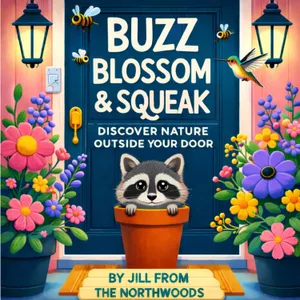
Buzz, Blossom & Squeak is a quiet, curious walk into the natural world right outside your door. You don’t need to be a scientist, a hardcore birder, or someone who hikes miles into the wilderness. This podcast is for anyone who has ever paused to notice a bird call, wondered about a plant growing along a sidewalk, watched insects move through a garden, or felt the seasons shifting without quite knowing why. Each episode focuses on small, approachable pieces of nature—birds, bugs, plants, weather, ecosystems, and natural patterns—explained in a way that’s calm, curious, and grounded in observation. Instead of rushing toward big conclusions, Buzz, Blossom & Squeak invites you to slow down and really notice what’s happening in the living world around you. You’ll hear about things like: How birds use different layers of trees and sky Why certain plants grow where they do What insects are actually doing when they buzz past How seasons quietly reshape landscapes The hidden systems that connect soil, water, plants, and animals The goal isn’t mastery—it’s familiarity. Nature becomes less overwhelming when you take it one small step at a time. This podcast is especially for people who: Want to understand nature without feeling intimidated Enjoy learning through real-world observation Prefer gentle explanations over fast facts Like noticing patterns, habits, and rhythms Find peace and wonder in everyday outdoor moments Episodes are designed to be thoughtful, practical, and reflective. You might walk away with a new question to watch for, a detail you’ve never noticed before, or simply a deeper appreciation for the ordinary wild things that share your space. Buzz, Blossom & Squeak isn’t about traveling far to find nature. It’s about realizing you’ve been standing in it all along.
Latest Episodes
The most recent episodes — sign up to get AI-powered summaries of each one.
- 5 days ago31 min
How Scientists Track Wildlife: Bird Bands, Monarchs, Motus, and Radar
How can scientists follow a monarch butterfly weighing about as much as a paperclip, or trace a tiny songbird from the Northwoods to its winter home? Jill explores the remarkable tools revealing where animals go, from simple numbered bird bands to miniature radio tags, solar-powered butterfly transmitters, GPS, satellites, and weather radar. Learn how banders weigh and identify birds, how color bands and neck collars let observers report sightings, and how the Motus Wildlife Tracking System uses a network of receiving stations to detect tagged animals. We also look at the possibilities and limits of insect tracking, satellite tracking, individual identification, and radar observations. Discover how an ordinary wildlife watcher can contribute useful observations without handling an animal. Chapters00:00 Why track migrating wildlife02:24 Bird bands and weighing songbirds06:52 Color bands and visible identification09:03 Nanotags and radio tracking09:52 The Motus receiver network13:05 Tracking monarch butterflies18:23 GPS and satellite tracking23:02 Identifying individuals without tags25:39 Migration on weather radar Resources and references USGS Bird Banding Laboratory — https://www.usgs.gov/labs/bird-banding-laboratoryMotus Wildlife Tracking System — https://motus.org/U.S. Fish & Wildlife Service — https://www.fws.gov/ Jill’s Links https://jillfromthenorthwoods.com/ - Find my podcasts, videos, downloads and ways to contact me https://www.buymeacoffee.com/smallstepspod https://x.com/NorthWoodsJill Email the podcast at NorthwoodsJill@fastmail.com YouTube @BuzzBlossomSqueak BBS personal disclaimer By choosing to watch this video or listen to this podcast, you acknowledge that you are doing so of your own free will. The content shared here reflects personal experiences and opinions and is intended for informational and educational purposes only. I am not a licensed biologist, ecologist, or wildlife professional. Any nature observations, identifications, or suggestions offered should not be considered a substitute for professional scientific or environmental guidance. Always follow local regulations when observing or interacting with wildlife and natural spaces. You are solely responsible for any decisions or actions you take based on this content.
- 1 weeks ago33 min
Where Do Our Summer Birds Go? Postcards from Their Winter Homes
Where Do Our Summer Birds Go? Postcards from Their Winter Homes Our Midwestern summer birds haven't disappeared—they're living entirely different lives thousands of miles away. From Bobolinks feeding in South American rice fields to Baltimore Orioles visiting coffee-growing landscapes, we're following familiar birds into their tropical winter homes. In this episode: Bobolinks, their seasonal plumage, and the South American 'rice bird'Baltimore Orioles among tropical fruit trees and shade-grown coffeeBlackburnian and Tennessee Warblers in mountain forests and coffee habitatsGolden-winged, Cerulean, Canada, and Yellow WarblersWhy habitat conservation matters along the entire migration route Find more episodes and resources: https://JillFromTheNorthwoods.com
- 2 weeks ago30 min
When Autumn Birds Arrive: Wisconsin’s Winter Visitors
When Autumn Birds Arrive: Wisconsin’s Winter Visitors A late-October marsh visit reveals that migration is not simply birds leaving for warmer places. Juncos, American tree sparrows, white-throated sparrows, trumpeter swans, and waterfowl show how Wisconsin can be a winter destination, a stopover, or a departure point depending on the species. In this episode of Buzz, Blossom & Squeak, Jill from the Northwoods explores the topic through examples and practical observations. In this episode Why fall migration brings arrivals as well as departuresWintering sparrows and dark-eyed juncosTrumpeter swans and other marsh waterbirdsHow food and open water shape migration Disclaimer [INSERT ORIGINAL SHOW-SPECIFIC DISCLAIMER HERE — exact approved wording not available in the uploaded transcripts] Find more from Jill from the Northwoods at https://jillfromthenorthwoods.com/
- 3 weeks ago24 min
Northern Visitors: Birds Flying Through in Fall
Northern Visitors: Birds Passing Through the Northwoods in FallBuzz, Blossom & Squeak October birding is far from over. As familiar summer birds leave, sparrows, raptors and other travelers from the boreal forest and Arctic move through the Northwoods. Learn where they breed, how to recognize them, and where to look during fall migration. In this episode:• Why the Northwoods is a stopover• October brings a new cast of birds• Harris’s sparrows• White-crowned sparrows• Fox sparrows• Other secretive migrants• Hawks and falcons on the move• Watching for northern visitors• How to welcome migrating birds Explore more episodes at https://jillfromthenorthwoods.com
- Oct 29, 202622 min
Where Do Insects Go in Winter?
Where Do Insects Go in Winter? A Northwoods yard can be buzzing with mosquitoes, butterflies, bees, and beetles in summer and look completely empty by January. But winter does not erase the insect world. We explore how different insects survive as eggs, larvae, pupae, or adults; how diapause differs from simply slowing down; and how natural antifreeze, protected hiding places, and even snow help insects survive. You may look at your autumn leaf piles and garden stems a little differently after this episode. IN THIS EPISODE• The mystery of the disappearing insects• Diapause and winter survival• Eggs, caterpillars, chrysalises, and adults• Natural antifreeze and freeze tolerance• How mosquitoes survive winter• Shelter in leaves, stems, and snow• What to leave in your garden for spring CHAPTERS00:00 Introduction: Where Do Insects Go in Winter?02:12 Diapause and winter survival04:24 Eggs, caterpillars, chrysalises, and adults06:39 Natural antifreeze and freeze tolerance08:53 How mosquitoes survive winter11:08 Shelter in leaves, stems, and snow13:22 What to leave in your garden for spring15:31 Putting the ideas together17:47 Practical lessons and reflections19:58 Final thoughts and next steps REFERENCES AND RESOURCESNature notes: diapause; quiescence; woolly bear caterpillars; praying mantis egg cases; swallowtail chrysalises; freeze avoidance and freeze tolerance Jill From the Northwoodshttps://jillfromthenorthwoods.com
- Oct 22, 202631 min
When Nature Looks Helpless
A fledgling misses a branch, a butterfly emerges with crumpled wings, and a young eagle wanders far from home. These moments can make us want to rush in and help. I look at the different processes behind nature's difficult transitions and why understanding what we are seeing matters before we intervene. Butterflies and Hatching ChicksThe familiar butterfly story makes a powerful metaphor, but emergence and wing expansion involve a delicate developmental process. A chick also needs time to complete hatching. Something that looks slow or awkward to us may be normal, and premature intervention can cause harm. Fledglings Learn by DoingYoung birds are not miniature experts. Flying, landing, finding food, and avoiding danger involve practice as well as instinct. I share what the house sparrows around my home have taught me about this awkward stage and why a healthy fledgling on the ground is not automatically abandoned. First Migrations and Wandering EaglesSome birds learn migration routes socially, while others begin their first journeys with inherited guidance. Experience still matters when weather and unfamiliar landscapes complicate the trip. Young bald eagles offer another picture of learning, with years of wandering before their familiar adult appearance and breeding life. Surviving Currents, Predators, and WinterSalmon migrations, predator and prey interactions, and winter survival are different kinds of challenges. They involve ecology, inherited adaptations, and experience rather than one universal rule that struggle makes every individual stronger. Fire also shows how a disturbance can play a role in some ecosystems. When Helping Really HelpsA healthy fledgling differs from an injured bird or an animal tangled in fishing line. Observation can help us recognize the distinction, but licensed wildlife rehabilitators and wildlife authorities are the right contacts for emergencies. Sometimes leaving room for normal development helps; sometimes prompt expert intervention is needed. Your small step is to watch carefully and keep contact information for a local licensed wildlife rehabilitator handy. Learn to recognize normal development while taking real injuries seriously. jill@startwithsmallsteps.com and jillfromthenorthwoods.com A note on this podcast: I’m a birder and backyard naturalist, not a licensed biologist or ecologist. What you hear here comes from personal observation, published research, and conversations with people who study this professionally. For serious fieldwork, conservation planning, or species identification questions that matter, please consult a professional in the field. TIMESTAMPS 00:00 When nature looks helpless02:28 Butterflies and the struggle story05:00 Hatching chicks07:05 Fledglings learning to fly09:58 A bird’s first migration12:09 Young eagles and experience15:27 Salmon and ecological challenges17:29 Predators, prey, and winter21:32 Fire and plant adaptations23:38 When to call a wildlife rehabilitator
- Oct 15, 202627 min
Hidden Animal Highways in Your Backyard
Fresh snow has a way of telling on everybody. Rabbit tracks, squirrel routes, deer crossings, and tiny paths along shrubs suddenly reveal that the animals in our yards are not wandering randomly. They have roads, and once you learn to look for them, your backyard starts looking less like a lawn and more like a map. Why Animals Build Familiar RoutesRepeated routes save energy, improve safety, and make travel more efficient. When food, water, shelter, and sleeping places stay in predictable locations, familiar paths become the easiest way to move between them. Deer Trails, Edges, and Backyard CorridorsWhite-tailed deer make some of the most obvious animal trails, but smaller animals use fence lines, shrubs, wooded edges, and spaces around buildings too. These edges can connect feeding places with safer cover.a Snow Makes the Map VisibleFresh snow is one of the easiest ways to see wildlife routes because every traveler leaves evidence. Instead of only asking which animal made a track, you can follow the direction and ask where it came from, where it went, and why. A Hidden World Under the SnowVoles, mice, and shrews can travel in the subnivean zone between the ground and insulating snow. When spring arrives, melting snow can reveal channels and runs that were hidden all winter. Roads Above Us and Through the WaterSquirrels reuse branches, trunks, and even utility lines, while flying squirrels develop familiar gliding routes. Beavers, muskrats, otters, raccoons, mink, and other animals also use waterways and shorelines as efficient transportation corridors. The Biggest Highways Are in the SkyBird migration scales the same principle up enormously. Flyways, shorelines, river valleys, ridgelines, stopover habitat, and rising air can help birds move long distances while finding food, rest, and efficient travel conditions. You do not need to identify every footprint to start reading the wildlife map around you. Look along edges, underneath shrubs, through openings in fences, up into connected branches, and across fresh snow. Once you begin noticing routes instead of isolated animals, a whole transportation network appears right outside your back door. Contact: jill@startwithsmallsteps.com | jillfromthenorthwoods.com A note on this podcast: I'm a birder and backyard naturalist, not a licensed biologist or ecologist. What you hear here comes from personal observation, published research, and conversations with people who study this professionally. For serious fieldwork, conservation planning, or species identification questions that matter, please consult a professional in the field. TIMESTAMPS 00:00 Fresh snow reveals hidden highways03:11 Why animals reuse the same routes05:37 Deer trails and generations of travel07:56 Why edges make good animal roads10:04 Foxes, coyotes, and backyard routes12:51 Reading tracks after fresh snow14:53 The subnivean world under the snow16:40 Highways in the trees19:28 Waterways and animal travel20:45 Bird flyways and migration routes
- Oct 1, 202611 min
Look Closer, Not Farther: See More on Every Walk
A few weeks ago, my friend Em and I were scanning the far side of a lake for migrating ducks and shorebirds. When I finally got tired of squinting through binoculars and turned around, there were a dozen American bullfrogs in the little pond right behind us, eyes above the water, watching us. That moment made me admit something: I'm a horizon scanner. And a lot of the best nature is happening within arm's reach. **The Horizon-Scanner Habit** Our attention goes to distance and drama: a soaring hawk, movement at a tree line, the big find. That's not a character flaw, it's how attention works. But it means we walk whole trails and miss most of what's living right beside us. **The Frog on the Leaf** On a birding walk, Em and I looked down only to avoid tripping, and found a tiny frog sitting on a large leaf. We watched it for ten or fifteen minutes while other hikers passed by, never once looking at the ground around them. **A Fly on the Steering Wheel** Waiting in the car at our favorite marsh, a small bug landed on my steering wheel. The Seek app identified it as a maize calligrapher, a hover fly I'd never heard of, sitting right in front of me while I looked out the windshield for birds. **What Lives Within Arm's Reach** Lichen on bark (a living air-quality indicator), mushrooms on a tree you've passed a hundred times, bright berries you never looked up, chickadees, wrens, and kinglets working the brush eight feet away. Up close is where much of the variety lives. **The Spider on the Ring Camera** Something kept triggering my Ring camera. It turned out to be an orb weaver disguised as a little leaf, sitting in a web with an egg sac, right outside my back door. **Tools for Looking Closer** A hand lens (loupe) on a lanyard, a simple magnifying glass, a handheld digital microscope, or your phone's macro mode can open up a world you can't see at arm's length. Take a photo, then identify it at home. The practice is simple: before you scan the horizon, scan near first. Give yourself sixty seconds to look at the ground, the low branches, and the base of the nearest tree, and then stay still and watch whatever you find. Tell me what turns up. You can find everything I do at jillfromthenorthwoods.com, and you can reach me directly at jill@startwithsmallsteps.com. --- **A note on this podcast:** I'm a birder and backyard naturalist, not a licensed biologist or ecologist. What you hear here comes from personal observation, published research, and conversations with people who study this professionally. For serious fieldwork, conservation planning, or species identification questions that matter, please consult a professional in the field. TIMESTAMPS 00:00 Bullfrogs behind us 01:07 Confessions of a horizon scanner 03:06 The frog on the leaf 04:48 A fly on the steering wheel 05:58 Lichen, mushrooms, and small birds 06:50 The practice: scan near first 07:51 Be still and watch 08:16 The spider on the Ring camera 09:12 Tools for looking closer 10:40 Your 60-second challenge
Get Buzz Blossom & Squeak — Be a Neighborhood Naturalist summaries in your inbox
Free AI-powered daily recaps. Key takeaways, quotes, and mentions — in a 5-minute read.
Get Free Summaries →Free forever for up to 3 podcasts. No credit card required.
You Might Also Like
Listeners also like.

Terrestrials
Nature stories that reveal surprising animal and plant behaviors through immersive, family-friendly audio adventures.
BirdNote Daily
Short audio stories about birds and nature that highlight animal behavior, sounds, and conservation.
In Defense of Plants Podcast
Explores the fascinating world of plants, from tiny duckweeds to towering redwoods, celebrating the science and wonder of botany.

Wild Edible World: A Foraging Podcast
Explores wild edible plants and mushrooms, sharing global foraging knowledge and ways to identify and use them safely.

ScienceSphere
A weekly exploration of scientific discoveries across physics, biology, astronomy, and technology, explained clearly for all listeners.
Nat Theo Nature Lessons Rooted in the Bible
Explores nature and science through a biblical lens, helping kids and families see how creation reflects God’s design.

Wonder
A brief weekly journey into the natural world through immersive soundscapes and mindful reflection.
Hello, Nature
Dustlight Productions, REI Co-op Studios

Amazing Wildlife: A San Diego Zoo Podcast
Explores wildlife conservation through behind-the-scenes stories from the San Diego Zoo and global efforts to protect endangered species.

BBC Gardeners’ World Magazine Podcast
Expert gardeners share seasonal tips, problem-solving advice, and global garden stories for enthusiasts.

The Weirdest Thing I Learned This Week
Three science journalists share bizarre and little-known facts they’ve recently discovered.
Scotland Outdoors
A topical guide to outdoor life in Scotland.
About Buzz Blossom & Squeak — Be a Neighborhood Naturalist
Buzz, Blossom & Squeak is a quiet, curious walk into the natural world right outside your door. You don’t need to be a scientist, a hardcore birder, or someone who hikes miles into the wilderness. This podcast is for anyone who has ever paused to notice a bird call, wondered about a plant growing along a sidewalk, watched insects move through a garden, or felt the seasons shifting without quite knowing why. Each episode focuses on small, approachable pieces of nature—birds, bugs, plants, weather, ecosystems, and natural patterns—explained in a way that’s calm, curious, and grounded in observation. Instead of rushing toward big conclusions, Buzz, Blossom & Squeak invites you to slow down and really notice what’s happening in the living world around you. You’ll hear about things like: How birds use different layers of trees and sky Why certain plants grow where they do What insects are actually doing when they buzz past How seasons quietly reshape landscapes The hidden systems that connect soil, water, plants, and animals The goal isn’t mastery—it’s familiarity. Nature becomes less overwhelming when you take it one small step at a time. This podcast is especially for people who: Want to understand nature without feeling intimidated Enjoy learning through real-world observation Prefer gentle explanations over fast facts Like noticing patterns, habits, and rhythms Find peace and wonder in everyday outdoor moments Episodes are designed to be thoughtful, practical, and reflective. You might walk away with a new question to watch for, a detail you’ve never noticed before, or simply a deeper appreciation for the ordinary wild things that share your space. Buzz, Blossom & Squeak isn’t about traveling far to find nature. It’s about realizing you’ve been standing in it all along.
Customized Recaps
AI-powered recaps with compact key takeaways, quotes, and insights.
Straight to Your Inbox
Get key takeaways from Buzz Blossom & Squeak — Be a Neighborhood Naturalist in a 5-minute read.
Save Hours Every Week
Stay current on your favorite podcasts without falling behind.
Frequently Asked Questions
What is Podzilla's Buzz Blossom & Squeak — Be a Neighborhood Naturalist daily summary?
It's a free AI-powered email that summarizes new episodes of Buzz Blossom & Squeak — Be a Neighborhood Naturalist as soon as they're published. You get the key takeaways, notable quotes, and links & mentions — all in a quick read.
How does the Buzz Blossom & Squeak — Be a Neighborhood Naturalist podcast summary work?
When a new episode drops, our AI transcribes and analyzes it, then generates a personalized summary tailored to your interests and profession. It's delivered to your inbox every morning.
Is this an official Buzz Blossom & Squeak — Be a Neighborhood Naturalist product?
No. Podzilla is an independent service that summarizes publicly available podcast content. We're not affiliated with or endorsed by Jill McKinley.
Can I get summaries of other podcasts too?
Absolutely! The free plan covers up to 3 podcasts, any in the catalog. Basic raises that to 15, Pro to 40 and Max to 100. Browse our full catalog at /podcasts.
How often does Buzz Blossom & Squeak — Be a Neighborhood Naturalist release new episodes?
Buzz Blossom & Squeak — Be a Neighborhood Naturalist publishes weekly. Our AI generates a summary within hours of each new episode.
What topics does Buzz Blossom & Squeak — Be a Neighborhood Naturalist cover?
Buzz Blossom & Squeak — Be a Neighborhood Naturalist covers topics including Science, Nature. Our AI identifies the specific themes in each episode and highlights what matters most to you.
Start getting Buzz Blossom & Squeak — Be a Neighborhood Naturalist summaries tomorrow morning.
Free forever for up to 3 podcasts. No credit card required.
Free forever for up to 3 podcasts. No credit card required.