Free Daily Podcast Summary
Buddhist Studies Footnotes: Daily Summaries Delivered
by Frances Garrett
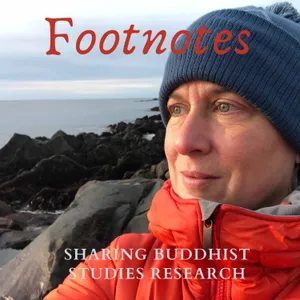
Footnotes is a series of short lectures or conversations on research in the field of Buddhist Studies. Created by Frances Garrett, a professor of Buddhist Studies at the University of Toronto, with co-host Tony Scott, most episodes are summaries or discussions of articles or book chapters from academic work in the field, with some episodes featuring guest lectures or guest hosts from events and courses at the University of Toronto. We aim to make Buddhist Studies research freely accessible to students and the public.Footnotes was made possible by a grant from eCampusOntario and also receives support from the Robert H.N. Ho Family Foundation Centre for Buddhist Studies at the University of Toronto. Audio editing has been done by Jesse Whitty and Frances Garrett.
Latest Episodes
The most recent episodes — sign up to get AI-powered summaries of each one.
- 3 days ago17 min
The Experiment
How did an unconventional undergraduate program become an international model for contemplative education? In episode 2 of this five-part series in the podcast Buddhist Studies Footnotes, Frances Garrett traces the origins of BPMH, from its roots in socially engaged Buddhism and the teachings of Thích Nhất Hạnh to its pioneering integration of Buddhist Studies, psychology, neuroscience, medicine, and contemplative science. Through classroom recordings, faculty reflections, and student testimonies, listeners explore an educational experiment that challenged disciplinary boundaries while asking deeper questions about attention, flourishing, and the purpose of higher education. As the field of contemplative science grows around the world, the episode asks why universities remain so uncertain about knowledge that refuses to fit within traditional academic structures. To learn more about the circumstances described in this series, see https://pathuoft.net/ This series was produced by Frances Garrett, with sound editing by Jesse Whitty, music by Kilian Kramer, and logo design by Kayla Bowland. The series has been organized by the Engaging Education in Buddhist Studies initiative at the University of Toronto, with generous support from the Khyentse Foundation.
- 1 weeks ago24 min
The Place They Found
What makes a university program unforgettable? In the opening episode of this five-part series, Frances Garrett introduces the University of Toronto's Buddhism, Psychology, and Mental Health (BPMH) program through the voices of students whose lives it transformed. As students describe finding an intellectual home where neuroscience, philosophy, psychology, and Buddhist Studies could be explored together, a portrait emerges of a rare academic community built on mentorship, curiosity, and belonging. But despite what a uniquely transformative experience students find this undergraduate minor, in 2024 they were suddenly prevented from joining it. The story reported on in this series begins with a question: what happens when a university fails to recognize the communities it has created? To learn more about the circumstances described in this series, see https://pathuoft.net/ This series was produced by Frances Garrett, with sound design by Jesse Whitty, music by Kilian Kramer, and logo design by Kayla Bowland. The series has been organized by the Engaging Education in Buddhist Studies initiative, with generous support from the Khyentse Foundation.
- Jul 15, 202648 min
Ten Thousand Joys, Ten Thousand Sorrows: The Heart of Queer Sangha
A conversation between Kody Muncaster and Ryan 'twinkle' Backer, who is co-founder of Queer Sangha, a Montreal-based group for queer individuals interested in Buddhism and meditation. twinkle shares their journey into Buddhism, starting with a 10-day Vipassana course in 2015, and discusses the challenges and transformative experiences of being a trans person in Buddhist spaces. Queer Sangha, established in 2019, offers weekly sessions, both online and in-person, with a focus on inclusivity, accessibility, and community. They emphasize welcoming practices and community discussions on challenging topics like racism and gender identity. The group values mutual aid, peer-led teachings, and maintaining a supportive, diverse community.
- Apr 23, 202649 min
LGBTQ+ affirmation in the Jodo Shinshu Buddhist tradition
A conversation between Kody Muncaster and Jeff Wilson, professor of Religious Studies and East Asian Studies. They discuss Dr. Wilson's journey into Buddhism and Buddhist Studies and his work as an ordained minister in the Jodo Shinshu tradition. Wilson highlights Jodo Shinshu's historical significance in North America, its long and important role in various forms of engaged Buddhism, and the transformative efforts of Jodo Shinshu temples in becoming LGBTQ+ inclusive. They also discuss practical steps Buddhist groups can adopt to improve inclusivity. Jeff Wilson is a professor of Religious Studies and East Asian Studies at Renison University College (University of Waterloo). His research focuses on Buddhism in North America, Hawaii, and Japan. His first book, Mourning the Unborn Dead (Oxford 2009), examined the American uses of Japanese Buddhist post-abortion rituals. His second book, Dixie Dharma (North Carolina 2012), explored the role of regionalism in the life of a Buddhist temple in the South. His third book, Mindful America (Oxford 2014), charted the transformation of mindfulness from a Buddhist monastic practice to a omnipresent medical, psychological, and self-help technique. His fourth book, Selected Writings of D.T. Suzuki, Volume III: Comparative Religion (California 2016), examined the interfaith writings of one of the most important 20th century Japanese Buddhist scholars. He is also the author of pioneering research on the first documented clergy-led same-sex marriages in American history, including the world’s first Buddhist same-sex wedding ceremonies.
- Jan 7, 20261h 19m
Creating safer spaces for queer and trans Buddhists
A conversation between Kody Muncaster and two representatives from the international Rainbodhi LGBTQIA+ Buddhist Community: Tenzin Tseme from Rainbodhi USA and Myra Blankenship from Rainbodhi Melbourne/Naarm. Rainbodhi is a network for LGBTQIA+ Buddhists to come together in community, sharing dharma and spiritual friendship. Rainbodhi has chapters all over the world. This episode explores Rainbodhi’s work, as well as the challenges faced by trans folks in Buddhism and how we can work to create a queer engaged Buddhism that is welcoming to all. This episode is part of a series of interviews with queer folks in Buddhism and Buddhist Studies.
- Nov 14, 20251h 16m
Living a queer Buddhist life, with Jampa Wurst
A conversation between Kody Muncaster and Jampa Wurst, as part of a series of interviews with queer folks in Buddhism and Buddhist Studies. Dr. Jampa Wurst is a queer, non-binary Buddhist and founder of the International Queer Buddhist Conference (IQBC). Dr. Wurst has a PhD in Comparative Studies in Religion from the Freie Universität, Berlin, Germany, completing a dissertation on Tibetan Buddhist Nuns and the Sakyadhita Network, an English translation of which was published in 2025 as Identity in Exile: Tibetan Buddhist Nuns and the Network Sakyadhītā. Kody Muncaster, PhD, the host of this series, has an MA in Buddhist Studies (University of South Wales) and a PhD in Gender, Sexuality, and Women’s Studies (Western University). They are an OCSWSSW Psychotherapist and Clinical Director of Pink Lotus Counselling & Psychotherapy, and they have taught at the Buddhism, Psychology, and Mental Health program at the University of Toronto as well as at Western University’s Department of Gender, Sexuality, and Women’s Studies. They began a three-year training to become a Zen priest under Venerable Bhikkhuni Thích Nũ’ Tinh Quang in 2024. Kody Muncaster is the author of the 2025 book, Queer Engaged Buddhism: Trans(forming) Buddhist Studies (Sumeru Press).
- Aug 13, 202448 min
Buddhist environmental ethics for a more-than-human world
A conversation with Colin Simonds, Lecturer in Religious Studies at the University of Alberta. His research focuses on how Tibetan Buddhist philosophy and contemplative practice are relevant to contemporary issues facing the more-than-human world. His doctoral thesis, titled "Moral Phenomenology in a More-Than-Human World: A New Approach to Buddhist Environmental Ethics," offers an interpretation of Buddhist ethics as a moral phenomenology and proposes a phenomenological approach to animal and environmental ethics from a Tibetan Buddhist perspective. Dr. Simonds is also interested in broader questions of animal ethics, environmental ethics, contemplative studies, yoga studies, and Buddhist studies. In this conversation with Frances Garrett, part of a Footnotes series on posthumanist approaches to the study of Buddhism, Dr. Simonds explores intersections of Buddhism, environmental ethics, and animal ethics. He talks about his work on deep ecology and on the feminist care ethics tradition, emphasizing the importance of relationship, community, and feeling. He also considers expanding traditional Buddhist understandings of sentience to include non-human animals, plants, and even maybe AI. This episode of Buddhist Studies Footnotes was created, produced and edited by Frances Garrett, with support from the Robert H.N. Ho Family Foundation Centre for Buddhist Studies at the University of Toronto. This project aims to make Buddhist Studies research freely accessible to students and the public.
- Apr 29, 202427 min
Buddhist environmentalism through philosophy of language
A conversation with Nan Kathy Lin, visiting assistant professor at Oberlin College in religious ethics and critical thought. Her work focuses on East Asian Buddhism, environmentalism, and moral philosophy as informed by ordinary language philosophy. In this conversation with Frances Garrett, part of a Footnotes series on posthumanist approaches to the study of Buddhism, Nan Kathy Lin talks about her work on developing a theory of religious change as seen through Buddhist environmentalism, drawing on philosophy of language and theoretical biology. She discusses the use of the concept of "interdependence" by 20th-century environmentalists, and she traces how the word interdependence as a translation of the Buddhist term paticca-samuppada should be seen as a response to moral concepts, such as growth or progress, embedded in 20th-century industrial political economy. This episode of Buddhist Studies Footnotes was created, produced and edited by Frances Garrett, with support from the Robert H.N. Ho Family Foundation Centre for Buddhist Studies at the University of Toronto. This project aims to make Buddhist Studies research freely accessible to students and the public.
About Buddhist Studies Footnotes
Footnotes is a series of short lectures or conversations on research in the field of Buddhist Studies. Created by Frances Garrett, a professor of Buddhist Studies at the University of Toronto, with co-host Tony Scott, most episodes are summaries or discussions of articles or book chapters from academic work in the field, with some episodes featuring guest lectures or guest hosts from events and courses at the University of Toronto. We aim to make Buddhist Studies research freely accessible to students and the public.Footnotes was made possible by a grant from eCampusOntario and also receives support from the Robert H.N. Ho Family Foundation Centre for Buddhist Studies at the University of Toronto. Audio editing has been done by Jesse Whitty and Frances Garrett.
Customized Recaps
AI-powered recaps with compact key takeaways, quotes, and insights.
Straight to Your Inbox
Get key takeaways from Buddhist Studies Footnotes in a 5-minute read.
Save Hours Every Week
Stay current on your favorite podcasts without falling behind.
Frequently Asked Questions
What is Podzilla's Buddhist Studies Footnotes daily summary?
It's a free AI-powered email that summarizes new episodes of Buddhist Studies Footnotes as soon as they're published. You get the key takeaways, notable quotes, and links & mentions — all in a quick read.
How does the Buddhist Studies Footnotes podcast summary work?
When a new episode drops, our AI transcribes and analyzes it, then generates a personalized summary tailored to your interests and profession. It's delivered to your inbox every morning.
Is this an official Buddhist Studies Footnotes product?
No. Podzilla is an independent service that summarizes publicly available podcast content. We're not affiliated with or endorsed by Frances Garrett.
Can I get summaries of other podcasts too?
Absolutely! The free plan covers up to 3 podcasts. Upgrade to Pro for 15, or Premium for 50. Browse our full catalog at /podcasts.
How often does Buddhist Studies Footnotes release new episodes?
Buddhist Studies Footnotes publishes weekly. Our AI generates a summary within hours of each new episode.
What topics does Buddhist Studies Footnotes cover?
Buddhist Studies Footnotes covers topics including Fitness, Religion & Spirituality, Spirituality, Buddhism, Health & Fitness, Society & Culture, Alternative. Our AI identifies the specific themes in each episode and highlights what matters most to you.
Start getting Buddhist Studies Footnotes summaries tomorrow morning.
Free forever for up to 3 podcasts. No credit card required.
Free forever for up to 3 podcasts. No credit card required.