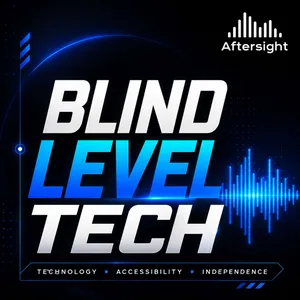
Free Daily Podcast Summary
Blind Level Tech: Daily Summaries Delivered
by Aftersight
Where accessibility meets innovation. Hosted by Liam Erven, Blind Level Tech explores the latest in assistive technology, accessible design, and everyday tools that empower the blind and low-vision community. Each episode dives into real stories, expert insights, and practical solutions—from screen readers and AI tools to mobility tech and inclusive apps. Whether you’re blind, low vision, a professional in the accessibility space, or simply curious about how technology is reshaping lives, this show offers fresh perspectives and actionable takeaways.Produced by Aftersight, Blind Level Tech is more than a tech podcast—it’s a platform for inclusion, discovery, and possibility.
Latest Episodes
The most recent episodes — sign up to get AI-powered summaries of each one.
- Yesterday40 min
Why Are Blind People Still Being Left Out of Game Night?
Episode SummaryBoard games bring people together, but what happens when vision loss makes it difficult to participate? This week on Blind Level Tech, host Liam Erven welcomes Gregg, creator of No Sight Game Night, to explore how everyday technology, creativity, and a little ingenuity can make board games more accessible for blind and low-vision players.After losing his vision, Gregg found himself increasingly dependent on family members to help him play the games he loved. Determined to participate independently, he began adapting popular games using PenFriend audio labels, accessible dice apps, and spreadsheets. What started with Sushi Go Party has grown into a collection of creative solutions for games like Ticket to Ride, Wingspan, Sagrada, and Clue.Liam and Gregg discuss practical ways to get started, the accessibility barriers that still exist in modern tabletop gaming, and why the opportunity to play independently means much more than winning or losing. Gregg also shares how his YouTube channel, No Sight Game Night, is helping others discover that accessible gaming doesn't always require expensive equipment or complicated technology.Because game night isn't just about playing. It's about belonging at the table.CreditsHost: Liam ErvenGuest: Gregg, Creator of No Sight Game NightProducer: Jonathan PriceProduction: AftersightContact InformationNo Sight Game Night- YouTube: Search for No Sight Game Night- Facebook: No Sight Game Night- Resources: Accessible game adaptation spreadsheets are discussed as available through links associated with Gregg's YouTube channel.Blind Level Tech / Aftersight- Website: aftersight.org- Guest applications: aftersight.org/guest- Feedback: feedback@aftersight.org- White Cane Program: Aftersight websiteChapters00:05 Welcome and Aftersight's Nationwide White Cane Program01:49 Meet Gregg of No Sight Game Night02:00 How Vision Loss Changed Family Game Night05:10 Making Sushi Go Party Accessible07:11 Using PenFriend Audio Labels for Cards08:08 Creating Labels with Family and Accessibility Apps09:43 Spreadsheets, Screen Readers, and Adaptation Tools10:26 Making Sagrada Accessible with a Custom Grid12:42 Accessible Dice Apps and Custom Dice16:20 Getting Started with Accessible Card Games18:03 Adapting Mahjong and Preserving Social Connections21:25 The Accessibility Challenges of Ticket to Ride25:31 What Board Game Designers Could Do Better27:16 No Sight Game Night and Shared Resources29:50 Adapting Complex Games Like Wingspan31:50 Using Spreadsheets to Make Clue Accessible34:25 Accessibility Kits and 64 Ounce Games37:13 Growing the Accessible Gaming Community37:55 Future Plans for No Sight Game Night39:56 Closing Thoughts and Aftersight Contact Information ★ Support this podcast ★
- 2 weeks ago41 min
Your AI Is Lying to You. This One Refuses To.
Episode SummaryShopping for clothes online can be frustrating for anyone, but when you're blind or have low vision, choosing the right size, matching colors, and knowing how an outfit will look can become a guessing game. What if technology could finally change that?In his first episode as the new host of Blind Level Tech, Liam Erven welcomes Mike Bamonte, co-owner and CEO of Dress Aloud. Inspired by a conversation with a close friend who lost his vision, Mike set out to build an AI-powered tool that gives blind and low-vision shoppers more independence, confidence, and control over their clothing choices.Dress Aloud combines personal measurements, product information, virtual try-on technology, and detailed audio-friendly descriptions to help users understand how clothing might fit and look before making a purchase. Unlike AI tools that simply tell users what they want to hear, Dress Aloud is designed to acknowledge uncertainty, flag missing sizing information, and recommend a different size or even skipping a purchase when appropriate.Mike also demonstrates the technology live, discusses privacy and accessibility, and shares how user feedback is shaping its development. The conversation expands into another of his projects, Tape Territory, a free audio-described movie platform featuring accessible watch parties.From clothing and confidence to accessible entertainment, this episode explores what can happen when developers listen to the people they're trying to serve.Explore the resources:Dress Aloud: https://dressaloud.comTape Territory: https://tapeterritory.comContact Mike: mike@dressaloud.comAfterSight: https://aftersight.orgBecome a guest: https://aftersight.org/guest/Subscribe to Blind Level Tech for conversations about accessible technology, innovation, and the tools helping people who are blind or have low vision live more independently.Episode ChaptersApproximate timestamps based on the supplied transcript.00:05 Liam Erven's First Episode01:26 Introducing Dress Aloud03:46 The Problem That Inspired the Technology06:28 Why AI Needs to Tell the Truth08:53 How Dress Aloud Evaluates Clothes11:48 Matching Colors and Outfits14:16 Live Demonstration18:15 Shopping Independence and Privacy21:25 Free Trials and Listener Opportunities23:07 Improving the Technology Through Feedback25:49 Introducing Tape Territory29:49 The Personal Impact of Accessible Technology33:29 What's Next for Dress Aloud37:24 How Listeners Can Get Involved - Liam Erven's First Episode - Introducing Dress Aloud - The Problem That Inspired the Technology - Why AI Needs to Tell the Truth - How Dress Aloud Evaluates Clothes - Matching Colors and Outfits - Live Demonstration - Shopping Independence and Privacy - Free Trials and Listener Opportunities - Improving the Technology Through Feedback - Introducing Tape Territory - The Personal Impact of Accessible Technology - What's Next for Dress Aloud - How Listeners Can Get Involved ★ Support this podcast ★
- 3 weeks ago14 min
Meet Liam Erven: A New Era of Blind Level Tech
Blind Level Tech is entering an exciting new chapter, and we're introducing the voice who will help lead the way! Jonathan Price welcomes Liam Erven as the new host of Blind Level Tech, bringing his passion for accessible technology, education, and a little humor to the Aftersight family.Liam shares his vision for the future of the podcast, focusing on making complicated technology understandable, approachable, and useful for people who are blind or have low vision. From artificial intelligence and accessibility innovations to everyday smartphone tips, Liam wants to help listeners build their own toolbox of practical technology skills.Jonathan and Liam also preview what's coming to BLT, including conversations with innovative guests, hands-on technology demonstrations, and quick BLT Byte episodes. Liam shares a few examples of the accessibility features he loves teaching, including customizable iPhone VoiceOver gestures and AI-powered image descriptions that can make digital content more accessible.Plus, Jonathan announces the upcoming nationwide expansion of Aftersight's free White Cane Project, introduces BLT's updated logo, and shares how listeners can become part of the show's next chapter.New host. Fresh ideas. The same commitment to making technology accessible to everyone.Show CreditsShow: Blind Level Tech (BLT)New Host: Liam ErvenSpecial Episode Host: Jonathan PriceProducer: Jonathan PriceProduction: AftersightFeatured Guest: Liam ErvenContact InformationAftersightWebsite: Aftersight.orgEmail: Jonathan@Aftersight.orgFeedback and tech tips: feedback@aftersight.orgPhone: (720) 712-8856Become a Guest: Aftersight.org/guest00:05 Welcome to a New Chapter of Blind Level Tech00:20 Aftersight's Nationwide White Cane Project00:53 What's Happening Across Aftersight Podcasts01:25 Introducing New BLT Host Liam Erven02:05 Liam's Passion for Technology03:36 Making Accessible Technology Less Intimidating05:56 The Future of Blind Level Tech06:46 Learning New Skills and Building Your Tech Toolbox07:48 Customizing iPhone VoiceOver Gestures08:21 AI Image Descriptions and BLT Bytes09:57 A Fresh Look for Blind Level Tech11:47 Liam's Invitation to Future Guests12:15 A Little Musical Theater Humor13:35 Connect with Aftersight and Join the Conversation - Welcome to a New Chapter of Blind Level Tech - Aftersight's Nationwide White Cane Project - What's Happening Across Aftersight Podcasts - Introducing New BLT Host Liam Erven - Liam's Passion for Technology - Making Accessible Technology Less Intimidating - The Future of Blind Level Tech - Learning New Skills and Building Your Tech Toolbox - Customizing iPhone VoiceOver Gestures - AI Image Descriptions and BLT Bytes - A Fresh Look for Blind Level Tech - Liam's Invitation to Future Guests - A Little Musical Theater Humor - Connect with Aftersight and Join the Conversation ★ Support this podcast ★
- Sep 16, 202647 min
The Future of Low Vision Tech: Inside Innovega’s Smart Glasses
Episode Summary What if one pair of glasses could replace the magnifiers, phone tricks, telescopic lenses, and other tools many people with low vision rely on every day? On this episode of Blind Level Tech, Jonathan Price sits down with Corrinalyn Guyette, Strategic Growth and Partnerships at Innovega, and Joseph, Innovega’s Chief Marketing Officer, for an in-depth look at the company’s upcoming vision-enhancement technology. Innovega’s smart glasses are not designed to cure blindness or restore vision. Instead, the company says they are designed to enhance a person’s existing functional vision through features including magnification, zoom, brightness and contrast adjustments, color inversion, and a camera-driven display. The team explains why a person’s diagnosis alone may not determine whether the glasses will be useful, and why the better question is whether tools such as magnification, contrast enhancement, or zoom already provide benefit. Corrinalyn and Joseph also share stories from early demonstrations, including users being able to read, recognize family members, watch television, play cards, and interact with their surroundings in new ways. Much of the conversation centers on a word that has repeatedly surfaced during Innovega's testing: hope. The conversation gets into the nuts and bolts as well: Innovega's Founder Series preorder, anticipated early-2027 shipping, phone compatibility, the wired first-generation design, screen mirroring, AI features under development, microphones and speakers, and the company's longer-term work involving smart contact lenses. Jonathan also asks an important accessibility question: how does a company developing promising technology make sure the people who could benefit from it can actually afford it? Innovega discusses HSA/FSA eligibility, potential sponsorship opportunities, work with low-vision clinics, and other possible pathways intended to broaden access. This episode is a detailed look at emerging low-vision technology, what it can potentially do, what it cannot do, and why Innovega believes listening directly to the blind and low-vision community is essential to developing it. Credits Host: Jonathan Price Guests: Corrinalyn Guyette and Joseph — Innovega Producer: Jonathan Price Podcast: Blind Level Tech Organization: Aftersight Contact & Resources Aftersight Website: aftersight.org Email: jonathan@aftersight.org Innovega Website: innovega.io Email: social@innovega.io Innovega also directs listeners to its website for information about its Founder Series, consultations, webinars, preorder information, and applications for in-person demonstrations. - Welcome to Blind Level Tech & the Search for a New Host - Meet Corrinalyn Guyette and Joseph from Innovega - What Is Innovega Trying to Solve? - Building Vision Technology People Actually Want to Wear - What the Smart Glasses Can and Cannot Do - Turning Everyday Low-Vision Tools Into Wearable Technology - A Hands-On Look at the Glasses - Who Could Benefit from Innovega? - Corrinalyn’s Most Impactful Demonstration - Joseph on Testing, Emotion, and Hope - How User Feedback Is Shaping the Technology - Vision Loss, Isolation, and Staying Engaged With Life - Features Requested by the Low-Vision Community - Price, Preorders, and Expected Availability - Android, iPhone, Computers, and Screen Mirroring - How AI Could Be Used in the Glasses - Built-In Microphones and Speakers - Where Innovega Goes From Here - Funding the Technology and Expanding Access - Making Vision Technology More Affordable - The Future of Innovega Smart Contact Lenses - How Innovega Is Listening to the Community - How to Learn More, Preorder, or Schedule a Consultation - Accessibility, Research, and Asking Better Questions - Applying for an In-Person Demonstration - Refunds and Final Thoughts - Closing and More from Aftersight ★ Support this podcast ★
- Sep 9, 202653 min
Accessibility Isn’t an Option: How Liam Erven Builds Games Everyone Can Play
Summary Blind programmer and game developer Liam Erven joins Jonathan Price to explore what accessible technology looks like when inclusion is built into the foundation rather than added at the end. Liam shares how he created Super Liam, the first audio-based side-scrolling platform game designed for blind players, and how a childhood idea eventually became something meaningful to gamers around the world. He explains how audio positioning can replace visual information, why developers must understand their audience, and how thoughtful testing catches barriers sighted development teams may never notice. Jonathan and Liam also discuss artificial intelligence, game modification, screen-reader-first design, quality assurance, and what aspiring programmers should learn before asking AI to build an application. The central lesson is simple: technology works best when developers communicate clearly, test with real users, and treat accessibility as a genuine need rather than an optional feature. Credits Show: Blind Level Tech Host: Jonathan Price Guest: Liam Erven Produced by: Jonathan Price Organization: Aftersight Contact Information Learn more about Liam’s accessible games and software at LWorks.net. Interested in auditioning to become the next host of Blind Level Tech? Contact Jonathan Price at jonathan@aftersight.org. For questions, guest suggestions, or feedback: Email: feedback@aftersight.orgWebsite: aftersight.orgChapters ★ Support this podcast ★
- Aug 26, 202621 min
TetraLogical and the great AI questions
Episode Description Artificial intelligence is changing how websites are built, searched, and experienced. But is it actually making the internet more accessible? Evan talks with accessibility specialist Ela Gorla from TetraLogical about the benefits and risks of using AI in web accessibility. They discuss AI-generated image descriptions, automatic captions, accessible coding, and why developers must give AI clear instructions instead of assuming it will produce accessible results automatically. Ela also explains how poorly trained AI could repeat the accessibility failures already found across the web—and what companies can do to create a more accessible digital future. Chapter Markers 00:00 – Welcome and Introducing Ela Gorla02:36 – Ela’s Work in Digital Accessibility03:50 – How Ela Uses AI in Her Work06:01 – How Generative AI Is Improving Accessibility08:00 – Using AI Instead of Navigating Websites09:23 – Why Website Structure Still Matters10:24 – AI-Generated Websites and Universal Access11:44 – The Risk of AI Repeating Accessibility Problems13:53 – What AI Companies Need to Do Differently16:50 – Giving AI Clear Accessibility Instructions17:55 – Building Reusable Prompts and AI Skills19:28 – Connecting With Ela and TetraLogical20:32 – Contact Aftersight and Closing ★ Support this podcast ★
- Aug 18, 202617 min
Meet My Menu: Mmmm Tasty!!!
Episode Description Restaurant menus are supposed to tell you what you can eat. But when the website is inaccessible, the PDF won’t work with a screen reader, or there isn’t a braille menu available, something as simple as ordering dinner can turn into a guessing game. On this episode of Blind Level Tech, Evan talks with Avital “Avi” Drel, creator of Meet My Menu, a tool designed to give blind and low-vision diners a more independent way to access restaurant menus. Avi explains how conversations with blind users around the country revealed just how inconsistent menu accessibility can be, from inaccessible restaurant websites to screen readers forcing users through an entire menu from beginning to end. Meet My Menu combines accessible menu formatting with an AI voice agent that can answer natural questions about dishes, prices, ingredients, and other information pulled directly from the restaurant menu. For users who prefer not to use voice, menus can also be presented in a consistent structure designed to work with screen readers and braille displays, including headings and expandable sections. And restaurants may only be the beginning. Avi talks about expanding the same accessibility concept into conferences, theater programs, events, and other information that can be difficult to access independently. Guest Avital “Avi” DrelCreator of Meet My Menu Links Meet My Menu: meetmymenu.comWeb App: app.meetmymenu.com - — Welcome to Blind Level Tech - — Avi’s technical and business background - — Where the idea for Meet My Menu came from - — Why restaurant menus remain an accessibility problem - — Meet the AI waiter - — Screen readers and braille displays - — Creating one consistent accessible menu format - — Expanding beyond restaurants - — Is Meet My Menu free? - — Where to find Meet My Menu - — Closing thoughts ★ Support this podcast ★
- Aug 12, 202618 min
Start Small, Make Something: getting started with Music Production
Getting into music production does not have to begin with an expensive microphone, audio interface, MIDI controller, or professional studio. In this solo episode of Blind Level Tech, Evan Starnes offers a practical introduction to making music and working with audio—especially for blind and low-vision creators.A phone or computer, paired with decent headphones or earbuds, may be everything you need to begin experimenting. Even built-in microphones can help you explore singing, rapping, or recording an instrument before investing in specialized equipment.Evan also goes over the pros and cons of several digital audio work stations, including some free options you may already have on your device.Creators & Guests Evan Starnes - Host ★ Support this podcast ★
Get Blind Level Tech summaries in your inbox
Free AI-powered daily recaps. Key takeaways, quotes, and mentions — in a 5-minute read.
Get Free Summaries →Free forever for up to 3 podcasts. No credit card required.
You Might Also Like
Listeners also like.

Double Tap
A weekly discussion exploring how technology can support blind and partially sighted people in daily life.

This Week in Tech (Audio)
A weekly roundtable of tech insiders discusses the latest developments in AI, robotics, computing, and digital privacy.

This Week in Tech (Video)
Leo Laporte and a panel of tech experts discuss recent developments in AI, robotics, computing, and privacy each week.

The AI XR Podcast.
Insightful interviews with tech founders and executives on AI, virtual reality, augmented reality, and the future of spatial computing.
Primary Technology
A weekly breakdown of major tech news, from consumer gadgets to AI, explained for a general audience.

TED Tech
Experts examine how technology reshapes society, science, design, and business through TED Talks hosted by Sherrell Dorsey.

Top Five Tech
A weekly roundup of five tech-related recommendations spanning media and ideas, curated and delivered each Friday.

Bloomberg Tech
Daily news and analysis on global tech companies, innovation, and the future of business.

Daily Tech News Show
Daily tech news coverage with analysis from Tom Merritt and team.

Intelligent Machines (Audio)
Explores the impact of artificial intelligence through conversations with pioneers shaping the future of intelligent technology.

Tech Life
Explores how technology shapes global work, learning, and play while examining its societal impacts and innovations.

Technically Speaking: An Intel Podcast
Explores how technological advancements, from computer chips to medical implants, are developed and shaping the future of society.
About Blind Level Tech
Where accessibility meets innovation. Hosted by Liam Erven, Blind Level Tech explores the latest in assistive technology, accessible design, and everyday tools that empower the blind and low-vision community. Each episode dives into real stories, expert insights, and practical solutions—from screen readers and AI tools to mobility tech and inclusive apps. Whether you’re blind, low vision, a professional in the accessibility space, or simply curious about how technology is reshaping lives, this show offers fresh perspectives and actionable takeaways.Produced by Aftersight, Blind Level Tech is more than a tech podcast—it’s a platform for inclusion, discovery, and possibility.
Customized Recaps
AI-powered recaps with compact key takeaways, quotes, and insights.
Straight to Your Inbox
Get key takeaways from Blind Level Tech in a 5-minute read.
Save Hours Every Week
Stay current on your favorite podcasts without falling behind.
Frequently Asked Questions
What is Podzilla's Blind Level Tech daily summary?
It's a free AI-powered email that summarizes new episodes of Blind Level Tech as soon as they're published. You get the key takeaways, notable quotes, and links & mentions — all in a quick read.
How does the Blind Level Tech podcast summary work?
When a new episode drops, our AI transcribes and analyzes it, then generates a personalized summary tailored to your interests and profession. It's delivered to your inbox every morning.
Is this an official Blind Level Tech product?
No. Podzilla is an independent service that summarizes publicly available podcast content. We're not affiliated with or endorsed by Aftersight.
Can I get summaries of other podcasts too?
Absolutely! The free plan covers up to 3 podcasts, any in the catalog. Basic raises that to 15, Pro to 40 and Max to 100. Browse our full catalog at /podcasts.
How often does Blind Level Tech release new episodes?
Blind Level Tech publishes weekly. Our AI generates a summary within hours of each new episode.
What topics does Blind Level Tech cover?
Blind Level Tech covers topics including News, Business, Non-Profit. Our AI identifies the specific themes in each episode and highlights what matters most to you.
Start getting Blind Level Tech summaries tomorrow morning.
Free forever for up to 3 podcasts. No credit card required.
Free forever for up to 3 podcasts. No credit card required.