Free Daily Podcast Summary
Birdshot Podcast: Daily Summaries Delivered
by Nick Larson
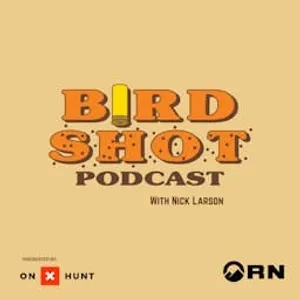
Birdshot Podcast, hosted by Nick Larson, is where upland hunters come together. Each week we share conversations that connect the people, stories, and traditions of wingshooting—from bird dogs and shotguns to the birds and landscapes that bring us back season after season.
Latest Episodes
The most recent episodes — sign up to get AI-powered summaries of each one.
- 1 weeks ago1h 20m
#362 | Young Bird Dogs: Learning to See Progress With Aaron Hepler
Young bird dogs can make a handler question everything after one rough hunt. Then the next outing offers a very different picture.Aaron Hepler of InCamp Podcast joins Nick to talk about learning alongside his French Brittany, Rue, and finding a place for bird hunting in a life that already includes bowhunting, work and family. Rue's development leads into a conversation about running pheasants, bird contacts, changing conditions and what it means to look for a pattern instead of judging a dog by a single mistake.There is more to the story than training. Aaron remembers growing up outdoors in Pennsylvania, shares a few thoughts on taking kids hunting, and looks back on Emma, the Labrador who made bird hunting part of his life. Her loss, and the quiet she left in the house, help explain why getting another bird dog meant so much.Later, Nick and Aaron compare the expectations they put on themselves with their first pointing dogs. They talk about everyday whoa foundations, learning from older dogs, and the satisfaction of watching a young dog begin to understand the job.In this episodeGiving kids room to enjoy their own day in the woodsHow Emma's pheasant hunts hooked Aaron on bird dogsMoving from a flushing Labrador to a pointing French BrittanyReading a young dog's progress across multiple bird contactsRue's very different outings in changing wind and moistureEveryday foundations and hunting alongside experienced dogsConnect with AaronInCamp Podcast: https://linktr.ee/incamppodcastRecorded October 13, 2026. Weather, season references and mentions of an episode releasing "today" refer to that recording date.Questions from the conversationDoes bumping a bird mean a young pointing dog is falling behind?A bumped bird alone does not tell the whole story. Nick describes looking at the pattern across contacts: whether the dog is trying to point, what happens on the next bird, and how conditions affect the work. Aaron's experiences with Rue show why one frustrating day can look very different from the next outing. This is a discussion of their experiences, not a training prescription.How did Aaron's experience change when he moved from a Labrador to a French Brittany?Aaron found himself learning a different job alongside Rue after years of pheasant hunting with his Labrador, Emma. He describes encouraging a pointing dog's natural instincts and providing bird exposure rather than trying to manufacture a point. The conversation centers on his own dogs and his expectations as a handler. It does not establish a rule about every Labrador or Brittany.What helped Aaron see progress in Rue's pointing?Repeated bird contacts gave Aaron a better picture of what Rue understood. He describes solid woodcock points and a pheasant outing that followed a much harder day. Nick connects those stories to looking for a pattern over time. Aaron also reflects on wind, moisture and running birds, while the conversation leaves room for several factors influencing any individual hunt.What do Nick and Aaron mean by everyday whoa foundations?They describe brief, consistent moments in daily life where a dog stands and waits for a release, including around meals, doors and the kennel. Nick distinguishes that foundation from the more involved steadiness work a new handler might see demonstrated. Aaron discusses adjusting to the dog in front of him. Their point is the value of clear, repeated communication in their own routines.What can a young bird dog learn from hunting with an older dog?Aaron describes Rue backing an experienced Vizsla and paying attention to how that dog worked. Nick shares his early observations of running a puppy with an older setter, while also wanting the pup to develop an independent search. Both stories concern what they have seen with their own dogs. The balance between shared hunts and solo time remains part of that development.How do they approach taking kids hunting?Nick and Aaron talk about letting the child's experience shape the day rather than pressing toward the adult's original objective. Aaron describes adjusting to a child's energy and interest, while Nick reflects on slowing down with his boys. Small-game outings and a memorable turkey encounter illustrate the conversation. Current youth-season dates and requirements depend on the relevant state regulations.Support the showSupport the show on Patreon: https://www.patreon.com/c/birdshotSponsorsThis episode is brought to you by Upland Gun Company, Final Rise, and Irish Setter B
- 3 weeks ago1h 0m
#361 | Bird Dog Puppy Progress: Grouse Woods and Prairie Sharptails
Bird dog puppy progress can be easier to recognize looking back than it is in the moment. In this solo episode, Nick Larson catches up on the grouse season and recaps a South Dakota sharptail hunt with Hazel and Rose.Back in the woods, six-month-old Hazel gets her first woodcock and begins showing more caution around grouse. Nick talks through the cover he explored, the birds he found and the check-ins that are helping him build confidence in her. A final walk produces the kind of puppy work that makes a day, even without a shot.On the prairie, fog and heat shape the hunting, Rose brings the experience of a six-year-old dog, and Nick encounters his first rattlesnake. Hazel keeps following scent across much more ground than Nick expects. Twice, he stops believing her before the birds get up.The episode also introduces Across the Uplands, a film series following a Upland Gun Company 20-gauge Venus and a Final Rise vest as they travel from hunter to hunter. The South Dakota film launches Friday, October 16, alongside this podcast episode.In this episodeHazel's first woodcock and more deliberate work around ruffed grouseAspen cover, understory and a patchy midseason bird reportRange, bells and learning to stay connected in the woodsRose's experience on exposed prairie birdsA first rattlesnake encounter and the unfamiliarity of new countryPuppy bumps, long sharptail tracks and learning when to trust the dogAcross the Uplands films, partners and giveawaysAcross the Uplands campaign and updates: https://finalrise.com/pages/across-the-uplandsQuestions from the episodeHow is Hazel progressing as a young bird dog?Hazel is beginning to slow down, point and advance more cautiously around birds. Nick contrasts her recent grouse-woods work with the birds she bumped in South Dakota. Her first woodcock and several promising grouse contacts stand out, while range, consistency and staying connected remain part of her development. This is one puppy's progress report, rather than a fixed training schedule.Why does Nick use a bell with a GPS collar?Nick likes the bell because its cadence gives him a sense of how his dog is moving through cover. With Hazel, he can hear her coming back, pausing to locate him and moving again after he calls. He describes those small exchanges as useful while they learn to keep track of each other in the grouse woods.What did the South Dakota sharptail tracks teach Nick?The long tracks challenged Nick's confidence in Hazel. During one sequence, he followed her for about 400 yards before stopping, and she continued downhill before two sharptails flushed. The experience left him wondering why he had quit following. He also acknowledges uncertainty about exactly what scent she was working throughout these sequences.What is Across the Uplands?Across the Uplands is a film series following a Upland Gun Company 20-gauge Venus and a Final Rise vest as they travel between hunters. The recording describes current-season hunts filmed and released shortly afterward, including this South Dakota trip. Nick also mentions partner giveaways. Find campaign updates at https://finalrise.com/pages/across-the-uplands.This episode is brought to you by Upland Gun Company, Final Rise, and Irish Setter Boots.Upland Gun Company: https://uplandguncompany.com/Final Rise Shirt of the Month: https://finalrise.com/pages/upland-shirt-subscriptionIrish Setter Pheasants Forever Edition: https://irishsetterboots.com/pheasantsforeverSupport the show on Patreon: https://www.patreon.com/c/birdshotListen and followSpotify: https://open.spotify.com/show/17EVUDJPwR2iJggzhLYil7Apple Podcasts: https://podcasts.apple.com/us/podcast/birdshot-podcast/id1288308609YouTube: https://www.youtube.com/@birdshot.podcastInstagram: https://www.instagram.com/birdshot.podcast/Website: <a h
- Oct 2, 20261h 53m
#360 | Reading Grouse Cover and Handling Bird Dogs with Ann Jandernoa
Ruffed grouse habitat can look good on a map and still leave plenty of questions once the boots hit the ground. Ann Jandernoa returns for her tenth appearance on the Birdshot Podcast to help Nick work through listener questions about reading cover and handling bird dogs.The conversation starts with early-season conditions and how dry weather changes the places Ann looks for birds. From there, they get into stem density, the forest floor, and the smaller features that make one pocket of a cut more useful than the surrounding cover. A clump of balsam, a shaded edge, or a connection between cover types can give a grouse another option.There are questions about hawthorn and wild apples, hunting habitat farther east, where grouse spend the night, and those unusual days when birds seem to keep flushing from the same stretch of cover. Nick and Ann also discuss helping a young dog work running grouse more calmly, choosing dogs to run together, and communicating a plan with hunting partners.In this episodeDry conditions, moisture, and early-season brood observationsWhat stem density tells Ann about canopy and the forest floorFinding productive pockets and connections within grouse coverHawthorn, wild apples, and habitat differences between New England and the Great LakesGrouse movement, nighttime cover, and large concentrations of birdsRelocating on running grouse and helping a young dog slow downRunning one dog or several, approaching points, and planning a hunt with partnersQuestions from the conversationWhat does stem density tell a grouse hunter?Ann looks beyond the number of stems to how the canopy comes together and what grows beneath it. She describes cover with an interlaced canopy and a floor that young grouse can move through. Nick and Ann discuss how the useful features change as a stand ages and birds move beyond their brood cover.How does dry weather change where Ann looks for grouse?Ann follows shade, moisture, and cover connections. She describes looking toward transitions near lowlands and conifers when surrounding cover dries out. Nick and Ann also discuss how sandy and heavier soils respond differently, and why the condition of the plants and forest floor can be more useful in the field than remembering a soil classification.What makes one pocket of grouse habitat better than another?Ann's answer changes with the season. Early on, she pays close attention to the floor and canopy. As leaves come down, shrub cover and connections between habitat types become more important. Nick describes scanning for a lone spruce, balsam clumps, deadfalls, and nearby edges, then giving his dog a chance to investigate those features.How does Ann approach a dog on point?Ann describes circling out and around rather than crowding the dog from behind or coming directly alongside a young dog. She also looks at likely escape cover and whether there is room to swing a shotgun among the trees. Nick shares his own tendency to circle wider, with communication and positioning becoming especially important when another hunter is present.Connect with AnnScout and Hunt habitat maps: https://scoutandhunt.com/Support the showThis episode is brought to you by Upland Gun Company, Final Rise, and Irish Setter Boots.Upland Gun Company: https://uplandguncompany.com/Final Rise Shirt of the Month: https://finalrise.com/pages/upland-shirt-subscriptionIrish Setter Pheasants Forever Edition: https://irishsetterboots.com/pheasantsforeverJoin the Birdshot Podcast community on Patreon: https://www.patreon.com/c/birdshotQuestions for a future episode: nick@birdshotpodcast.comListen and followSpotify: https://open.spotify.com/show/17EVUDJPwR2iJggzhLYil7Apple Podcasts: https://podcasts.apple.com/us/podcast/birdshot-podcast/id1288308609YouTube: https://www.youtube.com/@birdshot.podcastInstagram: https://www.in
- Sep 25, 20261h 9m
#359 | Prairie Lessons and a Puppy's First Sharptail Hunts
Sharptail hunting on the prairie gave Nick plenty to think about, especially with Hazel along for her first prairie trip. In this solo episode, he recaps the hunts and shares what changed when he started choosing cover with a young setter in mind.A cut hayfield that looked too short to hide a bird turned into one of the trip's most memorable walks. There was good work from an older dog, a puppy carrying a sharptail around a hay bale, and plenty of small moments that made the next hunt even more exciting.Nick also answers a listener's question about range and staying connected with a young dog, reflects on what the wind can hide, and remembers Hartley as another season gets underway.In this episodeWhy the roadside view doesn't always tell the whole story about prairie coverGrazing, patchy grass, and choosing places where Hazel could move and stay in sightA cut hayfield, Pike's point, and Hazel's first sharptail experiencesYoung-dog range, checking in, changing directions, and GPS collarsHow wind and the path a dog takes can change a bird contactHazel's early pointing and backing, and memories of HartleyA few questions from the conversationCan sharptails hide in a cut hayfield?They did on this trip. Nick describes Pike pointing a sharptail in short alfalfa that looked too open to conceal a bird. Taking Hazel into that field gave her room to move and stay visible, and the hunt changed Nick's confidence in a cover type he hadn't spent much time hunting.What made patchy prairie cover useful for a puppy?Nick found that thinner areas let Hazel move more easily and maintain visual contact. Patches of snowberry, bowls, and other remaining cover also gave the hunt clearer places to investigate. He contrasts that with thick, tall grass that can make a young dog's first outings harder than they need to be.How does Nick stay connected with a young dog?Nick describes building that connection through repeated outings and opportunities for the pup to check back. When Hazel lost sight of him, he stopped and let her look for him. He also talks about reconnecting before a major change of direction and fitting her with a GPS collar before her first grouse hunts.Does a birdless walk mean sharptails weren't there?Nick's experiences have taught him to leave room for doubt. One bird flushed while the hunters stopped to water a dog and check the map. In another remembered hunt, Hartley passed close to birds on the wrong side of the wind, then found them when he looped around.Support the showThis episode is brought to you by Upland Gun Company, Final Rise, and Irish Setter Boots.Upland Gun CompanyFinal Rise Shirt of the MonthIrish Setter Pheasants Forever EditionJoin the Birdshot Podcast community on Patreon.Have a question or something you'd like to hear more about in a future solo episode? Email nick@birdshotpodcast.com.Listen and followSpotifyApple PodcastsYouTubeInstagramBirdshot Podcast website Hosted by Simplecast, an AdsWizz company. See pcm.adswizz.com for information about our collection and use of personal data for advertising.
- Sep 11, 202651 min
#358 | Tick Prevention for Hunters and Bird Dogs with Travis Avery
Tick prevention for hunters and bird dogs starts before the first walk through cover. Travis Avery of Sawyer Products joins Nick to talk about permethrin, treated clothing, and what happens when a tick reaches that fabric.I've sprayed my hunting pants for years, but I hadn't spent much time thinking about what the treatment was doing two weeks later. No smell. Nothing I could see. Travis's explanation helped me connect that familiar routine to how the product works. We also discuss treating boots and socks, along with the dog beds and kennel pads I already spray.We talk about the difference between a fabric treatment and a topical repellent, why drying matters, and how Travis approaches prevention with his dog Murphy. The conversation also covers tick checks and the extra care involved when cats are around. We open with Sawyer's water filters and a few ways they can fit into a hunting vest, a truck, or a trip with the dogs.The idea is to spend more time in the woods with a routine that makes sense.Questions from the episodeHow is permethrin different from a topical insect repellent?Permethrin is the fabric treatment at the center of this conversation. Travis describes it as a contact insecticide, while DEET and picaridin serve as topical repellents. Nick asks how those approaches fit together when a hunter has treated clothing but still has exposed skin. The distinction helped him better understand the routine he already uses.Why can treated hunting clothes still work two weeks later?The treatment bonds with the fabric rather than depending on a smell that Nick can detect. Travis compares that bond to dye in a shirt. He describes sunlight and washing as factors that reduce its effectiveness over time. For Nick, that explains why an odorless pair of treated pants can still be part of his routine.How long does Sawyer's clothing treatment last?Sawyer describes its clothing treatment as lasting up to six weeks or six washings, whichever comes first. Travis discusses that window alongside sunlight, laundering, and time in the field. Nick connects it to the early grouse season, when he is regularly walking through tick cover. The current product label gives the application and retreatment directions.What changed in Nick's thinking about bird dogs and ticks?Nick already uses an oral preventive for his setters and treats their beds and kennel pads. Hearing how permethrin works on contact made him curious about treating the dogs themselves. Travis describes his routine with Murphy and points listeners to Sawyer's dog-specific instructions. That conversation is about an additional layer, with the product label and a veterinarian guiding any individual dog's use.Where does water filtration fit into a bird-hunting trip?Travis carries a filter when fly fishing and describes options for a hunting vest, truck, cabin, or group camp. Nick starts from a place where water is usually available, then thinks about western hunts and carrying enough for himself and the dogs. They also discuss the limits of standard filters, including viruses and chemical contamination.Connect with SawyerSawyer Products: https://www.sawyer.com/Permethrin product details and dog application instructions: https://www.sawyer.com/products/permethrin-fabric-treatmentSawyer on Instagram: https://instagram.com/sawyerproductsListen and followSpotify: https://open.spotify.com/show/17EVUDJPwR2iJggzhLYil7Apple Podcasts: https://podcasts.apple.com/us/podcast/birdshot-podcast/id1288308609YouTube: https://www.youtube.com/@birdshot.podcastInstagram: https://www.instagram.com/birdshot.podcast/Website: https://www.birdshotpodcast.com/SponsorsThis episode is brought to you by Upland Gun Company, Final Rise, and Irish Setter Boots.Upland Gun Company: https://uplandguncompany.com/Final Rise Shirt of the Month: https://finalrise.com/pages/upland-shirt-subscriptionIrish Setter Pheasants Forever Edition: <a href="https://irishsetterboots.com/phea
- Aug 28, 20261h 35m
#357 | What Wild Birds Teach a Pointing Dog with Mark Payton
Wild bird contacts can shape a pointing dog in ways a training setup cannot. Mark Payton joins Nick to talk about first seasons, launchers, steadiness, and letting birds teach. Mark is the author of Favorite Ways to Train Your Bird Dog and a longtime bird hunter who has worked dogs for the public for about 15 years. He returns to the podcast for a listener-question episode built around developing young dogs, carrying yard work into new places, and recognizing what a dog is saying before adding more pressure. I have a new setter pup at my feet this season, so this one landed at the right time. We talk about how little formal work a young pointing dog may need before its first fall, what early wild-bird opportunity can open up, and why a puppy's light-bulb moment tends to stick with the person holding the gun. Mark remembers Izzy pointing a quail single before she was six months old. With another dog, he went into the field with a puppy and came out with a bird dog. The conversation also gets practical. Mark explains his wooden backing silhouette, his use of remote launchers, the difference between steady to flush and steady through the fall, and why he treats a launcher as a stand-in for a wild bird rather than a machine for making a dog point. His recurring question is a useful one: what would a wild bird do? Later, we get into whoa posts, flank collars, relocation, gun introduction, e-collar timing, trash breaking, retrieving, and the limited role of a wing on a string. The larger idea stays simple. Build the dog's love for birds, give it meaningful opportunity, and pay attention to the small signals along the way. Chapters 00:00 Let the wild bird teach the dog 02:37 Short bird dog training sessions and consistency 04:58 Mark Payton's bird dog background 11:33 How much training does a young pointing dog need? 21:47 Letting the dog and bird work it out 22:14 A young bird dog's first hunting season 28:24 Building bird drive in a hesitant puppy 31:02 Developing range and independence 33:26 Teaching backing with a wooden silhouette 43:16 Helping dogs generalize training in new places 46:05 E-collar timing and command reinforcement 48:58 When a young dog catches a training bird 50:37 Using a launcher like a wild bird 54:35 Steady to flush, wing, shot, and fall 1:00:00 Whoa posts and flank collars 1:03:54 Letting a pointing dog relocate on moving birds 1:07:28 Reading small signals during gun introduction 1:10:28 Trash breaking and deer chasing 1:14:37 Retrieving and force fetch 1:19:15 The limited role of wing on a string 1:28:00 Birds, breaks, and taking away the chase 1:30:16 Why wild birds become the best teacher 1:33:47 Where to find Mark Payton Questions from the episode How much training does a young pointing dog need before its first season? Mark keeps the early program fairly light: recall, collar conditioning, bird introduction, gun introduction, and enough bird work for the dog to begin pointing. He prefers to build a love for birds and let the first hunting season provide experience. More formal polish can come later, often when the dog is roughly nine to 15 months old. Is it a good idea to hunt a puppy during its first season? Mark believes a first season can be valuable when the puppy is physically ready and has the basic preparation to be safe in the field. The goal is opportunity, not finished performance. His own young dogs pointed wild quail and woodcock before six months, while another dog needed more time before the light came on during a scattered covey. What does a young bird dog's light-bulb moment look like? It is the point when bird contacts begin to make sense to the dog. Nick remembers Rose moving from a very young puppy to reliably pointing grouse as the season progressed. Mark remembers one dog sticking quail singles so clearly that he felt he had walked into the field with a puppy and walked out with a bird dog. Why does Mark Payton use a remote bird launcher? Mark treats a remote launcher as a tool for simulating the consequence a wild bird would give a dog. If the dog crowds the scent cone, approaches from the wrong side of the wind, or gets too close, the bird leaves. That loss of opportunity helps many dogs learn to stop and point without the handler manufacturing the point. Will catching one training pigeon ruin a pointing dog? One caught pigeon is unlikely to create a lasting problem, especially with a young dog still developing bird drive. Repeated catches are different because they can teach the dog that birds are available to grab. Mark moves away from easy catches once the dog's interest is established and uses stronger-flying birds or launchers to pr
- Aug 21, 20261h 7m
#356 | What Grouse Hunting Is Really About with Andy Wayment
Idaho Grouse Fever author Andy Wayment joins Nick to talk about bird dogs, grouse literature, favorite shotguns, and what keeps a life of grouse hunting meaningful. Andy returns to the podcast with two new projects: Idaho Grouse Fever: An Obsession for All Things Grouse and Breaking Cover, a monthly podcast focused on upland literature and tradition. He explains why his latest book reaches across all five of Idaho's grouse species and mixes hunting stories with classic writing, sporting art, shotguns, named coverts, and the friendships built around them. I was halfway through the book when we recorded, and what kept standing out was Andy's attention to everything surrounding the bird in hand. We talk about Rainy's growth into a seasoned grouse dog, what Aki learned by hunting alongside her, and what I hope Hazel might pick up from Rose this fall. Andy also takes us into the mystery behind Corey Ford's The Road to Tinkham Town, including the clues that suggest its fictional covert was rooted in a real place. The conversation closes with broken and lost Ruger Red Labels, a first ruffed grouse double with a 16-gauge side-by-side, the beauty of Idaho's Franklin grouse, and Andy's belief that the highs and lows are what make progress in the grouse woods feel earned. Chapters 00:00 Keeping grouse hunting honest 01:44 Andy Wayment returns to the Birdshot Podcast 02:44 Breaking Cover and the books behind upland hunting 09:35 Counting down to Idaho's grouse opener 11:36 A new setter, an older dog, and another season 13:27 How Rainy became a seasoned grouse dog 20:21 Teaching a golden retriever to hunt grouse 24:27 What a young dog can learn from an older dog 29:09 Why Andy wrote Idaho Grouse Fever 31:39 Tinkham Town, Sleepy Hollow, and grouse-country fiction 33:32 Ross Young and Jay Dowd bring the book to life 38:41 Searching for the real Tinkham Town 45:08 What grouse hunting becomes over time 48:17 Lost guns, Ruger Red Labels, and shotgun fit 53:37 Andy's first ruffed grouse double 1:01:21 Why Franklin grouse stand out in Idaho 1:04:36 Named coverts and the places hunters remember 1:05:36 Where to find Idaho Grouse Fever Questions from the episode What is Idaho Grouse Fever about? Idaho Grouse Fever: An Obsession for All Things Grouse collects Andy Wayment's stories about hunting all five of Idaho's grouse species. The book also reaches into bird dogs, sporting literature, shotguns, art, named coverts, mistakes, and friendships. Andy describes it as a book for people who think about grouse hunting eight days a week. Why does grouse hunting become about more than finding birds? The hunt grows to include everything surrounding the bird: companionship with dogs, time with friends, the history of a place, and the search itself. Andy says the highs and lows make successful moments sweeter because growth comes through both. Nick adds that if grouse hunting were easy, much of the fun would disappear. Can a golden retriever that is not from hunting stock learn to hunt grouse? Andy's golden retriever Aki did. She first learned by hunting alongside Rainy, watching for the pointing dog's bell to go quiet, and racing in to find birds. Over time, Aki became more independent, worked mostly within about 30 yards, flushed birds in range, and developed into the retriever Andy trusts most with a bird. What is Tinkham Town, and why does it matter to grouse hunters? The Road to Tinkham Town is Corey Ford's classic fictional grouse story. Andy found clues in an unedited version of the story and in writing by Ford's hunting companions that suggest the covert drew from a real place. That turns the story into something close to a treasure hunt for the grouse hunter's ideal cover. Which shotguns does Andy Wayment hunt with? Andy rotates among a Ruger Red Label 12 gauge, a Ruger Red Label 28 gauge with a straight grip, and a 16-gauge TriStar Bristol side-by-side. Fit and confidence determine which gun he carries. The Bristol produced his first ruffed grouse double, while the lighter Red Label 28 remains his go-to grouse gun. What is the Breaking Cover podcast about? Breaking Cover is a monthly conversation about upland hunting books and literary tradition. Andy co-hosts it with Matt Millbauer. Their first episode covered Pheasants of the Mind by Datus C. Proper and Pheasant Hunter's Harvest by Steve Grooms, with later episodes planned around other writers and seasonal themes. Where can listeners find Idaho Grouse Fever? Andy says the book is available through Amazon, while signed copies can be ordered through his Upland Way
- Jul 24, 20261h 11m
#355 | What 39 Years of Guiding Has Taught Jason Curtis About Bird Dogs
New Brunswick guide Jason Curtis shares what 39 years around grouse, woodcock, and wild birds have taught him about developing young bird dogs. Nick welcomes Jason back to the podcast eight years after their first conversation. They start on the Miramichi River, where a fall trip can combine Atlantic salmon fishing with grouse and woodcock hunting, then move into the part of the conversation that hit closest to home: raising a puppy for her first season. Jason explains why he begins exposure work early, how he introduces a wing, birds, a bell, and gunfire without turning puppyhood into a formal training program, and why short sessions woven into everyday life can build the foundation for later work. He and Nick also talk about what younger dogs pick up from older dogs, why solo hunting time still matters, and how real contacts with wild birds can change a dog quickly. The conversation also covers New Brunswick's changing woodcock migration, the timing of a Miramichi cast-and-blast trip, and what visiting hunters need to know about guides, lodges, and the short October window. Chapters 00:00 How wild birds change a young dog 01:52 Jason Curtis returns to the Birdshot Podcast 06:05 Miramichi River salmon outlook 12:27 Planning a grouse, woodcock, and salmon trip 17:09 October cover and the changing woodcock migration 22:52 Jason's path into 39 years of guiding 30:58 Bringing home a new bird dog puppy 35:01 Early puppy exposure and the first bird-dog lessons 41:03 Building steadiness through everyday routines 46:42 Introducing birds and gunfire 51:03 Wild woodcock close to home 52:54 What puppies learn from older dogs 59:27 Planning a New Brunswick upland trip 1:06:13 Bringing young hunters into the uplands 1:07:31 What a strong grouse and woodcock day looks like 1:09:14 Connect with Jason Curtis Questions from the episode When does Jason Curtis begin working with a bird dog puppy? Jason starts as soon as the puppy comes home, but he keeps the work light and playful. He uses short sessions with a wing, a small check cord, and simple moments around food or doorways to introduce the idea of standing still and paying attention. At that age, the goal is exposure and foundation, not polished performance. How does Jason introduce a young dog to birds and gunfire? He begins with sound at a distance while the puppy is occupied and confident, then closes that distance gradually. Around 12 weeks, he may introduce planted birds at a preserve. By roughly 16 weeks, when the individual dog is handling each step well, he likes to begin finding wild birds in real cover. Why are wild birds valuable for a young bird dog? Wild birds teach lessons that planted birds cannot fully reproduce. Their scent, movement, escape behavior, and use of cover require the dog to adjust naturally. Jason has watched young dogs make visible progress after several consecutive days of good wild-bird contacts, especially in New Brunswick covers with strong grouse and woodcock numbers. Do young bird dogs learn from older dogs? They can learn a great deal about range, recall, routine, and backing by watching experienced dogs. Jason still believes the puppy needs solo time so it develops independence instead of simply following. The older dogs help establish the pattern, while individual contacts teach the puppy how to hunt for itself. When is the best time for a New Brunswick cast-and-blast trip? The overlap runs from the September 15 woodcock opener through the October 15 salmon close, but the full grouse, woodcock, and salmon window is October 1 through October 15. Hunters can float and combine both pursuits in one day, or hunt the cooler morning and fish the river later. Does a nonresident need a guide to hunt in New Brunswick? Yes. Jason explains that hunters coming from outside New Brunswick need a licensed guide. A lodge is the simplest all-inclusive route, while an Airbnb paired with the right independent guide can also work. Guide availability is limited during the prime October weeks, so the relationship and timing matter. Connect with Jason Curtis Email: uplandhunter3@gmail.com Instagram: https://www.instagram.com/jasoncurtismiramichi/ Facebook: https://www.facebook.com/jason.curtis.722439 Listen and follow Spotify: https://open.spotify.com/show/17EVUDJPwR2iJggzhLYil7</a
Get Birdshot Podcast summaries in your inbox
Free AI-powered daily recaps. Key takeaways, quotes, and mentions — in a 5-minute read.
Get Free Summaries →Free forever for up to 3 podcasts. No credit card required.
You Might Also Like
Listeners also like.

The Upland Social
Ryan Lynton
The American Birding Podcast
Discusses birds, birding, conservation, and birding-related travel with experts and enthusiasts across North America and beyond.
Vortex Nation Podcast
A podcast for outdoor enthusiasts focused on hunting, shooting, public lands, the Second Amendment, and cooking.

Gun Talk
Discusses gun rights, recreational shooting, hunting, and Second Amendment issues across multiple firearm-focused shows.
TrapDraw Podcast – No Laying Up
Discusses pop culture, personal stories, and eclectic topics beyond golf through varied episode formats and host conversations.
The Hunting Collective
Explores the ethics, conservation, and cultural values of modern hunting through conversations with prominent voices in the field.

The Southern Outdoorsmen Hunting Podcast
Deer hunting strategies for DIY whitetail hunters, covering scouting, terrain, deer behavior, and tactics in the Southeast and beyond.
The Michigan DNR's Wildtalk Podcast
Experts from Michigan’s Department of Natural Resources discuss wildlife, habitat, and conservation efforts across the state.
Wired To Hunt Podcast
Explores whitetail hunting strategies and stories with experts and experienced hunters.

Hangar Flying with Smokehouse Pilots Club
Smokehouse Pilots
Thoughts of A Dog Man
Steven Thomas
Fist Full of Dirt
Discusses outdoor living, land management, and maximizing enjoyment of rural and backyard properties.
About Birdshot Podcast
Birdshot Podcast, hosted by Nick Larson, is where upland hunters come together. Each week we share conversations that connect the people, stories, and traditions of wingshooting—from bird dogs and shotguns to the birds and landscapes that bring us back season after season.
Customized Recaps
AI-powered recaps with compact key takeaways, quotes, and insights.
Straight to Your Inbox
Get key takeaways from Birdshot Podcast in a 5-minute read.
Save Hours Every Week
Stay current on your favorite podcasts without falling behind.
Frequently Asked Questions
What is Podzilla's Birdshot Podcast daily summary?
It's a free AI-powered email that summarizes new episodes of Birdshot Podcast as soon as they're published. You get the key takeaways, notable quotes, and links & mentions — all in a quick read.
How does the Birdshot Podcast podcast summary work?
When a new episode drops, our AI transcribes and analyzes it, then generates a personalized summary tailored to your interests and profession. It's delivered to your inbox every morning.
Is this an official Birdshot Podcast product?
No. Podzilla is an independent service that summarizes publicly available podcast content. We're not affiliated with or endorsed by Nick Larson.
Can I get summaries of other podcasts too?
Absolutely! The free plan covers up to 3 podcasts, any in the catalog. Basic raises that to 15, Pro to 40 and Max to 100. Browse our full catalog at /podcasts.
How often does Birdshot Podcast release new episodes?
Birdshot Podcast publishes biweekly. Our AI generates a summary within hours of each new episode.
What topics does Birdshot Podcast cover?
Birdshot Podcast covers topics including Leisure, Science, Sports, Hobbies, Nature, Wilderness. Our AI identifies the specific themes in each episode and highlights what matters most to you.
Start getting Birdshot Podcast summaries tomorrow morning.
Free forever for up to 3 podcasts. No credit card required.
Free forever for up to 3 podcasts. No credit card required.