Free Daily Podcast Summary
Beyond the Shore: Daily Summaries Delivered
by Michigan Public
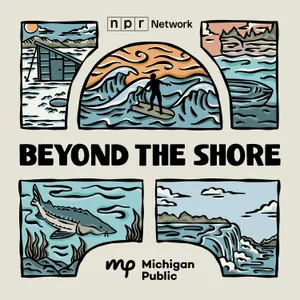
You could be forgiven for mistaking the Great Lakes for oceans. Many of us have made memories on the beaches – but there’s so much more to learn about our huge inland seas. Join us as we travel to Lake Huron, Lake Michigan, Lake Erie, Lake Superior, and Lake Ontario to discover something about each that makes them so special and learn why it will take communities across the Great Lakes region to ensure they stay great for generations to come.
Latest Episodes
The most recent episodes — sign up to get AI-powered summaries of each one.
- 5 days ago33 min
Beyond the Shore presents: How Wild from KALW
Today we’re sharing a podcast from our friends at KALW Public Media called How Wild. In the podcast, journalist and longtime backpacker Marissa Ortega-Welch explores where the original ideas for wilderness came from and how today’s changes are testing the definition of wilderness.In the first episode, Marissa ventures off trail in California’s Sequoia-Kings Canyon National Park to see a grove of ancient giant sequoia trees that burned down in a severe fire, and learn why park biologists and environmentalists are grappling with how much to try and restore these trees.Both How Wild and Beyond the Shore are proud to be part of the American Storytelling Collection. To find even more great titles to explore the outdoors this summer with the NPR Network, just search for the 'American Storytelling Collection' in the NPR App or on Apple Podcasts.
- 1 weeks ago1 min
The American Storytelling collection explores the great outdoors
Out in the open, beyond the noise of everyday life, the land has a way of revealing us. ‘American Storytelling’ is a collection of podcasts from across the NPR Network, and this summer, we’re presenting a selection of shows that celebrate the great American outdoors, and the deeper stories it tells about who we are.
- 2 weeks ago31 min
Lake Ontario, Unsafe Passage
The American eel is an unlucky and undeniably slippery hero. Sometimes thought of as slimy or scary, it’s an underdog in the conservation world. An animal existing in frighteningly low abundance compared to its early 20th century glory. An animal that has the power to instantly capture the imagination with its mysterious and obscured life cycle.In this episode, we take a road trip through Canada, following part of the very long and arduous American eel migration from Lake Ontario, talking with people along the way and witnessing their obstacles up close.Support for the production of this podcast was made possible by the Charles Stewart Mott Foundation, as part of its Great Lakes News Collaborative.Music by Blue Dot Sessions.More at michiganpublic.org/bts
- 3 weeks ago25 min
The ancient origins of, and enduring connections to Lake Superior
Lake Superior is the largest of the Great Lakes, one of the largest lakes in the world. And its history stretches back to a stunning geological event in the earth’s history. That event made the Upper Peninsula's Keweenaw Peninsula rich with copper - and it didn't take long for humans to start mining it. The impact of this copper mining boom is evident everywhere you go in the Keweenaw Peninsula. This area has the largest deposit of what’s known as native copper anywhere in the world. And people up here are still dealing with the leftovers. Over the course of the past century, storms have blown the coarse, dark sand down along the shore, and over Buffalo Reef. And those sands and remnants of the copper have impacted fish populations, who love the rocky shore of the reef for spawning, and the tribal fisherman who fish those waters.Support for the production of this podcast was made possible by the Charles Stewart Mott Foundation, as part of its Great Lakes News Collaborative.Music by Blue Dot Sessions.More at michiganpublic.org/bts
- May 15, 202626 min
Restoring the dinosaur fish of Lake Erie
Lake Sturgeon are huge, long-lived fish that are often called “living fossils.” They have survived all of Lake Erie’s hardships, and now scientists, educators and community members are all working hard to restore their populations.Michigan Public's Kate Furby and Jodi Westrick traveled around the state to learn more about Lake Sturgeon, from going out on frozen Black Lake during the ice fishing season to touching baby sturgeon in the Toledo Zoo, all in the name of learning more about the efforts being made to restore these populations to their rightful waters. Efforts to ensure lake sturgeon are here for future generations.Support for the production of this podcast was made possible by the Charles Stewart Mott Foundation, as part of its Great Lakes News Collaborative.Music by Blue Dot Sessions.More at michiganpublic.org/bts
- May 8, 202617 min
Surfing Lake Michigan
Michigan Public's Dustin Dwyer dons a wet suit, borrows a surfboard, straps on a GoPro, and heads into the waves of Lake Michigan. In November. All in the name of finding out: How does anyone have fun surfing in Lake Michigan?Waves on Lake Michigan can be fickle creatures, surfers told him. For non-surfers, it’s a bit of a wonder how there are waves at all.In the second episode of Beyond the Shore, we uncover why Lake Michigan, and most of the Great Lakes, really, produce surfable waves and whether or not these surfers are experiencing less of them as our climate changes. Support for the production of this podcast was made possible by the Charles Stewart Mott Foundation, as part of its Great Lakes News Collaborative.Music by Blue Dot Sessions.More at michiganpublic.org/bts
- May 1, 202623 min
The hidden shipwrecks of Lake Huron
The Great Lakes hold more than 20% of the fresh surface water in the entire world. If you live here or you’ve been here, you’ve probably gone to the beach. Maybe you’ve gone fishing or gotten water up your nose. But there’s so much more to the Lakes when you look below. Like shipwrecks!Each of the Great Lakes has sunken ships. But in Lake Huron, there’s a place nicknamed Shipwreck Alley.Michigan Public's Rebecca Williams and Jodi Westrick took a road trip north to Alpena from Ann Arbor to check it out.Support for the production of this podcast was made possible by the Charles Stewart Mott Foundation, as part of its Great Lakes News Collaborative.Music by Blue Dot Sessions.
- Apr 21, 20261 min
Michigan Public Presents: Beyond the Shore, a Great Lakes podcast
You could be forgiven for mistaking the Great Lakes for oceans. Many of us have made memories on the beaches – but there’s so much more to learn about our huge inland seas. Join us as we travel to Lake Huron, Lake Michigan, Lake Erie, Lake Superior, and Lake Ontario to discover something about each that makes them so special and learn why it will take communities across the Great Lakes region to ensure they stay great for generations to come. The first episode drops May 1, with new episodes every Friday through May 29. Subscribe at michiganpublic.org/bts or wherever you get your podcasts.
About Beyond the Shore
You could be forgiven for mistaking the Great Lakes for oceans. Many of us have made memories on the beaches – but there’s so much more to learn about our huge inland seas. Join us as we travel to Lake Huron, Lake Michigan, Lake Erie, Lake Superior, and Lake Ontario to discover something about each that makes them so special and learn why it will take communities across the Great Lakes region to ensure they stay great for generations to come.
Customized Recaps
AI-powered recaps with compact key takeaways, quotes, and insights.
Straight to Your Inbox
Get key takeaways from Beyond the Shore in a 5-minute read.
Save Hours Every Week
Stay current on your favorite podcasts without falling behind.
Frequently Asked Questions
What is Podzilla's Beyond the Shore daily summary?
It's a free AI-powered email that summarizes new episodes of Beyond the Shore as soon as they're published. You get the key takeaways, notable quotes, and links & mentions — all in a quick read.
How does the Beyond the Shore podcast summary work?
When a new episode drops, our AI transcribes and analyzes it, then generates a personalized summary tailored to your interests and profession. It's delivered to your inbox every morning.
Is this an official Beyond the Shore product?
No. Podzilla is an independent service that summarizes publicly available podcast content. We're not affiliated with or endorsed by Michigan Public.
Can I get summaries of other podcasts too?
Absolutely! The free plan covers up to 3 podcasts. Upgrade to Pro for 15, or Premium for 50. Browse our full catalog at /podcasts.
How often does Beyond the Shore release new episodes?
Beyond the Shore publishes weekly. Our AI generates a summary within hours of each new episode.
What topics does Beyond the Shore cover?
Our AI identifies the specific themes in each episode and highlights what matters most to you.
Start getting Beyond the Shore summaries tomorrow morning.
Free forever for up to 3 podcasts. No credit card required.
Free forever for up to 3 podcasts. No credit card required.