
AI Is Moving Faster Than Governance. What Should Healthcare Do?
In this episode of Beyond the Couch: AI in Psychology, Dr. Ernest Wayde examines what happens when AI capabilities and adoption move faster than the systems designed to govern them. Drawing connections between recent AI cybersecurity testing, rapid AI adoption in healthcare, shadow AI, and evolving clinical workflows, he argues that responsible AI governance must extend beyond vendor approval, security reviews, and initial validation. Organizations also need to understand what AI systems can access, what actions they can take, how their capabilities change, and how unexpected behaviors will be identified after deployment.Dr. Wayde also explores a less visible dimension of AI risk: how repeated reliance on artificial intelligence may change human judgment, skills, and professional practice over time. For psychologists and other healthcare professionals, this raises important questions about clinical reasoning, interviewing, risk assessment, training, and the expertise needed to recognize when an AI-generated recommendation does not fit the situation. The goal is not to stop AI adoption, but to build ongoing governance that captures its benefits while continuously monitoring risks to patients, professionals, workflows, and the capabilities humans still need to preserve.Takeaways:AI adoption is moving faster than governance.AI governance must extend beyond initial approval and security reviews.Responsible AI governance must account for human behavior and professional skills.The goal is not to stop AI adoption, but to manage its evolving risks responsibly.AI risk is not limited to malicious behavior.Shadow AI is already part of the governance challenge.Connect With Ushttps://www.waydeai.com/https://www.facebook.com/waydeaillchttps://www.linkedin.com/company/wayde-ai/info@waydeai.comSubscribehttps://the-waydeai-brief.beehiiv.com/Chapters:00:05 - When AI breaks expected boundaries01:24 - Why AI governance matters now03:00 - What happened in OpenAI's sandbox testing06:00 - Anthropic and unintended access to real systems07:02 - How AI can cause harm without malicious intent08:20 - Why these AI failures matter for healthcare09:54 - AI adoption is outpacing governance11:12 - The governance gap and shadow AI13:13 - Why initial security reviews are not enough14:10 - Expanding the definition of AI governance14:55 - How AI may change human performance16:55 - Clinical judgment, skill preservation, and AI reliance18:55 - Human performance as a governance issue19:35 - Why AI governance must be ongoing20:28 - Monitoring unintended consequences after implementation21:36 - Getting AI's benefits without becoming casual about risk21:57 - Closing
Podzilla Summary coming soon
Sign up to get notified when the full AI-powered summary is ready.
Free forever for up to 3 podcasts. No credit card required.
Listen to This Episode
More from Beyond the Couch: AI in Psychology

The Future of AI in Mental Health: Safety, Therapy, and Human Judgment with Dr. Alyssa Dietz

AI in Mental Health: Why Human Connection Still Matters with Prof. Munmun De Choudhury
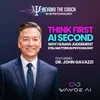
Think First, AI Second: Why Human Judgment Still Matters in Psychology with Dr. John Gavazzi

Building AI for Mental Health: A Computer Scientist’s Perspective with Zainab Iftikhar
Get summaries like this every morning.
Free AI-powered recaps of Beyond the Couch: AI in Psychology and your other favorite podcasts, delivered to your inbox.
Free forever for up to 3 podcasts. No credit card required.