Free Daily Podcast Summary
Beyond Coding: Daily Summaries Delivered
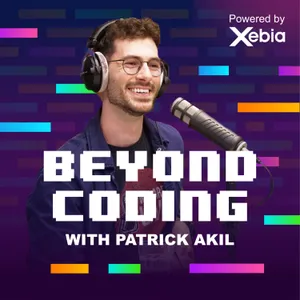
by Patrick Akil
For software engineers ready to level up. Learn from CTOs, principal engineers, and tech leaders about the skills beyond coding: from technical mastery to product thinking and career growth
Latest Episodes
The most recent episodes — sign up to get AI-powered summaries of each one.
- 5 days ago33 min
How Top Engineers Still Get Hired When Most Get Ghosted
How do top engineers still get hired in 2026 when most applicants get ghosted, 120,000 people have been laid off this year, and hiring managers say they can't find talent? A recruiter, a hiring lead, a career coach and an open source engineer explain why your resume is dead on arrival when every CV looks the same, and what actually gets you in the room instead.In this episode, we cover:Why 120,000 tech layoffs and 60,000 open engineering roles exist at the same timeWhy only 20% of LinkedIn messages get a reply, and how to write the ones that doWhy one hiring team bans AI tools in interviews and is building an agentic coding session insteadAdaptability and resilience: the two soft skills that keep you in the roomGetting hired through GitHub, referrals and open source when your CV can't stand outWhether junior engineers still have a path, and which engineering cohort is at risk in 3 to 5 yearsTitles vs scope: how to grow when your title never changesFor software engineers, students about to graduate, and anyone in tech who wants to know what recruiters and hiring managers are actually filtering on right now.Timestamps:00:00:00 - Intro: 1,000 Layoffs a Day00:00:47 - How Bad Is the Tech Job Market in 2026?00:02:05 - Why 120K Layoffs and 60K Open Jobs Don't Add Up00:03:40 - Why AI Tools Are Banned From Interviews00:06:28 - Hard Skills Get You In, Soft Skills Keep You There00:09:20 - "I'm a University Dropout": How GitHub Got Me Hired00:10:18 - CVs Are Too Good Now: Why Referrals Win00:13:04 - How to Get Your Open Source PR Merged00:15:02 - Why 80% of Your LinkedIn Messages Get Ghosted00:16:51 - How Open Source Led to a HashiCorp Job Offer00:19:15 - Is There Still a Place for Junior Engineers?00:22:00 - The Engineers Who'll Be Obsolete in 3 to 5 Years00:24:20 - Should You Contribute to Open Source at All?00:26:05 - AI Skills Required, Algorithms Still Tested00:27:54 - Stop Chasing Titles: Scope, Impact and Owning Your Career#softwareengineering #techjobs #careeradvice
- 1 weeks ago40 min
How this ex-Googler accidentally founded a database company
Jordan Tigani helped create Google BigQuery, then got fired as Chief Product Officer on a Friday morning. He planned to hack on DuckDB to learn Rust. Investors offered to fund it before he'd decided to start a company. That company became MotherDuckIn this episode, we cover:The DuckDB Labs partnership: why MotherDuck gave the open-source creators a co-founder share instead of going open-coreFrom alpha to paid product: 11 founders, 3 to 4 months to alpha, two years to something people would pay forAI on top of the data warehouse: vibe-coded dashboards (Dives), pipelines (Flights), a context layer (Guides), and why business users catch mistakes analysts missAre dashboards dead? Jordan wrote "Big Data Is Dead"; his answer on dashboards is differentCareer advice: why you shouldn't want to work on the query optimizer, and the skill Jordan says matters moreFor engineers curious about database and infrastructure companies, open-source business models, and how AI is changing who gets to ask questions of data.Timestamps:00:00:00 - Intro00:00:32 - Fired on a Friday: how MotherDuck accidentally started00:04:50 - Giving DuckDB Labs a co-founder share of the company00:07:43 - Why most open-source SaaS products are just "managed"00:09:31 - Why VCs said yes: Snowflake, DuckDB, and BigQuery credibility00:10:50 - The 11-person founding team that skipped the wrong designs00:12:20 - Alpha in 4 months, beta in a year, paid in two00:15:20 - Vibe-coded BI: Dives, Flights, Guides, and an agent harness00:20:10 - The questions business users ask that analysts never do00:24:14 - Are dashboards dead in the age of agents?00:27:57 - Everybody wants to work on the optimizer (don't)00:31:23 - The engineer superpower most engineers look down on00:33:20 - Writing: the one skill Jordan would learn (and still hates)00:36:05 - Does contributing to DuckDB get you hired at MotherDuck?00:37:20 - Why a database company leaned into the duck#MotherDuck #DuckDB #SoftwareEngineering
- 2 weeks ago37 min
Niantic Spatial CTO: How The Best Engineers Solve Problems Most Give Up On
Niantic Spatial CTO Brian McClendon on how the best engineers solve problems most give up on — from a 4D model of the world to shipping research in months. He built Google Earth and ran Google Maps for over a decade, and he's been there, done that. What he's building now is harder, and it's already live for customers. Along the way: who makes it on his team and who doesn't, and the one piece of advice he'd give every engineer using AI.In this video, we cover:- The 4D model of the world: visual positioning, change detection, and treating a pile of photos like a database- Gaussian splats and real-to-sim: capturing a room and loading it into Nvidia Isaac to train robots- Turning a research idea into a production service in six months- What Google Maps taught him about building for robots instead of humans- Designing problems AI can self-check, and why token maxing is a wasteFor engineers and engineering leaders who want to work on problems that don't have a known answer yet — and who want to know what a CTO who's built the definitive product in his field looks for in the people he hires.Recorded at the AI4 conference 2026. Timestamps:00:00:00 - Google Earth? Been There, Done That00:00:46 - Turning a Research Idea Into Production in 6 Months00:02:37 - How Any Photo Gets Located Within Half a Meter00:06:37 - The Long-Term Goal: A 4D Model of the World00:08:37 - Treating a Pile of Photos Like a Database00:11:58 - What Google Maps Taught Him About Training Robots00:15:22 - Gaussian Splats Explained in Plain Terms00:17:42 - The Unsolved Problem: Scale and Semantic Change00:20:34 - Why Google Earth Is Good Enough00:22:09 - Who Makes It on His Team and Who Doesn't00:23:38 - Designing Problems AI Can Self-Check00:26:03 - The Insights Hidden in the Physical World00:28:18 - Digital Twins, Cities, and Ready Player One00:31:35 - Visual Positioning When GPS Gets Spoofed00:33:24 - Token Maxing Is Bullshit: Advice for EngineersGuest: Brian McClendon, CTO at Niantic Spatial. The engineer behind Google Earth; ran Google Maps for over a decade.https://www.linkedin.com/in/brianmcclendon#NianticSpatial #GoogleEarth #SoftwareEngineering
- 3 weeks ago49 min
How New Staff Engineers Build Judgment Without Years of Experience
How do new staff engineers build judgment without the years of experience that used to come with the role? Mallika Rao, engineering leader in big tech, explains why the data-structures-and-algorithms foundation everyone was trained on is no longer enough on its own, and where the complexity has actually shifted now that AI writes the implementation.In this video, we cover:Why "how does AI affect engineers" is the wrong question, and what to ask insteadRehearsing multiple futures: what judgment looks like in a staff engineerThe case method: building judgment from incident reports and system design history instead of waiting years for itCognitive coordination, code review load, and the surprise ask for more meetings at staff levelTiger teams vs scaled teams, trust as architecture, and building evals from a spreadsheetSplitting planning from execution so engineers stop falling behind with agentsTaste vs judgment, and how to build both outside of softwareIf you've just made staff, or you're about to, this conversation gives you a frame for what the level actually demands now and how to grow into it faster than the old apprenticeship allowed.Timestamps:00:00:00 - How AI Is Changing Senior Engineering Careers00:00:41 - Why "How Does AI Affect Engineers" Is the Wrong Question00:03:26 - What Judgment Actually Is: Rehearsing Multiple Futures00:05:24 - Why Data Structures and Algorithms Are No Longer Enough00:07:22 - Learning Judgment From Incident Reports Like the 2017 S3 Outage00:11:13 - The New Staff Engineer's Core Challenge: Cognitive Coordination00:14:48 - What Managers, Universities, and Shakespeare Each Owe You00:17:55 - Code Review Load, Meeting Notes, and the Surprise Ask for More Meetings00:23:59 - Trust as Architecture: Why Evals Started as a Spreadsheet00:27:09 - Tiger Teams vs Big Teams: Product Managers Reviewing Code00:32:39 - Why Some Engineers Can't Keep Up With Agents00:35:46 - Local AI Champions and Splitting Planning From Execution00:38:38 - Go Deep or Go Broad? Search in a World of Agents00:44:12 - Taste vs Judgment: Thinking in 50 LayersGuest: Mallika Rao, engineering leader in big tech.Rehearshing the Future framework If by Rudyard Kipling
- Aug 19, 202641 min
How Amazon Turns Real Failures Into Better AI Models
How does Amazon build its agentic AI? Michael Giannangeli, Head of Product for Amazon Nova and Agentic AI, breaks down evals, RL gyms, and model routing. He also explains why the bottleneck in software has shifted away from engineering hours and what takes its place.In this video, we cover:The eval lifecycle: building from real failure modes, saturation, and why 100% means deleteRL gyms: training models on real environments like migrations, DevOps, and pen testingModel routing, cost-per-token trade-offs, and why routing isn't solvedThe agent stack of an Amazon product lead: Claude Code, Codex, and KiroAutonomous migrations, trust, and how much human-in-the-loop survivesFor engineers and product people building with AI agents who want to see how a frontier lab actually closes its feedback loops.Recorded at the AI4 conference 2026. Timestamps:00:00:00 - Intro00:00:36 - The Agents an Amazon Product Lead Uses Daily00:03:36 - Why Nobody's Heard of Amazon Nova00:04:55 - Model Costs and the Routing Problem00:08:10 - Why Building Good Evals Is So Hard00:10:05 - When Evals Saturate and Get Deleted00:12:17 - Turning Real Failure Modes Into Hundreds of Evals00:15:26 - Improving Models Without Training on Customer Data00:18:26 - If Everyone Uses Agents, You Need Agents00:20:22 - The Bottleneck Is No Longer Engineering Hours00:23:20 - Ship Fast to Validate the Right Thing00:26:44 - Staying at the Frontier Amid Constant Noise00:29:37 - Spend 10-20% of Your Time Experimenting00:32:54 - RL Gyms: How Models Learn From Failure00:37:09 - Will Migrations Become Fully Autonomous?Guest: Michael Giannangeli - Head of Product, Agentic AI & Amazon Nova at Amazon#AmazonNova #AgenticAI #AIEngineering
- Aug 12, 202624 min
Wes Bos: How Engineers Solve Problems Beyond Syntax
AI is changing what developers build, but code alone is no longer enough to prove what you can do. Wes Bos explains why engineers need to solve problems beyond syntax, how agent workflows are reshaping software development, and what still requires human thinking.In this conversation:The limits of generative UI and AI-generated designAgent loops, harnesses, and cheaper AI modelsThe rising cost of AI coding and the case for local hardwareWhy developer education is shifting from syntax to problem-solvingPersonal branding, conferences, newsletters, and AI-generated contentFor developers navigating AI-assisted coding, this episode explores the skills and signals that still help you stand out.This podcast was recorded at JSNation, the key web dev conference.OUTLINE00:00:00 - Code Is Not Enough for Developers00:00:32 - Why Generative UI Still Feels Unfinished00:04:35 - How Agent Loops Improve AI Coding00:07:06 - When Agent Workflows Become Standard Tools00:08:19 - Are Cheaper AI Models Good Enough?00:10:44 - Can AI Coding Costs Stay Sustainable?00:12:24 - What Engineers Need To Learn Now00:14:23 - Why Fundamentals Matter Beyond Syntax00:15:34 - How Non-Coders Are Building Production Tools00:16:21 - Why In-Person Conferences Still Matter00:18:11 - Personal Branding When Code Isn't Enough00:20:37 - Can Newsletters Beat The Attention Crisis?00:22:02 - Why AI-Generated Content Feels Insulting00:24:12 - Use AI To Scaffold, Not Think
- Aug 5, 202655 min
Career Advice Every Software Engineer Needs Right Now
Answering engineer questions on AI pressure, career growth, product thinking and impact. Including the production incident I'm glad happened, and the mindset I refuse to accept when things break.In this video, we cover:- Whether managers are really demanding more output because of AI- Balancing fundamentals with AI coding tools and agents early in your career- Specialist vs generalist and when to lean into each- Visibility, personal branding and who gets credit for your work- Product thinking, evaluating impact and what I got wrong about content being kingFor software engineers at any level who want honest answers on career strategy in the agent era, from someone doing both engineering and product.Timestamps:00:00:00 - How to Spot the Next Big Thing00:03:15 - The Saying I Hate Most00:04:27 - The Production Mistake I'm Glad I Made00:07:32 - Are Managers Demanding More Because of AI?00:13:39 - Learning Fundamentals vs AI Coding Tools00:19:00 - Will AI Ever Get Good at Distributed Systems?00:20:51 - Specialist vs Generalist: When to Lean In00:26:35 - How to Become More Visible in Your Org00:31:49 - I Was Wrong: Content Isn't King00:35:03 - Workflows, Priorities and Hiring an Editor00:37:08 - What Being a Force Multiplier Really Means00:41:26 - How to Evaluate What's Worth Building00:45:01 - Product Thinking Without Years of Experience00:48:13 - Energy Management, Curiosity and Defining Success00:54:21 - Hair Talk
- Jul 29, 20261h 22m
The AI Spend Question Nobody Can Answer
How do you prove AI is shipping more features? Amos Haviv leads the Developer Workflow teams at Booking.com, supporting 4000 engineers operating 8000 repos.Everybody is burning through their AI budget right now and almost nobody can answer what it bought them. Amos can, because his team spent four years building an event system to debug their own SDLC before AI upped the urgency.In this video, we cover:Why verification is the bottleneck right now, and where it moves nextBuilding an event store that separates KTLO from real feature deliveryWhy static dashboards create the metric they measure, and the cobra story behind itAgent cost, model routing, and why Booking ignores token maxing entirelyRunning a developer survey with a 92% response rate across 3k+ engineersWho should own skills and MCPs: a central platform team or the domain experts?For platform engineers, engineering leaders, and anyone being asked to prove ROI on AI tooling this quarter.Timestamps:00:00:00 - Everyone is burning through their budget00:00:32 - Verification Is the Bottleneck Every Team Hit00:03:35 - 4,000 Engineers and 8,000 Repos at Booking.com00:06:48 - Why Copying Google and OpenAI Will Break You00:09:21 - Verification Is a Stack of Agents, Not One Review00:13:27 - Cost Is Becoming a Bottleneck of Its Own00:17:14 - Was the Internet a Bubble? What That Teaches Us00:25:32 - What Working With the Frontier Labs Looks Like00:28:26 - Debugging the SDLC With Four Years of Event Data00:30:24 - Do Engineers Using AI Actually Ship More Features?00:37:13 - Where to Start If You Measure Nothing Today00:45:01 - The Cobra Effect: When a Metric Becomes a Target00:52:23 - Everyone Is a Builder Now, and Everything Needs Support01:01:21 - Is AI Turning Every Engineer Into a Manager?01:03:46 - The Developer Survey With a 92% Response Rate01:10:09 - Who Owns Skills, MCPs, and the Enterprise Harness01:17:46 - Great Developer Experience Is High VelocityMentioned in the episode:High Output Management by Andy GroveThe Sovereign Individual (1997)The story of General MagicViews expressed are Amos's own and do not represent Booking.com.#AI #SoftwareEngineering #DeveloperExperience
Get Beyond Coding summaries in your inbox
Free AI-powered daily recaps. Key takeaways, quotes, and mentions — in a 5-minute read.
Get Free Summaries →Free forever for up to 3 podcasts. No credit card required.
You Might Also Like
Listeners also like.
The Pragmatic Engineer
Insightful interviews with engineers and tech leaders on real-world software development challenges and best practices.

Lenny's Podcast: Product | Career | Growth
Conversations with top product and growth leaders offering practical strategies for building, launching, and scaling successful products.

The Digital Executive
A daily tech podcast exploring emerging technologies through interviews with Silicon Valley CEOs, influencers, and celebrities.
Training Data
Experts discuss AI advancements and their impact on technology, business, and society with insights from leading researchers and builders.

Expert Intelligence with Paul Estes
Examines how AI and human expertise are reshaping work, freelancing, and workplace dynamics through expert conversations.

Syntax - Tasty Web Development Treats
Two full stack developers discuss JavaScript frameworks, CSS updates, and web tooling advancements.

Latent Space: The AI Engineer Podcast
Explores AI engineering breakthroughs in foundation models, code generation, and AI agents through interviews with researchers and developers.
Deep Questions with Cal Newport
Answers reader questions on focus, productivity, and living meaningfully in a distracted digital world.

Silicon Valley Girl: AI, Tech and Career Growth
Explores how AI, technology, and entrepreneurship can accelerate career growth, build wealth, and create a purpose-driven life.

Technology Now
A podcast exploring cutting-edge technology trends and innovations through interviews with industry leaders and HPE experts.
AI and I
Interviews with professionals who use AI tools in their work, exploring how AI affects creativity, thinking, and daily life through live demonstrations.
Dwarkesh Podcast
Dwarkesh Patel
About Beyond Coding
For software engineers ready to level up. Learn from CTOs, principal engineers, and tech leaders about the skills beyond coding: from technical mastery to product thinking and career growth
Customized Recaps
AI-powered recaps with compact key takeaways, quotes, and insights.
Straight to Your Inbox
Get key takeaways from Beyond Coding in a 5-minute read.
Save Hours Every Week
Stay current on your favorite podcasts without falling behind.
Frequently Asked Questions
What is Podzilla's Beyond Coding daily summary?
It's a free AI-powered email that summarizes new episodes of Beyond Coding as soon as they're published. You get the key takeaways, notable quotes, and links & mentions — all in a quick read.
How does the Beyond Coding podcast summary work?
When a new episode drops, our AI transcribes and analyzes it, then generates a personalized summary tailored to your interests and profession. It's delivered to your inbox every morning.
Is this an official Beyond Coding product?
No. Podzilla is an independent service that summarizes publicly available podcast content. We're not affiliated with or endorsed by Patrick Akil.
Can I get summaries of other podcasts too?
Absolutely! The free plan covers up to 3 podcasts. Upgrade to Pro for 15, or Premium for 50. Browse our full catalog at /podcasts.
How often does Beyond Coding release new episodes?
Beyond Coding publishes weekly. Our AI generates a summary within hours of each new episode.
What topics does Beyond Coding cover?
Beyond Coding covers topics including Technology. Our AI identifies the specific themes in each episode and highlights what matters most to you.
Start getting Beyond Coding summaries tomorrow morning.
Free forever for up to 3 podcasts. No credit card required.
Free forever for up to 3 podcasts. No credit card required.