Free Daily Podcast Summary
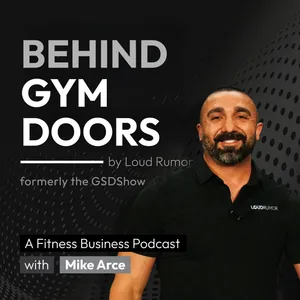
Behind Gym Doors | A Fitness Business Podcast: Daily Summaries Delivered
by Mike Arce | Loud Rumor | Fitness Business Growth
We cover the most common challenges in the fitness industry to help you overcome them and GSD! This podcast is also available in high-def video and audio only formats.--Read the show: https://www.loudrumor.com/the-gsd-show/Facebook: https://www.facebook.com/GSDshow/Twitter: https://twitter.com/GSD_ShowInstagram: https://www.instagram.com/gsd_show/
Latest Episodes
The most recent episodes — sign up to get AI-powered summaries of each one.
- 3 days ago40 min
454: How to Grow a Fitness Studio: Hitting Record Months and Opening a Second Location
Stephanie Swanson's boutique fitness studio growth story starts with a simple problem: she did not know her own numbers. Stephanie owns Oxygen Yoga and Fitness in Burlington, Ontario, and just opened a second location in Alder Shot, already at 50 pre-sales in under two weeks. In her first 60 days working with GSD Gyms, her revenue grew 15%, hitting close to $73,000 in a single month. In this episode, GSD's Director of Operations Ash Wimble sits down with Stephanie to unpack exactly what changed. For a year and a half, Stephanie ran her studio without fully understanding her own KPIs. Once she started reviewing her data regularly and translating it for her team, small changes started compounding into real results, including a simple congratulations card system that turned member milestones into a recurring source of referrals and social proof. They also cover how Stephanie built her team culture around education instead of authority, why she believes every member joins a gym or studio for either transformation or belonging, and what it actually took to open a second location while still running her first. This is what boutique fitness studio growth looks like when the numbers finally get tracked. In this episode you'll learn: — Why Stephanie went a year and a half without truly understanding her own KPIs — The system Ash and Stephanie built to track and communicate data to her team — Why quarterly trends matter more than short term ups and downs — The simple congratulations card system that turned member milestones into a source of referrals — How Stephanie leads a team of 26, most of them part time, without losing culture — Why she believes every member joins a gym or studio for transformation or belonging — The leadership lessons Stephanie pulled from 12 years as a teacher — Why she never asks her team to do anything she would not do herself — How Stephanie sold 50 pre-sale memberships for her second location in under two weeks — What changed for her once she stopped trying to do everything herself — Why setting aside real thinking time made her a better leader If you have ever felt like you were working hard on the wrong things, this conversation shows what changes once you finally understand your own numbers. Timestamps: — 0:00 Welcoming Stephanie Swanson to the podcast — 0:46 What ownership actually looked like versus what she expected — 40:11 Closing thoughts and thank you Connect with Stephanie Swanson, Oxygen Yoga and Fitness: Instagram (Burlington): https://www.instagram.com/oyfburlington Instagram (Alder Shot): https://www.instagram.com/oyfaldershot 100K Plan: https://100kplan.com Behind Gym Doors Podcast Playlist: https://www.youtube.com/playlist?list=PLnwaMl7Us7dAkfE6idQW56EYkEEQ2E5eE Fitness Business Assessment Stephanie turned a year and a half of guesswork into a 15% revenue increase and a second location already selling out pre-sales. The plan behind how GSD Gyms helps studios build systems like this is right here. Turns out a congratulations card can outperform a marketing budget.
- 2 weeks ago19 min
453: Gym Facebook Ads Using AI: $3 Cost Per Lead in a 9,000-Person Market
This is part of how we help gym owners build ad systems like Joel's. See the plan here: https://100kplan.com Joel Holland never ran a gym ad in 14 years. He used AI to build his first campaign. $3 cost per lead. 84 leads in 10 days. Here's how. This gym Facebook ads using AI breakdown starts with Joel Holland, who runs 902 Athletics, a 17,000 square foot CrossFit and commercial gym in a 9,000 person market in Nova Scotia, Canada. In 14 years of business he had never run a paid ad. Everything was organic and referral based. Ten days before this conversation, Joel taught himself how to run gym ads using Claude, an AI tool, and built his entire campaign from scratch. No agency. No prior experience. The result was a $3 cost per lead, compared to the $20 to $35 most gyms are paying right now, and 84 leads in 10 days. Mike and Joel walk through the exact setup: the lead objective, the offer, the 34 second video ad, and why Joel wanted to learn ads himself before ever handing the account to an agency. They also cover why most agencies get bad results even when the technical setup is correct, and what the Meta algorithm actually does to gym ads that lose attention in the first two seconds. If you have been told paid ads do not work for your gym, this look at gym Facebook ads using AI might change your mind. In this episode you'll learn: — Why Joel never ran a paid ad in 14 years of business, until now — How he used Claude to build his entire ad campaign from scratch, no agency — The lead objective, offer, and 34 second video ad that got him $3 leads — Why he chose a two week trial with no charge instead of worrying it would devalue his gym — The 70 to 75% trial-to-paid conversion rate that made the offer make sense — Why increasing ad budget by more than 15 to 20% at a time can hurt performance — What the Meta algorithm actually does to ads that lose attention in the first few seconds — Why most agencies get blamed for bad creative instead of a bad account setup — Why Joel is running his own ads for 30 to 45 days before handing it to an agency — Why referrals built his gym to 1,000 members before he ever ran an ad — What to say the next time an agency tells you they have never seen this before If you have been putting off paid ads because you assumed you needed an agency first, this episode shows you what is actually possible on your own. Timestamps: 0:00 $3 cost per lead, 84 leads in 10 days 0:50 Welcoming Joel and setting up the story 2:30 Inside Joel's 17,000 square foot gym 3:17 Why Joel wanted to learn ads before hiring an agency 3:57 The lead objective and the sign up flow 4:14 The two week trial offer that started it all 5:17 The 70 to 75% trial to paid conversion rate 6:20 Building the video ad and the first few seconds that matter 9:20 The $15 daily budget and why Mike called immediately 10:21 What happens the moment someone clicks the ad 12:29 How referrals built the gym before any paid ads 13:32 The biggest lesson Joel did not expect 15:00 What the Meta algorithm actually does to bad ads 16:30 Why a 9,000 person market is not an excuse 18:10 What Joel took away from the A-Class retreat 100K Plan: https://100kplan.com Behind Gym Doors Podcast Playlist: https://www.youtube.com/playlist?list=PLnwaMl7Us7dAkfE6idQW56EYkEEQ2E5eE ———————————————————————— Joel used AI to build a $3 cost per lead campaign from scratch, in a market smaller than most gym owners would even try. The plan behind how GSD Gyms helps studios build systems like this is right here. Watch the 100K Plan: https://100kplan.com New gym growth strategy every Thursday. Subscribe so you don't miss it. Turns out horses and Facebook ads mix better than you'd think.
- 3 weeks ago28 min
452: The Gym Sales Process That Creates Members Worth $30,000
Matt charges $600 a month, keeps under 2% churn, and earns $30K per member. Here's his exact gym sales and referral system. This gym membership sales case study starts with the math. The average gym member in America is worth $1,400 over their lifetime. Matt's average member is worth $30,000. Same math, completely different numbers: under 2% monthly churn, more than 50 months of average retention, and 15 competing gyms within five minutes of his Costa Mesa studio. Matt runs Recoup Personal Training with his wife Stevie and business partner Beau, and joined Mike at the A-Class retreat to break down the sales process behind those numbers. This is not about closing harder. It is about everything that happens before the close. They walk through how to build real rapport without relying on small talk, the discovery questions that get a prospect to sell themselves, and a live role play of Matt's actual $600 a month consultation. Matt also breaks down his gold gift card referral program and why giving away a month at no charge makes sense when a member is worth $30,000. If you have ever been afraid to raise your prices, this gym membership sales breakdown shows you what is actually possible. In this episode you'll learn: — Why the average gym member is worth $1,400, and Matt's is worth $30,000 — The exact discovery questions that get a prospect to sell themselves — Why rapport is not about small talk, and what actually works instead — A live $600 a month sales role play, start to finish — The dating analogy Matt uses to explain why sales are lost early — Why closing 1% better matters more at a $30,000 lifetime value — The gold gift card referral program that turns one sale into two — Why a month with no charge is a smarter referral incentive than a discount — How Matt and his team refined their avatar after almost losing their best clients — Why Matt still does the sales himself instead of handing it off — How reviews and past client stories became their real growth engine If you have ever wondered whether raising your prices would cost you members, this episode shows you what happens when the sales process actually earns it. Timestamps: — 0:00 The average member math: $1,400 versus $30,000 — 0:38 Welcoming Matt and introducing Recoup Personal Training — 1:41 $600 a month, under 2% churn, and what that means — 2:48 Why raising prices does not have to cost you members — 4:26 Why sales are lost in the first few minutes — 5:28 What most people get wrong about rapport — 7:44 The discovery process that gets a prospect to sell themselves — 9:00 Live role play: selling a $600 a month consultation — 10:35 Why reviews became their biggest growth lever — 11:46 Turning results into referrals without asking for a review — 15:34 The avatar mistake that almost cost them their best clients — 18:18 The gold gift card referral program — 18:59 Why giving away a month makes more sense than a discount — 21:14 Capacity, sales volume, and why they are not opening a second location — 22:22 How much of the sales Matt still does himself — 23:32 Natural talent versus a trainable sales system Connect with Mattison Fetters, Recoup Personal Training: Instagram: https://www.instagram.com/recoup_personal_training 100K Plan: https://www.youtube.com/watch?v=uMPx7b3_LOA Behind Gym Doors Podcast Playlist: https://www.youtube.com/playlist?list=PLnwaMl7Us7dAkfE6idQW56EYkEEQ2E5eE Mike breaks down the exact sales math and referral system behind a $30,000 lifetime value member. The plan behind how GSD Gyms helps studios build systems like this is right here. Turns out the golden gift card is not for show.
- Aug 20, 20261h 25m
451: Part 2 - Saving a Struggling Pilates Studio: Live Coaching With Mike Arce
Mike coaches a struggling Pilates studio owner on phone sales live: avatar building, referral strategy, and a real walk-in prospect. This pilates studio sales coaching session picks up where Part 1 left off. In Part 1, Mike walked through Jess Landar's churn, lifetime value, and pricing. In Part 2, they build her customer avatar, run a full gym sales role play on her actual phone script, and design a gym referral program built around feeding children. Halfway through filming, a real prospect walked into Jess's studio while the cameras were rolling. Mike coached her through that conversation live, in real time. It has never happened on this podcast before. The gym membership sales tips in this pilates studio sales coaching session are not Pilates-specific. The same principles for how to sell gym memberships, plant a belief before price ever comes up, and control a sales call apply to any boutique gym. This is Part 2 of a continuing series. Jess has 30 days of ads running before she and Mike reconnect for Part 3. In this episode you'll learn: — The exact way to build a customer avatar most gym owners skip — A full gym sales role play using Jess's real phone script, line by line — What happened when a real prospect walked into the studio mid recording — How to plant a belief before a prospect ever asks about price — The moves that control a sales call instead of getting steered by it — A gym referral program built around feeding children instead of a discount — The welcome gift bag move that gets new members texting back after their first class — Why customer acquisition cost matters more than cost per lead — How to turn a low priced trial into a full membership without extra ad spend — The AI assistant setup Mike uses to manage ads, CRM, and follow up — The homework and 30 day timeline before Part 3 If you have ever fumbled a walk-in prospect or lost control of a sales call, this live session shows you exactly what to do differently. Timestamps: — 0:00 Welcome back for Part 2 — 4:54 Building Jess's avatar, meet Brenda — 10:05 Finding Brenda's biggest insecurity — 12:17 The fishing analogy for hooks, lines, and offers — 17:46 How many members her studio can actually hold — 24:31 Live roleplay: selling the $39 trial over the phone — 29:41 Planting a belief before the close — 32:04 Finding out how ready a lead really is — 41:12 The VIP referral pass strategy — 45:33 Amateurs add, professionals multiply — 49:39 The double call and video text combo — 1:00:26 Why customer acquisition cost matters more than cost per lead — 1:08:39 Designing a scarier, higher converting offer — 1:16:05 What value stacking actually means — 1:19:20 Setting up an AI assistant to run the business — 1:21:29 Automating follow up with Go High Level Connect with Jess Landar: Instagram: https://www.instagram.com/thereformerlibrary 100K Plan: https://www.youtube.com/watch?v=uMPx7b3_LOA Behind Gym Doors Podcast Playlist: https://www.youtube.com/playlist?list=PLnwaMl7Us7dAkfE6idQW56EYkEEQ2E5eE Go High Level (CRM Mike uses and recommends): https://www.gohighlevel.com/?fp_ref=gsd-company11 Viktor AI Assistant (referral credit link): https://ref.viktor.com/mike-arce Mike builds Jess's entire offer and sales script live, the same way GSD Gyms helps studios everywhere sell what they already have. The plan behind how we get gyms to $100K a month is right here. Turns out a $39 trial can do a lot of talking.
- Aug 6, 20261h 32m
450: Saving a Struggling Pilates Studio: Live Coaching With Mike Arce
Struggling pilates studio owner goes viral asking for help -- Mike Arce coaches her live on numbers, retention, ads, and pricing. Jess Landar runs a struggling pilates studio in Auckland, New Zealand. She posted on Instagram that she needed help, so Mike reached out and turned it into a live gym business audit. This is Part 1 of a two-part series. Her studio peaked at $15,000 NZD a month and had dropped to $10,000 when they sat down. Mike walks through her gym churn rate, her lifetime value, her ad data, and her pricing structure, and shows her the exact math that would triple her book of business without adding a single new member. This episode is for any struggling pilates studio owner, or any boutique fitness studio owner who feels like they are doing everything right and still losing ground. Mike coaches her live the same way he coaches the studios inside GSD Gyms, using real numbers instead of guesses. Part 2 covers her retention plan and her sales process. In this episode you'll learn: — Why her ad costs looked expensive but were actually some of the best Mike has seen — The churn math that shows what her book of business is really worth — How dropping churn from 11.3% to 4% could triple her lifetime value without a single new member — The three ways to grow revenue, and why only one made sense for her right now — The three ways to get more members, and the three ways to improve retention — Why community, not results, is now the number one reason people join and stay in a boutique studio — The four levels of certainty every prospect needs before they buy — Why her 12% close rate is actually better than it looks once you see the real math — The CRM and automation setup Mike recommends for following up with every lead — Why simplifying her four pricing tiers down to three could change her close rate — The homework Mike gave her to complete before Part 2 If you have ever felt like you are doing everything right and still losing ground, this live audit shows you exactly where to look first. Timestamps: — 0:00 Jess's viral Pilates studio story and why this episode exists — 1:34 Welcoming Jess to the podcast — 4:18 Studio peak revenue versus current revenue — 5:31 Revealing an 11.3% monthly churn rate — 7:32 Calculating her lifetime value and book of business — 10:11 What her book of business would be worth at 4% churn — 13:00 Her sales rate versus her attrition rate — 14:14 Three ways to increase revenue — 19:58 Three ways to improve retention — 33:00 Paid, earned, and owned leads — 36:09 The four levels of certainty before someone buys — 41:11 Reviewing her actual ad numbers — 1:10:33 Setting up a CRM and automation for lead follow-up — 1:24:31 Simplifying her pricing to three tiers — 1:27:14 Homework before Part 2 100K Plan: https://www.youtube.com/watch?v=uMPx7b3_LOA Behind Gym Doors Podcast Playlist: https://www.youtube.com/playlist?list=PLnwaMl7Us7dAkfE6idQW56EYkEEQ2E5eE Go High Level (CRM Mike uses and recommends): https://www.gohighlevel.com/?fp_ref=gsd-company11 Pricing Episode Mike References — "The Decoy Effect: How to Structure Your Gym's Pricing to Close More Members": https://www.youtube.com/watch?v=Uzb8xuTOA4A Want an ad agency referral? DM GSD Gyms on Instagram: https://www.instagram.com/gsdgyms Connect with Jess Landar: Instagram: https://www.instagram.com/thereformerlibrary Mike walks Jess through the same math and process he uses with the $100K a month studios inside GSD Gyms. The plan behind how we get gyms there is right here. Turns out her ads were never the problem.
- Jul 30, 20268 min
449: Why Gym Ads Optimize for Leads (Not Members)
Fixing gym Facebook ads conversion tracking is part of how we get studios to $100K a month. Your ads manager sees fifty leads on one ad and six on another, calls the fifty-lead ad the winner, and kills the other one before ever checking what happened next. That is the blind spot behind most gym ad optimization strategy decisions. When your CRM and your Meta ads manager never talk past the lead stage, nobody actually knows which ad produced a member. The six-lead ad that closed two members just got cut so the fifty-lead ad that closed zero could get double the budget. Mike walks through the Meta CAPI setup gym owners can hand straight to their agency, the gym CRM Meta integration naming translation between lead, book, show, and close, and why fixing this one setup matters more for gym owner paid ads in 2026 than any new ad creative. If your team has ever asked how many leads did we get instead of how many members did we get, this gym leads vs members breakdown is for you. In this episode you'll learn: — Why the fifty-lead ad might actually be your worst ad — The exact CAPI setup Mike tells every agency to put in place — Why your ads manager and CRM need to talk past the lead stage — The naming translation between your CRM and Meta so nothing gets lost — Why lead volume is the weakest metric to optimize for and the most common one used — What happens when you optimize for closes instead of leads — The one line to tell your agency if they say CAPI is not necessary — Why $100K a month gyms track every ad past the show stage — What to do if your agency will not set this up If your agency has been optimizing your gym ads for lead volume, this episode gives you the exact fix to hand them today. Timestamps: — 0:00 Demanding this from your agency — 0:59 What CAPI actually stands for — 1:23 The checklist Mike is giving away — 1:58 Lead, book, show, close: the real funnel — 3:09 Why fifty leads can still be your worst ad — 4:27 How ads manager and CRM connect past the lead — 5:39 The real winners hiding in your numbers — 5:56 Why lead volume is the weakest metric — 6:36 Handing the checklist to your agency — 6:52 The CRM to Meta naming translation — 8:00 Why $100K gyms track this differently 100K Plan: https://www.youtube.com/watch?v=uMPx7b3_LOA Behind Gym Doors Podcast Playlist: https://www.youtube.com/playlist?list=PLnwaMl7Us7dAkfE6idQW56EYkEEQ2E5eE CAPI Setup Checklist: https://drive.google.com/file/d/1qFHmXVI56EjG6SVgK5-jCu7birtD8g7_/view Turns out the fifty lead ad was never the winner.
- Jul 23, 202634 min
448: Why Gym Ads Fail (It's Not Your Ad Agency)
Want to see how we help gyms get to $100K a month? Here's the plan the best gym owners are following right now: https://www.youtube.com/watch?v=uMPx7b3_LOA Your ad agency did not lose you that member. Something else did, and it happened long before the ad ever ran. Paid ads get blamed for problems they did not cause. A great ad still fails if your Google reviews look shaky, if leads sit for hours before anyone calls, or if your team has no script for the close. More than 80 percent of consumers research a company before they ever click through on an ad, and gyms that respond to a lead within five minutes are nearly 900 times more likely to actually reach that person. In this episode you'll learn: — Why more than 80 percent of consumers check you out before clicking your ad — The Google review numbers that make a gym look credible instead of shaky — Why 1 in 9 gyms miss the easiest fix on their entire Google listing — What to put in your three pinned Instagram posts, and what to leave out — Why community now beats results as the top reason people join a gym — The five numbers every $100K gym tracks after a lead comes in — What the MIT five minute rule actually means for your close rate — Why asking a lead when works for you is costing you the sale — The double call trick that gets more leads to actually pick up — How booking two for one can add 20 more leads to every 100 you generate — Why your ad agency might not be the problem at all If you have been blaming your ads for a while now, this episode might show you where the real leak is. Timestamps: — 0:00 Cold open, the weakest link problem — 1:13 The quarterback analogy for paid ads — 3:20 Reputation, the first weak link — 3:34 Why 80 percent of consumers check you out first — 6:19 The Google review numbers that build trust — 7:00 Why 1 to 2 new reviews a week matters — 8:49 The Google listing update most gyms skip — 11:04 Adding case studies and proof to your Google listing — 12:35 Why community now beats results — 12:42 Building an Instagram profile people trust — 16:20 What to put in your three pinned posts — 17:33 Posting cadence and stories that actually convert — 18:42 Tracking, the second weak link — 20:11 Contact rate, booking rate, and show rate targets — 22:44 Close rate benchmarks for $100K studios — 24:07 Referral rate and the math behind 100 leads — 26:47 Sales process, the third weak link — 27:02 Speed to lead and the five minute rule — 29:04 Why you should always book today — 31:57 The double call trick — 32:32 Booking two for one — 33:11 Daily and weekly sales training — 34:22 Scripts and the price presentation transition Weakest Link Checklist Marketing budget video Competitor Creep ———————————————————————— Mike walks through the exact numbers behind every $100K a month gym, from reviews to close rate to referrals. The plan behind how GSD Gyms helps studios hit those numbers is right here. Watch the 100K Plan: https://www.youtube.com/watch?v=uMPx7b3_LOA He still cannot play the drums.
- Jul 16, 202616 min
447: How to See Every Ad Your Gym Competitors Are Running
Curious what it actually looks like to build with us? Start here: https://www.youtube.com/watch?v=uMPx7b3_LOA Mike found a competitor a mile and a half from one of his gyms. She has no idea he is watching. Studying competitors sounds like copying. It is actually the fastest way to find out where you already win and nobody else has noticed. One studio in this breakdown has 458 five star reviews, and not a single competitor ad in the market uses reviews as proof. In this episode you'll learn: — Why Mike is against competitor focused marketing, except for this one use case — The exact AI prompt Mike uses to run a full competitor ad breakdown — How to pull real time data from the Meta Ad Library instead of guessing — What a live price split test reveals about what your market will actually pay — Why running more ad creative is healthier than running less — The gap nobody in this market is advertising — Why 458 five star reviews beats any headline about results — The percentage of GSD's $100K a month gyms that run paid ads versus the ones that do not — Why watching a competitor's split test can tell you what to test next — What 98% of GSD Gyms members say is the number one value of the program If you have never looked at what your competition is actually running, this episode gives you the exact process to do it. Timestamps: — 0:00 Cold open, spotting a competitor — 1:03 Why Mike is not pro competitor focused marketing — 2:26 Two reasons competitor research still helps — 3:18 Picking a random studio to analyze — 4:41 Building the competitor breakdown prompt in AI — 6:01 A quick note on the Meta connector — 6:47 The sweep results start coming in — 8:02 Reading a competitor's ad account and offer angle — 9:01 The live $0 versus $10 price split test — 9:26 Where two competitors are falling short — 11:04 What percentage of $100K gyms actually run paid ads — 13:01 What to watch for over the next two weeks — 14:00 Why competition drives innovation — 14:37 What 98% of GSD members say is the real value Whisper trial link Competitor Creep prompt breakdown / Meta connector training link ———————————————————————— Mike breaks down a real competitor's ad account start to finish and shows exactly where the openings are. The plan behind how GSD Gyms helps studios find those same openings is right here. Watch the 100K Plan: https://www.youtube.com/watch?v=uMPx7b3_LOA She still has no idea any of this happened.
About Behind Gym Doors | A Fitness Business Podcast
We cover the most common challenges in the fitness industry to help you overcome them and GSD! This podcast is also available in high-def video and audio only formats.--Read the show: https://www.loudrumor.com/the-gsd-show/Facebook: https://www.facebook.com/GSDshow/Twitter: https://twitter.com/GSD_ShowInstagram: https://www.instagram.com/gsd_show/
Customized Recaps
AI-powered recaps with compact key takeaways, quotes, and insights.
Straight to Your Inbox
Get key takeaways from Behind Gym Doors | A Fitness Business Podcast in a 5-minute read.
Save Hours Every Week
Stay current on your favorite podcasts without falling behind.
Frequently Asked Questions
What is Podzilla's Behind Gym Doors | A Fitness Business Podcast daily summary?
It's a free AI-powered email that summarizes new episodes of Behind Gym Doors | A Fitness Business Podcast as soon as they're published. You get the key takeaways, notable quotes, and links & mentions — all in a quick read.
How does the Behind Gym Doors | A Fitness Business Podcast podcast summary work?
When a new episode drops, our AI transcribes and analyzes it, then generates a personalized summary tailored to your interests and profession. It's delivered to your inbox every morning.
Is this an official Behind Gym Doors | A Fitness Business Podcast product?
No. Podzilla is an independent service that summarizes publicly available podcast content. We're not affiliated with or endorsed by Mike Arce | Loud Rumor | Fitness Business Growth.
Can I get summaries of other podcasts too?
Absolutely! The free plan covers up to 3 podcasts. Upgrade to Pro for 15, or Premium for 50. Browse our full catalog at /podcasts.
How often does Behind Gym Doors | A Fitness Business Podcast release new episodes?
Behind Gym Doors | A Fitness Business Podcast publishes weekly. Our AI generates a summary within hours of each new episode.
What topics does Behind Gym Doors | A Fitness Business Podcast cover?
Behind Gym Doors | A Fitness Business Podcast covers topics including Business, Marketing, Fitness, Health & Fitness. Our AI identifies the specific themes in each episode and highlights what matters most to you.
Start getting Behind Gym Doors | A Fitness Business Podcast summaries tomorrow morning.
Free forever for up to 3 podcasts. No credit card required.
Free forever for up to 3 podcasts. No credit card required.