Free Daily Podcast Summary
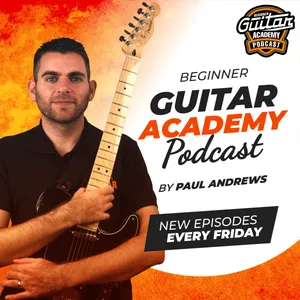
Beginner Guitar Academy: Daily Summaries Delivered
by Beginner Guitar Academy
This podcast is for beginner guitarist who want to take the confusion out of learning and the pain out of practice
Latest Episodes
The most recent episodes — sign up to get AI-powered summaries of each one.
- 2 days ago22 min
304 - What Should You Practise Right Now?
When you sit down with your guitar, having too many options can make practice harder, not easier. In this episode, Paul Andrews shares a simple way to choose what deserves your attention right now, so your practice sessions become more focused and productive.In this episodeWhy more lessons, exercises, and guitar information can create confusionHow to start with your current goalHow to identify the bottleneck holding back your playingWhy smaller practice actions lead to clearer progressHow to isolate difficult chord changes, rhythm patterns, transitions, and tempo increasesThe three parts of a useful practice session: progress, maintain, and playWhy balance should be considered across weeks and months, not forced into every sessionHow long to keep working on the same priorityHow to avoid constantly switching to new riffs, songs, and exercisesWhat to do when you don’t yet have a clear guitar goalThe three questionsUse these questions to decide what to practice:What am I trying to achieve?What is stopping me from doing it?What is the smallest action that would improve it?Instead of choosing a broad goal such as “get better at guitar,” identify a specific action, such as changing from G to C four times without pausing.Build your practice sessionA balanced session can include:Progress: Work on your current bottleneck with your greatest concentration.Maintain: Revisit skills and material you already know so you don’t lose them.Play: Make music by playing a song, revisiting a riff, or improvising over a backing track.For a 20-minute session, you might spend 10 minutes on progress, 5 minutes on maintenance, and 5 minutes playing. The exact timings can change, but each section should have a clear purpose.This week’s challengeChoose one practice priority and write down your answers to the three questions. Give that small action focused attention during each practice session this week.Your priority could be:Changing between two chords smoothlyPlaying a rhythm consistently with a metronomeLearning four bars of a songWorking through a difficult exercisePlaying a song from beginning to end without stoppingKeep it specific enough that you know exactly what to do when you pick up the guitar.Beginner Guitar AcademyBeginner Guitar Academy provides a five-level curriculum covering seven essential guitar skills: picking, chords, arpeggios, scales, rhythm, notes, and ear training.Members also receive focused exercises, songs, progress checks, assessments, unlimited teacher support from Paul Andrews, and access to the Practice Studio.Join for a $1 two-week trial at beginnerguitaracademy.com.
- 1 weeks ago21 min
303 - Why Consistency Beats Motivation
Motivation can get you excited about playing guitar, but it’s too unreliable to build your progress around. In this episode, Paul Andrews explains how to create a realistic guitar routine that keeps you moving forward, even when life gets busy.In this episodeWhy waiting to feel motivated can hold back your guitar playingHow small actions create momentum and motivationWhat consistency realistically looks like for adult guitaristsHow to build a practice routine around your actual weekUsing reliable anchors, such as after breakfast or after dinnerWhy keeping your guitar visible and ready to play reduces frictionThe three types of practice sessions:Minimum sessionTarget sessionBonus sessionHow to recover quickly after missing a practice sessionWhy showing up matters before measuring visible improvementHow to adjust your routine when it stops workingThis week’s challengeCreate your own:Minimum session for difficult or busy daysTarget session for a normal dayBonus session for days with extra time and energyReliable anchor for when you’ll play guitarUse your plan for the next seven days. You don’t need to practice every day or complete the target session every time. If you miss a session, return to the plan the next day without trying to catch up.Example practice planMinimum: Five minutes working on one chord changeTarget: Twenty minutes split into four five-minute sectionsBonus: Play through several songs you’ve learnedAnchor: After dinner or before watching TVJoin Beginner Guitar AcademyGet a step-by-step curriculum across five levels, lessons covering seven essential guitar skills, songs, workshops, teacher support, a community of adult guitarists, and access to the Beginner Guitar Academy Practice Studio.Start your two-week trial for $1 at beginnerguitaracademy.com.
- 2 weeks ago16 min
302 - How to Get Back Into Guitar After a Break
Taking a break from guitar doesn’t mean you’ve failed. The hardest part is often starting again, especially when you feel like you need to catch up on everything you missed.In this episode, Paul explains how to restart without creating unnecessary pressure. You’ll learn how to reconnect with the guitar, assess what feels rusty, and choose one small action you can repeat over the next seven days.In this episodeWhy you don’t need to catch up on missed practiceHow to avoid judging your playing during the first few minutes backWhy large, ambitious practice plans often fall apartHow small actions create momentumThe three-step guitar reset:Reconnect with the guitarTake stock of where you areChoose one repeatable actionWhy missing a day doesn’t mean you have to start overHow to make guitar feel normal again after a breakThe 7-Day Guitar ResetChoose one guitar activity that takes five minutes or less. Complete it once today, then return to it as often as you can over the next seven days.You could:Practice a G-to-C chord changePlay the opening riff to a song you enjoyWork through one short exercisePlay something familiar for five minutesComplete one short session in Practice StudioKeep the target small. Don’t add extra exercises or try to make up for missed sessions. The goal is to make picking up the guitar easy and repeatable.Key takeaway“Forget about catching up, just pick up a guitar, play something familiar, notice where you are today, choose one small action you can repeat, and that is how momentum begins.”Continue your progressBeginner Guitar Academy provides a clear path through the seven essential guitar skills, while Practice Studio helps you turn that path into focused practice sessions, record what you’ve done, and see your progress over time.Visit beginningguitaracademy.com to try the 14-day, $1 trial.
- 3 weeks ago1h 4m
301 - From Beginner to BGA Graduate: Søren Rusbjerg’s Guitar Journey
In this inspiring episode, Paul Andrews welcomes Søren, the fourth graduate of the Beginner Guitar Academy, to share his journey from total beginner to advanced guitarist. Together, they discuss the realities of learning guitar as an adult, the importance of structured practice, overcoming challenges, and practical strategies for consistent progress.Key Topics CoveredSøren’s Guitar JourneyInitial motivation: Desire to play favorite rock songs and seek structure in learning.Previous experience with Guitar Hero and Simply Guitar app versus real-life guitar progress.Joining Beginner Guitar Academy for step-by-step support, structure, and a clear path.Three-year journey through all five Academy levels.Facing Challenges & Overcoming PlateausThe struggle and ultimate success with challenging pieces like “Heartbreaker.”Battling “red light fever” when recording and pushing through performance nerves.The importance of balancing practice consistency with life's demands.The Value of Structure and CommunityWhy methodical, skill-based learning works better than random or gamified app learning.Benefits of module-based progression and not rushing through levels.Leveraging the Academy's workshops, practice diaries, and community inspiration.The power of seeing fellow members’ playthroughs to stay motivated.Practical Advice for Beginner and Advancing GuitaristsConsistency beats perfection—practice most days, but don’t obsess if you miss one.Don’t rush; spending time mastering basics pays off in higher levels.Make your guitar easily accessible for frequent practice.Early adoption of good habits: counting beats, performance mindset, and recording yourself.Use tools like leg supports or footrests for better playing posture.If you hit a wall, try learning new songs or attending a workshop for a fresh perspective.Enjoy the journey—focus on growth, not just completing levels.What’s Next After Graduation?Exploring workshops and developing new skills (e.g., looping with a looper pedal).Considering further studies in genres like blues/rock with other learning platforms.Continuing to participate in the Academy community as a graduate with ongoing access.Resources & CommunityGrad Club perks: Lifetime Academy access, exclusive merch, special workshops.New practice studio tool for tracking practice and progress.Active peer support through the Beginner Guitar Academy online community.Quickfire Favorites (from Søren)Favorite guitarist: Jack White and David Gilmour (Pink Floyd)Favorite genres: Rock and bluesTop riffs/songs to play: "Money," "Sweet Child o’ Mine," “Hold On,” “Parisienne Walkways”Most valued guitar gear: Quality multi-effects pedal, looper pedal, leg support pillowInspirational Takeaway“If you put in the time and effort, you can learn almost anything on guitar.” – SernRemember, there’s no quick fix in learning guitar—real progress comes from dedication and enjoying every step.Want to start your own journey?Learn more about Beginner Guitar Academy—structured courses, community support, and a proven path from absolute beginner to confident guitarist.
- Aug 21, 202621 min
300 — What 300 Episodes Have Taught Me About Learning Guitar
Welcome to episode 300 of the Beginner Guitar Academy podcast! In this milestone edition, reflects on the journey so far, shares major lessons learned from teaching guitar to hundreds of students over the years, and announces the exciting launch of the new Practice Studio tool for members.Key Takeaways from 300 Episodes1. Consistency Beats IntensityRegular, focused practice trumps occasional long sessions. You don’t need marathon sessions—just 20 focused minutes, four to five times a week, can make a huge difference in your progress over time.2. Progress Is Not LinearGuitar learning comes with ups and downs. Plateaus are normal, and sometimes progress is invisible until it suddenly becomes apparent weeks or months later. Stick with your routine and give yourself time.3. Follow a Path, But Make It Your OwnStructure helps, especially amidst the overwhelming amount of online resources. But your path should serve you, not the other way around. Allow yourself to deviate and enjoy the journey.4. Balance Practice, Play, and ExplorationA healthy guitar learning journey involves practicing skills, playing music, and exploring new ideas. Don’t just practice—make music and experiment!5. Mistakes Are Part of the ProcessEveryone, even pros, makes mistakes. What matters is how you react: learn to recover and keep going instead of stopping at every error.6. Avoid Unhealthy ComparisonSocial media can distort your perception of progress. The only comparison that matters is you against your past self.7. Enjoyment Is Not a Future RewardDon’t wait until you’re "good enough" to enjoy playing. Enjoyment should be part of your learning process, not something postponed.8. The Best Guitarist Isn’t Always the Most AdvancedIt’s not about knowing the most; it’s about enjoying the instrument and creating a sustainable, rewarding relationship with music.Big Announcement: Practice Studio Launchunveils Practice Studio, a new integrated practice tool for Academy members. This suite includes:A practice timer and metronomeSession tracking and stats (minutes practiced, skills worked on)Achievements for practice milestonesDirect links to lesson content based on your focus areasThis tool is designed to bring all elements of structured practice into one place, making it easier to sustain consistency and track progress.Community News & WorkshopThe August theme in the community is "Practice, Play, and Explore."Upcoming live workshop: Focused on unlocking creativity and exploring the guitar, especially helpful for members looking to move from strict practice into more exploratory playing.Workshop attendance now earns badges for community engagement.Listener ChallengeTake a moment to reflect:Where were you when you started playing guitar?What can you do now that your past self would be proud of?Where would you like to be when episode 400 comes out?Gratitude & Looking AheadPaul expresses deep thanks to all listeners, supporters, and Academy members for accompanying him through 300 episodes. Here’s to the next chapter, with even more growth, community, and music.Next Episode: Join us next Friday for episode 301, or catch the upcoming live workshop if you’re a community member. Keep practicing!
- Aug 14, 202626 min
299 — You Don't Need to Be Creative to Explore on Guitar
In this episode, Paul Andrews continues the August series on “Practice, Play, and Explore,” delving into why exploration is crucial for beginner guitarists—even if you don’t feel creative or think you lack theory knowledge. Breaking down the barriers that hold beginner guitarists back from exploring their instruments, Paul Andrews shares actionable tips to help you become more curious and confident, and explains how exploration is accessible to everyone. Plus, hear some exciting Beginner Guitar Academy news and teasers for next week's milestone 300th episode.Key TopicsPractice, Play, ExploreRecap of the month’s themes with special focus on the importance of exploring your guitar to truly grow as a musician.The Myth of Needing Creativity or TheoryPaul Andrews reassures listeners that you don’t need to be creative, know lots of theory, or be an improvisational master to start exploring the guitar.Overcoming Beginner BarriersInsights into why adults often shy away from exploration—structure, fear of getting it wrong, and lack of confidence.Practical Exploration StrategiesStart with something you know and change just one thing (chord, rhythm, tempo, etc.)Use restrictions to focus creativity (limit yourself to three notes or two chords)Use your ears before your eyes—try to figure out simple melodies or riffs by earGrowth Through ‘Bad’ SoundsEmbracing mistakes and learning from things that don’t sound great as an essential part of the learning process.You Already Have EnoughWhy even absolute beginners with just two chords or a simple scale can start exploring right away.Set an Exploration ChallengeSet a timer for five minutes, pick something you already know, and experiment with changing one element—free from pressure and expectation.Celebrating Member SuccessRecognition for community members, including a special shout out to Sorin, the fourth BGA graduate, and update on upcoming workshops.Looking Ahead to Episode 300 & Practice Studio LaunchSneak peek at next week’s big celebration and the highly anticipated Practice Studio feature.Action ChallengeSet aside five minutes this week to explore on your guitar:Choose something familiar (a chord, riff, note, or pattern).Change one thing—rhythm, order, emotion, or dynamics.Embrace curiosity; there’s no wrong answer.Share your experience in the BGA community forum:Where did exploration take you this week?Academy NewsWorkshop Recording Available: Last weekend’s “From Practice to Playing” workshop video and audio are now on the member dashboard.August Academy Show: Catch up on last month’s highlights, upcoming features, and member achievements.Upcoming Workshop: “Explore” workshop happening Sunday, August 23rd, 9 PM UK time.Sørin’s Story: Stay tuned for Paul Andrews’s upcoming interview with Sørin, BGA’s fourth graduate.Next WeekDon’t miss our milestone episode 300 with the official launch of Practice Studio and a special look ahead at how to keep guitar as a lifelong pursuit.Remember:Practice to improve, play to make music, and explore to discover.Subscribe and join the Beginner Guitar Academy community for support, direction, and more ways to grow!
- Aug 7, 202614 min
298 - The Skills You Never Practise (But Every Guitarist Needs)
In this episode, Paul pulls back the curtain on the often-overlooked skills that separate well-rounded guitarists from those who feel stuck or stagnant. While most players focus on learning chords, scales, and songs, there are essential skills that only develop when you actually play rather than just practice. Paul outlines these hidden skills and offers motivational advice to help you grow not just as a player, but as a musician.Key Takeaways1. Recovering from MistakesGreat guitarists aren’t flawless—they’re just excellent at recovering from slip-ups during performances. Learning to keep going after you make a mistake is a vital skill that can only be developed through actual playing, not just isolated practice.2. Keeping the Music MovingMusic is about flow and continuity. Stopping your strumming hand or hesitating is more disruptive than a misplaced chord. Keep the rhythm and music moving—even if it means simplifying or skipping a section. The audience is more likely to notice a pause than a minor fumble.3. ListeningDuring practice, we focus almost exclusively on technique and finger placement. When playing, it’s crucial to listen—to yourself, to backing tracks, or other musicians. Listening back to recordings of yourself is a powerful way to identify areas for improvement and hone your musical ear.4. Musical ExpressionThe notes are just the beginning—how you play them is what sets you apart. Dynamics, timing, tone, space, and vibrato all add your unique voice to the music. Expression is what makes the same song sound completely different when played by different guitarists.5. ConfidenceConfidence isn’t accidental—it’s earned through experience. Every time you play through nerves, recover from a mistake, or perform for others, your confidence grows. Stick with a proven path and recognize that every bit of progress builds both your competence and your self-assurance.Weekly ChallengePick a complete song and imagine you’re performing it for someone who matters to you. Play it from beginning to end. If you make a mistake, recover and keep going. Use expression, listen as you play, and reflect at the end on which of the five skills you experienced during the performance.Upcoming Live WorkshopJoin Paul this Sunday, August 9th at 9 PM GMT, for the "From Practice to Playing" live workshop. The session is designed to help you transition your practice skills into genuine musical performance—building confidence, using backing tracks, and making your music come alive. Members can register via the Academy forum or email. Not a member yet? Start with a $1 two-week trial and join the workshop as part of your trial. Join HereFinal ThoughtsPracticing technique is essential, but playing is what makes you a musician. Don’t just chase new information—invest in becoming the guitarist you’ve always wanted to be by developing these musician’s skills.Rate and review the podcast to help spread the word and inspire more beginner guitarists!For more information, updates, or to start your membership, visit beginnerguitaracademy.com.
- Jul 31, 202613 min
297 - How to Bring More Playing & Exploring Into Your Practice
In this episode, Paul Andrews continues a deep dive into the difference between practicing, playing, and exploring on your guitar. Building on last week's popular discussion, the focus shifts from "why" to "how", giving you practical steps to incorporate more enjoyment and creativity into your daily guitar routine, all without sacrificing your progress.Key TopicsThe August Theme: All month long, BGA is focusing on the pillars of practice, play, and exploration to help you become a more confident, fulfilled guitarist.Upcoming Live Workshops:From Practice to Playing – Learn how to transform skills from exercises into real, musical experiences.Unlocking Creativity – Simple ways to explore your own music, improvise with what you know, and spark your creativity, even if you don’t know much theory.5 Habits to Balance Practice, Play & ExplorationPaul Andrews shares five essential habits for building deeper fulfilment and progress on guitar:Schedule the Last 10 Minutes:Dedicate the final part of each session purely to playing or exploring—your reward and a key driver of motivation.Create a Ready-to-Play List:Build a small repertoire (3-5 songs) you can play at any time, reducing decision fatigue and bringing instant enjoyment to your routine.Explore with Questions, Not Pressure:Treat exploration as curiosity—ask “what happens if...?” and allow yourself the freedom to experiment without expectations.Finish the Song:Play through a song from start to finish without stopping to fix mistakes. Focus on continuation and communication, not perfection.Ask a Different Question:Instead of “what did I improve?”, ask “what did I enjoy?” to foster a positive association and cultivate consistency.Weekly ChallengePaul Andrews invites listeners to end every practice this week with 10 minutes dedicated just to playing or exploring—choose anything that makes you smile. Then, share your experience in the community.Academy News & RemindersLive Workshop Recordings are always available on your Academy dashboard.Join the Academy for access to live workshops, recordings, and a supportive community. New members can start with a 2-week trial for just $1 at beginnerguitaracademy.com.Final ThoughtBecoming a guitarist is about more than drills and technique; it’s about building a relationship with music. Embrace practice, play, and exploration to enjoy every step of your journey.Ready to get inspired, stay motivated, and grow as a guitarist? Practice, play, and explore with us all August long at Beginner Guitar Academy!
Get Beginner Guitar Academy summaries in your inbox
Free AI-powered daily recaps. Key takeaways, quotes, and mentions — in a 5-minute read.
Get Free Summaries →Free forever for up to 3 podcasts. No credit card required.
You Might Also Like
Listeners also like.

Guitar Music Theory
Learn how music theory applies to the guitar fretboard, covering scales, chords, progressions, and improvisation through practical lessons.

Acoustic Guitar
Conversations about acoustic guitar playing, building, and collecting, featuring interviews with guitarists, luthiers, and industry figures.

The Beginner's Garden with Jill McSheehy
A practical guide for new gardeners, breaking down gardening basics and terminology to help beginners grow confidently.
Everyone Loves Guitar
Conversations with guitarists and music insiders about their lives, careers, and the personal lessons behind their success.

Know Your Gear Podcast
A no-nonsense guide to guitars, amps, pedals, and the music industry from a seasoned insider.

Dipped In Tone
Two music industry insiders discuss gear, news, and myths in weekly conversations.

Learn Jazz Standards Podcast
A jazz musician discusses improvisation, theory, and practice with guests and answers listener questions about playing jazz.

Photography for Beginners | Learn the Basics of Photography
Learn photography fundamentals like exposure, composition, and visual storytelling from experienced instructors.

Podmastery: podcasting insights and advice for indie creators
Practical podcasting advice for independent creators aiming to grow their audience and improve production.

Classical Fix
A podcast introducing beginners to classical music.

Wong Notes
Musicians reveal behind-the-scenes stories, creative techniques, and career insights in candid conversations with Cory Wong.

Learning English Grammar
Learn and practice English grammar through real-life examples, weekly lessons, and interactive quizzes.
About Beginner Guitar Academy
This podcast is for beginner guitarist who want to take the confusion out of learning and the pain out of practice
Customized Recaps
AI-powered recaps with compact key takeaways, quotes, and insights.
Straight to Your Inbox
Get key takeaways from Beginner Guitar Academy in a 5-minute read.
Save Hours Every Week
Stay current on your favorite podcasts without falling behind.
Frequently Asked Questions
What is Podzilla's Beginner Guitar Academy daily summary?
It's a free AI-powered email that summarizes new episodes of Beginner Guitar Academy as soon as they're published. You get the key takeaways, notable quotes, and links & mentions — all in a quick read.
How does the Beginner Guitar Academy podcast summary work?
When a new episode drops, our AI transcribes and analyzes it, then generates a personalized summary tailored to your interests and profession. It's delivered to your inbox every morning.
Is this an official Beginner Guitar Academy product?
No. Podzilla is an independent service that summarizes publicly available podcast content. We're not affiliated with or endorsed by Beginner Guitar Academy.
Can I get summaries of other podcasts too?
Absolutely! The free plan covers up to 3 podcasts. Upgrade to Pro for 15, or Premium for 50. Browse our full catalog at /podcasts.
How often does Beginner Guitar Academy release new episodes?
Beginner Guitar Academy publishes weekly. Our AI generates a summary within hours of each new episode.
What topics does Beginner Guitar Academy cover?
Beginner Guitar Academy covers topics including Education. Our AI identifies the specific themes in each episode and highlights what matters most to you.
Start getting Beginner Guitar Academy summaries tomorrow morning.
Free forever for up to 3 podcasts. No credit card required.
Free forever for up to 3 podcasts. No credit card required.