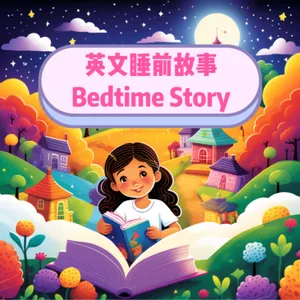
Free Daily Podcast Summary
英文睡前故事 Bedtime Story: Daily Summaries Delivered
by Riley讲故事
Get key takeaways, quotes, and insights from 英文睡前故事 Bedtime Story in a 5-minute read. Delivered straight to your inbox.
Latest Episodes
The most recent episodes — sign up to get AI-powered summaries of each one.
- Apr 7, 20262 min
The Willow Branch That Never Fades 永不褪色的柳枝
Little Lin loved spring. She loved the warm rain, the buzzing bees, and the way the wind carried the scent of fresh earth. But this year, spring felt different. Her grandmother had passed away in winter, and Lin missed her more than words could say.One morning, her mother said, “Today we will visit Grandma at the hillside. It’s almost Qingming.”Lin didn’t understand. “How can we visit her? She’s not there.”Her mother smiled softly. “Her body rests there, but her love lives in our hearts. Qingming is the day we sweep the graves, offer food, and show that we remember.”So Lin and her family walked up the misty hill, carrying a basket of oranges, rice cakes, and a small pot of tea—Grandma’s favorite. They cleaned the moss from the stone, placed fresh wildflowers around it, and poured tea in a circle near the grave.Lin whispered, “Grandma, I miss you. I drew a picture of us under the old banyan tree. I left it here for you.”As she tucked the drawing beneath a smooth stone, a gentle breeze lifted a single willow branch from a nearby tree. It floated down and landed softly on Lin’s palm.“Look,” her mother said. “Willow branches are for Qingming. They help guide our loved ones’ spirits home, just for a little while.”That night, Lin placed the willow branch under her pillow. As she closed her eyes, she dreamed of Grandma—not as a ghost, but as a warm light. They sat under the old banyan tree, eating rice cakes and laughing. Grandma touched Lin’s cheek and said, “I see your picture, little one. And I will always be with you—in the spring rain, in the willow’s shade, and in your kind heart.”Lin woke with tears on her cheeks, but also a smile. She hugged the willow branch and whispered, “Good night, Grandma. I’ll remember you every spring.”And from that year on, whenever Lin saw a willow branch sway in the breeze, she knew it was Grandma’s way of saying, “I’m still here. And I love you.”
- Mar 8, 20253 min
The Star Within 不灭的星光
In a small village nestled under a sky full of stars, there lived a girl named Ayla. Ayla loved to gaze at the night sky, imagining herself soaring among the constellations(星座). But sometimes, she felt unsure about being a girl. “People say girls should be quiet and gentle,” she thought. “But I want to be bold and brave. Can I still be a girl and dream of the stars?”One night, as Ayla sat on a hilltop, a shooting star streaked across the sky. It landed nearby, and when she approached, she found a glowing figure—a woman made of starlight. “I am the Keeper of the Stars,” she said. “And I’m here to show you something extraordinary.”The Keeper waved her hand, and the sky came alive. Stars rearranged themselves into shapes of women from history: a pilot soaring through the clouds, an engineer building bridges, a poet weaving words into magic. “These are just a few of the countless girls and women who reached for the stars,” the Keeper said.Ayla’s eyes widened. “But… how did they do it?”The Keeper smiled. “They embraced who they were. They were strong when they needed to be, gentle when it mattered, and brave even when they were afraid. They knew that being a girl wasn’t about fitting into a mold—it was about breaking it and creating their own.”As Ayla walked through the starlit meadow, she noticed something incredible. With every step, new stars appeared in the sky. One constellation formed a shield(盾). “This is the star of courage,” the Keeper said. “It shines for girls who stand up for what’s right.”Another constellation sparkled like a paintbrush streaking across the night. “This is the star of creativity,” the Keeper explained. “It glows for girls who dream and create.”And then there was a tiny, steady star that pulsed(跳动) softly. “This one is for kindness,” the Keeper said. “It shines for girls who care for others, even when no one is watching.”Ayla felt her heart swell(怦怦跳). “So… being a girl means I can be all these things?”“Yes,” the Keeper said. “And more. The stars shine because of girls like you. You are strong, kind, clever, and full of dreams. You are part of a story that’s been written for centuries—a story of girls and women who have shaped the world with their hearts and hands.”As Ayla left the meadow, she noticed something new: a tiny star had appeared in the sky, just above her. It was her star, just beginning to shine.From that day on, Ayla walked with her head held high, proud to be a girl. And whenever she doubted herself, she remembered the Keeper’s words: “You are part of something infinite, simply by being you.”
- Feb 11, 20252 min
The Year of the Brave Snake 蛇年之勇敢的蛇
Long ago, in a misty valley nestled between emerald mountains, there lived a village terrified of the monstrous Nian. Every winter, when the moon grew thin, the beast would descend from the shadows, devouring crops, homes, and even children. The villagers trembled, hiding in caves, until one frosty year, a shimmering snake named Ling slithered into their midst. Ling was no ordinary serpent. Her scales glowed like jade, and her eyes held the wisdom of ancient rivers. “I can help you,” she hissed softly. “Nian fears courage and light. Together, we can drive him away.” The villagers doubted—how could a snake defeat a monster? But Ling’s calm resolve kindled hope.On the eve of Nian’s return, Ling coiled herself around the village well, her scales reflecting the moonlight. When Nian lunged, roaring with fiery breath, Ling struck. She twisted her body into a living barrier, her venomous fangs biting at the beast’s claws. The villagers, emboldened, clanged pots and lit firecrackers, their noise echoing like thunder. Nian staggered, blinded by the flashes and deafened by the clamor.But the monster was relentless. With a furious swipe, he tore through Ling’s scales. Yet even wounded, she tightened her coils, trapping Nian in a glittering knot. “Now!” Ling cried. The villagers hurled torches, driving Nian into the mountains—forever.Exhausted, Ling collapsed, her light fading. “Do not mourn,” she whispered. “My spirit will watch over you. Let my sacrifice remind you that even the smallest can be mighty.” As her last breath misted into the cold air, her scales scattered like stars, painting the night sky.From that year on, the villagers honored Ling by naming the year after her, celebrating the Year of the Snake. They hung red lanterns to ward off evil and shared stories of the brave serpent who taught them courage. To this day, when the new moon rises, children whisper thanks to Ling, knowing her stars still shine above, guarding them from shadows.And so, kindness and bravery—like a snake’s sleek grace—endure forever.
- Jan 8, 20254 min
The Puppy Who Became Family 成为家人的小狗
It was a chilly autumn afternoon when Lisa first saw the little puppy. She was walking home from school, kicking through piles of crunchy leaves, when she heard a soft whimper. Turning around, Lisa saw a small, scruffy dog sitting by the sidewalk. The puppy’s fur was a mix of brown and white, and his eyes were big and round, filled with a kind of sadness that tugged at Lisa’s heart."Hey, little guy," Lisa said gently, crouching down. "What’s wrong?"The puppy wagged his tail weakly but didn’t move. Lisa could see his ribs showing, and his fur looked dirty and matted. She knew the puppy must have been out on the street for a while.Lisa looked around. No one else was nearby. She reached into her backpack, hoping to find something to feed the puppy, but there was nothing. Then she had an idea. She carefully picked the little dog up and cradled him in her arms.“I can’t just leave you here,” Lisa whispered. "Come with me."She walked all the way home, the puppy snuggled close against her chest, shivering slightly. When Lisa got inside, her mom was sitting at the kitchen table, reading a book."Mom," Lisa said, "I found a puppy outside. Can we keep him?"Her mom looked up in surprise, but then saw the puppy in Lisa’s arms and softened. “Oh, Lisa. He looks like he really needs help. Let’s see what we can do.”They gave the puppy a warm bath, cleaned his fur, and fed him some leftover chicken. The little dog ate eagerly, his tail wagging faster with every bite. After his meal, he curled up on a soft blanket in the living room, falling asleep quickly, looking peaceful for the first time since Lisa had found him.“Mom, can we name him? I think I want him to stay with us,” Lisa said softly, watching the puppy sleep.Her mom smiled. “What do you think his name should be?”Lisa thought for a moment, gazing at the little puppy. “How about Buddy? He seems like a Buddy.”Her dad nodded in agreement. “Buddy it is.”Lisa beamed, happy to know that the puppy had not only found a safe home, but also a name. Buddy it was.Lisa spent the next few days taking care of Buddy, who soon became full of energy. He loved to chase Lisa’s socks, roll around in the yard, and wag his tail when anyone came to visit. Lisa’s parents took Buddy to the vet to make sure he was healthy. He was given a clean bill of health, and Lisa was overjoyed to know that Buddy would be a part of their family for a long time.As the weeks went by, Buddy grew stronger and happier. Lisa and Buddy became inseparable. Lisa took Buddy on walks every day, taught him how to sit and fetch, and even let him sleep in her room at night. Buddy quickly became a part of the family, and soon, no one could imagine their home without him.One winter evening, as the family sat around the fireplace, Lisa looked at her parents and smiled. “I’m really glad we found Buddy,” she said. “He’s not just a puppy we rescued. He’s our family now.”Her mom smiled, running her fingers through Buddy’s fur. “Yes, he is. He’s part of our family just like you.”From that day on, Buddy was no longer the lost puppy on the street. He was Lisa’s best friend, a beloved family member who brought laughter, love, and joy into their home. And every time Lisa looked at him, she remembered the cold afternoon when she found Buddy—alone and afraid—but now, he was home, and that was all that mattered.
- Jan 5, 20254 min
Alice Who Can Talk to the Animals 可以和动物说话的爱丽丝
Alice had always known she was different. While most kids played with toys or watched TV, Alice spent hours in the garden, the forest, or by the river, talking to the animals. She had a special gift—she could understand them.One day, as Alice wandered along the riverbank, she met a wise old turtle. The turtle had been living in the same pond for years, and he was known by the other animals for his knowledge of the world.“Alice,” the turtle said in his slow, deep voice, “there is something important I need to share with you.”Alice sat down beside him, curious. “What is it, Mr. Turtle?”The turtle blinked slowly. “The water, Alice. Water is the key to everything. People often forget how much it connects us. If you understand water, you will understand the world.”Alice frowned, thinking about his words. “What do you mean?”“The water moves through the land, nourishing plants, carrying fish, and creating life. But sometimes, people take it for granted. They don’t see how the flow of water can solve so many problems.”Alice’s mind raced with possibilities. What could water have to do with anything? But as the turtle continued to speak, Alice began to understand. He told her about the way the water always found its way, no matter how many obstacles were in its path. It could carve through rock, bring life to the driest places, and even clean itself.The turtle’s words stayed with Alice, and the next day, as she was walking through her village, she noticed something troubling. The river near her home had been polluted. The water was murky, and fish no longer swam in it. The villagers didn’t seem to care, but Alice couldn’t ignore it.Suddenly, the turtle’s words came back to her. Water can clean itself. Water finds a way. Alice had an idea.She ran home, grabbed her sketchbook, and began drawing. The more she thought about it, the more the idea grew in her mind. What if there was a way to filter the water, to bring it back to life? What if she could create something that could help the river clean itself?For days, Alice worked in her small workshop, experimenting with materials she found around her house—sand, charcoal, mesh, and a few old jars. She built a small device that could filter the polluted water. It wasn’t perfect, but it was a start. The next day, she went to the river with her invention.With a hopeful heart, Alice set up her filter and let the water flow through it. She watched in awe as the water became clearer and clearer, just as the turtle had explained. It was working!Alice took her invention to the village leaders and explained what she had done. At first, they were skeptical, but when they saw the results, they were amazed. Soon, the whole village began using Alice’s simple water filters, and the river started to heal.The animals watched from the trees, proud of Alice for using the wisdom they had shared with her. The turtle, now with a twinkle in his eye, smiled at her from the edge of the pond.“Alice,” he said, “you’ve learned the most important lesson. You’ve seen how water works, and you’ve used it to help others. You’ve understood that the world is full of answers—if you listen carefully.”Alice grinned, knowing that the secret to solving problems was not always in big ideas or expensive inventions. Sometimes, the answers came from the simplest of places—like the water that flows through the earth, connecting everything together.
- Dec 24, 20243 min
The Adventure of the Little Robot 小机器人历险记
In a small workshop at the edge of the city, three friends—Jia, Hao, and Li—had spent weeks building their school science project: a tiny robot named Nio. It wasn’t just any robot; Nio was special. With its round body, blinking eyes, and a squeaky voice, it had a curious personality that the friends had programmed into it.When the day of the school science fair arrived, Nio stood proudly on the table. Jia pressed the button to activate it. “Hello, I’m Nio!” it chirped, spinning in a happy circle. The judges were impressed, and the friends won first prize.That night, while everyone slept, something extraordinary happened. A strange glow surrounded Nio, and suddenly, it came fully to life. “What’s this feeling?” Nio wondered. It looked at its tiny metal hands and decided to explore.The next morning, Jia, Hao, and Li woke to find Nio missing. “Where could it have gone?” Hao asked, panicking.Li noticed small tracks leading out of the workshop. “Let’s follow them!”Meanwhile, Nio wandered the bustling streets of the city. It stopped by a bakery, where the smell of fresh bread intrigued it. “What’s this amazing thing?” it asked the baker, who laughed and gave it a small roll.Then, Nio noticed a group of kids arguing over a broken toy car. “Why are you upset?” Nio asked. The kids explained their problem. “Let me help!” Nio chirped. It used its tiny tools to fix the car, and the kids cheered.By the time the friends found Nio, it was surrounded by people—helping fix a bicycle chain, teaching a curious toddler how gears worked, and answering endless questions about how it came to life.“Nio, you’re alive!” Jia exclaimed, both thrilled and worried.“I think I am,” Nio replied. “And I’ve discovered so many things! People are so different from machines, but I like learning about them.”The friends decided to take Nio back home to keep it safe. But Nio had a request: “Can I explore the world more? I want to understand feelings, teamwork, and why people do what they do.”Realizing how important this was to Nio, the friends made a plan. They’d take turns bringing Nio on adventures—hiking in the mountains, visiting museums, and even joining family dinners. They taught Nio about kindness, laughter, and curiosity, and in return, Nio helped them see the world through fresh eyes.Over time, Nio became a beloved member of the community. The little robot that had started as a science project was now a symbol of exploration, friendship, and the endless possibilities of learning.
- Dec 7, 20244 min
The Floating Forest 漂浮的森林
In the small riverside village of Willowbend, two siblings, Anya and Wei, lived a simple but happy life. They loved to explore the woods and play by the riverbank. But one stormy night, heavy rains turned the calm river into a raging flood. When the water finally receded, the village was left in ruins.Anya and Wei stood on the muddy ground, staring at what was once their home. “What will we do now?” Wei whispered.“We rebuild,” Anya said firmly. “But first, we need to find supplies.”The siblings set out in their small boat, paddling through the floodwaters in search of anything useful. After hours of rowing, they noticed something unusual—a cluster of trees floating on the water.“Look!” Anya exclaimed. “Those trees aren’t rooted in the ground. How are they floating?”Curious, they paddled closer. The trees were unlike anything they’d ever seen. Their roots formed a web-like mat that kept them afloat, and their leaves shimmered faintly in the sunlight. As they approached, a soft voice seemed to whisper, “Welcome.”Startled but intrigued, Anya and Wei stepped onto the floating forest. It felt firm and stable under their feet, like solid ground. They explored the trees, discovering fruits they’d never tasted and vines that seemed to hum with energy.“This forest could save our village,” Wei said. “If we bring some of these trees back, they can grow even on the floodwaters.”As they spoke, an elderly tree with a wise face formed in its bark bent low to greet them. “We are the Wanderers,” it said. “We travel the world, helping those who respect nature. If you promise to protect us, we will help you rebuild.”Anya and Wei nodded eagerly. “We promise to take care of you and share what we learn with others,” Anya said.The Wanderers agreed to go with the siblings. With the trees' help, Anya and Wei built floating platforms for homes and planted the magical trees to create a new village that could rise with the water. They taught their neighbors how to live in harmony with nature, using what the forest provided without taking too much.Soon, Willowbend became a thriving, floating community. The villagers grew fruits from the magical trees, used their strong vines to make sturdy ropes, and even discovered that the trees purified the water around them.Anya and Wei often returned to the floating forest to visit their new friends, grateful for the lesson they’d learned: by respecting nature and adapting to its changes, they could create a brighter future for everyone.
- Nov 22, 20243 min
Grandma's Magic Cookbook 祖母的魔法食谱
Sophie always loved visiting her grandma’s cozy little house at the edge of the woods. Grandma’s kitchen smelled of cinnamon, chocolate, and all things wonderful. One rainy afternoon, while exploring the attic, Sophie stumbled upon a dusty, leather-bound cookbook.“Grandma, what’s this?” Sophie asked, bringing the book downstairs.Grandma’s eyes twinkled. “Ah, that’s my old cookbook. I used to experiment with those recipes when I was your age. Why don’t you try making something from it?”Excited, Sophie opened the book. The pages were filled with scribbles and odd illustrations of cakes, soups, and pies. She decided to make the first recipe she saw: Giggleberry Muffins.The instructions were strange: “Add a pinch of laughter, two teaspoons of kindness, and a splash of curiosity.” Sophie giggled at the directions but followed them anyway, adding real ingredients. Soon, the muffins were ready.When her little brother, Timmy, took a bite, he burst into uncontrollable laughter. “These muffins are hilarious!” he said between giggles. Sophie tasted one and felt a wave of happiness too.Curious, Sophie tried another recipe: Friendship Soup. She shared it with her shy neighbor, Ellie. After eating, Ellie smiled and said, “I feel brave enough to talk to new people now!”Word spread about Sophie’s magical cooking. Friends and neighbors began visiting, asking for treats. She whipped up Memory Marshmallows for Grandma’s forgetful friend, Hug Cookies for a sad classmate, and even Courage Pie for her friend Jake, who was scared of the school talent show.But one day, a boy named Harry came to her house with a mean smirk. “I dare you to make something no one can resist,” he said. Sophie hesitated but decided to try a recipe called Fame Fudge.When Harry ate it, he began bragging loudly about himself. “I’m the best soccer player! Everyone should know how amazing I am!” He ran off to show everyone his “new talent.”Grandma chuckled as she watched Harry. “Sophie, remember, magic can be fun, but it’s most powerful when it’s used to help others, not show off.”Sophie nodded. She decided to use the cookbook carefully from then on. She and Grandma worked together to rewrite the recipes, adding reminders about kindness, gratitude, and sharing.Sophie realized the cookbook’s true magic wasn’t just in the food—it was in making people feel loved and cared for. From that day on, her kitchen became a place where everyone could find a little bit of magic and a whole lot of heart.
Get 英文睡前故事 Bedtime Story summaries in your inbox
Free AI-powered daily recaps. Key takeaways, quotes, and mentions — in a 5-minute read.
Get Free Summaries →Free forever for up to 3 podcasts. No credit card required.
You Might Also Like
Listeners also like.
我們家的睡前故事
我們家的睡前故事

Chinese Stories For Kids | Bedtime Stories | Exploart Podcast
Exploart
費雪阿姨說故事
Fish
嘘!睡着了丨成人睡前故事 3D立体声
仙仙儿FM
Bedtime Stories for Kids|Good Night Tales|Stories of New Beginnings
BabyBus
V媽咪早安雙語故事屋 Bilingual Stories For Kids
Bilingual Start Kids

Chinese Short Stories for Kids - Adventures with Ollie
Ollie (Chinese)
晚安妈妈睡前故事
晚安妈妈

Sleep睡前音樂故事 | Bedtime Music & Stories
小七媽咪
彩虹故事屋
小怪獸媽媽
成人睡前故事|温柔男声哄睡夜听治愈助眠晚安电台
徐之末
水獺媽媽巧巧話|聽巧慧說故事學台語!
蘇巧慧
Customized Recaps
AI-powered recaps with compact key takeaways, quotes, and insights.
Straight to Your Inbox
Get key takeaways from 英文睡前故事 Bedtime Story in a 5-minute read.
Save Hours Every Week
Stay current on your favorite podcasts without falling behind.
Frequently Asked Questions
What is Podzilla's 英文睡前故事 Bedtime Story daily summary?
It's a free AI-powered email that summarizes new episodes of 英文睡前故事 Bedtime Story as soon as they're published. You get the key takeaways, notable quotes, and links & mentions — all in a quick read.
How does the 英文睡前故事 Bedtime Story podcast summary work?
When a new episode drops, our AI transcribes and analyzes it, then generates a personalized summary tailored to your interests and profession. It's delivered to your inbox every morning.
Is this an official 英文睡前故事 Bedtime Story product?
No. Podzilla is an independent service that summarizes publicly available podcast content. We're not affiliated with or endorsed by Riley讲故事.
Can I get summaries of other podcasts too?
Absolutely! The free plan covers up to 3 podcasts. Upgrade to Pro for 15, or Premium for 50. Browse our full catalog at /podcasts.
What topics does 英文睡前故事 Bedtime Story cover?
英文睡前故事 Bedtime Story covers topics including Kids & Family, Family. Our AI identifies the specific themes in each episode and highlights what matters most to you.
Start getting 英文睡前故事 Bedtime Story summaries tomorrow morning.
Free forever for up to 3 podcasts. No credit card required.
Free forever for up to 3 podcasts. No credit card required.