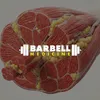
Muscle is where most of the glucose goes, and muscle insulin resistance is the first thing that breaks on the road to type 2 diabetes. Both of those are true, and neither one means that building more muscle is the treatment for obesity. This episode works through what actually decides whether a tissue handles fuel well: not how much of it you have, but how fast it's moving fuel through. We go through the one-legged exercise studies, the 18,000-person analysis of what body composition actually predicts, the athlete's paradox, the energy cost of building a kilogram of muscle, the GLP-1 lean mass panic, and why sarcopenic obesity is named after the wrong organ.This is part two of a two-part series on storage capacity. Part one covered where body fat goes and what happens when the storage runs out. Timestamps0:00 The one-leg study, and the muscle-centric claim02:06 What obesity is, and the garage analogy05:06 How glucose gets into a muscle cell11:21 Insulin sensitivity improves without building muscle17:11 The best case for muscle-centric medicine21:13 What predicts falls and death: strength, not lean mass25:18 Separating muscle size from muscle function31:33 Liver fat: amount, type, and flux37:54 Should you build muscle first? The arithmetic42:37 Building muscle in a calorie deficit50:29 GLP-1s, DXA, and the lean mass panic58:23 Sarcopenic obesity, and why the name is wrong01:04:37 Why size still tells you something01:11:46 So what is obesity?Resources:Buy the book, Signal: https://www.barbellmedicine.com/shop/learning/signal/New Barbell Medicine Hybrid 5K and 10K Run + Lift ProgramsBarbell Medicine coaching and templates: https://www.barbellmedicine.com1. Richter EA, Mikines KJ, Galbo H, Kiens B. Effect of exercise on insulin action in human skeletal muscle. J Appl Physiol (1985). 1989;66(2):876-885. doi:10.1152/jappl.1989.66.2.876. PMID: 2496078. https://doi.org/10.1152/jappl.1989.66.2.8762. Cawthon PM, Travison TG, Manini TM, et al. Establishing the link between lean mass and grip strength cut points with mobility disability and other health outcomes. J Gerontol A Biol Sci Med Sci. 2020;75(7):1317-1323. doi:10.1093/gerona/glz081. PMID: 30869772. https://doi.org/10.1093/gerona/glz0813. Bhasin S, Travison TG, Manini TM, et al. Sarcopenia definition: the position statements of the Sarcopenia Definition and Outcomes Consortium. J Am Geriatr Soc. 2020;68(7):1410-1418. doi:10.1111/jgs.16372. PMID: 32150289. https://doi.org/10.1111/jgs.163724. Elgaddal N, Kramarow EA, Reuben C. Physical activity among adults aged 18 and over: United States, 2020. NCHS Data Brief No. 443. Hyattsville, MD: National Center for Health Statistics; 2022. PMID: 36043905. https://www.cdc.gov/nchs/products/databriefs/db443.htm5. Whitfield GP, Carlson SA, Ussery EN, Fulton JE, Galuska DA, Petersen R. Trends in meeting physical activity guidelines among urban and rural dwelling adults, United States, 2008-2017. MMWR Morb Mortal Wkly Rep. 2019;68(23):513-518. doi:10.15585/mmwr.mm6823a1. PMID: 31194722. https://doi.org/10.15585/mmwr.mm6823a16. Wang T, Wang J, Hu X, Huang XJ, Chen GX. Current understanding of glucose transporter 4 expression and functional mechanisms. World J Biol Chem. 2020;11(3):76-98. doi:10.4331/wjbc.v11.i3.76. PMID: 33274014. https://doi.org/10.4331/wjbc.v11.i3.767. DeFronzo RA, Tripathy D. Skeletal muscle insulin resistance is the primary defect in type 2 diabetes. Diabetes Care. 2009;32(Suppl 2):S157-S163. doi:10.2337/dc09-S302. PMID: 19875544. https://doi.org/10.2337/dc09-S3028. Richter EA, Hargreaves M. Exercise, GLUT4, and skeletal muscle glucose uptake. Physiol Rev. 2013;93(3):993-1017. doi:10.1152/physrev.00038.2012. PMID: 23899560. https://doi.org/10.1152/physrev.00038.20129. Petersen KF, Dufour S, Savage DB, et al. The role of skeletal muscle insulin resistance in the pathogenesis of the metabolic syndrome. Proc Natl Acad Sci U S A. 2007;104(31):12587-12594. doi:10.1073/pnas.0705408104. PMID: 17640906. https://doi.org/10.1073/pnas.070540810410. Rabøl R, Petersen KF, Dufour S, Flannery C, Shulman GI. Reversal of muscle insulin resistance with exercise reduces postprandial hepatic de novo lipogenesis in insulin resistant individuals. Proc Natl Acad Sci U S A. 2011;108(33):13705-13709. doi:10.1073/pnas.1110105108. PMID: 21808028. https://doi.org/10.1073/pnas.111010510811. Perseghin G, Price TB, Petersen KF, et al. Increased glucose transport-phosphorylation and muscle glycogen syn
Podzilla Summary coming soon
Sign up to get notified when the full AI-powered summary is ready.
Free forever for up to 3 podcasts. No credit card required.
Listen to This Episode
More from Barbell Medicine Podcast
Do You Need a Calorie Surplus to Build Muscle? | Dr. Eric Helms

Who Needs Testosterone, and Who's Not Getting It I Signal Episode 4
Your Fat Has a Storage Limit

Lifting and longevity: is 1 hour a week really the limit? Plus GLP1s and mood, training with ME/CFS, and Protein vs. Calories
Get summaries like this every morning.
Free AI-powered recaps of Barbell Medicine Podcast and your other favorite podcasts, delivered to your inbox.
Free forever for up to 3 podcasts. No credit card required.