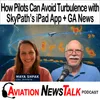
423 How Pilots Can Avoid Turbulence and Find Smoother Air with SkyPath
Max talks with Maya Shpak, CEO of SkyPath, about how pilots can avoid turbulence and find smoother air by combining crowdsourced observations, aircraft data, and machine-learning predictions. The idea for SkyPath came from an airline captain and check airman who encountered turbulence and realized that the iPad already carried in the cockpit contained accelerometers capable of measuring aircraft movement. Much like a traffic app gathers information from phones on the road, SkyPath could collect ride-quality observations from participating aircraft, send them to the cloud, and return an updated turbulence picture to other pilots. Maya says the system now receives data from about 40,000 users each day. An iPad observation is only one of five sources used by SkyPath. The system filters accelerometer readings, removes noise, and normalizes each report for aircraft type. That adjustment is important because light turbulence in a large business jet may feel moderate in a smaller general aviation airplane. When two pilots have iPads aboard the same aircraft, SkyPath can compare the two devices and identify a questionable reading. SkyPath also derives turbulence information from ADS-B vertical-rate data. Many aircraft provide both ADS-B reports and iPad observations, allowing the company to compare the two and refine its conversion algorithm. This expands coverage into areas where no participating iPad-equipped aircraft has recently passed. The platform also incorporates PIREPs and eddy dissipation rate, or EDR, reports. EDR is an aircraft-independent measure of atmospheric turbulence widely used in commercial aviation. SkyPath can convert its sensor information into EDR-compatible reports while using existing EDR data to supplement its own observations. The fifth source is SkyPath's predictive model. More than 200 meteorological parameters from NOAA and other government sources are fed into a machine-learning system trained with SkyPath's observational data. This produces estimated ride conditions where direct reports are limited. Maya says this is particularly useful to general aviation pilots flying below normal airline cruise altitudes, although the company generally sees better accuracy above about 5,000 feet. Pilots can use SkyPath before takeoff or during a flight. They may enter a call sign or flight number, paste a route from another electronic flight bag, or operate without a filed IFR flight plan. In its bearing mode, the app monitors an area approximately 100 miles ahead and 15 degrees to either side of the aircraft's direction of flight. It can run in the background and generate an alert about ten minutes before the airplane reaches significant turbulence. For larger operators, the same information can also be delivered through SkyPath's own flight-following tools or integrated EFB systems. Pilots can set the alert threshold, place the app in the background, and continue using their primary navigation display. Dispatchers may receive warnings when an aircraft is approaching rough air and then contact the crew through the operator's normal communications system. Maya says SkyPath was not yet integrated with ForeFlight at the time of the interview, although routes can be copied from ForeFlight into the app. The altitude slider helps pilots compare ride conditions above and below their planned or current altitude. This can support a decision to climb, descend, or choose a different cruising altitude before departure. SkyPath also displays validated smooth-air observations as white hexagons. Knowing where the air is smooth can be more actionable than simply seeing where rough air has been reported. The display uses familiar aviation colors to represent smooth, light, light-to-moderate, moderate, and occasional severe turbulence. Observed and predicted areas appear differently, allowing pilots to distinguish between actual aircraft encounters and conditions generated by the forecast model. Users can filter the display to
Podzilla Summary coming soon
Sign up to get notified when the full AI-powered summary is ready.
Free forever for up to 3 podcasts. No credit card required.
Listen to This Episode
More from Aviation News Talk – Pilot Stories, Safety Tips & General Aviation News
426 Gear-Up Landings & Gear Collapses: How to Prevent Them with Tom Turner + GA News

425 STEM Flights: How Volunteer Pilots Inspire Future Aviation Careers + GA News
424 The Savvy Flight Instructor: Greg Brown on CFI Jobs, Getting Hired, and Finding Students
422 N249CP King Air Crash: GPS Jamming, Dark Night, and a Fatal Visual Approach + GA News
Get summaries like this every morning.
Free AI-powered recaps of Aviation News Talk – Pilot Stories, Safety Tips & General Aviation News and your other favorite podcasts, delivered to your inbox.
Free forever for up to 3 podcasts. No credit card required.