Free Daily Podcast Summary
Autistic and ADHD Kids Parenting Strategies: Every Brain is Different: Daily Summaries Delivered
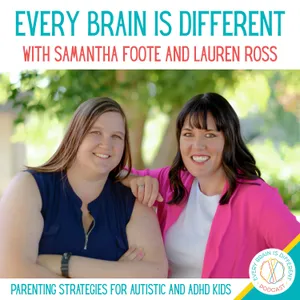
by Samantha Foote & Lauren Ross | Parenting Neurodiverse Kids
Welcome to Every Brain is Different, the podcast designed for parents raising kids with Autism, ADHD, and other neurodiverse conditions. Discover practical parenting strategies, expert insights, and real-life stories that highlight the strengths and challenges of neurodivergent individuals. Join us to connect with a supportive community of parents, gain tools to help your child thrive, and celebrate the unique ways every brain works. If you're looking for inspiration, effective parenting strategies, or simply a sense of connection, tune into Every Brain is Different and join a community that truly understands.Website: www.everybrainisdifferent.comInstagram: www.instagram.com/everybrainisdifferentTikTok: www.tiktok.com/everybrainsidifferentYouTube: www.youtube.com/@everybrainisdifferent
Latest Episodes
The most recent episodes — sign up to get AI-powered summaries of each one.
- 2 days ago34 min
Autism and ADHD Parenting: 5 Things People Judge That Actually Support Your Child
Connect with Samantha: https://everybrainisdifferent.com/Get the Ultimate Guide to Parenting Your Neurodivergent Child: https://everybrainisdifferent.com/ Samantha and Lauren discuss how parenting, especially with a neurodivergent kid, is often judged through a narrow definition of “good parenting." They share five practices that may look like bad parenting but aren’t: allowing a child to have a public meltdown while prioritizing safety and regulation over punishment (“regulate first, teach later”); not forcing children to give hugs, emphasizing bodily autonomy, consent, and respectful acknowledgment without physical touch; allowing screen time as a way to decompress and self-regulate in overwhelming environments; letting kids eat the same foods or wear the same clothes when it supports regulation and participation; and adjusting expectations based on a child’s changing capacity. They also offer ways to respond to judgment, including setting boundaries, not over-explaining, and confidently doing what works for the family. 00:00 Thanksgiving Catch Up01:52 Why Parenting Gets Judged03:23 Public Meltdowns Aren't Failure08:16 No Forced Hugs16:48 Screens For Regulation20:52 Same Foods Same Clothes27:20 Adjusting Expectations30:01 Handling Parenting Critics34:56 Thanksgiving Send-Off  Connect with Samantha Foote!Website: https://everybrainisdifferent.com/Instagram: https://www.instagram.com/everybrainisdifferentYouTube: https://www.youtube.com/@everybrainisdifferent
- 1 weeks ago27 min
Co-Regulating When You’re Tapped Out: Practical Strategies for Overwhelmed Parents
Connect with Samantha: https://everybrainisdifferent.com/Download the Ultimate Guide to Parenting Your Neurodivergent Child: https://everybrainisdifferent.com/ Samantha and Lauren discuss how parents can co-regulate with children during frequent meltdowns when the parent is overstimulated, exhausted, and “tapped out,” emphasizing that co-regulation doesn’t require perfect calm and that parents need support too.They encourage naming emotions aloud so children can pair emotional empathy with cognitive understanding. Practical strategies include recognizing dysregulation signs using a green/yellow/red framework, taking regulation breaks, lowering demands during meltdowns, choosing battles, repairing with apologies, and creating a backup plan with support people, a hand-off phrase, and a solo “regulation kit,” including low-demand options like an iPad when needed. 00:00 Welcome and Topic01:10 When Parents Are Tapped02:06 Co-Meltdown Release03:34 Reflective Questions05:16 What Co-Regulation Is06:18 Research and Burnout10:16 Find Your Support11:45 Strategy One Limits14:41 Yellow Red Zones17:43 Strategy Two Lower Demands20:30 Public Judgment Story23:53 Strategy Three Backup Plan25:43 Regulation Kit Solo27:39 Wrap Up and Resources  Connect with Samantha Foote!Website: https://everybrainisdifferent.com/Instagram: https://www.instagram.com/everybrainisdifferentYouTube: https://www.youtube.com/@everybrainisdifferent
- 2 weeks ago32 min
What to do When Your Child's Sensory Needs Are Opposite of Yours
Connect with Samantha: https://everybrainisdifferent.com/Download the Ultimate Guide to Parenting Your Neurodivergent Child: https://everybrainisdifferent.com/Join the Neurodivergent Parenting Community: https://everybrainisdifferent.com/membership Samantha and Lauren discuss parenting when a parent’s sensory profile conflicts with a child’s, emphasizing that both nervous systems matter and that chronic parental overstimulation makes support harder.They review sensory systems (auditory, visual, tactile, olfactory, gustatory, vestibular, proprioception, interoception) and patterns from Winnie Dunn’s framework (seeking, avoiding, sensitivity, low registration), noting people can differ across domains and change with stress or fatigue.They describe how children’s regulating behaviors (noise-making, constant touch, crashing) can dysregulate parents and create escalation cycles, plus signs of reaching sensory limits (snapping, tension, reduced tolerance, anger). Strategies include meeting both needs with accommodations (headphones, movement zones, timers for touch/noise), changing environments rather than the child (sensory spaces, soft furnishings, scent control), using shame-free boundaries, planning sensory breaks, and teaching kids about differing needs.Samantha and Lauren advise using supports during meltdowns, considering occupational therapy or counseling, avoiding guilt, apologizing responsibly, and trying a weekly challenge to identify triggers and make one change for each person. 00:00 Welcome and Topic00:27 Opposite Sensory Needs02:40 Sensory Systems 10107:17 Conflict Cycle Explained09:35 Signs of Overload12:46 Strategy One Compromise16:34 Strategy Two Environment19:07 Strategy Three Boundaries21:27 Strategy Four Sensory Breaks25:35 Strategy Five Teach Kids26:39 When Needs Clash29:29 Guilt and Self Advocacy31:44 Weekly Challenge and Wrap Connect with Samantha Foote!Website: https://everybrainisdifferent.com/Instagram: https://www.instagram.com/everybrainisdifferentYouTube: https://www.youtube.com/@everybrainisdifferent
- 3 weeks ago27 min
The Power of Apologizing to Your Neurodivergent Child
Connect with Samantha: https://everybrainisdifferent.com/Get the Ultimate Guide to Raising Your Neurodivergent Child: https://everybrainisdifferent.com/Join the Neurodivergent Parenting Community: https://everybrainisdifferent.com/membership Samantha and Lauren discuss what to do when you mess up as a parent, emphasizing that apologizing is not weakness but modeling accountability, empathy, and healthy relationships.They address parental guilt, especially after a child’s neurodivergence diagnosis, noting “you didn’t know what you didn’t know,” and encourage apologizing without staying stuck in shame.They outline steps to repair: acknowledge what happened without excuses or blaming the child, regulate before reconnecting, apologize without conditions or pressure for forgiveness, and tailor apologies to a child’s communication needs.They stress that apologies must be followed by behavior change through identifying triggers, building and practicing a regulation plan, and involving the child in problem-solving when appropriate. Examples include morning routine yelling, responding during meltdowns, and shifting from punishment to accommodations. 00:00 Apologize or Not00:26 Why Parents Avoid Apologies04:13 Guilt After Diagnosis05:53 Perfection Isn’t Required08:33 Step 1 Acknowledge12:43 Step 2 No Conditions17:22 Step 3 Change Behavior21:29 Real Life Scenarios24:18 Grace Growth and Wrap Up Connect with Samantha Foote!Website: https://everybrainisdifferent.com/Instagram: https://www.instagram.com/everybrainisdifferentYouTube: https://www.youtube.com/@everybrainisdifferent
- Oct 26, 202625 min
Why Can My Kid Do It One Day and Not the Next? (Part 2)
Connect with Samantha: https://everybrainisdifferent.com/Get the Ultimate Guide to Parenting Your Neurodivergent Child: https://everybrainisdifferent.com/Babble with Brooke: https://www.babblewithbrooke.com/ Samantha and Lauren share strategies for when a child can complete tasks one day but struggles the next. They encourage parents to track patterns (sleep, routine changes, sensory environment, prior demands) rather than judge isolated moments, reduce the size of the first step to support task initiation, and “externalize” executive function with tools like visual schedules, checklists, timers, first-then boards, labeled bins, consistent landing spots, body doubling, and offering two acceptable choices.Samantha and Lauren emphasize regulation before compliance through nervous system support and co-regulation, and recommend flexible supports that can vary day to day without implying regression.They also discuss planning for predictable low-capacity times, when to seek professional help for sudden or intense changes, and classroom supports.Babble is a free weekly newsletter created for women in the thick of real life. Every week, we sort through the noise and deliver the recommendations, discoveries, tips, and fun finds worth your time. 00:00 Why Kids Seem Inconsistent00:37 Track Patterns Like a Detective02:42 Shrink the First Step04:42 Externalize Executive Function08:43 Regulation Before Compliance11:09 Flexible Support Not Regression16:11 Plan for Low Capacity Times18:54 When to Seek Extra Help22:08 Key Takeaway and Weekly Challenge24:10 Babble Newsletter and Wrap Up Connect with Samantha Foote!Website: https://everybrainisdifferent.com/Instagram: https://www.instagram.com/everybrainisdifferentYouTube: https://www.youtube.com/@everybrainisdifferent
- Oct 19, 202625 min
Why Can My Kid Do It One Day and Not the Next? (Part 1)
Connect with Samantha: https://everybrainisdifferent.com/Download the Ultimate Guide to Raising Your Neurodivergent Child: https://everybrainisdifferent.com/Samantha and Lauren discuss why children may struggle with tasks they seemed able to do the day before (like getting dressed, brushing teeth, or doing homework) and how parents can respond without assuming laziness or defiance.They emphasize a mindset shift: yesterday’s success doesn’t guarantee today’s ability, and parents should get “curious, not furious” by looking for what helped previously and what’s harder now.The episode explains executive functioning and how multi-step tasks involve transitions, planning, organization, impulse control, memory, and sensory tolerance, which can be affected by ADHD, autism, stress, sleep, sensory processing, and environmental factors like rushing or noise.00:00 Why Kids Seem Inconsistent02:40 Curious Not Furious04:03 Executive Function Basics04:54 Getting Dressed Breakdown08:37 Hidden Support You Give11:41 ADHD Inconsistency Research13:12 Video Games Versus Homework18:04 Sleep Stress Sensory Environment22:52 Cant Versus Wont23:49 Practical Support Ideas24:42 Part Two And Wrap Up Connect with Samantha Foote!Website: https://everybrainisdifferent.com/Instagram: https://www.instagram.com/everybrainisdifferentYouTube: https://www.youtube.com/@everybrainisdifferent
- Oct 12, 202623 min
What is Interoception and How Does it Affect Autism?
Connect with Samantha: https://everybrainisdifferent.com/Get the Ultimate Guide to Raising Your Neurodivergent Child: https://everybrainisdifferent.com/Samantha and Lauren discuss Samantha’s son’s years-long struggle with chronic, debilitating pain (legs, back, migraines) and how a pain clinic evaluation led to a new explanation: sensory processing disorder with heightened interoception. After extensive normal test results, a multidisciplinary team suggested his internal body-signal sense may be “turned up,” intensifying pain perception.Samantha and Lauren define interoception (internal sensations like hunger, bathroom needs, heart rate, temperature, pain, and emotions) using occupational therapist Kelly Mahler’s framework and note that interoception differences can be muted, intense, or distorted, affecting interpretation of sensations and emotions.The episode emphasizes validation, shifting from “why does he hurt?” to “what support does his nervous system need?”, and introduces Mahler’s “body, emotion, action” approach, encouraging parents to become “body detectives” with neutral body check-ins and curiosity rather than telling kids to “calm down.”00:00 Welcome and Topic Setup00:15 Years of Chronic Pain Search00:46 Pain Clinic Evaluation02:27 Unexpected Diagnosis Insight04:32 Interoception Explained06:24 When Signals Feel Too Loud09:23 Muted vs Intense Awareness11:56 Validation and Support Mindset15:32 Body Emotion Action Framework20:38 Becoming Body Detectives22:06 Key Takeaways and Next Steps23:44 Resources and Closing Connect with Samantha Foote!Website: https://everybrainisdifferent.com/Instagram: https://www.instagram.com/everybrainisdifferentYouTube: https://www.youtube.com/@everybrainisdifferent
- Oct 5, 202629 min
Raising Neurodivergent Kids Without Losing Your Marriage with Susan Minor
Connect with Samantha: https://everybrainisdifferent.com/Get the Free Ultimate Guide to Parenting Your Neurodivergent Child: https://everybrainisdifferent.com/Join the Neurodivergent Parenting Community: https://everybrainisdifferent.com/membershipConnect with Susan: https://www.LoveBridgecoaching.com Samantha and Lauren interview Susan Minor, a certified relationship coach trained in the Laura Doyle method, about rebuilding connection in marriage, especially for parents under the stress of raising neurodivergent children.Susan shares how, after nearly 30 years of feeling isolated and disconnected, she used the Laura Doyle skills privately and saw her relationship transform within months, later deepening the work with coaching.She addresses common misunderstandings of The Empowered Wife, emphasizing it is not about shrinking or doing more, but about being heard and creating space for a partner to step up. The discussion covers “triage” after diagnosis, resentment, disengagement, “tools not rules,” gratitude and receiving, self-care, choosing connection over perfect logistics, and using conversation prompts to move beyond schedule-only talk. 00:00 Welcome and Guest Intro01:28 Susan Marriage Turning Point04:03 Empowered Wife Misconceptions06:08 Neurodivergent Parenting Strain11:16 Six Tools for Connection14:28 Gratitude and Receiving18:02 Beyond Logistics Talk24:31 Conversation Starters Ideas26:21 Where to Find Susan28:10 Fun and Final Takeaways28:54 Host Highlights and Wrap Up Connect with Samantha Foote!Website: https://everybrainisdifferent.com/Instagram: https://www.instagram.com/everybrainisdifferentYouTube: https://www.youtube.com/@everybrainisdifferent
Get Autistic and ADHD Kids Parenting Strategies: Every Brain is Different summaries in your inbox
Free AI-powered daily recaps. Key takeaways, quotes, and mentions — in a 5-minute read.
Get Free Summaries →Free forever for up to 3 podcasts. No credit card required.
You Might Also Like
Listeners also like.

Dysregulated Kids: Science-Backed Parenting Help for Behavior, Anxiety, ADHD and More
A therapist explains the brain science behind children's behavioral and emotional challenges and offers research-based parenting strategies.

The ADHD Parenting Podcast
Practical strategies for parents to support children with ADHD in managing behavior, emotions, school, and daily routines.

ResponseABLE Parenting
A podcast helping parents understand their reactions and develop mindful, effective strategies for raising strong-willed children.

ADHD for Smart Ass Women with Tracy Otsuka
A podcast exploring the strengths and brilliance of women with ADHD, helping them embrace their unique brains and thrive.

Uniquely Human: The Podcast
Amplifies autistic and neurodivergent voices to explore the neurodivergent experience with insight and practical understanding.

After Bedtime with Big Little Feelings
Honest conversations about modern parenting challenges with practical advice and emotional support from experienced guides.

Tony Mantor: Why Not Me ?
Explores autism, mental health, and human stories to promote understanding, challenge stigma, and support neurodiversity.

Parenting With Psychology
A clinical psychologist offers practical parenting advice based on psychological research to help families manage challenges and strengthen relationships.

Raising Good Humans
A developmental psychologist discusses evidence-based parenting approaches with experts and parents to support raising resilient, empathetic children.

Ask Lisa: Untangling Family Life
Psychologist Lisa Damour answers parents' questions about raising tweens and teens with evidence-based advice on mental health, behavior, and family dynamics.

You Only Know What You Know
Compass Health Center

Calm Parenting Podcast
Practical strategies for managing strong-willed children and ending family power struggles without yelling or punishment.
About Autistic and ADHD Kids Parenting Strategies: Every Brain is Different
Welcome to Every Brain is Different, the podcast designed for parents raising kids with Autism, ADHD, and other neurodiverse conditions. Discover practical parenting strategies, expert insights, and real-life stories that highlight the strengths and challenges of neurodivergent individuals. Join us to connect with a supportive community of parents, gain tools to help your child thrive, and celebrate the unique ways every brain works. If you're looking for inspiration, effective parenting strategies, or simply a sense of connection, tune into Every Brain is Different and join a community that truly understands.Website: www.everybrainisdifferent.comInstagram: www.instagram.com/everybrainisdifferentTikTok: www.tiktok.com/everybrainsidifferentYouTube: www.youtube.com/@everybrainisdifferent
Customized Recaps
AI-powered recaps with compact key takeaways, quotes, and insights.
Straight to Your Inbox
Get key takeaways from Autistic and ADHD Kids Parenting Strategies: Every Brain is Different in a 5-minute read.
Save Hours Every Week
Stay current on your favorite podcasts without falling behind.
Frequently Asked Questions
What is Podzilla's Autistic and ADHD Kids Parenting Strategies: Every Brain is Different daily summary?
It's a free AI-powered email that summarizes new episodes of Autistic and ADHD Kids Parenting Strategies: Every Brain is Different as soon as they're published. You get the key takeaways, notable quotes, and links & mentions — all in a quick read.
How does the Autistic and ADHD Kids Parenting Strategies: Every Brain is Different podcast summary work?
When a new episode drops, our AI transcribes and analyzes it, then generates a personalized summary tailored to your interests and profession. It's delivered to your inbox every morning.
Is this an official Autistic and ADHD Kids Parenting Strategies: Every Brain is Different product?
No. Podzilla is an independent service that summarizes publicly available podcast content. We're not affiliated with or endorsed by Samantha Foote & Lauren Ross | Parenting Neurodiverse Kids.
Can I get summaries of other podcasts too?
Absolutely! The free plan covers up to 3 podcasts, any in the catalog. Basic raises that to 15, Pro to 40 and Max to 100. Browse our full catalog at /podcasts.
How often does Autistic and ADHD Kids Parenting Strategies: Every Brain is Different release new episodes?
Autistic and ADHD Kids Parenting Strategies: Every Brain is Different publishes weekly. Our AI generates a summary within hours of each new episode.
What topics does Autistic and ADHD Kids Parenting Strategies: Every Brain is Different cover?
Autistic and ADHD Kids Parenting Strategies: Every Brain is Different covers topics including Fitness, Parenting, Health & Fitness, Kids & Family, Society & Culture, Family, Mental Health. Our AI identifies the specific themes in each episode and highlights what matters most to you.
Start getting Autistic and ADHD Kids Parenting Strategies: Every Brain is Different summaries tomorrow morning.
Free forever for up to 3 podcasts. No credit card required.
Free forever for up to 3 podcasts. No credit card required.