Free Daily Podcast Summary
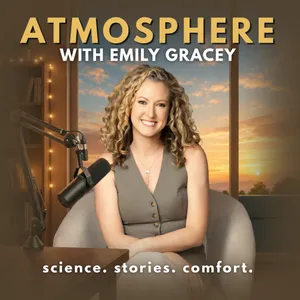
Atmosphere with Emily Gracey: Daily Summaries Delivered
by Emily Gracey
Meteorologist Emily Gracey sits down each week with leading scientists, researchers, and experts in weather, climate, earth science, and beyond. Every episode goes deeper than the science itself, uncovering the human stories behind the work and making complex ideas feel relevant, relatable, and real. From hurricanes and severe storms to earthquakes and emerging research, Atmosphere turns complicated ideas into conversations everyone can connect with.
Latest Episodes
The most recent episodes — sign up to get AI-powered summaries of each one.
- Yesterday7 min
BONUS: The History of Daylight Saving Time in America
Who decided we should change our clocks twice a year? And why are we still doing it?From the days when every town kept its own time to America's failed experiment with permanent daylight saving time in 1974, meteorologist Emily Gracey takes a quick trip through the surprisingly messy history of timekeeping.Plus, why Arizona refuses to play along, how China manages with just one time zone, and what all of this has to do with saving energy.For more on the science of daylight saving time and how it affects our sleep and health, listen to the full Atmosphere episode featuring Stanford sleep researcher Dr. Jamie Zeitzer.Sources & Further ReadingCongressional Research Service — Daylight Saving Time: https://www.everycrsreport.com/reports/RS22284.htmlU.S. Department of Transportation — The Daylight Saving Time Study: A Report to Congress (1975): https://rosap.ntl.bts.gov/view/dot/92250Smithsonian National Museum of American History — On Time: Synchronizing Time: https://americanhistory.si.edu/ontime/synchronizing/zones.htmlArizona State University — Why Arizona Has Opted Out of Daylight Saving Time: https://news.asu.edu/20180305-discoveries-why-arizona-has-opted-out-daylight-saving-time?page=3Timeanddate — Daylight Saving Time in Arizona: https://www.timeanddate.com/time/us/arizona-no-dst.htmlTimeanddate — China Only Has One Time Zone: https://www.timeanddate.com/time/china/one-time-zone.html
- 4 days ago34 min
Daylight Saving Time: The Great Debate
Twice a year, Americans change their clocks. Twice a year, we argue about whether we should stop. But what does the science actually say?Stanford sleep researcher Dr. Jamie Zeitzer joins Atmosphere to unpack the surprisingly complicated science behind daylight saving time. Is permanent standard time really healthier? And are we overlooking a much bigger problem while arguing about the clocks?From the Sunshine Protection Act to our alarming lack of natural daylight, Jamie explores how sunlight affects our circadian rhythms, sleep, and overall health. He also shares surprisingly simple ways to get a better night's sleep, explains why some of us are night owls while others are early birds, and challenges some conventional thinking about changing the clocks.Maybe the problem isn't what time we're setting our clocks. It's what we're doing with the daylight we've got.Atmosphere is supported by founding sponsor Weather100.Learn more at https://weather100.com/ and use code EMILY20 for 20% off your purchase.
- 1 weeks ago37 min
Clouds! The Science, the Wonder & Why NASA Needs You.
What if simply looking up at the clouds could help NASA?Satellites can observe Earth in extraordinary detail, but there's something they can't do: stand on the ground and look up with the human eye. And that human perspective turns out to be incredibly valuable to scientists.In this episode of Atmosphere, meteorologist Emily Gracey talks with Dr. Andy Sayer, an atmospheric scientist working with NASA's PACE satellite, and Jessica Taylor from NASA's GLOBE Clouds program about the surprising limitations of satellite technology and how everyday people can help fill in the gaps.Through NASA's free GLOBE Observer app, anyone with a smartphone can collect cloud observations that contribute to real scientific research. No scientific background required!But there's another benefit to all this cloud watching. Taking a few minutes to look up can reconnect us with nature, help us appreciate the world around us, and maybe even bring a little peace to our busy lives.Become a cloud observer:NASA GLOBE Observer app: https://observer.globe.gov/about/get-the-appPACE Clouds Challenge: https://www.globe.gov/do-globe/measurement-campaigns/field-measurement-campaigns/pace-clouds-challengeAtmosphere is supported by founding sponsor Weather100. Learn more at https://weather100.com and use code EMILY20 for 20% off your purchase.
- 2 weeks ago3 min
BONUS: Kelvin Wave - the '80s Power Ballad
What happens when ocean science meets an '80s power ballad?Oceanographer and coastal scientist Dr. Greg Dusek created Kelvin Wave, an AI-generated song and music video that tells the story of Kelvin waves, El Niño, coastal flooding, and rising seas.The project was created by Dr. Dusek using Claude.ai for the lyrics and visuals, Suno for the music, and real NOAA water level data to help tell the scientific story.It's catchy, dramatic, and packed with real science.We're sharing the complete song as a special bonus episode of Atmosphere.Want to understand the science behind the lyrics? Listen to this week's full episode, "Ocean Science Gets an '80s Power Ballad," where meteorologist Emily Gracey talks with Dr. Dusek about how he made the video, what Kelvin waves actually are, and why they matter for coastal flooding and sea level rise.Created by: Dr. Greg DusekAI tools: Claude.ai and SunoScientific data: NOAA Atmosphere is hosted and produced by meteorologist Emily Gracey.
- 2 weeks ago25 min
Ocean Science Gets an '80s Power Ballad
What happens when an oceanographer uses artificial intelligence to turn a complicated scientific phenomenon into an '80s power ballad? You get soaring vocals, dramatic lyrics, a saxophone solo... and some surprisingly serious science.In this episode of Atmosphere, meteorologist Emily Gracey sits down with Dr. Greg Dusek, a coastal scientist and former NOAA oceanographer, to talk about his AI-generated music video, Kelvin Wave. Created in just half a day, the song tells the story of an ocean phenomenon that plays an important role in El Niño and can have major consequences for coastal communities.Greg breaks down the science behind the lyrics, explaining how Kelvin waves travel across the Pacific, why they matter for sea levels and winter storms, and what they could mean for coastal flooding along the West Coast in the months ahead.We also explore the creative possibilities of AI in science communication, and how something as unexpected as a power ballad might help people understand the changing world around them.It's a little rock and roll, a little ocean physics, and a reminder that science doesn't always have to be serious to tell an important story.Thanks to our founding sponsor, Weather100, for supporting independent science storytelling. Learn more at Weather100 and use code EMILY20 for 20% off.Watch Greg's full Kelvin Wave music video: https://youtu.be/qAYF63a67MI?si=fBkUUiiYwNHD6_osLyrics and video are by ClaudeMusic by SunoGenerated by Greg Dusek, with data provided by NOAASubscribe to Atmosphere on YouTube, Spotify, or Apple Podcasts, and find more science stories at Atmosphere on Substack.
- 3 weeks ago50 min
AI & Weather: Where Do We Draw the Line?
Artificial intelligence is already changing the way meteorologists forecast and communicate the weather. But how much of the job should we actually hand over?Meteorologist and weather communications coach Tim Heller joins Atmosphere to talk about the AI weather tools he’s building, how meteorologists are using AI to analyze data and create content, and why simply avoiding the technology isn’t the answer.We also get into AI-generated weather graphics and avatars, whether these tools could eventually be used to replace meteorologists, the environmental cost of AI, and what consumers should know when scrolling through weather information online.For Tim, the question isn't whether we use AI. It's where we draw the line and why context, community, empathy and a "human in the loop" may become even more important as the technology gets better.Tim's Website: https://hellerweather.com/This episode is sponsored by Weather100Weather100 puts today’s weather into historical context, showing you how your local temperature, rainfall, wind and more compare with the last 100 years.Atmosphere listeners can save 20% on any Weather100 device with code EMILY20 at checkout.Learn more at Weather100.com
- Sep 29, 202642 min
Inside the World of Forensic Meteorology
What happens when weather becomes evidence?Forensic meteorologist Rob Perillo has spent decades reconstructing the atmosphere to help answer that question. Using radar, satellite imagery, weather observations and even a little geometry, he pieces together what happened at a specific place and time—and sometimes takes those findings into a courtroom.In this episode of Atmosphere, Rob shares some of his most fascinating cases, from hurricane-damaged ships and deadly lightning strikes to extreme heat, icy parking lots and investigations where a few degrees or a single weather observation can change the story.He also takes us back to the morning the Space Shuttle Columbia broke apart over Texas and Louisiana, when he went from watching the shuttle from his backyard to helping national news networks track its debris on Doppler radar.It's part meteorology, part detective work and, as Rob calls it, “CSI meteorology.”Sources Rob uses in his forensic work:Archived Radar and SatelliteNWS/SPC Text Forecasts and Severe Weather GraphicsWeather Prediction Center ArchivesStorm Prediction Center ArchivesNational Hurricane Center Archives
- Sep 22, 202640 min
Hip Hop Science: Curiosity, Culture & Creativity
What if science didn't have to feel like science class?Maynard Okereke — better known as Hip Hop Science — has built an audience of more than 100,000 followers by blending science with entertainment, pop culture and curiosity.But before Hip Hop Science, Maynard was a civil engineer who also happened to be a hip-hop artist and performer — two sides of himself he once felt he had to keep separate. Eventually, he stopped trying to fit into one box and built a career that brought them together.In this episode of Atmosphere, Maynard talks with meteorologist Emily Gracey about making the leap from engineering to entertainment, how Hip Hop Science grew from a sketch comedy idea into a platform for science communication, and the work that goes into making complicated science accurate, accessible and fun.They also dig into a bigger question: kids are naturally curious about science, so why does that curiosity so often fade as they get older? Maynard shares why representation and confidence matter, why science and creativity aren't opposites, and why we might want to stop asking kids what they want to be when they grow up — and start asking what problems they want to solve.Plus, wildlife, quantum computing, the Amazon rainforest, wrestling, Shark Tank — and how to turn doom scrolling into learn scrolling.Links:HipHopScienceShow.comHip Hop Science on InstagramDr. Dakotah TylerJustin Shaifer aka Mr. Fascinate Dr. Alex Dainis
Get Atmosphere with Emily Gracey summaries in your inbox
Free AI-powered daily recaps. Key takeaways, quotes, and mentions — in a 5-minute read.
Get Free Summaries →Free forever for up to 3 podcasts. No credit card required.
You Might Also Like
Listeners also like.
A Matter of Degrees
Two climate experts explore the systems driving climate change and spotlight solutions through stories of leadership and activism.
ScienceSphere
A weekly exploration of scientific discoveries across physics, biology, astronomy, and technology, explained clearly for all listeners.
The EF-Show
AJ Raber Meteorology
For What It’s Earth
Emma Brisdion & Sophie Pavelle
The Nature Of with Willow Defebaugh
Explores lessons from nature through conversations with artists, scientists, and thinkers about creativity, connection, and transformation.

Inquiring Minds
Explores the intersection of science and society through critical thinking and in-depth analysis.
Short Wave
A daily science podcast exploring discoveries, everyday mysteries, and the stories behind scientific headlines.
Weather with Cliff Mass
A weekly weather forecast and analysis of current and future weather patterns in the Pacific Northwest by atmospheric scientist Cliff Mass.

AccuWeather Daily
AccuWeather Daily covers the top trending weather story each day.
BBC Inside Science
Explores the latest scientific discoveries and debates shaping our understanding of the world.

The Rest Is Science
Hannah Fry and Michael Stevens explore the strange and overlooked questions at the boundary of scientific understanding.
Seeking A Scientist
A chemist hosts conversations with scientists to explore futuristic scientific possibilities and their real-world implications.
About Atmosphere with Emily Gracey
Meteorologist Emily Gracey sits down each week with leading scientists, researchers, and experts in weather, climate, earth science, and beyond. Every episode goes deeper than the science itself, uncovering the human stories behind the work and making complex ideas feel relevant, relatable, and real. From hurricanes and severe storms to earthquakes and emerging research, Atmosphere turns complicated ideas into conversations everyone can connect with.
Customized Recaps
AI-powered recaps with compact key takeaways, quotes, and insights.
Straight to Your Inbox
Get key takeaways from Atmosphere with Emily Gracey in a 5-minute read.
Save Hours Every Week
Stay current on your favorite podcasts without falling behind.
Frequently Asked Questions
What is Podzilla's Atmosphere with Emily Gracey daily summary?
It's a free AI-powered email that summarizes new episodes of Atmosphere with Emily Gracey as soon as they're published. You get the key takeaways, notable quotes, and links & mentions — all in a quick read.
How does the Atmosphere with Emily Gracey podcast summary work?
When a new episode drops, our AI transcribes and analyzes it, then generates a personalized summary tailored to your interests and profession. It's delivered to your inbox every morning.
Is this an official Atmosphere with Emily Gracey product?
No. Podzilla is an independent service that summarizes publicly available podcast content. We're not affiliated with or endorsed by Emily Gracey.
Can I get summaries of other podcasts too?
Absolutely! The free plan covers up to 3 podcasts. Upgrade to Pro for 15, or Premium for 50. Browse our full catalog at /podcasts.
How often does Atmosphere with Emily Gracey release new episodes?
Atmosphere with Emily Gracey publishes weekly. Our AI generates a summary within hours of each new episode.
What topics does Atmosphere with Emily Gracey cover?
Atmosphere with Emily Gracey covers topics including Science, Earth Sciences. Our AI identifies the specific themes in each episode and highlights what matters most to you.
Start getting Atmosphere with Emily Gracey summaries tomorrow morning.
Free forever for up to 3 podcasts. No credit card required.
Free forever for up to 3 podcasts. No credit card required.