Free Daily Podcast Summary
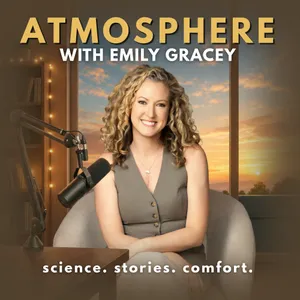
Atmosphere with Emily Gracey: Daily Summaries Delivered
by Emily Gracey
Meteorologist Emily Gracey sits down each week with leading scientists, researchers, and experts in weather, climate, earth science, and beyond. Every episode goes deeper than the science itself, uncovering the human stories behind the work and making complex ideas feel relevant, relatable, and real. From hurricanes and severe storms to earthquakes and emerging research, Atmosphere turns complicated ideas into conversations everyone can connect with.
Latest Episodes
The most recent episodes — sign up to get AI-powered summaries of each one.
- 6 days ago51 min
Climate Change: We Have the Solutions. So What's Stopping Us?
What if the biggest obstacle to tackling climate change isn’t finding the solutions... but actually using them?Dr. Jonathan Foley, climate scientist and Executive Director of Project Drawdown, joins Atmosphere for a candid conversation about where we really stand on climate change, the solutions already within reach, and why he has little patience for the idea that our individual actions don’t matter.We talk about the growing pull of climate doomerism, why Foley believes both despair and blind optimism can get in the way of progress, and what it means to choose action when there’s no guarantee of success.Jonathan also shares his own path from atmospheric science to becoming one of the world’s most highly cited environmental scientists and an award-winning science communicator, plus what Project Drawdown is doing to make climate science and solutions easier for all of us to understand.This isn’t a conversation about pretending everything is going to be okay. It’s about recognizing what we already know, what we can already do, and deciding what comes next.Links Mentioned in this Episode:Project DrawdownJoin the ShiftHope in the Dark, Rebecca SolnitFork Ranger on InstagramThe Garbage Queen on InstagramSimon Clark on YouTube
- 1 weeks ago47 min
Where Are All the Hurricanes? A Mid-Season Check-in with Michael Lowry
Halfway through the 2026 Atlantic hurricane season, the biggest story may be what hasn’t happened. The Atlantic has been exceptionally quiet — but does that mean we can relax?Hurricane expert Michael Lowry joins Atmosphere to explain what’s behind the unusual season, what he’s watching as we head into the fall, and why the Gulf could still play an important role.Michael also shares the fascinating path that has taken him from the National Hurricane Center and FEMA to The Weather Channel and South Florida television. We talk about how hurricane forecasting and communication have changed, the growing role of AI, and why he believes authenticity still matters in a world of algorithms and clickbait.And Michael opens up about the very personal reason he draws a firm line between hurricane season and family life — and why stepping away from the weather is essential to doing his job well.Links:Michael's SubstackAtmosphere Substack
- 2 weeks ago57 min
Sunsets: The Science Behind the Magic
Why do sunsets move us so much?In this episode of Atmosphere, we're exploring the science, stories and emotions behind one of nature's most beautiful daily spectacles.Cameron Hewitt, director of content at Rick Steves Europe, has traveled the world chasing and photographing sunsets. He'll share what makes a truly spectacular sunset, where he's found the most memorable ones, and why a sunset can mean something completely different depending on where you are — and what is happening in your life.Then certified consulting meteorologist and green flash photographer Jan Null takes us into the atmosphere to explain what's really happening as the sun drops toward the horizon. Why do sunsets turn red and orange? How do clouds and atmospheric particles shape the colors? And what creates that fleeting, elusive green flash?It's a conversation about travel, memory, physics, perspective and the simple act of stopping to look up.Links from the Show:Jan Null's Green Flash PhotographyCameron Hewitt's WebsiteCameron on InstagramCameron on FacebookSubscribe to Atmosphere on SubstackAtmosphere on Instagram
- 3 weeks ago38 min
Flying into Tornadoes with The OTUS Project
The OTUS Project is a family-run team flying custom-built drones directly into tornadoes — including the first-ever drone flight inside a tornado's eye, captured in May 2024. Co-founder Louis Tucker joins us to talk about how he and his brother Nelson build drones tough enough to survive tornado wind speeds, how they forecast and chase storms in real time, and the near-surface wind data they're collecting for organizations like NIST — data that could directly shape future building codes. We also cover the near-misses, including a tornado that crossed their exact location two minutes after they left, and what it's actually like to pilot a drone into a tornado while your team protects you from the very phenomenon you are documenting.
- Aug 4, 20263 min
Science, Stories & Comfort: A Summer Poem
While Emily takes a short break to travel with her family, Atmosphere takes a different form. In this special mini-episode, a rhyming journey through the summer’s biggest weather and natural disaster stories leads us from science, to stories, to comfort, and back again. The poem was written with the help of AI, guided and shaped by Emily. Now is the time to catch up on Atmosphere - new episodes will return later this month!
- Jul 28, 20261h 1m
What Scientists Wish They Knew
We like to think of scientists as people who have the answers. But what about the questions they still can’t answer?In this episode of Atmosphere, meteorologist Emily Gracey sits down with marine scientist, author, and science communicator Dr. Ellen Prager to explore some of the biggest mysteries in science and the natural world. What happens beneath a volcano before it erupts? Can we ever truly predict a tsunami, rogue wave, or rapidly intensifying hurricane? What is happening in the deepest parts of the ocean—and why have we explored so little of it? And how quickly will climate change reshape the planet?From Mount St. Helens and the 2004 Indian Ocean tsunami to rogue waves, rip currents, sharks, hurricanes, deep-ocean exploration, and a changing climate, this conversation explores what scientists know, what they still don't know, and why those unknowns matter.But perhaps the biggest lesson is that the most important thing keeping scientists up at night isn't always what we don't know. It's what we do know—and whether we're paying attention, preparing, and taking action.Because science doesn't begin with what we know. It begins with what we don't know.
- Jul 21, 202645 min
Dr. Marshall Shepherd: from Science Fair to Science Leader
Dr. Marshall Shepherd didn't plan to become a meteorologist. A life-threatening honeybee allergy forced him to abandon his childhood dream of becoming an entomologist, leading to a sixth-grade science project that changed the course of his life, and eventually the field of atmospheric science.In this episode of Atmosphere, Emily Gracey sits down with Dr. Marshall Shepherd, former president of the American Meteorological Society, former NASA scientist, associate dean and director of the Atmospheric Sciences Program at the University of Georgia, Forbes contributor, and host of Weather Geeks.Together they explore Dr. Shepherd's concept of the "end-to-end scientist" - the idea that great research isn't enough if scientists can't effectively communicate it to the public. They discuss why science communication matters more than ever, how weather forecasts can save lives only if people understand and trust them, and why scientists must engage beyond academic journals.The conversation also tackles some of today's biggest issues in meteorology, including weather equity, disaster vulnerability, language barriers in severe weather warnings, the future of artificial intelligence in weather forecasting, growing tornado risks in the Southeast, and the ongoing debate over public versus private weather data. Dr. Shepherd also shares his thoughts on mentorship, increasing diversity in atmospheric science, and how the next generation of meteorologists can better serve their communities.Whether you're fascinated by weather, climate, science communication, or the future of forecasting, this wide-ranging conversation offers an inside look at the people and ideas shaping modern meteorology.Topics covered:Dr. Marshall Shepherd's journey from sixth-grade science fair to NASAScience communication and the "end-to-end scientist"Weather forecasting, AI, and the future of meteorologyWeather equity and protecting vulnerable communitiesPublic vs. private weather forecastingBuilding trust in science and improving public understandingLinks:Marshall's Forbes ArticlesWeather Geeks PodcastWeekly Weather Brief Podcast
- Jul 14, 202645 min
Weather Myths: What's Fact, What's Fiction?
We've all heard them.Rubber tires protect you from lightning. Heat lightning is a different kind of lightning. A hundred-year flood only happens once every hundred years. If the weather changes, a big earthquake must be coming.But how many of these weather myths are actually true?In this episode of Atmosphere, meteorologist Emily Gracey is joined by fellow meteorologist Anthony Yanez for a fun, fast-paced conversation separating weather fact from fiction. Drawing on decades of forecasting, television, school visits, and viewer questions, they unpack the myths they've heard countless times, and explain why so many of them continue to stick.We cover some of the most common weather misconceptions, including:Lightning Safety: Can lightning strike the same place twice? Do rubber tires or shoes really protect you? And is the lightning crouch still recommended?Heat Lightning: Is it actually a different type of lightning, or something else entirely?Hundred-Year Floods: What does the term really mean, and why is it so widely misunderstood?Rain Chances: What meteorologists actually mean when they forecast a "30% chance of rain."Earthquake Myths: Can weather trigger earthquakes, and why do these rumors spread after major events?Why Myths Persist: The psychology behind why we believe - and pass along - weather misconceptions.Whether you're a weather enthusiast, a science communicator, or someone who's repeated one of these myths without thinking twice, this episode will leave you looking at everyday weather in a whole new way.Resources & LinksAnthony Yanez's Weather Lab: https://www.click2houston.com/weatherlab/Anthony's documentary, Garden in the Gulf: A Reef Rescue Mission: https://www.click2houston.com/weather/2025/04/18/garden-in-the-gulf-a-reef-rescue-mission/Shorely Safe: www.shorelysafe.liveConnect with us:Facebook: Emily Gracey MeteorologistInstagram: @AtmospherePodcastSubstack: Atmosphere Podcast (Subscribe for a deeper dive into this week's content!)
About Atmosphere with Emily Gracey
Meteorologist Emily Gracey sits down each week with leading scientists, researchers, and experts in weather, climate, earth science, and beyond. Every episode goes deeper than the science itself, uncovering the human stories behind the work and making complex ideas feel relevant, relatable, and real. From hurricanes and severe storms to earthquakes and emerging research, Atmosphere turns complicated ideas into conversations everyone can connect with.
Customized Recaps
AI-powered recaps with compact key takeaways, quotes, and insights.
Straight to Your Inbox
Get key takeaways from Atmosphere with Emily Gracey in a 5-minute read.
Save Hours Every Week
Stay current on your favorite podcasts without falling behind.
Frequently Asked Questions
What is Podzilla's Atmosphere with Emily Gracey daily summary?
It's a free AI-powered email that summarizes new episodes of Atmosphere with Emily Gracey as soon as they're published. You get the key takeaways, notable quotes, and links & mentions — all in a quick read.
How does the Atmosphere with Emily Gracey podcast summary work?
When a new episode drops, our AI transcribes and analyzes it, then generates a personalized summary tailored to your interests and profession. It's delivered to your inbox every morning.
Is this an official Atmosphere with Emily Gracey product?
No. Podzilla is an independent service that summarizes publicly available podcast content. We're not affiliated with or endorsed by Emily Gracey.
Can I get summaries of other podcasts too?
Absolutely! The free plan covers up to 3 podcasts. Upgrade to Pro for 15, or Premium for 50. Browse our full catalog at /podcasts.
How often does Atmosphere with Emily Gracey release new episodes?
Atmosphere with Emily Gracey publishes weekly. Our AI generates a summary within hours of each new episode.
What topics does Atmosphere with Emily Gracey cover?
Our AI identifies the specific themes in each episode and highlights what matters most to you.
Start getting Atmosphere with Emily Gracey summaries tomorrow morning.
Free forever for up to 3 podcasts. No credit card required.
Free forever for up to 3 podcasts. No credit card required.